VS

Honda Civic vs Skoda Octavia Combi comparison

Compare performance (184 HP vs 204 HP), boot space and price (32,500 £ vs 25,600 £ ) at a glance. Find out which car is the better choice for you – Honda Civic or Skoda Octavia Combi?

Honda Civic vs Skoda Octavia Combi: Key differences

Honda Civic

4.5 (3 Reviews)
rate
details

Skoda Octavia Combi

4.6 (3 Reviews)
rate
  • noticeably cheaper
  • very slightly more power
  • only slightly more efficient
  • a bit quicker 0–100 km/h
  • somewhat lighter
details

All details on performance, efficiency, range and trunk space can be found in the technical comparison below – including user reviews for both models.

By Achim Sedelmaier

Civic

Honda Civic VS Skoda Octavia Combi — quick take

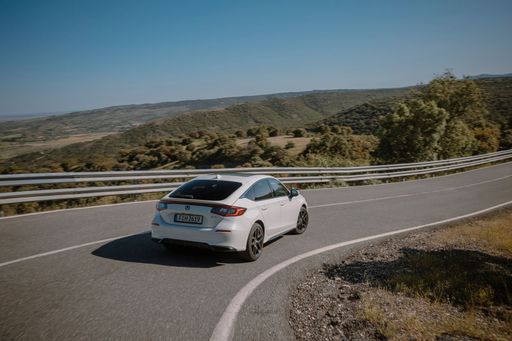
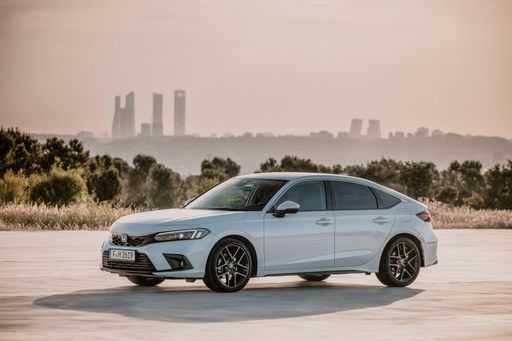
Honda Civic VS Skoda Octavia Combi pits a driver-focused hybrid hatch against a space-first estate, and that contrast defines the matchup for most buyers. The Honda Civic feels like a compact, efficiency-minded car that still rewards someone who enjoys steering precision and quiet cruising. The Skoda Octavia Combi answers with enormous real-world usability: a cargo-minded layout, generous rear room and a stronger shove when you ask for it. Choosing between them is about whether you prioritise low running fuss and a more engaging small-car feel (Civic) or maximum everyday practicality and payload (Octavia Combi). Below we break the differences into the moments that matter on the road and in family life.
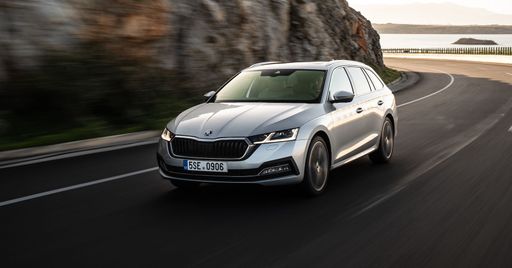
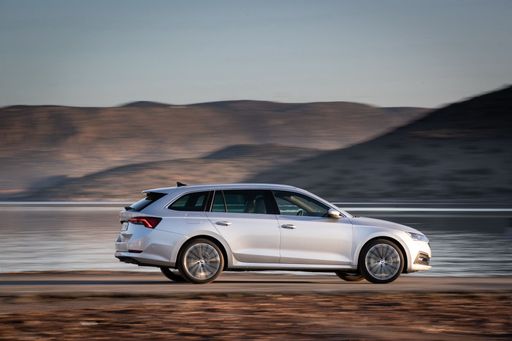
Octavia Combi

Driving character: city nimbleness versus estate composure

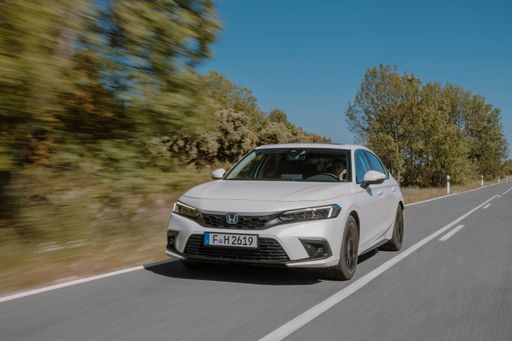
The Honda Civic drives lighter and more willing in town thanks to its hybrid setup and direct steering, so merging, manoeuvring and stop‑start cruising feel relaxed and responsive. The Skoda Octavia Combi trades a bit of that agility for a steadier, more planted nature that rewards motorway miles and loaded journeys — it simply feels less fussed when carrying people and luggage. Under hard acceleration the Octavia will pull with noticeably more authority, useful when overtaking or climbing hills, while the Civic masks its effort until you push it and then reveals the typical hybrid rise in revs. In the city the Civic’s compactness and gentler take‑off are friendlier, but in long runs the Octavia’s composure and stronger torque make sustained high‑speed driving less taxing.

Civic

Comfort and cabin feel: tactile finesse vs airy practicality

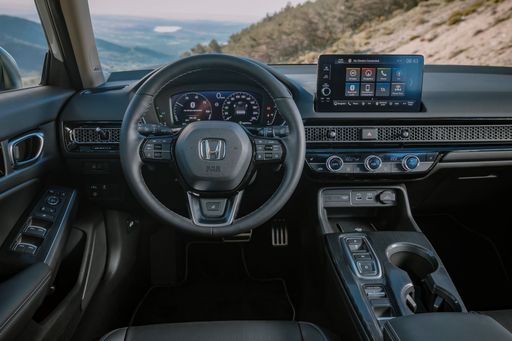
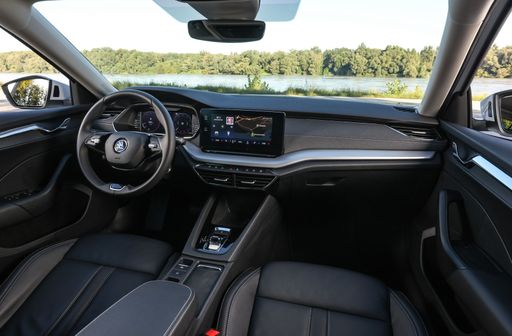
Inside, the Honda Civic leans on tactile controls and a driver‑centric layout that feels neat and slightly premium for the class; the seats and suspension bias create a calm highway cocoon. The Skoda Octavia Combi prioritises space and functionality, giving rear passengers noticeably more head- and legroom and an airy feeling that translates into less fatigue on long trips. Materials in the Civic feel carefully chosen around the driver, whereas the Octavia is more utilitarian up close — solid and purposeful but with some harder plastics in less visible areas. For perceived quality the Civic reads as a slightly more polished small car, while the Octavia sells reassurance through size and sensible ergonomics.

Octavia Combi

Practicality: estate utility against clever hatch packaging

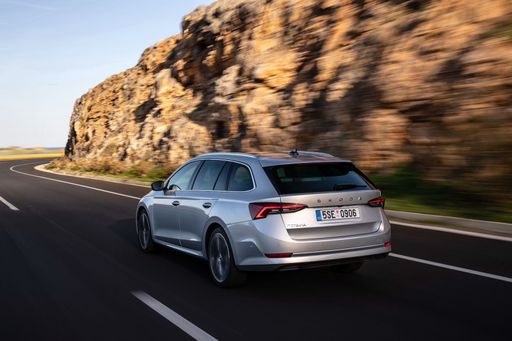
The Octavia Combi’s estate layout is the defining advantage here — its boot is far squarer and easier to load, the low lip and flexible floor solutions make it the better choice for frequent movers or families with lots of kit. The Honda Civic still delivers an impressively usable hatch boot with clever touches that make daily loading simple, but it doesn’t match the Octavia’s raw cargo volume or payload tolerance when you need to carry heavy or bulky loads. Rear passenger usability also swings to the Octavia: three child seats and taller adults fit more comfortably in its cabin. If your life revolves around luggage, bikes in the boot or long holiday drives, the Octavia Combi will save you compromises that the Civic forces.

Civic

Usability and tech: physical controls vs touchscreen-first logic

When it comes to everyday controls the Honda Civic favours physical knobs and buttons for the essentials, which keeps glances off the road and makes climate and audio changes quick without diving into menus. The Skoda Octavia Combi has moved further toward touch and slider controls, which looks modern and frees up the dash but can be less intuitive in bright light or when you need to operate things by feel. Both cars offer modern smartphone integration and driver aids, yet the Octavia tends to bundle desirable extras into option packs that can push the asking price up. In short, Civic gives you straightforward, low-distraction ergonomics out of the box, while the Octavia offers more technology and configurability if you’re prepared to specify it.

Octavia Combi

Buyer fit and trade-offs: which suits you better

Buy the Honda Civic if you want a compact, quietly efficient daily that still feels engaging to drive and keeps controls simple — it suits commuters, drivers who value refinement and those who prefer a hatchback’s footprint. Choose the Skoda Octavia Combi if you need maximum usable space, routinely carry heavy loads or tall passengers, or prefer the calm certainty of an estate on long runs — it suits families, regular travellers and pragmatists. The trade is clear: Civic trims noise, weight and complexity for a more driver-focused daily, while Octavia layers in room, payload and stronger acceleration at the cost of bulk and a touch more touch‑dependant tech. Read on to see the technical comparison that translates these real-world differences into drivetrain, payload and equipment specifics so you can match numbers to your needs.

Here’s where it gets real: The technical differences in detail

Civic

Costs and Efficiency:

Looking at overall running costs, both models reveal some interesting differences in everyday economy.

Skoda Octavia Combi is noticeably cheaper – starting at 25,600 £ , while the Honda Civic costs 32,500 £ . That’s a price difference of around 6,908 £.

Fuel consumption also shows a difference: the Skoda Octavia Combi uses 4.4 L/100km and is only slightly more efficient than the Honda Civic with 4.7 L/100km. The difference is about 0.3 L/100km.

Octavia Combi

Engine and Performance:

Power, torque and acceleration are the classic benchmarks for car enthusiasts – and here, some clear differences start to show.

When it comes to engine power, the Skoda Octavia Combi offers very slightly more power – delivering 204 HP compared to 184 HP. That’s roughly 20 HP more horsepower.

When accelerating from 0 to 100 km/h, the Skoda Octavia Combi is a bit quicker – completing the sprint in 6.7 s, while the Honda Civic takes 7.8 s. That’s about 1.1 s quicker.

There’s also a difference in torque: the Skoda Octavia Combi delivers somewhat more torque with 360 Nm compared to 315 Nm. That’s about 45 Nm more.

Civic

Space and Everyday Use:

Whether family car or daily driver – which one offers more room, flexibility and comfort?

Both vehicles offer seating for 5 people.

In terms of curb weight, Skoda Octavia Combi is somewhat lighter – 1,366 kg compared to 1,517 kg. The difference is around 151 kg.

When it comes to payload, the Skoda Octavia Combi carries noticeably more – 534 kg compared to 397 kg. That’s a difference of about 137 kg.

Who wins the race in the data check?

The Skoda Octavia Combi is far ahead overall in the objective data comparison.
This result only shows which model scores more points on paper – not which of the two cars feels right for you.

from £25,600
Octavia Combi

Skoda Octavia Combi

  • Engine Type Petrol, Petrol MHEV, Diesel
  • Transmission Automatic, Manuel
  • Drive Type All-Wheel Drive, Front-Wheel Drive
  • Power HP 116 - 204 HP
  • Consumption L/100km 4.4 - 6.9 L/100km
Honda Civic
Skoda Octavia Combi

Costs and Consumption

View detailed analysis

Engine and Performance

View detailed analysis

Dimensions and Body

View detailed analysis

Honda Civic

The Honda Civic mixes practical daily usability with a surprisingly engaging driving character, wrapping clever interior design and dependable engineering in a tidy, modern package. It’s a smart buy for drivers who want sensible reliability, a bit of fun behind the wheel, and a shape that never looks like it’s trying too hard.

details

Skoda Octavia Combi

The Skoda Octavia Combi is a practical, well‑packaged estate that delivers generous and flexible interior space ideal for families or active owners. Its sensible cabin layout, comfortable ride and solid reputation for reliability make it a pragmatic choice for buyers who value utility over flash.

details
Honda Civic
Skoda Octavia Combi

Costs and Consumption

Price
32,500 - 35,500 £
Price
25,600 - 39,600 £
Consumption L/100km
4.7 - 5 L/100km
Consumption L/100km
4.4 - 6.9 L/100km
Consumption kWh/100km
-
Consumption kWh/100km
-
Electric Range
-
Electric Range
-
Battery Capacity
-
Battery Capacity
-
co2
108 - 114 g/km
co2
113 - 157 g/km
Fuel tank capacity
-
Fuel tank capacity
-

Dimensions and Body

Body Type
Hatchback
Body Type
Estate
Seats
5
Seats
5
Doors
-
Doors
-
Curb weight
1,517 - 1,533 kg
Curb weight
1,366 - 1,553 kg
Trunk capacity
-
Trunk capacity
640 L
Length
-
Length
-
Width
1,890 mm
Width
1,829 mm
Height
-
Height
-
Max trunk capacity
-
Max trunk capacity
-
Payload
348 - 397 kg
Payload
502 - 534 kg

Engine and Performance

Engine Type
Full Hybrid
Engine Type
Petrol, Petrol MHEV, Diesel
Transmission
Automatic
Transmission
Automatic, Manuel
Transmission Detail
CVT
Transmission Detail
Dual-Clutch Automatic, Manual Gearbox
Drive Type
Front-Wheel Drive
Drive Type
All-Wheel Drive, Front-Wheel Drive
Power HP
184 HP
Power HP
116 - 204 HP
Acceleration 0-100km/h
7.8 - 8.1 s
Acceleration 0-100km/h
6.7 - 10.7 s
Max Speed
-
Max Speed
-
Torque
315 Nm
Torque
220 - 360 Nm
Number of Cylinders
4
Number of Cylinders
4
Power kW
135 kW
Power kW
85 - 150 kW
Engine capacity
1,993 cm3
Engine capacity
1,498 - 1,984 cm3

General

Model Year
2025
Model Year
2025
CO2 Efficiency Class
C
CO2 Efficiency Class
E, F, D, C
Brand
Honda
Brand
Skoda
DriveDuel uses data analysis and artificial intelligence to evaluate vehicle data and create content. Content is regularly reviewed and improved. The displayed prices are estimates based on German list prices, adjusted to the respective country’s VAT. Country-specific registration taxes are not included. This information is not legally binding.