@ Honda Motor Co., Ltd.
@ Volkswagen AG / VW Media
VS

Honda CR-V vs VW Tayron – Which car suits you better?

Both models have their strengths – but which one suits you more?
Compare performance, efficiency, price and space directly: Honda CR-V or VW Tayron?

CR-V @ Honda Motor Co., Ltd.

Honda CR-V vs VW Tayron: A Comprehensive Comparison

As the SUV market continues to evolve, two heavyweights stand out in the compact segment: the Honda CR-V and the VW Tayron. Both models showcase a blend of technology, performance, and comfort, appealing to families and adventure-seekers alike. This article delves into a head-to-head comparison of the two, highlighting their technical specifications, innovations, and overall value.
Tayron @ Volkswagen AG / VW Media

Design and Dimensions

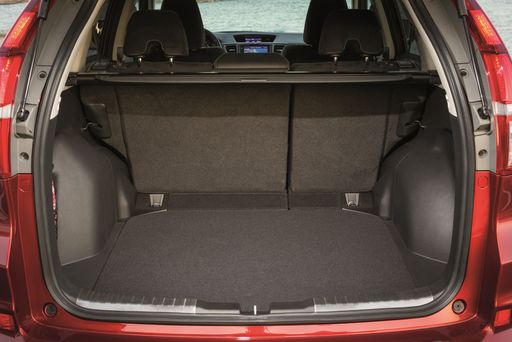
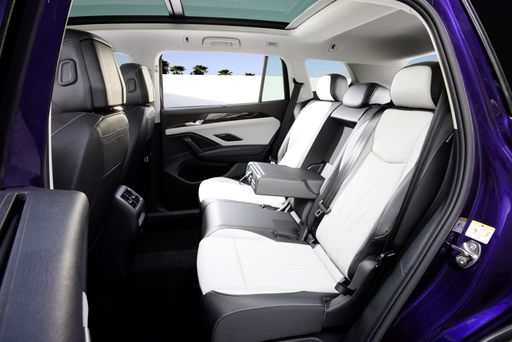
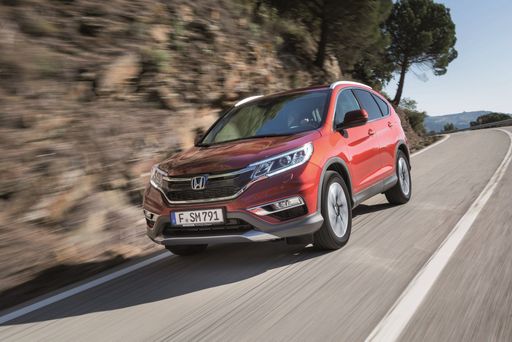
The Honda CR-V measures a length of 4706 mm, a width of 1866 mm, and a height ranging from 1673 mm to 1684 mm, depending on the variant. This makes it a spacious choice for those prioritizing passenger and cargo area. With a trunk capacity of up to 617 liters, the CR-V offers ample storage, ideal for families on the go.

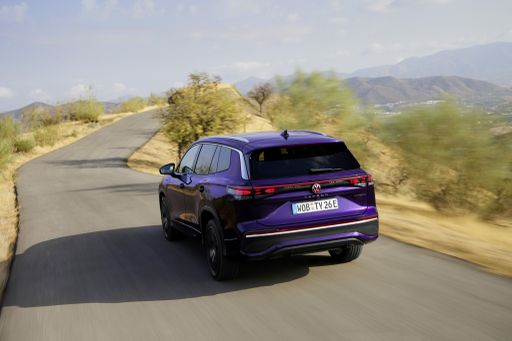
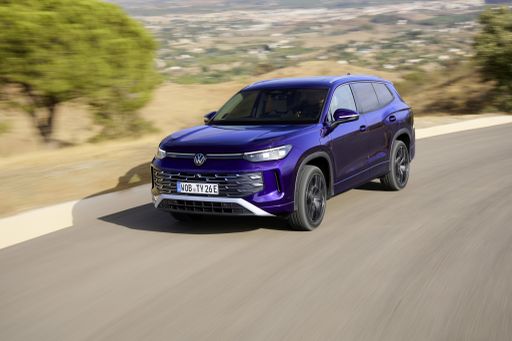
In contrast, the VW Tayron is slightly longer at 4792 mm and features a width of 1853 mm or 1866 mm, with a height of 1666 mm to 1668 mm. Though it has a smaller trunk capacity of 705 liters, the Tayron compensates with a more streamlined design and an athletic stance, giving it a sporty appearance on the road.

CR-V @ Honda Motor Co., Ltd.

Engine Options and Performance

When it comes to powertrains, the Honda CR-V shines with its range of hybrid options. It offers a full hybrid and a plugin hybrid, with a maximum power output of 184 HP. Equipped with a continuously variable transmission (CVT), the CR-V achieves an impressive fuel consumption of 6.0 to 6.7 L/100km, depending on the specific variant.

On the other hand, the VW Tayron boasts a more diverse engine lineup, including petrol, petrol MHEV, diesel, and plugin hybrid options, providing power outputs ranging from 150 HP in its base engine to a robust 272 HP in its higher-end variant. The Tayron features a dual-clutch automatic transmission, enhancing its performance with faster gear shifts. Fuel consumption for the Tayron varies, with the most efficient variant achieving as low as 5.4 L/100km.

Tayron @ Volkswagen AG / VW Media

Technology and Innovations

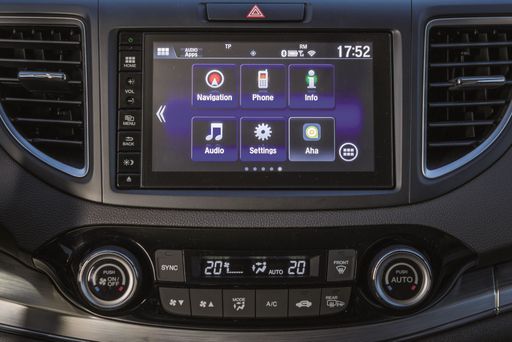
Both the Honda CR-V and VW Tayron come packed with advanced technology and safety features that elevate the driving experience. The CR-V's full and plug-in hybrid models offer innovative energy-saving features, along with an impressive electric range of up to 79 km, making it a great choice for urban commuting.

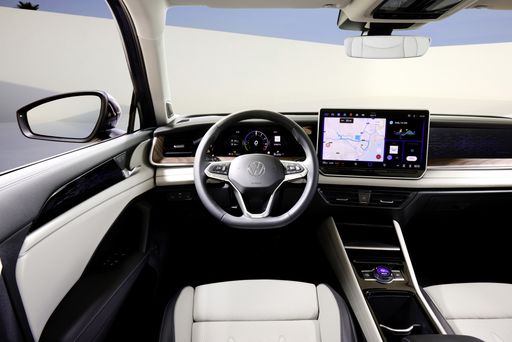
The VW Tayron, on the other hand, incorporates cutting-edge infotainment systems with integrated online connectivity and multiple driving modes. Its advanced driver assistance systems enhance safety and navigation, making it a techno-savvy choice for the modern driver.

CR-V @ Honda Motor Co., Ltd.

Driving Dynamics

In terms of driving experience, the Honda CR-V focuses on comfort with its soft suspension setup, providing a smooth ride on various terrains. Acceleration from 0-100 km/h is respectable at an average of 9.4 to 9.5 seconds across different trims, making it a reliable choice for daily driving.

The VW Tayron offers a sportier ride, especially in higher-powered versions, boasting a 0-100 km/h acceleration time as low as 6.1 seconds. Its responsive steering and agile handling make it engaging to drive, especially for those who prefer a more dynamic experience behind the wheel.

Tayron @ Volkswagen AG / VW Media

Conclusion: Which SUV Reigns Supreme?

Ultimately, both the Honda CR-V and VW Tayron cater to slightly different preferences in the SUV market. The CR-V is a stellar choice for those seeking a spacious, fuel-efficient, and hybrid option, while the VW Tayron impresses with its broad range of engines and sporty driving dynamics. Deciding between the two will boil down to personal preferences regarding performance, technology, and overall driving experience.

As both models continue to evolve in the face of changing automotive trends, buyers can expect these SUVs to remain at the forefront of the compact SUV segment, offering exciting options for modern consumers.

Here’s where it gets real: The technical differences in detail

CR-V @ Honda Motor Co., Ltd.

Costs and Efficiency:

Price and efficiency are key factors when choosing a car – and this is often where the real differences emerge.

VW Tayron has a minimal advantage in terms of price – it starts at 39600 £, while the Honda CR-V costs 42800 £. That’s a price difference of around 3159 £.

Fuel consumption also shows a difference: Honda CR-V manages with 0.90 L and is therefore clearly more efficient than the VW Tayron with 1.50 L. The difference is about 0.60 L per 100 km.

As for range, the VW Tayron performs clearly perceptible better – achieving up to 123 km, about 44 km more than the Honda CR-V.

Tayron @ Volkswagen AG / VW Media

Engine and Performance:

Power, torque and acceleration say a lot about how a car feels on the road. This is where you see which model delivers more driving dynamics.

When it comes to engine power, the VW Tayron has a distinct edge – offering 272 HP compared to 184 HP. That’s roughly 88 HP more horsepower.

In acceleration from 0 to 100 km/h, the VW Tayron is convincingly quicker – completing the sprint in 6.10 s, while the Honda CR-V takes 9 s. That’s about 2.90 s faster.

In terms of top speed, the VW Tayron performs to a small extent better – reaching 240 km/h, while the Honda CR-V tops out at 195 km/h. The difference is around 45 km/h.

There’s also a difference in torque: VW Tayron pulls slightly stronger with 400 Nm compared to 335 Nm. That’s about 65 Nm difference.

Space and Everyday Use:

Whether family car or daily driver – which one offers more room, flexibility and comfort?

Both vehicles offer seating for 5 people.

In curb weight, VW Tayron is minimal lighter – 1682 kg compared to 1821 kg. The difference is around 139 kg.

In terms of boot space, the VW Tayron offers clearly perceptible more room – 885 L compared to 617 L. That’s a difference of about 268 L.

In maximum load capacity, the VW Tayron performs slightly better – up to 2090 L, which is about 380 L more than the Honda CR-V.

When it comes to payload, VW Tayron a bit takes the win – 566 kg compared to 475 kg. That’s a difference of about 91 kg.

Who comes out on top?

Overall, the VW Tayron shows itself to be wins the duel decisively and secures the title of DriveDuel Champion.
It convinces with the more balanced overall package and proves to be the more versatile choice for everyday use.

from about £39,600
Tayron @ Volkswagen AG / VW Media

VW Tayron

  • Engine Type : Petrol MHEV, Diesel, Petrol, Plugin Hybrid
  • Transmission : Automatic
  • Drive Type : Front-Wheel Drive, All-Wheel Drive
  • Power HP : 150 - 272 HP
  • Consumption L/100km : 1.5 - 8.5 L
  • Electric Range : 116 - 123 km

Honda CR-V

5 (1)
rate

The Honda CR-V blends sensible practicality with a polished feel, offering roomy interiors and a confident ride that keeps commutes and weekend escapes equally comfortable. Its unshowy styling and reliable reputation make it a smart, low‑drama choice for buyers who want versatility without fuss — the kind of car that quietly makes everyday life a little easier.

details

VW Tayron

The VW Tayron is Volkswagen's roomy, no-nonsense SUV that pairs clean, familiar styling with a practical cabin built for families and everyday use. It rides comfortably, packs sensible tech and creature comforts, and feels like the sensible sweater of SUVs for buyers who prefer steady value over headline-grabbing drama.

details
Honda CR-V
VW Tayron
CR-V @ Honda Motor Co., Ltd.
Tayron @ Volkswagen AG / VW Media

Costs and Consumption

Price
42800 - 52100 £
Price
39600 - 53300 £
Consumption L/100km
0.9 - 6.7 L
Consumption L/100km
1.5 - 8.5 L
Consumption kWh/100km
-
Consumption kWh/100km
-
Electric Range
79 km
Electric Range
116 - 123 km
Battery Capacity
-
Battery Capacity
19.70 kWh
co2
19 - 152 g/km
co2
33 - 192 g/km
Fuel tank capacity
46 - 57 L
Fuel tank capacity
45 - 58 L

Dimensions and Body

Body Type
SUV
Body Type
SUV
Seats
5
Seats
5
Doors
5
Doors
5
Curb weight
1821 - 1988 kg
Curb weight
1682 - 1948 kg
Trunk capacity
579 - 617 L
Trunk capacity
705 - 885 L
Length
4706 mm
Length
4792 mm
Width
1866 mm
Width
1853 - 1866 mm
Height
1673 - 1684 mm
Height
1666 - 1668 mm
Max trunk capacity
1634 - 1710 L
Max trunk capacity
1915 - 2090 L
Payload
439 - 475 kg
Payload
489 - 566 kg

Engine and Performance

Engine Type
Plugin Hybrid, Full Hybrid
Engine Type
Petrol MHEV, Diesel, Petrol, Plugin Hybrid
Transmission
Automatic
Transmission
Automatic
Transmission Detail
CVT
Transmission Detail
Dual-Clutch Automatic
Drive Type
Front-Wheel Drive, All-Wheel Drive
Drive Type
Front-Wheel Drive, All-Wheel Drive
Power HP
184 HP
Power HP
150 - 272 HP
Acceleration 0-100km/h
9 - 9.5 s
Acceleration 0-100km/h
6.1 - 9.7 s
Max Speed
187 - 195 km/h
Max Speed
204 - 240 km/h
Torque
335 Nm
Torque
250 - 400 Nm
Number of Cylinders
4
Number of Cylinders
4
Power kW
135 kW
Power kW
110 - 200 kW
Engine capacity
1993 cm3
Engine capacity
1498 - 1984 cm3

General

Model Year
2024 - 2025
Model Year
2025
CO2 Efficiency Class
B, D, E
CO2 Efficiency Class
E, F, G, B
Brand
Honda
Brand
VW
What drivetrain options does the Honda CR-V have?

The Honda CR-V is available as Front-Wheel Drive or All-Wheel Drive.

The prices and data displayed are estimates based on German list prices and may vary by country. This information is not legally binding.