VS

Honda e:Ny1 vs BYD Atto 3 comparison

Compare performance (204 HP vs 449 HP), boot space and price (33,400 £ vs 38,600 £ ) at a glance. Find out which car is the better choice for you – Honda e:Ny1 or BYD Atto 3?

Honda e:Ny1 vs BYD Atto 3: Key differences

Honda e:Ny1

4.4 (1 Reviews)
rate
  • a bit cheaper
  • barely lighter
details

BYD Atto 3

4.2 (6 Reviews)
rate
  • clearly more power
  • a bit more efficient
  • slightly more electric range
  • considerably quicker 0–100 km/h
  • visibly more trunk space
details

All details on performance, efficiency, range and trunk space can be found in the technical comparison below – including user reviews for both models.

By Achim Sedelmaier

e:Ny1

BYD Atto 3 vs Honda e:Ny1: A Comprehensive Comparison

The electric SUV segment is rapidly evolving, with numerous models vying for attention. Two of the standout contenders in 2023 are the BYD Atto 3 and the Honda e:Ny1. Both vehicles boast innovative features and competitive specifications, but which one comes out on top? Let’s dive into a detailed comparison of these two electric SUVs.
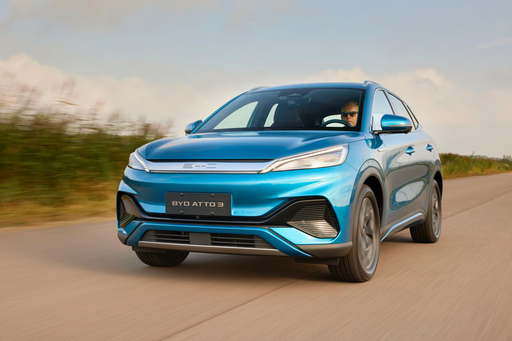
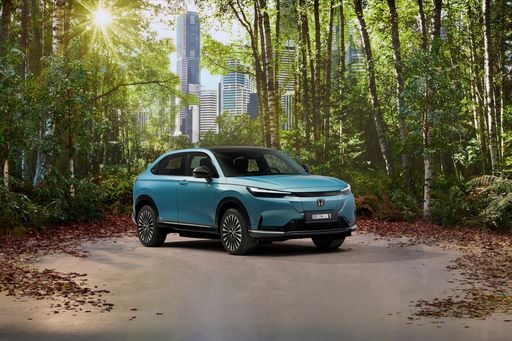
Atto 3

Performance and Powertrain

Both the BYD Atto 3 and Honda e:Ny1 are powered by electric drivetrains, delivering 204 HP with 310 Nm of torque. They feature equally sophisticated automatic transmissions coupled with a reduction gearbox, ensuring smooth and responsive driving. In terms of acceleration, the Atto 3 edges slightly ahead with a 0-100 km/h time of 7.3 seconds, while the e:Ny1 takes 7.6 seconds to achieve the same speed.

When it comes to top speed, both models max out at 160 km/h. Although they share many similarities in power and acceleration, the BYD Atto 3 offers a marginal advantage that may appeal to performance-oriented drivers.

e:Ny1

Electric Range and Efficiency

Battery efficiency is crucial for electric vehicles, and here is where we see a noticeable difference. The BYD Atto 3 has a consumption rate of 16 kWh/100km, allowing it to achieve an impressive electric range of 420 km on a full charge. In comparison, the Honda e:Ny1 consumes 18.2 kWh/100km, providing a slightly shorter range of 412 km.

In real-world application, this difference in energy consumption can result in longer trips without frequent charging for Atto 3 owners. Both models are classified as A in CO2 efficiency, with no emissions, solidifying their eco-friendly credentials.

Atto 3

Dimensions and Space Utilization

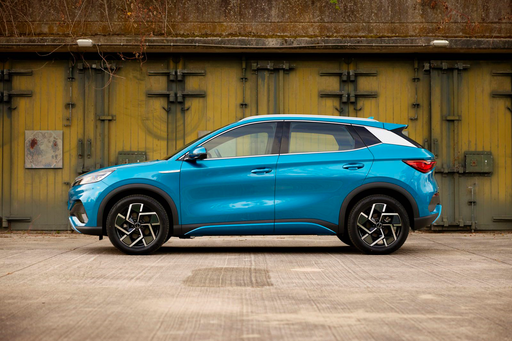
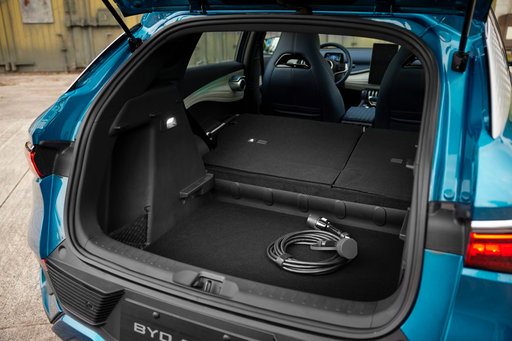
The dimensions of both vehicles indicate their unique offerings in terms of space and practicality. The BYD Atto 3 measures 4455 mm in length, 1875 mm in width, and stands 1615 mm tall, offering substantial interior space. Its trunk capacity is impressive at 440 liters, catering well to families and individuals needing extra cargo room.

On the other hand, the Honda e:Ny1 has a more compact profile, measuring 4387 mm in length, 1790 mm in width, and 1584 mm in height. Its trunk capacity ranges between 344-361 liters, which, while still adequate, may appeal less to those seeking maximum storage options. Both models come with five seats, ensuring comfortable travel for passengers.

e:Ny1

Weight and Payload Capacity

The curb weight of the Atto 3 is 1825 kg, making it heavier than the e:Ny1, which weighs in at 1730 kg. The payload for the Atto 3 is slightly less, at 335 kg compared to the e:Ny1's 350 kg. This could make the Honda a better option for those looking to maximize their hauling capabilities.

Atto 3

Technological Innovations

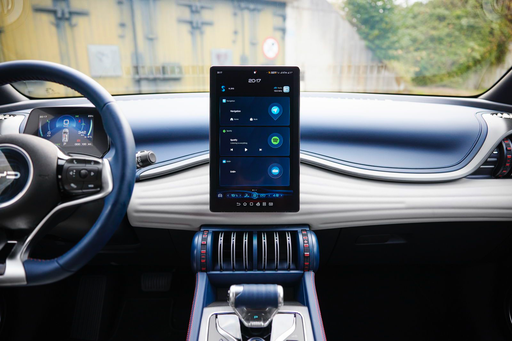
Both vehicles showcase impressive technological features, such as advanced driver-assistance systems and infotainment options. The BYD Atto 3 is recognized for its state-of-the-art autonomous driving assistance, offering features like adaptive cruise control and lane-keeping assist. Honda’s e:Ny1, however, draws on the brand's legacy of user-friendly technology, integrating various safety and connectivity solutions.

e:Ny1

Conclusion: Which SUV Should You Choose?

Ultimately, the choice between the BYD Atto 3 and Honda e:Ny1 will depend on individual preferences and needs. The Atto 3 excels in acceleration and range, making it an ideal choice for performance enthusiasts and long-distance drivers. In contrast, the Honda e:Ny1 shines in its slightly lighter weight and payload capacity, catering more to urban drivers who might prioritize compactness and versatility.

Regardless of which model you choose, both the BYD Atto 3 and Honda e:Ny1 demonstrate the exciting potential of electric mobility, proving that sustainability and performance can indeed go hand in hand.

Here’s where it gets real: The technical differences in detail

e:Ny1

Costs and Efficiency:

Looking at overall running costs, both models reveal some interesting differences in everyday economy.

Honda e:Ny1 is a bit cheaper – starting at 33,400 £ , while the BYD Atto 3 costs 38,600 £ . That’s a price difference of around 5,142 £.

In terms of energy consumption, the BYD Atto 3 is a bit more efficient: consuming 16.4 kWh/100km compared to 18.2 kWh/100km for the Honda e:Ny1. That’s a difference of about 1.8 kWh/100km.

As for electric range, the BYD Atto 3 offers slightly more range – reaching up to 510 km, about 98 km more than the Honda e:Ny1.

Atto 3

Engine and Performance:

Power, torque and acceleration are the classic benchmarks for car enthusiasts – and here, some clear differences start to show.

When it comes to engine power, the BYD Atto 3 offers clearly more power – delivering 449 HP compared to 204 HP. That’s roughly 245 HP more horsepower.

When accelerating from 0 to 100 km/h, the BYD Atto 3 is considerably quicker – completing the sprint in 3.9 s, while the Honda e:Ny1 takes 7.6 s. That’s about 3.7 s quicker.

There’s also a difference in torque: the BYD Atto 3 delivers clearly more torque with 560 Nm compared to 310 Nm. That’s about 250 Nm more.

e:Ny1

Space and Everyday Use:

Whether family car or daily driver – which one offers more room, flexibility and comfort?

Both vehicles offer seating for 5 people.

In terms of curb weight, Honda e:Ny1 is barely lighter – 1,730 kg compared to 1,880 kg. The difference is around 150 kg.

Looking at boot space, the BYD Atto 3 offers visibly more boot space – 490 L compared to 361 L. That’s a difference of about 129 L.

When it comes to payload, the BYD Atto 3 carries clearly more – 530 kg compared to 350 kg. That’s a difference of about 180 kg.

Who wins the race in the data check?

The BYD Atto 3 is clearly superior overall in the objective data comparison.
This result only shows which model scores more points on paper – not which of the two cars feels right for you.

from £38,600
Atto 3

BYD Atto 3

  • Engine Type Electric
  • Transmission Automatic
  • Drive Type Rear-Wheel Drive, All-Wheel Drive
  • Power HP 313 - 449 HP
  • Consumption kWh/100km 16.4 - 17.8 kWh/100km
  • Electric Range 470 - 510 km
Honda e:Ny1
BYD Atto 3

Costs and Consumption

View detailed analysis

Engine and Performance

View detailed analysis

Dimensions and Body

View detailed analysis

Honda e:Ny1

The Honda e:Ny1 arrives as a cheeky, compact electric crossover that blends bold styling with clever practicality, perfect for city life and weekend escapes. Inside it's clean and tech-forward, offering a relaxed driving experience with enough space and refinement to make daily commutes feel surprisingly grown-up — and yes, the smile factor is real.

details

BYD Atto 3

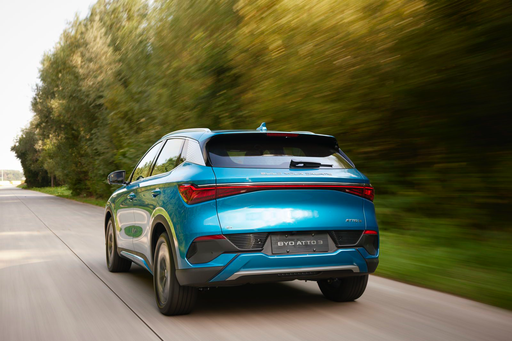
The BYD Atto 3 is an electric crossover that blends a distinctive, modern design with a comfortable, well-equipped cabin suited to everyday family use. It offers a relaxed, smooth driving feel and practical running costs, making it a sensible choice if you want an uncomplicated, value-focused EV.

details
Honda e:Ny1
BYD Atto 3

Costs and Consumption

Price
33,400 - 36,000 £
Price
38,600 - 43,700 £
Consumption L/100km
-
Consumption L/100km
-
Consumption kWh/100km
18.2 kWh/100km
Consumption kWh/100km
16.4 - 17.8 kWh/100km
Electric Range
412 km
Electric Range
470 - 510 km
Battery Capacity
-
Battery Capacity
-
co2
0 g/km
co2
0 g/km
Fuel tank capacity
-
Fuel tank capacity
-

Dimensions and Body

Body Type
SUV
Body Type
SUV
Seats
5
Seats
5
Doors
5
Doors
-
Curb weight
1,730 kg
Curb weight
1,880 - 1,990 kg
Trunk capacity
344 - 361 L
Trunk capacity
490 L
Length
4,387 mm
Length
-
Width
1,790 mm
Width
1,875 mm
Height
1,584 mm
Height
-
Max trunk capacity
1,136 - 1,176 L
Max trunk capacity
-
Payload
350 kg
Payload
530 kg

Engine and Performance

Engine Type
Electric
Engine Type
Electric
Transmission
Automatic
Transmission
Automatic
Transmission Detail
Reduction Gearbox
Transmission Detail
Reduction Gearbox
Drive Type
Front-Wheel Drive
Drive Type
Rear-Wheel Drive, All-Wheel Drive
Power HP
204 HP
Power HP
313 - 449 HP
Acceleration 0-100km/h
7.6 s
Acceleration 0-100km/h
3.9 - 5.5 s
Max Speed
160 km/h
Max Speed
-
Torque
310 Nm
Torque
380 - 560 Nm
Number of Cylinders
-
Number of Cylinders
-
Power kW
150 kW
Power kW
230 - 330 kW
Engine capacity
-
Engine capacity
-

General

Model Year
2023
Model Year
2026
CO2 Efficiency Class
A
CO2 Efficiency Class
A
Brand
Honda
Brand
BYD
DriveDuel uses data analysis and artificial intelligence to evaluate vehicle data and create content. Content is regularly reviewed and improved. The displayed prices are estimates based on German list prices, adjusted to the respective country’s VAT. Country-specific registration taxes are not included. This information is not legally binding.