VS

Honda HR-V vs Mazda 3 Hatchback comparison

Compare performance (131 HP vs 186 HP), boot space and price (29,700 £ vs 24,500 £ ) at a glance. Find out which car is the better choice for you – Honda HR-V or Mazda 3 Hatchback?

Honda HR-V vs Mazda 3 Hatchback: Key differences

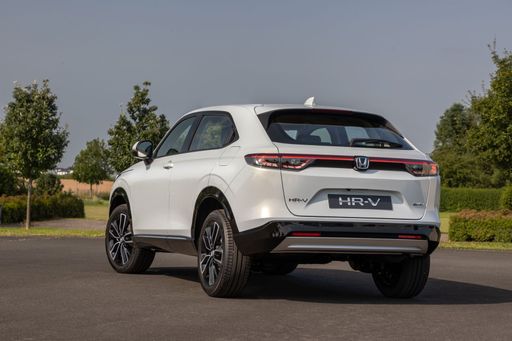
Honda HR-V

4.2 (13 Reviews)
rate
  • very slightly more efficient
Overall, owners tend to find the Honda HR‑V a practical, reliable and economical compact SUV that’s easy to live with in town and for family duties, offering predictable handling and a comfortable ride. Common positives include good fuel economy, roomy/intuive packaging and reassuring manners; common negatives some owners mention are noticeable noise under brisk acceleration or low‑speed maneuvers and a tendency to feel underpowered on sustained highway runs. So while feedback is broadly favorable for city and everyday use, opinions are more mixed on long‑distance refinement — worth a motorway run during your test drive if that’s your regular terrain.

Mazda 3 Hatchback

  • noticeably cheaper
  • clearly more power
  • clearly quicker 0–100 km/h
  • barely lighter
  • marginally more trunk space

All details on performance, efficiency, range and trunk space can be found in the technical comparison below – including user reviews for both models.

HR-V

The 2022 Honda HR-V vs. the 2024 Mazda 3 Hatchback: A Dynamic Duo for the Modern Driver

When it comes to choosing a vehicle that fits contemporary lifestyles, two names often pop up: the 2022 Honda HR-V and the 2024 Mazda 3 Hatchback. With each bringing unique features to the table, this head-to-head comparison will help potential buyers identify which model best suits their needs.
3 Hatchback

Design and Dimensions

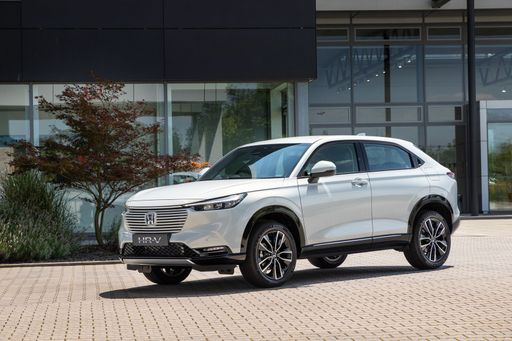
The Honda HR-V, standing tall as an SUV, offers a spacious interior with a body length of 4340 mm and a height of 1582 mm. Its commanding presence is coupled with an elevated driving position, which many drivers find attractive for greater road visibility.

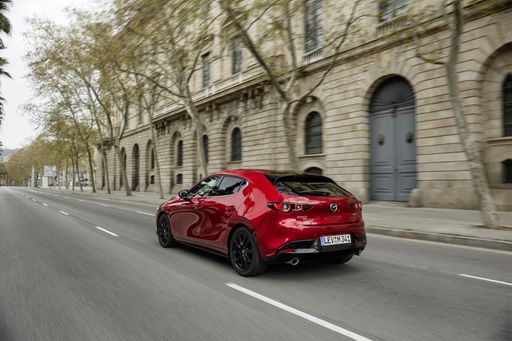
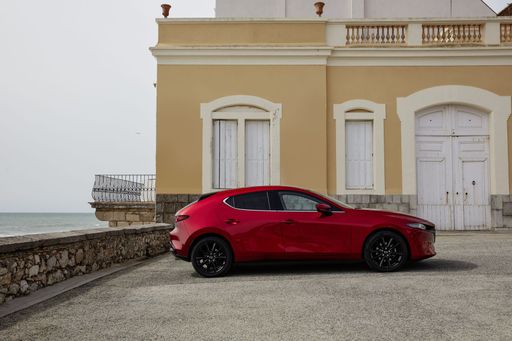
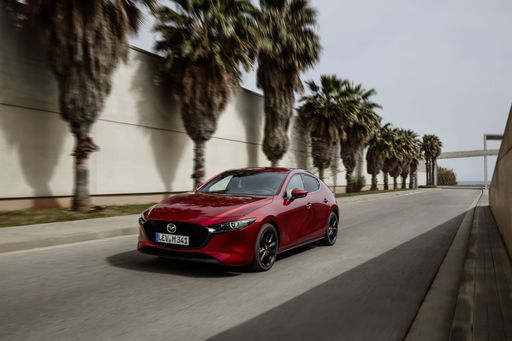
Contrastingly, the Mazda 3 Hatchback portrays a sportier silhouette, extending to 4460 mm in length, and possessing a sleeker height of 1435 mm. For those leaning towards aesthetics and aerodynamic form, the Mazda excels in combining elegance with utility.

HR-V

Performance and Power

Under the hood, the Honda HR-V features a full hybrid engine with 130 HP, whilst offering a torque of 253 Nm. This power unit, combined with a CVT transmission, provides smooth acceleration—reaching 0-100 km/h in around 10.6 seconds. The HR-V's focus is clearly on efficient fuel consumption, clocking at 5.4 L/100km, which is particularly appealing for those looking to reduce fuel costs.

The Mazda 3 Hatchback, however, ups the ante with its petrol MHEV engine offerings ranging up to 186 HP and delivering a torque of 240 Nm. The multiple transmission options, both manual and automatic, allow for a customized driving experience. With a sharper 0-100 km/h time as quick as 8 seconds, and a top speed rising up to 216 km/h, the Mazda prioritizes a spirited performance.

3 Hatchback

Interior Comfort and Practicality

Both vehicles accommodate up to five passengers, ensuring comfortable rides for family outings or trips with friends. However, the HR-V's trunk capacity sits between 320 and 335 liters, offering a decent amount of space for luggage and gear, further supported by its SUV pedigree.

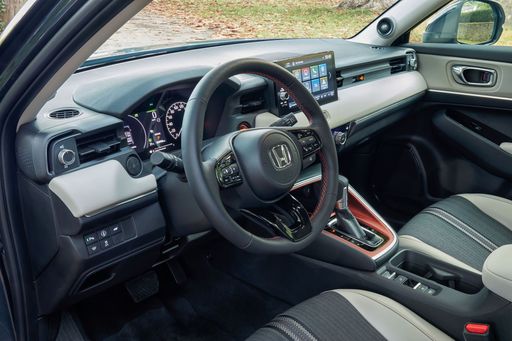
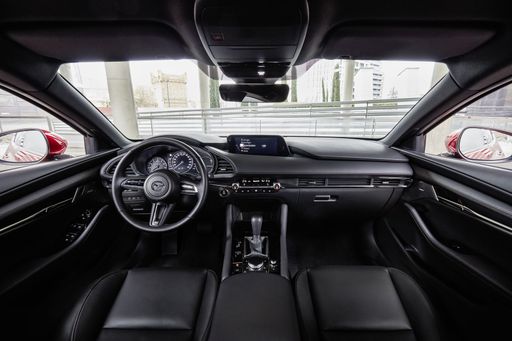
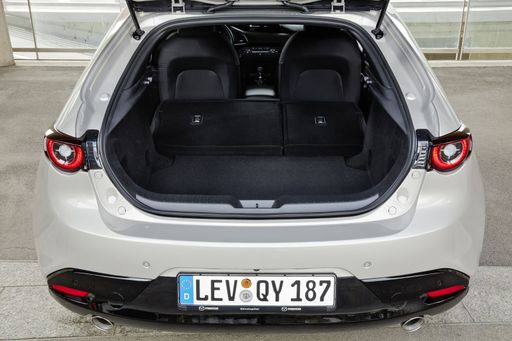
On the flip side, the Mazda 3 Hatchback provides 351 liters of trunk space, ensuring that it can handle bulkier loads without sacrificing passenger comfort. Its cabin layout is praised for its driver-centric design and premium material feel, enhancing the overall driving experience.

HR-V

Efficiency and Environmental Impact

Environmental concerns remain a key factor for modern drivers. The HR-V sports a CO2 emission of 122 g/km, maintaining a respectable footprint in its segment. Coupled with its hybrid technology, it aims to offer both efficiency and reduced emissions.

The Mazda 3 Hatchback exhibits slightly higher CO2 figures, ranging from 126 to 146 g/km. However, its mild hybrid technologies do contribute to lowering environmental impact compared to conventional petrol engines, demonstrating Mazda's commitment to greener driving.

3 Hatchback

The Verdict

In conclusion, the decision between these two popular contenders largely depends on personal preferences and priorities. Those prioritizing fuel economy, a higher driving position, and hybrid technology may opt for the Honda HR-V. Meanwhile, drivers seeking a dynamic performance, sporty design, and a more hands-on driving experience may lean towards the Mazda 3 Hatchback. Both models excel in their own right, offering diverse benefits to cater to varied lifestyle needs.

Here’s where it gets real: The technical differences in detail

HR-V

Costs and Efficiency:

Price and efficiency are often the first things buyers look at. Here it becomes clear which model has the long-term edge – whether at the pump, the plug, or in purchase price.

Mazda 3 Hatchback is noticeably cheaper – starting at 24,500 £ , while the Honda HR-V costs 29,700 £ . That’s a price difference of around 5,194 £.

Fuel consumption also shows a difference: the Honda HR-V uses 5.4 L/100km and is very slightly more efficient than the Mazda 3 Hatchback with 5.6 L/100km. The difference is about 0.2 L/100km.

3 Hatchback

Engine and Performance:

Power, torque and acceleration are the classic benchmarks for car enthusiasts – and here, some clear differences start to show.

When it comes to engine power, the Mazda 3 Hatchback offers clearly more power – delivering 186 HP compared to 131 HP. That’s roughly 55 HP more horsepower.

When accelerating from 0 to 100 km/h, the Mazda 3 Hatchback is clearly quicker – completing the sprint in 8 s, while the Honda HR-V takes 10.6 s. That’s about 2.6 s quicker.

There’s also a difference in torque: the Honda HR-V delivers very slightly more torque with 253 Nm compared to 240 Nm. That’s about 13 Nm more.

HR-V

Space and Everyday Use:

Cabin size, boot volume and payload all play a role in everyday practicality. Here, comfort and flexibility make the difference.

Both vehicles offer seating for 5 people.

In terms of curb weight, Mazda 3 Hatchback is barely lighter – 1,419 kg compared to 1,452 kg. The difference is around 33 kg.

Looking at boot space, the Mazda 3 Hatchback offers marginally more boot space – 351 L compared to 319 L. That’s a difference of about 32 L.

When it comes to payload, the Mazda 3 Hatchback carries somewhat more – 485 kg compared to 418 kg. That’s a difference of about 67 kg.

Who wins the race in the data check?

The Mazda 3 Hatchback is clearly superior overall in the objective data comparison.
This result only shows which model scores more points on paper – not which of the two cars feels right for you.

from £24,500
3 Hatchback

Mazda 3 Hatchback

  • Engine Type : Petrol MHEV
  • Transmission : Manuel, Automatic
  • Drive Type : Front-Wheel Drive, All-Wheel Drive
  • Power HP : 140 - 186 HP
  • Consumption L/100km : 5.6 - 6.5 L/100km
Honda HR-V
Mazda 3 Hatchback

Costs and Consumption

View detailed analysis

Engine and Performance

View detailed analysis

Dimensions and Body

View detailed analysis

Honda HR-V

The Honda HR-V is the sensible compact crossover that blends roomy practicality with a composed, friendly drive, making it an easy pick for buyers who want everyday usability without fuss. It won’t thrill hardcore enthusiasts, but its clever packaging, comfortable cabin and low-key styling make life simpler — and that’s exactly the point.

details

Mazda 3 Hatchback

The Mazda 3 hatchback blends elegant design with a surprisingly sporty drive, giving a cabin that feels more upscale than you’d expect for the segment. Practical enough for everyday life yet eager to entertain behind the wheel, it’s a smart, good-humored choice that makes even grocery runs feel like a mini escape.

details
Honda HR-V
Mazda 3 Hatchback

Costs and Consumption

Price
29,700 - 35,400 £
Price
24,500 - 35,500 £
Consumption L/100km
5.4 L/100km
Consumption L/100km
5.6 - 6.5 L/100km
Consumption kWh/100km
-
Consumption kWh/100km
-
Electric Range
-
Electric Range
-
Battery Capacity
-
Battery Capacity
-
co2
122 g/km
co2
126 - 146 g/km
Fuel tank capacity
-
Fuel tank capacity
-

Dimensions and Body

Body Type
SUV
Body Type
Hatchback
Seats
5
Seats
5
Doors
-
Doors
-
Curb weight
1,452 kg
Curb weight
1,419 - 1,549 kg
Trunk capacity
319 L
Trunk capacity
351 L
Length
-
Length
-
Width
-
Width
1,795 mm
Height
-
Height
-
Max trunk capacity
-
Max trunk capacity
-
Payload
418 kg
Payload
470 - 485 kg

Engine and Performance

Engine Type
Full Hybrid
Engine Type
Petrol MHEV
Transmission
Automatic
Transmission
Manuel, Automatic
Transmission Detail
CVT
Transmission Detail
Manual Gearbox, Automatic Gearbox
Drive Type
Front-Wheel Drive
Drive Type
Front-Wheel Drive, All-Wheel Drive
Power HP
131 HP
Power HP
140 - 186 HP
Acceleration 0-100km/h
10.6 - 10.8 s
Acceleration 0-100km/h
8 - 9.8 s
Max Speed
-
Max Speed
-
Torque
253 Nm
Torque
238 - 240 Nm
Number of Cylinders
4
Number of Cylinders
4
Power kW
96 kW
Power kW
103 - 137 kW
Engine capacity
1,498 cm3
Engine capacity
1,998 - 2,488 cm3

General

Model Year
2,025
Model Year
2,025
CO2 Efficiency Class
D
CO2 Efficiency Class
D, E
Brand
Honda
Brand
Mazda
DriveDuel uses data analysis and artificial intelligence to evaluate vehicle data and create content. Content is regularly reviewed and improved. The displayed prices are estimates based on German list prices, adjusted to the respective country’s VAT. Country-specific registration taxes are not included. This information is not legally binding.