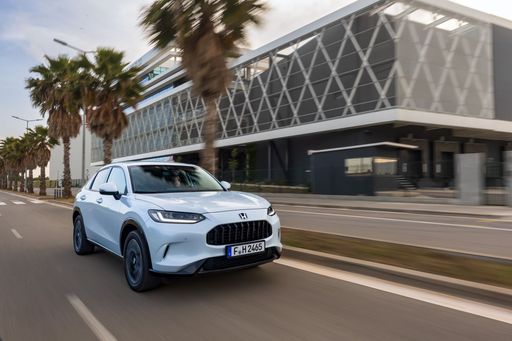
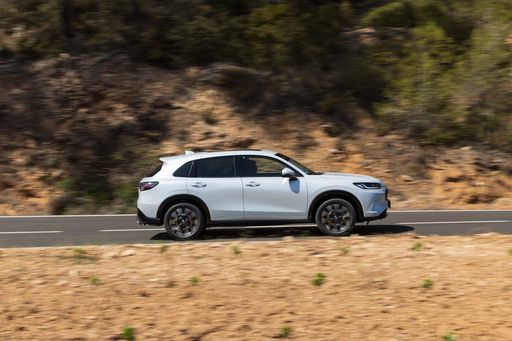
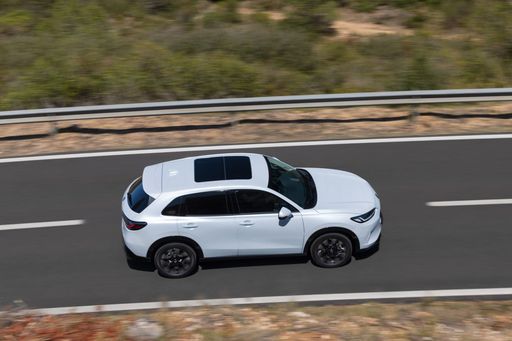
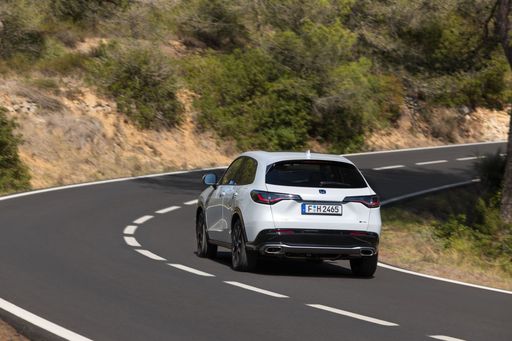
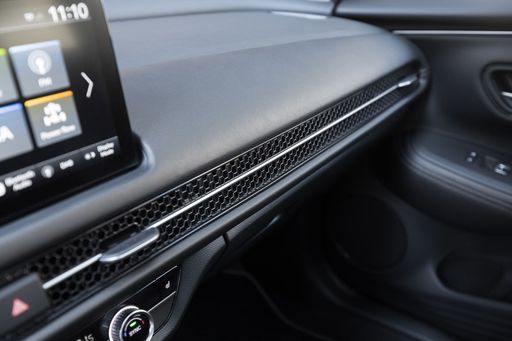
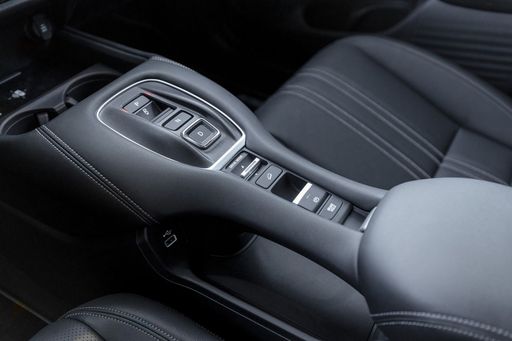
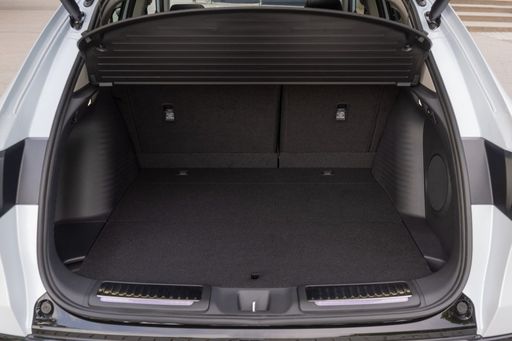
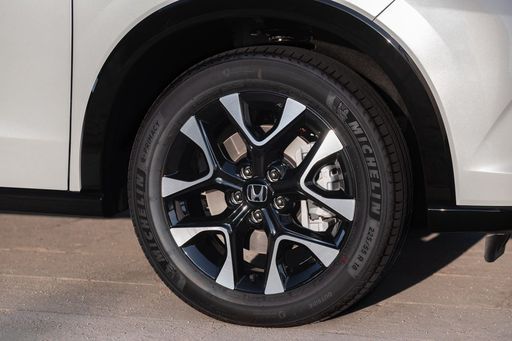
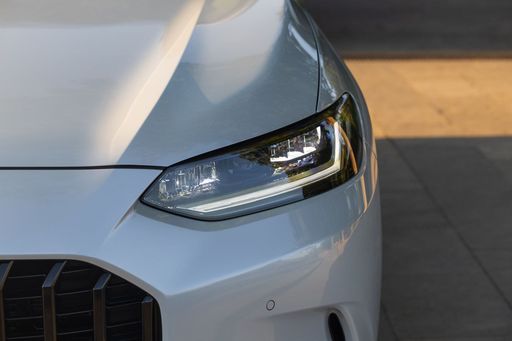
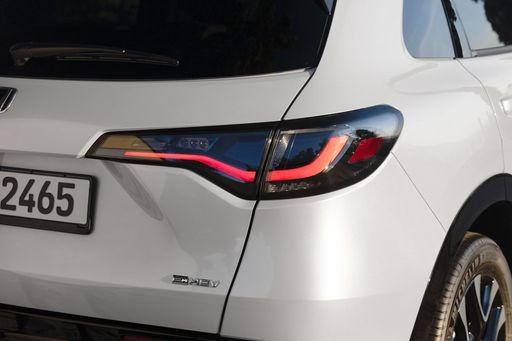
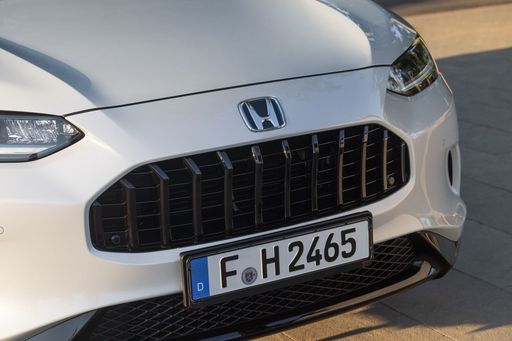
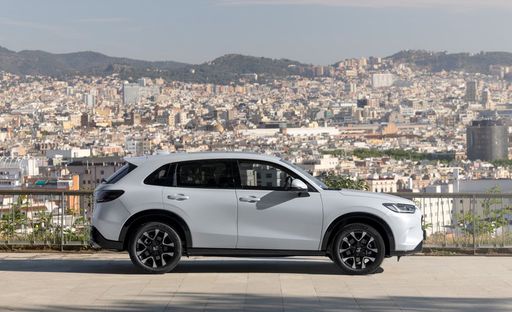
@ Honda Motor Co., Ltd.
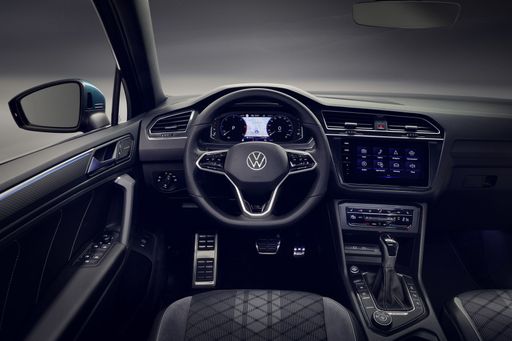
@ Volkswagen AG / VW Media
VS

Honda ZR-V vs VW Tiguan – Which model is better for everyday use?

Both models have their strengths – but which one suits you more?
Compare performance, efficiency, price and space directly: Honda ZR-V or VW Tiguan?

ZR-V @ Honda Motor Co., Ltd.

Honda ZR-V vs. VW Tiguan: The Battle of the SUVs

In the competitive world of SUVs, the Honda ZR-V and the VW Tiguan stand out as two formidable contenders. Both vehicles exhibit strong engineering and innovative features, appealing to a diverse range of drivers. Let's dive into the technical contrasts and standout innovations that set these two models apart.
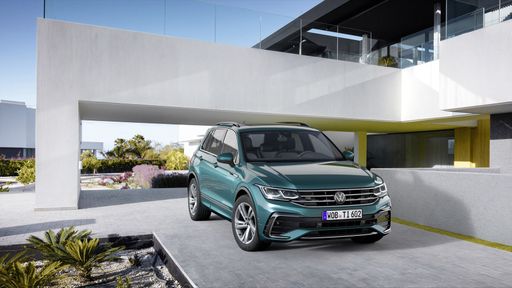
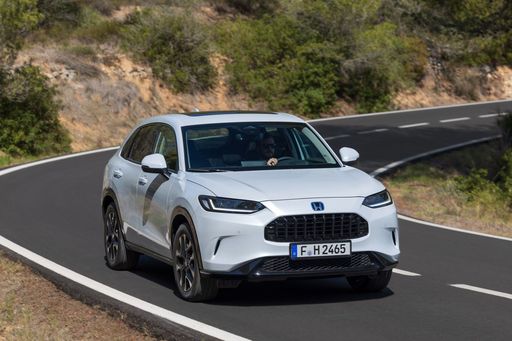
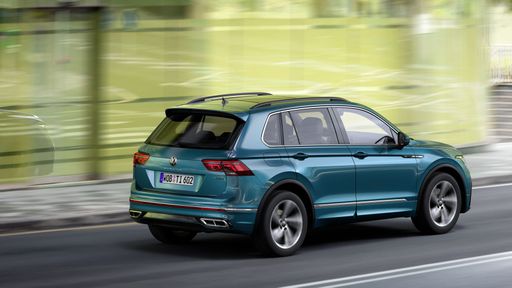
Tiguan @ Volkswagen AG / VW Media

The Engines and Performance

The Honda ZR-V is powered by a full hybrid engine, delivering 184 HP with a torque of 315 Nm. Its engine configuration, a 1,993 cm³ four-cylinder setup, promotes efficiency with a consumption rating of around 5.7-5.8 L/100 km. The ZR-V accelerates from 0 to 100 km/h in approximately 8 seconds, reaching a top speed of 173 km/h. Honda's commitment to efficiency is evident in its CO2 emissions, which range between 130-132 g/km, classifying it in the D efficiency category.

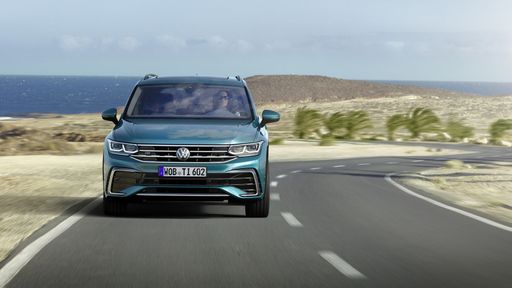
On the other hand, the VW Tiguan offers a more varied engine lineup, including petrol MHEV, plug-in hybrid, diesel, and petrol engines. The power output ranges from 130 to an impressive 272 HP. Its top performance variant accelerates from 0 to 100 km/h in just 5.9 seconds, with a maximum speed of up to 242 km/h, demonstrating VW's focus on power and speed. CO2 emissions can be as low as 8 g/km for the plug-in hybrid, putting it in a favorable B efficiency class.

ZR-V @ Honda Motor Co., Ltd.

Design and Dimensions

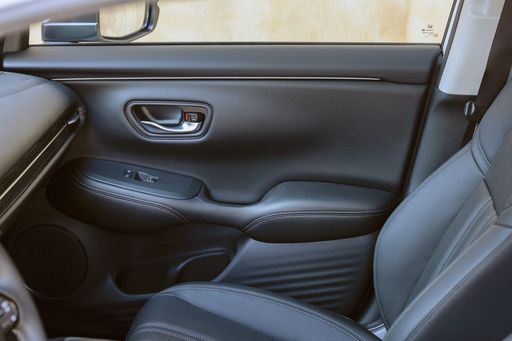
The Honda ZR-V stands at 4,568 mm in length, 1,840 mm in width, and 1,613 mm in height. Its comfortable interior is designed to accommodate five passengers with a trunk capacity of 370-380 liters. The vehicle's design is both sleek and aerodynamic, thanks to Honda's strategic engineering, and its curb weight ranges from 1660 to 1675 kg.

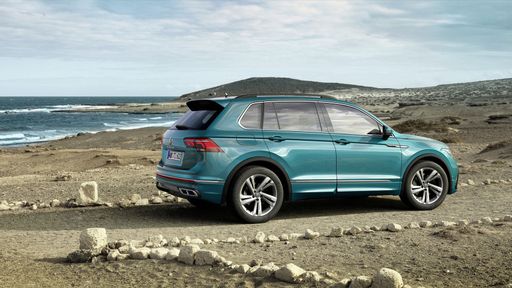
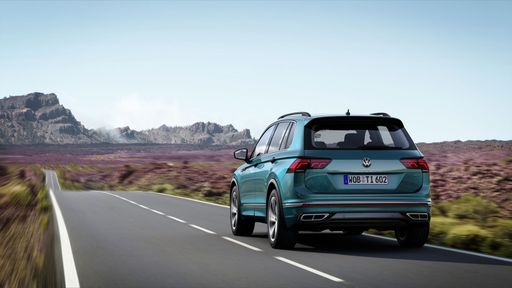
Similarly, the VW Tiguan exudes a robust presence with a length of 4,539 mm, a width up to 1,859 mm, and a height of approximately 1,656 mm. It also seats five passengers but offers greater trunk capacity at 490-652 liters, providing ample room for cargo. This, coupled with a curb weight from 1598 to 1890 kg, makes the Tiguan a practical choice for families and adventurers alike.

Tiguan @ Volkswagen AG / VW Media

Innovations and Features

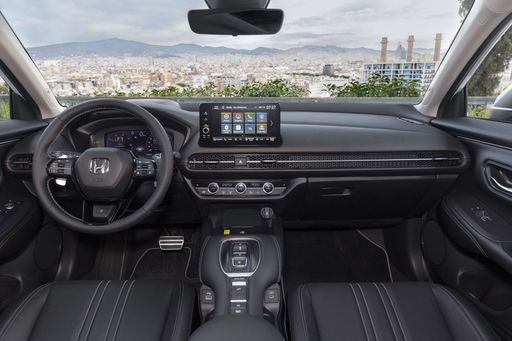
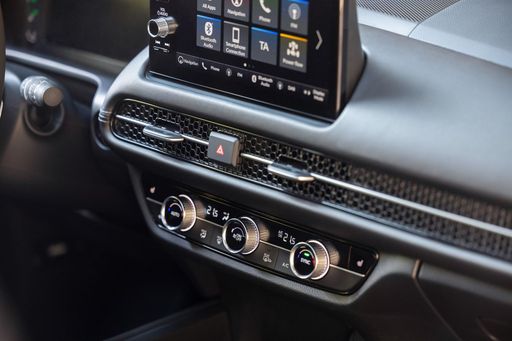
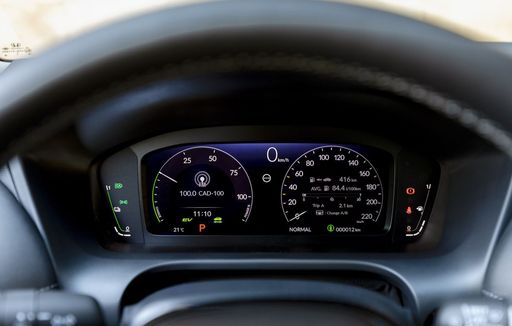
The Honda ZR-V integrates cutting-edge hybrid technology, maximizing fuel efficiency and reducing emissions without compromising on performance. Its hybrid system allows seamless transitions between electric and combustion engine power, enhancing driving comfort and responsiveness. Honda's emphasis on green technology is evident in the various efficiency improvements seen in the ZR-V.

The VW Tiguan showcases innovation with its dual-clutch automatic transmission, offering smooth and responsive gear changes. Notably, the plug-in hybrid version brings an electric range of up to 113 km, enabling sustainable urban commutes. With a battery capacity of 19.7 kWh, the Tiguan is equipped to handle diverse driving scenarios while promoting eco-friendliness.

ZR-V @ Honda Motor Co., Ltd.

Conclusion: Decoding the Perfect Choice

Choosing between the Honda ZR-V and the VW Tiguan ultimately depends on individual priorities. The ZR-V's efficient hybrid system makes it an excellent choice for environmentally conscious drivers seeking practicality and reliability. Meanwhile, the Tiguan's diverse engine options and impressive power outputs cater to those looking for versatility, speed, and innovative technology.

Both SUVs are compelling choices in their own right, embodying the essence of modern engineering and technological advancement in the automotive industry. Whether it’s efficiency or power you’re after, both the Honda ZR-V and the VW Tiguan promise to deliver a rewarding driving experience.

Here’s where it gets real: The technical differences in detail

Tiguan @ Volkswagen AG / VW Media

Costs and Efficiency:

Price and efficiency are often the first things buyers look at. Here it becomes clear which model has the long-term edge – whether at the pump, the plug, or in purchase price.

VW Tiguan has a slightly advantage in terms of price – it starts at 32800 £, while the Honda ZR-V costs 36800 £. That’s a price difference of around 3986 £.

Fuel consumption also shows a difference: VW Tiguan manages with 1.40 L and is therefore convincingly more efficient than the Honda ZR-V with 5.70 L. The difference is about 4.30 L per 100 km.

ZR-V @ Honda Motor Co., Ltd.

Engine and Performance:

Power, torque and acceleration are the classic benchmarks for car enthusiasts – and here, some clear differences start to show.

When it comes to engine power, the VW Tiguan has a clearly perceptible edge – offering 272 HP compared to 184 HP. That’s roughly 88 HP more horsepower.

In acceleration from 0 to 100 km/h, the VW Tiguan is clearly perceptible quicker – completing the sprint in 5.90 s, while the Honda ZR-V takes 7.80 s. That’s about 1.90 s faster.

In terms of top speed, the VW Tiguan performs noticeable better – reaching 242 km/h, while the Honda ZR-V tops out at 173 km/h. The difference is around 69 km/h.

There’s also a difference in torque: VW Tiguan pulls distinct stronger with 400 Nm compared to 315 Nm. That’s about 85 Nm difference.

Tiguan @ Volkswagen AG / VW Media

Space and Everyday Use:

Beyond pure performance, interior space and usability matter most in daily life. This is where you see which car is more practical and versatile.

Both vehicles offer seating for 5 people.

In curb weight, VW Tiguan is slight lighter – 1599 kg compared to 1660 kg. The difference is around 61 kg.

In terms of boot space, the VW Tiguan offers convincingly more room – 652 L compared to 380 L. That’s a difference of about 272 L.

In maximum load capacity, the VW Tiguan performs distinct better – up to 1650 L, which is about 338 L more than the Honda ZR-V.

When it comes to payload, VW Tiguan slightly takes the win – 533 kg compared to 455 kg. That’s a difference of about 78 kg.

Who comes out on top?

Overall, the VW Tiguan shows itself to be is largely superior and secures the title of DriveDuel Champion.
It convinces with the more balanced overall package and proves to be the more versatile choice for everyday use.

from about £32,800
Tiguan @ Volkswagen AG / VW Media

VW Tiguan

  • Engine Type : Petrol, Petrol MHEV, Diesel, Plugin Hybrid
  • Transmission : Automatic
  • Drive Type : All-Wheel Drive, Front-Wheel Drive
  • Power HP : 130 - 272 HP
  • Consumption L/100km : 1.4 - 8.4 L
  • Electric Range : 118 - 126 km

Honda ZR-V

5 (1)
rate

The Honda ZR-V blends smart practicality with sharper styling than you might expect, giving buyers a calm, competent companion for daily life. Inside it's comfortable and cleverly laid out, easy to live with and never trying too hard to be exciting.

details

VW Tiguan

3.3 (3)
rate

The VW Tiguan blends sensible family practicality with a dash of German polish, delivering a calm, reassuring ride and a cabin that never feels like an afterthought. For buyers who want an SUV that’s easy to live with yet still nicely dressed, the Tiguan is the grown‑up choice that keeps a cheeky wink in reserve.

details
Honda ZR-V
VW Tiguan
ZR-V @ Honda Motor Co., Ltd.
Tiguan @ Volkswagen AG / VW Media

Costs and Consumption

Price
36800 - 40400 £
Price
32800 - 51900 £
Consumption L/100km
5.7 - 5.8 L
Consumption L/100km
1.4 - 8.4 L
Consumption kWh/100km
-
Consumption kWh/100km
-
Electric Range
-
Electric Range
118 - 126 km
Battery Capacity
-
Battery Capacity
19.70 kWh
co2
130 - 132 g/km
co2
32 - 190 g/km
Fuel tank capacity
57 L
Fuel tank capacity
45 - 58 L

Dimensions and Body

Body Type
SUV
Body Type
SUV
Seats
5
Seats
5
Doors
5
Doors
5
Curb weight
1660 - 1710 kg
Curb weight
1599 - 1890 kg
Trunk capacity
370 - 380 L
Trunk capacity
490 - 652 L
Length
4568 mm
Length
4539 mm
Width
1840 mm
Width
1842 - 1859 mm
Height
1613 mm
Height
1656 - 1658 mm
Max trunk capacity
1291 - 1312 L
Max trunk capacity
1486 - 1650 L
Payload
440 - 455 kg
Payload
460 - 533 kg

Engine and Performance

Engine Type
Full Hybrid
Engine Type
Petrol, Petrol MHEV, Diesel, Plugin Hybrid
Transmission
-
Transmission
Automatic
Transmission Detail
-
Transmission Detail
Dual-Clutch Automatic
Drive Type
Front-Wheel Drive
Drive Type
All-Wheel Drive, Front-Wheel Drive
Power HP
184 HP
Power HP
130 - 272 HP
Acceleration 0-100km/h
7.8 - 8 s
Acceleration 0-100km/h
5.9 - 10.6 s
Max Speed
173 km/h
Max Speed
198 - 242 km/h
Torque
315 Nm
Torque
220 - 400 Nm
Number of Cylinders
4
Number of Cylinders
4
Power kW
135 kW
Power kW
96 - 200 kW
Engine capacity
1993 cm3
Engine capacity
1498 - 1984 cm3

General

Model Year
2025
Model Year
2024 - 2025
CO2 Efficiency Class
D
CO2 Efficiency Class
G, D, E, F, B
Brand
Honda
Brand
VW
What drivetrain options does the Honda ZR-V have?

The Honda ZR-V is available as Front-Wheel Drive.

The prices and data displayed are estimates based on German list prices and may vary by country. This information is not legally binding.