@ Hyundai Motor Company
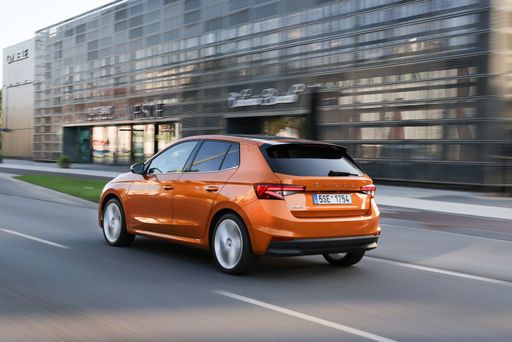
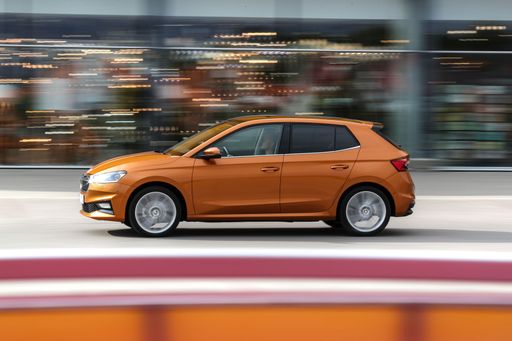
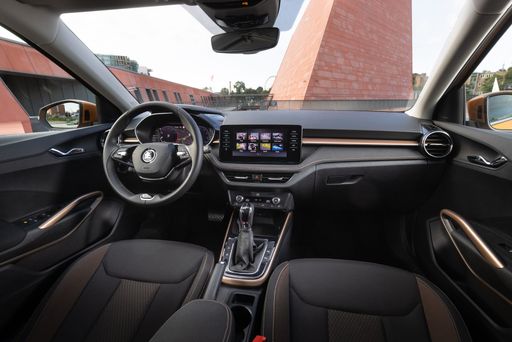
@ Škoda Auto a.s. / Škoda Storyboard
VS

Hyundai Bayon vs Skoda Fabia – Which model is better for everyday use?

Both models have their strengths – but which one suits you more?
Compare performance, efficiency, price and space directly: Hyundai Bayon or Skoda Fabia?

Bayon @ Hyundai Motor Company

The Urban Warriors: Hyundai Bayon VS Skoda Fabia

In the world of compact and versatile automobiles, the Hyundai Bayon and the Skoda Fabia emerge as strong contenders. With their unique appeal, impressive technical specifications, and innovative features, choosing the right fit for urban driving requires a closer look at both options. Let’s dive into the specifics and see how these two popular models stack up against each other.
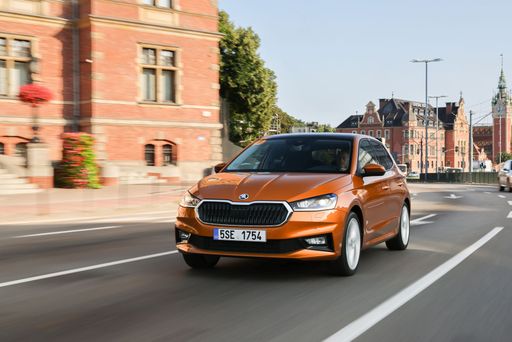
Fabia @ Škoda Auto a.s. / Škoda Storyboard

Design and Body: Compact Stylishness

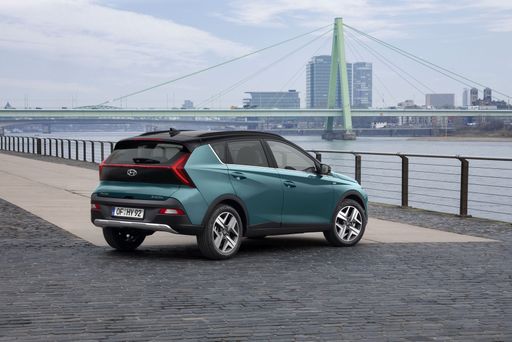
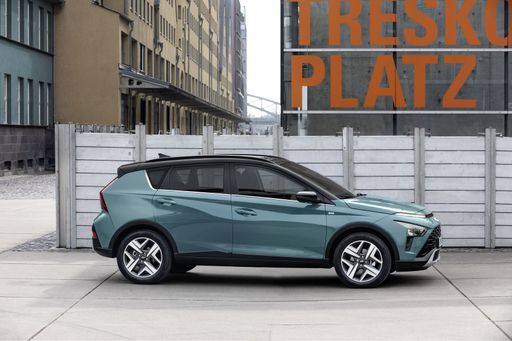
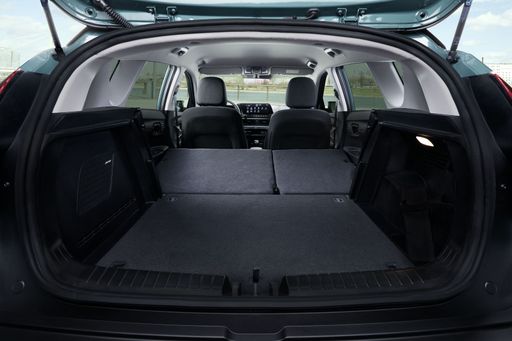
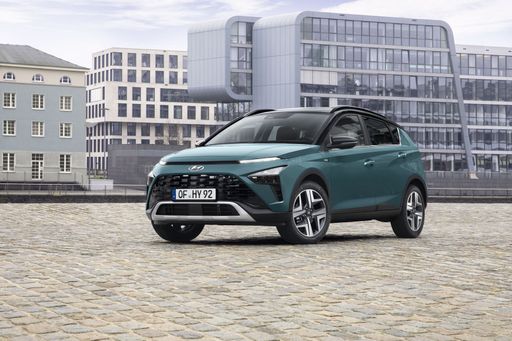
The Hyundai Bayon, with its SUV body type, exudes a robust and sporty presence thanks to its dimensions of 4180 mm in length, 1775 mm in width, and 1500 mm in height. It offers ample space with a trunk capacity of 411 liters, making it ideal for both city commutes and weekend getaways. On the other hand, the Skoda Fabia, a hatchback, appeals with its sleek design, slightly shorter in length at 4108 mm but similarly spacious with a trunk capacity of 380 liters.

Bayon @ Hyundai Motor Company

Engine Performance: Power vs. Efficiency

The Hyundai Bayon is equipped with a 998 cm3, three-cylinder petrol engine that delivers 100 HP (74 kW) of power and offers a smooth driving experience with a dual option of manual and dual-clutch automatic transmission. Whether manual or automatic, the Bayon achieves a 0-100 km/h acceleration in just under 12.4 seconds and boasts a top speed of 179 km/h.

Conversely, the Skoda Fabia offers a broader range of power options, starting from 80 HP and going up to 150 HP. Its engine options include both three and four-cylinder variants, with engine capacities ranging from 999 cm3 to 1498 cm3. The Fabia can accelerate from 0 to 100 km/h in as fast as 8 seconds while reaching maximum speeds of up to 225 km/h in its higher trims.

Fabia @ Škoda Auto a.s. / Škoda Storyboard

Fuel Efficiency and Environmental Impact

When it comes to fuel efficiency, the Bayon offers a consumption rate of 5.4 L/100 km and a CO2 emission of 122 g/km, classifying it in the D CO2 efficiency class. The Fabia, meanwhile, is more diverse in its consumption figures depending on the engine choice, ranging from 5 to 5.5 L/100 km, with a CO2 emission as low as 112 g/km, earning some variants a C class in CO2 efficiency.

Bayon @ Hyundai Motor Company

Drive Comfort and Features

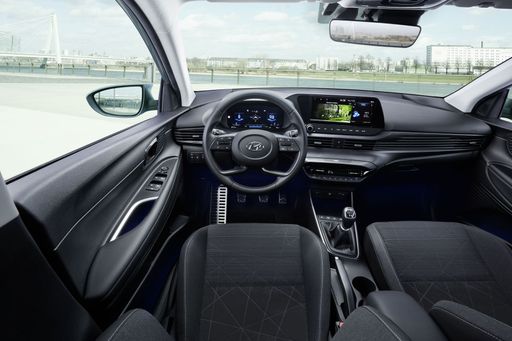
Both the Hyundai Bayon and the Skoda Fabia come with a front-wheel drive, presenting a similar driving feel that's well-suited for urban environments. Each model seats five passengers, offering comfort-driven interiors with modern technology and infotainment systems tailored for today's needs.

The Bayon emphasizes a higher driving position typical of SUVs, enhancing visibility and road presence, whereas the Fabia's hatchback style appeals to those looking for nimble maneuvering and compact simplicity without compromising on interior comfort.

Fabia @ Škoda Auto a.s. / Škoda Storyboard

Conclusion: Choosing Your Urban Companion

The choice between the Hyundai Bayon and the Skoda Fabia boils down to personal preference and individual needs. The Bayon stands out for those seeking an SUV's practicality and higher riding experience without excessive bulk. In contrast, the Fabia caters to a wider performance range and the elegant simplicity of a hatchback format, ideal for those prioritizing engine variety and dynamic driving.

Both vehicles promise reliability and efficiency with their 2024 models, leaving the decision to be made according to lifestyle, driving preferences, and performance demand.

Here’s where it gets real: The technical differences in detail

Bayon @ Hyundai Motor Company

Costs and Efficiency:

Price and efficiency are key factors when choosing a car – and this is often where the real differences emerge.

Skoda Fabia has a to a small extent advantage in terms of price – it starts at 16900 £, while the Hyundai Bayon costs 20100 £. That’s a price difference of around 3180 £.

Fuel consumption also shows a difference: Skoda Fabia manages with 4.90 L and is therefore somewhat more efficient than the Hyundai Bayon with 5.40 L. The difference is about 0.50 L per 100 km.

Fabia @ Škoda Auto a.s. / Škoda Storyboard

Engine and Performance:

Power, torque and acceleration are the classic benchmarks for car enthusiasts – and here, some clear differences start to show.

When it comes to engine power, the Skoda Fabia has a convincingly edge – offering 177 HP compared to 100 HP. That’s roughly 77 HP more horsepower.

In acceleration from 0 to 100 km/h, the Skoda Fabia is significantly quicker – completing the sprint in 7.40 s, while the Hyundai Bayon takes 11.30 s. That’s about 3.90 s faster.

In terms of top speed, the Skoda Fabia performs distinct better – reaching 228 km/h, while the Hyundai Bayon tops out at 179 km/h. The difference is around 49 km/h.

There’s also a difference in torque: Skoda Fabia pulls to a small extent stronger with 250 Nm compared to 200 Nm. That’s about 50 Nm difference.

Bayon @ Hyundai Motor Company

Space and Everyday Use:

Whether family car or daily driver – which one offers more room, flexibility and comfort?

Both vehicles offer seating for 5 people.

In curb weight, Skoda Fabia is slight lighter – 1143 kg compared to 1170 kg. The difference is around 27 kg.

In terms of boot space, the Hyundai Bayon offers slight more room – 411 L compared to 380 L. That’s a difference of about 31 L.

In maximum load capacity, the Hyundai Bayon performs minimal better – up to 1205 L, which is about 15 L more than the Skoda Fabia.

When it comes to payload, Hyundai Bayon barely noticeable takes the win – 465 kg compared to 437 kg. That’s a difference of about 28 kg.

Who comes out on top?

Overall, the Skoda Fabia shows itself to be wins the duel decisively and secures the title of DriveDuel Champion.
It convinces with the more balanced overall package and proves to be the more versatile choice for everyday use.

from about £16,900
Fabia @ Škoda Auto a.s. / Škoda Storyboard

Skoda Fabia

  • Engine Type : Petrol
  • Transmission : Manuel, Automatic
  • Drive Type : Front-Wheel Drive
  • Power HP : 80 - 177 HP
  • Consumption L/100km : 4.9 - 5.6 L

Hyundai Bayon

The Hyundai Bayon is a compact crossover that effortlessly merges practicality with modern design. Its sleek exterior and spacious interior make it an ideal choice for urban settings and longer journeys alike. With a focus on comfort and connectivity, this vehicle provides a smooth driving experience paired with advanced technology features.

details

Skoda Fabia

The Skoda Fabia is a clever, no-nonsense small car that turns everyday chores into a breeze thanks to smart packaging and a surprisingly roomy cabin. It won’t set your pulses racing, but it’s a consistently sensible choice — reliable, easy to live with and blessed with a few neat tricks that make city life less faff.

details
Hyundai Bayon
Skoda Fabia
Bayon @ Hyundai Motor Company
Fabia @ Škoda Auto a.s. / Škoda Storyboard

Costs and Consumption

Price
20100 - 25800 £
Price
16900 - 30500 £
Consumption L/100km
5.4 - 5.5 L
Consumption L/100km
4.9 - 5.6 L
Consumption kWh/100km
-
Consumption kWh/100km
-
Electric Range
-
Electric Range
-
Battery Capacity
-
Battery Capacity
-
co2
124 g/km
co2
112 - 126 g/km
Fuel tank capacity
40 L
Fuel tank capacity
40 L

Dimensions and Body

Body Type
SUV
Body Type
Hatchback
Seats
5
Seats
5
Doors
5
Doors
5
Curb weight
1170 - 1195 kg
Curb weight
1143 - 1278 kg
Trunk capacity
411 L
Trunk capacity
380 L
Length
4180 mm
Length
4108 - 4137 mm
Width
1775 mm
Width
1780 mm
Height
1500 mm
Height
1458 - 1461 mm
Max trunk capacity
1205 L
Max trunk capacity
1190 L
Payload
460 - 465 kg
Payload
402 - 437 kg

Engine and Performance

Engine Type
Petrol
Engine Type
Petrol
Transmission
Manuel, Automatic
Transmission
Manuel, Automatic
Transmission Detail
Manual Gearbox, Dual-Clutch Automatic
Transmission Detail
Manual Gearbox, Dual-Clutch Automatic
Drive Type
Front-Wheel Drive
Drive Type
Front-Wheel Drive
Power HP
100 HP
Power HP
80 - 177 HP
Acceleration 0-100km/h
11.3 - 12.4 s
Acceleration 0-100km/h
7.4 - 15.7 s
Max Speed
176 - 179 km/h
Max Speed
175 - 228 km/h
Torque
172 - 200 Nm
Torque
93 - 250 Nm
Number of Cylinders
3
Number of Cylinders
3 - 4
Power kW
74 kW
Power kW
59 - 130 kW
Engine capacity
998 cm3
Engine capacity
999 - 1498 cm3

General

Model Year
2024
Model Year
2025
CO2 Efficiency Class
D
CO2 Efficiency Class
D, C
Brand
Hyundai
Brand
Skoda
What drivetrain options does the Hyundai Bayon have?

The Hyundai Bayon is available as Front-Wheel Drive.

The prices and data displayed are estimates based on German list prices and may vary by country. This information is not legally binding.