VS

Hyundai i10 vs Toyota Corolla comparison

Compare performance (90 HP vs 178 HP), boot space and price (14,600 £ vs 28,600 £ ) at a glance. Find out which car is the better choice for you – Hyundai i10 or Toyota Corolla?

Hyundai i10 vs Toyota Corolla: Key differences

Hyundai i10

5 (1 Reviews)
rate
  • substantially cheaper
  • clearly lighter

Toyota Corolla

5 (1 Reviews)
rate
  • clearly more power
  • somewhat more efficient
  • clearly quicker 0–100 km/h
  • clearly more trunk space

All details on performance, efficiency, range and trunk space can be found in the technical comparison below – including user reviews for both models.

i10

Hyundai i10 vs Toyota Corolla: An Urban Hatchback Showdown

The two giants in the automotive compact car sector, the Hyundai i10 and the Toyota Corolla, showcase impressive features for urban travelers. While both cater to hatchback enthusiasts, they bring unique strengths to the table. Let's dive into the technical aspects and innovations these vehicles offer and find out which one might suit your needs.
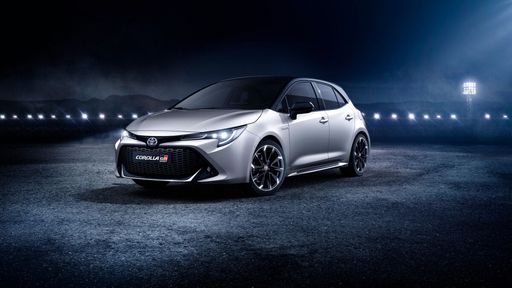
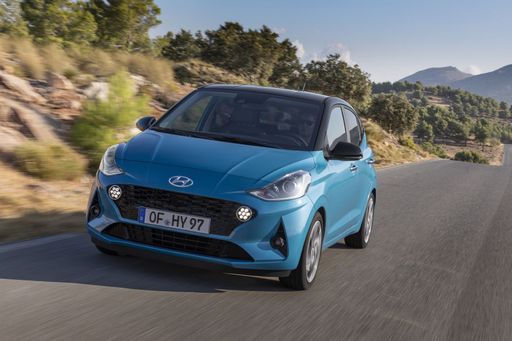
Corolla

Engine and Performance

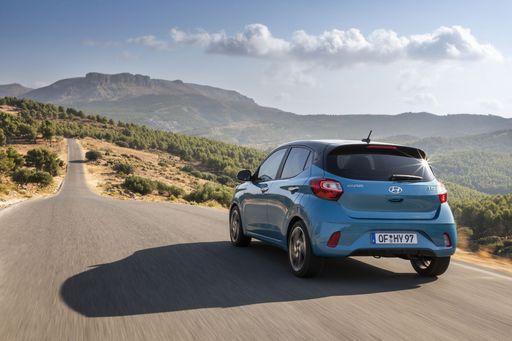
The Hyundai i10 comes with a choice of 1.0L and 1.2L petrol engines, providing power outputs ranging from 63 HP to 90 HP. The car's acceleration varies, with the fastest model reaching 0-100 km/h in 11.4 seconds. The i10's efficiency ranges from 4.9 to 5.4 L/100km, marking its place as an economical option for daily commuting.

On the other hand, the Toyota Corolla offers a more powerful package with full hybrid engines producing between 140 HP and 196 HP. With a commendable 0-100 km/h acceleration in as quick as 7.5 seconds, it's clear that the Corolla is designed for those seeking a bit more zip. Its hybrid engine ensures lower fuel consumption, ranging between 4.4 to 4.6 L/100km, aligning with eco-friendly driving.

i10

Dimensions and Capacity

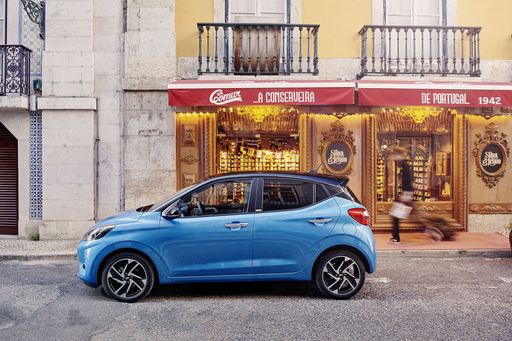
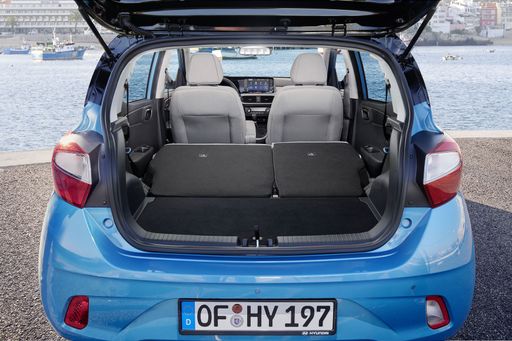
The Hyundai i10 is compact and practical, measuring around 3670 to 3675 mm in length, 1680 mm in width, and a height of about 1480 to 1483 mm. With a trunk capacity of 252 liters, it's designed to make urban parking a breeze while offering sufficient space for daily errands.

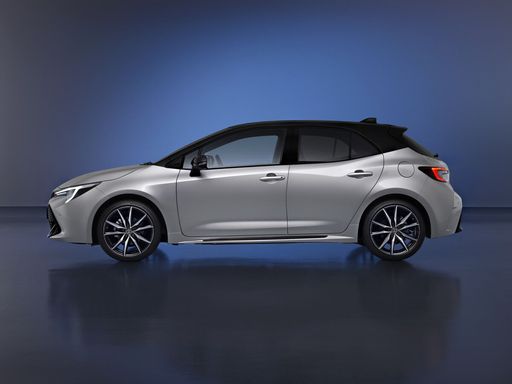
The Corolla, notably longer and wider, stretches to 4370 mm in length and 1790 mm in width with a height of 1435 mm. The trunk space is noticeably larger, offering between 313 to 361 liters. Its expanded dimensions and capacity cater to individuals needing a balance of city agility and extra storage for larger shopping trips or family outings.

Corolla

Technological Innovations

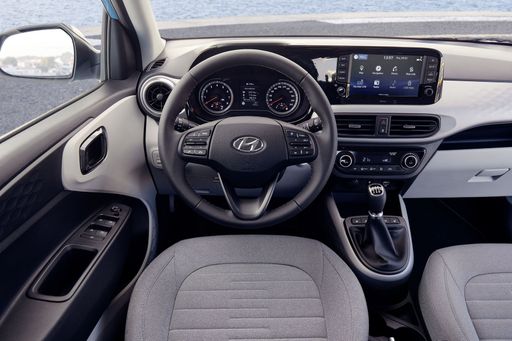
Hyundai i10 is equipped with modern connectivity options, intending to provide a seamless driving experience. With the convenience of a choice between manual and automated manual transmissions, it offers drivers an engaging or relaxed drive, aligned with preferences.

The Toyota Corolla takes innovation a step further with its CVT automatic transmission designed for a smooth journey. As a hybrid, it also appeals to the environmentally conscious driver, thanks to low CO2 emissions of 100 g/km. Additional features may include advanced infotainment systems and comprehensive safety technologies, setting new benchmarks in urban mobility.

i10

Conclusion

While the Hyundai i10 represents affordability and efficiency for city drivers looking for an agile and straightforward car, the Toyota Corolla offers a more robust drive with eco-efficiency thanks to its hybrid engine. Your choice between these two may rest on whether you prioritize budget and compactness or seek a blend of performance and sustainability. Either way, both models successfully cater to the modern consumer's needs.

Here’s where it gets real: The technical differences in detail

i10

Costs and Efficiency:

Price and efficiency are key factors when choosing a car – and this is often where the real differences emerge.

Hyundai i10 is substantially cheaper – starting at 14,600 £ , while the Toyota Corolla costs 28,600 £ . That’s a price difference of around 14,015 £.

Fuel consumption also shows a difference: the Toyota Corolla uses 4.4 L/100km and is somewhat more efficient than the Hyundai i10 with 4.9 L/100km. The difference is about 0.5 L/100km.

Corolla

Engine and Performance:

Power, torque and acceleration say a lot about how a car feels on the road. This is where you see which model delivers more driving dynamics.

When it comes to engine power, the Toyota Corolla offers clearly more power – delivering 178 HP compared to 90 HP. That’s roughly 88 HP more horsepower.

When accelerating from 0 to 100 km/h, the Toyota Corolla is clearly quicker – completing the sprint in 7.5 s, while the Hyundai i10 takes 11.4 s. That’s about 3.9 s quicker.

Looking at top speed, the Toyota Corolla is very slightly faster – reaching 180 km/h, while the Hyundai i10 tops out at 175 km/h. The difference is around 5 km/h.

i10

Space and Everyday Use:

Whether family car or daily driver – which one offers more room, flexibility and comfort?

Both vehicles offer seating for 5 people.

In terms of curb weight, Hyundai i10 is clearly lighter – 996 kg compared to 1,420 kg. The difference is around 424 kg.

Looking at boot space, the Toyota Corolla offers clearly more boot space – 361 L compared to 252 L. That’s a difference of about 109 L.

For maximum load capacity, the Toyota Corolla offers marginally more capacity – up to 1,052 L, about 2 L more than the Hyundai i10.

When it comes to payload, the Toyota Corolla carries very slightly more – 450 kg compared to 423 kg. That’s a difference of about 27 kg.

Who wins the race in the data check?

The Toyota Corolla is clearly superior overall in the objective data comparison.
This result only shows which model scores more points on paper – not which of the two cars feels right for you.

from £28,600
Corolla

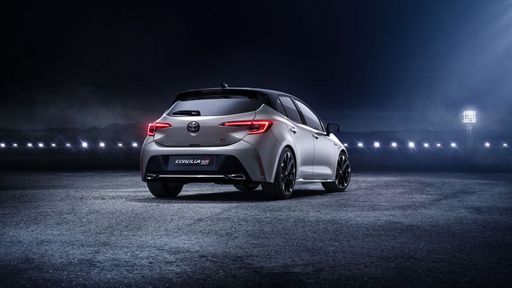
Toyota Corolla

  • Engine Type : Full Hybrid
  • Transmission : Automatic
  • Drive Type : Front-Wheel Drive
  • Power HP : 140 - 178 HP
  • Consumption L/100km : 4.4 L/100km
Hyundai i10
Toyota Corolla

Costs and Consumption

View detailed analysis

Engine and Performance

View detailed analysis

Dimensions and Body

View detailed analysis

Hyundai i10

The Hyundai i10 is a cheeky city car that squeezes big-car confidence into a pocket-friendly package, carving through tight streets with surprising composure and sensible practicality. For buyers after low fuss, sensible equipment and wallet-friendly running costs, it's a smart, no-nonsense pick that makes sense whether you're a first-time driver or need a reliable second car.

details

Toyota Corolla

The Toyota Corolla remains the steady, no-nonsense compact that puts reliability and low running costs at the top of your shopping list, with a comfortable, well-built interior that won't embarrass you at the supermarket. It won't set your pulse racing, but it's an honest, easy-to-live-with car that makes smart sense for buyers who want dependability and sensible value with a dash of modern tech.

details
Hyundai i10
Toyota Corolla

Costs and Consumption

Price
14,600 - 19,000 £
Price
28,600 - 34,900 £
Consumption L/100km
4.9 - 5.5 L/100km
Consumption L/100km
4.4 L/100km
Consumption kWh/100km
-
Consumption kWh/100km
-
Electric Range
-
Electric Range
-
Battery Capacity
-
Battery Capacity
-
co2
110 - 124 g/km
co2
100 g/km
Fuel tank capacity
36 L
Fuel tank capacity
43 L

Dimensions and Body

Body Type
Hatchback
Body Type
Hatchback
Seats
4 - 5
Seats
5
Doors
5
Doors
5
Curb weight
996 - 1,099 kg
Curb weight
1,420 - 1,460 kg
Trunk capacity
252 L
Trunk capacity
313 - 361 L
Length
3,670 - 3,675 mm
Length
4,370 mm
Width
1,680 mm
Width
1,790 mm
Height
1,480 - 1,483 mm
Height
1,435 mm
Max trunk capacity
1,050 L
Max trunk capacity
1,004 - 1,052 L
Payload
344 - 423 kg
Payload
400 - 450 kg

Engine and Performance

Engine Type
Petrol
Engine Type
Full Hybrid
Transmission
Manuel, Automatic
Transmission
Automatic
Transmission Detail
Manual Gearbox, Automated Manual
Transmission Detail
CVT
Drive Type
Front-Wheel Drive
Drive Type
Front-Wheel Drive
Power HP
63 - 90 HP
Power HP
140 - 178 HP
Acceleration 0-100km/h
11.4 - 18.4 s
Acceleration 0-100km/h
7.5 - 9.2 s
Max Speed
143 - 175 km/h
Max Speed
180 km/h
Torque
93 - 172 Nm
Torque
-
Number of Cylinders
3 - 4
Number of Cylinders
4
Power kW
46 - 66 kW
Power kW
103 - 131 kW
Engine capacity
998 - 1,197 cm3
Engine capacity
1,798 - 1,987 cm3

General

Model Year
2,024
Model Year
2,025
CO2 Efficiency Class
C, D
CO2 Efficiency Class
C
Brand
Hyundai
Brand
Toyota
DriveDuel uses data analysis and artificial intelligence to evaluate vehicle data and create content. Content is regularly reviewed and improved. The displayed prices are estimates based on German list prices, adjusted to the respective country’s VAT. Country-specific registration taxes are not included. This information is not legally binding.