VS

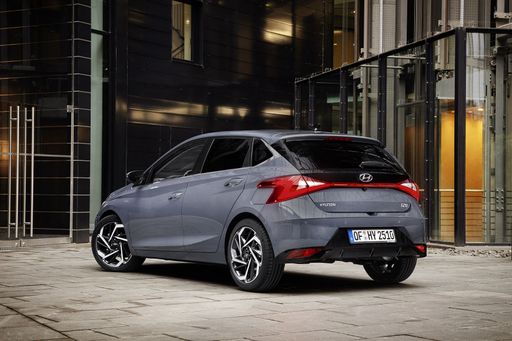
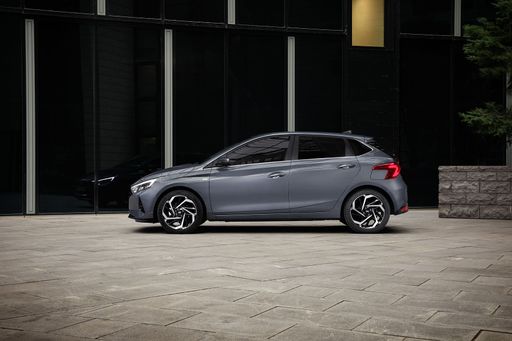
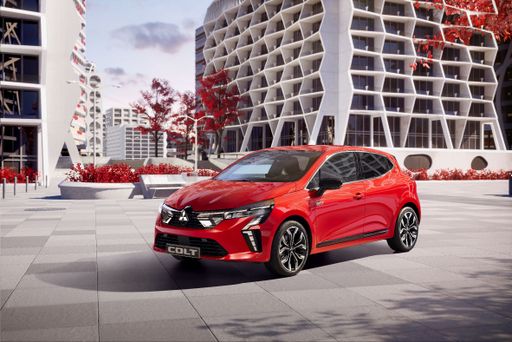
Hyundai i20 vs Mitsubishi Colt - Differences and prices compared

Compare performance (90 HP vs 143 HP), boot space and price (18600 £ vs 18200 £ ) at a glance. Find out which car is the better choice for you – Hyundai i20 or Mitsubishi Colt?

i20

The Battle of Hatchbacks: Hyundai i20 vs Mitsubishi Colt

In the competitive world of compact hatchbacks, the Hyundai i20 and Mitsubishi Colt have been turning heads with their blend of style, efficiency, and cutting-edge technology. These small but mighty vehicles are perfect for urban adventurers and eco-conscious drivers alike. Let's dive into a detailed comparison, assessing their technical features and innovations.
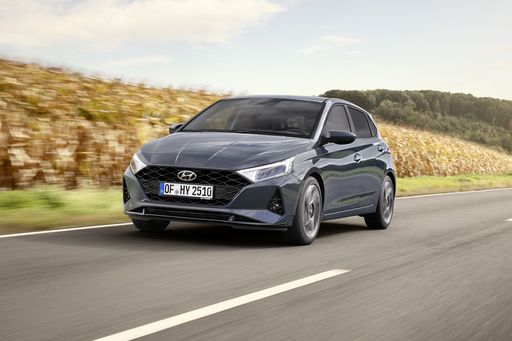
i20

Performance and Powertrain

The Hyundai i20 comes with a choice of Petrol MHEV and Petrol engines, offering versatility with a Dual-Clutch Automatic or Manual Gearbox. The engine power ranges from 79 HP to 100 HP, translating to a smooth drive with top speeds between 166 and 183 km/h. The torque varies from 113 Nm to 200 Nm across different variants, ensuring a responsive and energetic performance.

On the other hand, the Mitsubishi Colt provides a diverse powertrain lineup, including Petrol and Full Hybrid engines. It features Manual and Automatic transmissions, with engine power options spanning from 67 HP to 143 HP. The top speed for the Colt caps at 174 km/h, with torque figures ranging from 95 Nm to 160 Nm. The Full Hybrid variant distinguishes itself with enhanced fuel efficiency and eco-friendliness.

i20

Fuel Efficiency

Both hatchbacks cater to budget-conscious drivers with excellent fuel efficiency. The Hyundai i20 boasts a fuel consumption of 5.1 to 5.3 L/100km, while the Mitsubishi Colt offers similar consumption at 4.2 to 5.4 L/100km, particularly impressive in the hybrid variant.

i20

Interior and Comfort

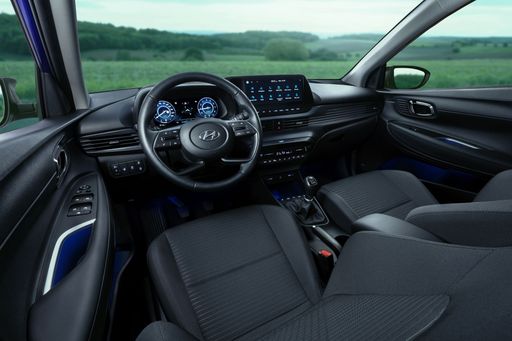
Inside, both cars comfortably seat five passengers. The Hyundai i20 offers a spacious trunk with a capacity of 352 liters, making it ideal for everyday errands and weekend getaways. The Mitsubishi Colt, with its trunk capacity ranging from 301 to 391 liters, offers flexibility in its various models, catering to diverse hauling needs.

The Hyundai i20 is slightly larger in dimensions, providing a bit more room with a length of 4075 mm, width of 1775 mm, and height of 1455 mm. Comparatively, the Mitsubishi Colt's dimensions are compact with a length of 4053 mm, width of 1798 mm, and height of 1439 mm, making it a perfect fit for tight parking spaces.

i20

Technical and Safety Innovations

Hyundai consistently integrates smart technology in their vehicles, and the i20 is no exception. It comes equipped with modern driver-assistance systems, connectivity options, and efficient energy management in its MHEV variant.

Mitsubishi incorporates advanced safety features and eco-technologies in the Colt, especially in the Full Hybrid variant. This ensures not only a sustainable driving experience but also a safe one, thanks to its comprehensive array of safety systems.

Conclusion: Making the Choice

In conclusion, both the Hyundai i20 and Mitsubishi Colt have proven to be commendable hatchbacks that address different driver preferences. The i20 is geared towards those seeking a balance of performance with mild hybrid efficiency, while the Colt shines with its Full Hybrid technology and varied powertrain options.

Ultimately, the choice between these two stylish models depends on individual priorities—be it innovative hybrid technology, performance prowess, or inner-city maneuverability. Both brands continue to push the envelope, setting new benchmarks in the compact car category.

Hyundai i20

4 (1 Reviews)
rate

Mitsubishi Colt

You can find all user reviews further down on this page.

Here’s where it gets real: The technical differences in detail

Costs and Efficiency:

Price and efficiency are often the first things buyers look at. Here it becomes clear which model has the long-term edge – whether at the pump, the plug, or in purchase price.

Mitsubishi Colt has a hardly perceptible advantage in terms of price – it starts at 18200 £ , while the Hyundai i20 costs 18600 £ . That’s a price difference of around 438 £.

Fuel consumption also shows a difference: Mitsubishi Colt manages with 4.20 L and is therefore clearly perceptible more efficient than the Hyundai i20 with 5.70 L. The difference is about 1.50 L per 100 km.

Engine and Performance:

Power, torque and acceleration say a lot about how a car feels on the road. This is where you see which model delivers more driving dynamics.

When it comes to engine power, the Mitsubishi Colt has a noticeable edge – offering 143 HP compared to 90 HP. That’s roughly 53 HP more horsepower.

In acceleration from 0 to 100 km/h, the Mitsubishi Colt is evident quicker – completing the sprint in 9.30 s, while the Hyundai i20 takes 11.50 s. That’s about 2.20 s faster.

There’s also a difference in torque: Hyundai i20 pulls minimal stronger with 172 Nm compared to 160 Nm. That’s about 12 Nm difference.

Space and Everyday Use:

Cabin size, boot volume and payload all play a role in everyday practicality. Here, comfort and flexibility make the difference.

Both vehicles offer seating for 5 people.

In curb weight, Hyundai i20 is barely noticeable lighter – 1145 kg compared to 1189 kg. The difference is around 44 kg.

In terms of boot space, the Mitsubishi Colt offers slight more room – 391 L compared to 352 L. That’s a difference of about 39 L.

When it comes to payload, Hyundai i20 to a small extent takes the win – 465 kg compared to 385 kg. That’s a difference of about 80 kg.

Who wins the race in the data check?

The Mitsubishi Colt holds a decisive overall lead in the objective data comparison.
This result only shows which model scores more points on paper – not which of the two cars feels right for you.

Hyundai i20
Mitsubishi Colt

Costs and Consumption

View detailed analysis

Engine and Performance

View detailed analysis

Dimensions and Body

View detailed analysis
from about £18,200
default

Mitsubishi Colt

  • Engine Type : Petrol, Full Hybrid
  • Transmission : Manuel, Automatic
  • Drive Type : Front-Wheel Drive
  • Power HP : 91 - 143 HP
  • Consumption L/100km : 4.2 - 5.3 L

Hyundai i20

4 (1 Reviews)
rate

The Hyundai i20 is a cheeky small car that mixes smart styling with sensible practicality, feeling more polished and roomy than you might expect for the money. It’s an easy car to live with, offering engaging handling, a comfy cabin and useful equipment that make daily commutes and weekend errands notably less dull.

details

Mitsubishi Colt

The Mitsubishi Colt is a compact city hatch that blends sensible practicality with cheeky, no-nonsense styling, making it a confident companion for tight streets and daily errands. It may not be a playground for driving purists, but its easy-to-live-with manners, modest running costs and surprisingly roomy cabin make it a smart, sensible pick for urban buyers who value reliability over showmanship.

details
Hyundai i20
Mitsubishi Colt

Costs and Consumption

Price
18600 - 24000 £
Price
18200 - 25000 £
Consumption L/100km
5.70 L
Consumption L/100km
4.2 - 5.3 L
Consumption kWh/100km
-
Consumption kWh/100km
-
Electric Range
-
Electric Range
-
Battery Capacity
-
Battery Capacity
-
co2
128 - 129 g/km
co2
96 - 119 g/km
Fuel tank capacity
-
Fuel tank capacity
39 - 42 L

Dimensions and Body

Body Type
Hatchback
Body Type
Hatchback
Seats
5
Seats
5
Doors
-
Doors
5
Curb weight
1145 - 1170 kg
Curb weight
1189 - 1380 kg
Trunk capacity
352 L
Trunk capacity
301 - 391 L
Length
-
Length
4053 mm
Width
1775 mm
Width
1798 mm
Height
-
Height
1439 mm
Max trunk capacity
-
Max trunk capacity
979 - 1069 L
Payload
455 - 465 kg
Payload
381 - 385 kg

Engine and Performance

Engine Type
Petrol
Engine Type
Petrol, Full Hybrid
Transmission
Manuel, Automatic
Transmission
Manuel, Automatic
Transmission Detail
Manual Gearbox, Dual-Clutch Automatic
Transmission Detail
Manual Gearbox, Automatic Gearbox
Drive Type
Front-Wheel Drive
Drive Type
Front-Wheel Drive
Power HP
90 HP
Power HP
91 - 143 HP
Acceleration 0-100km/h
11.5 - 12.8 s
Acceleration 0-100km/h
9.3 - 12.2 s
Max Speed
-
Max Speed
174 km/h
Torque
172 Nm
Torque
148 - 160 Nm
Number of Cylinders
3
Number of Cylinders
3 - 4
Power kW
66 kW
Power kW
67 - 105 kW
Engine capacity
998 cm3
Engine capacity
999 - 1598 cm3

General

Model Year
2025
Model Year
2023 - 2025
CO2 Efficiency Class
D
CO2 Efficiency Class
D, C
Brand
Hyundai
Brand
Mitsubishi
What drivetrain options does the Hyundai i20 have?

The Hyundai i20 is offered with Front-Wheel Drive.

The prices shown are estimates based on German list prices, adjusted for local VAT. Local registration taxes (e.g. NoVA, BPM or CO2 malus) are not included. This information is not legally binding.