
 Deutschland
 France
 Nederland
 Great Britain
 Sverige
 Norge
Norge Danmark
 Suomi
Suomi Italia
 Polska
 España
VS
Hyundai i20 vs Porsche 911 Convertible – Which one offers the better deal?
Everyday use, family trips or long-distance drives – here’s where the differences show.
Discover whether Hyundai i20 or Porsche 911 Convertible fits your lifestyle better.
i20
@ Hyundai Motor Company
Costs and Efficiency:
Price and efficiency are often the first things buyers look at. Here it becomes clear which model has the long-term edge – whether at the pump, the plug, or in purchase price.
Hyundai i20 has a clearly advantage in terms of price – it starts at 17400 £, while the Porsche 911 Convertible costs 122400 £. That’s a price difference of around 105000 £.
Fuel consumption also shows a difference: Hyundai i20 manages with 5.20 L and is therefore convincingly more efficient than the Porsche 911 Convertible with 10.30 L. The difference is about 5.10 L per 100 km.
i20
@ Hyundai Motor Company
Engine and Performance:
Under the bonnet, it becomes clear which model is tuned for sportiness and which one takes the lead when you hit the accelerator.
When it comes to engine power, the Porsche 911 Convertible has a significantly edge – offering 711 HP compared to 100 HP. That’s roughly 611 HP more horsepower.
In acceleration from 0 to 100 km/h, the Porsche 911 Convertible is significantly quicker – completing the sprint in 2.60 s, while the Hyundai i20 takes 11.10 s. That’s about 8.50 s faster.
In terms of top speed, the Porsche 911 Convertible performs clearly better – reaching 322 km/h, while the Hyundai i20 tops out at 183 km/h. The difference is around 139 km/h.
There’s also a difference in torque: Porsche 911 Convertible pulls convincingly stronger with 800 Nm compared to 200 Nm. That’s about 600 Nm difference.
i20
@ Hyundai Motor Company
Space and Everyday Use:
Cabin size, boot volume and payload all play a role in everyday practicality. Here, comfort and flexibility make the difference.
Seats: Hyundai i20 offers somewhat more seating capacity – 5 vs 4.
In curb weight, Hyundai i20 is convincingly lighter – 1088 kg compared to 1655 kg. The difference is around 567 kg.
In terms of boot space, the Hyundai i20 offers clearly more room – 352 L compared to 163 L. That’s a difference of about 189 L.
When it comes to payload, Hyundai i20 evident takes the win – 472 kg compared to 345 kg. That’s a difference of about 127 kg.
Who wins the race?
The Hyundai i20 proves to be leaves the rival little chance and therefore becomes our DriveDuel Champion!
Hyundai i20 is the better all-rounder in this comparison.
from about £17,400
 @ Hyundai Motor Company
Hyundai i20
Hyundai i20
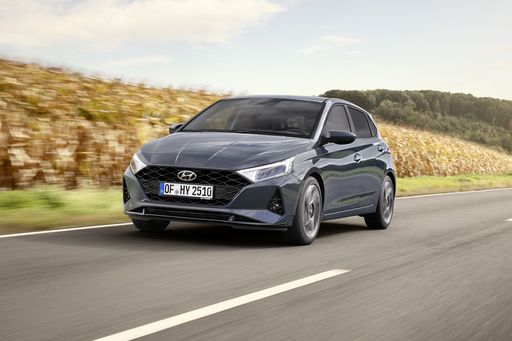
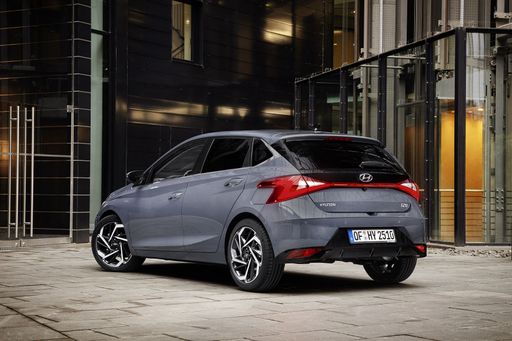
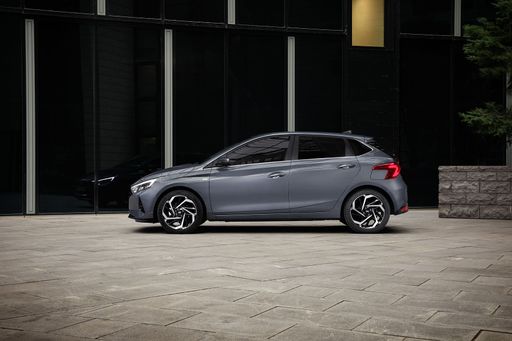
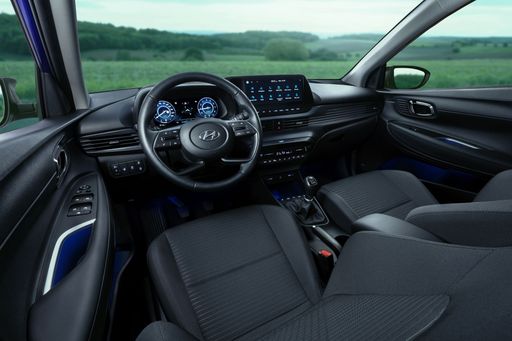
The Hyundai i20 is a cheeky small car that mixes smart styling with sensible practicality, feeling more polished and roomy than you might expect for the money. It’s an easy car to live with, offering engaging handling, a comfy cabin and useful equipment that make daily commutes and weekend errands notably less dull.
details
@ Hyundai Motor Company
 @ Hyundai Motor Company
 @ Hyundai Motor Company
 @ Hyundai Motor Company
 @ Hyundai Motor Company
Porsche 911 Convertible
The Porsche 911 Cabrio is a stunning blend of timeless design and exhilarating performance. With its sleek lines and convertible roof, this model seamlessly combines the thrill of open-air driving with the precision and heritage of the Porsche brand. The interior exudes luxury, providing both driver and passenger with an unmatched sense of elegance and comfort.
details
Hyundai i20
Porsche 911 Convertible
|
@ Hyundai Motor Company
|
|
|
|
|
Costs and Consumption |
|
|---|---|
|
Price
17400 - 24000 £
|
Price
122400 - 244500 £
|
|
Consumption L/100km
5.2 - 5.3 L
|
Consumption L/100km
10.3 - 11.7 L
|
|
Consumption kWh/100km
-
|
Consumption kWh/100km
-
|
|
Electric Range
-
|
Electric Range
-
|
|
Battery Capacity
-
|
Battery Capacity
-
|
|
co2
119 - 121 g/km
|
co2
234 - 265 g/km
|
|
Fuel tank capacity
40 L
|
Fuel tank capacity
63 L
|
Dimensions and Body |
|
|---|---|
|
Body Type
Hatchback
|
Body Type
Convertible
|
|
Seats
5
|
Seats
4
|
|
Doors
5
|
Doors
2
|
|
Curb weight
1088 - 1190 kg
|
Curb weight
1655 - 1900 kg
|
|
Trunk capacity
352 L
|
Trunk capacity
163 L
|
|
Length
4065 - 4075 mm
|
Length
4542 - 4553 mm
|
|
Width
1775 mm
|
Width
1852 - 1900 mm
|
|
Height
1450 - 1455 mm
|
Height
1292 - 1302 mm
|
|
Max trunk capacity
1165 L
|
Max trunk capacity
-
|
|
Payload
450 - 472 kg
|
Payload
275 - 345 kg
|
Engine and Performance |
|
|---|---|
|
Engine Type
Petrol
|
Engine Type
Petrol, Full Hybrid
|
|
Transmission
Automatic, Manuel
|
Transmission
Automatic, Manuel
|
|
Transmission Detail
Dual-Clutch Automatic, Manual Gearbox
|
Transmission Detail
Dual-Clutch Automatic, Manual Gearbox
|
|
Drive Type
Front-Wheel Drive
|
Drive Type
Rear-Wheel Drive, All-Wheel Drive
|
|
Power HP
79 - 100 HP
|
Power HP
394 - 711 HP
|
|
Acceleration 0-100km/h
11.1 - 13.7 s
|
Acceleration 0-100km/h
2.6 - 4.7 s
|
|
Max Speed
166 - 183 km/h
|
Max Speed
291 - 322 km/h
|
|
Torque
113 - 200 Nm
|
Torque
450 - 800 Nm
|
|
Number of Cylinders
3 - 4
|
Number of Cylinders
6
|
|
Power kW
58 - 74 kW
|
Power kW
290 - 523 kW
|
|
Engine capacity
998 - 1197 cm3
|
Engine capacity
2981 - 3591 cm3
|
General |
|
|---|---|
|
Model Year
2024
|
Model Year
2024 - 2026
|
|
CO2 Efficiency Class
D
|
CO2 Efficiency Class
G
|
|
Brand
Hyundai
|
Brand
Porsche
|
What drivetrain options does the Hyundai i20 have?
The Hyundai i20 is offered with Front-Wheel Drive.
The prices and data displayed are estimates based on German list prices and may vary by country. This information is not legally binding.