VS

Hyundai i30 vs MG MG3 comparison

Compare performance (150 HP vs 194 HP), boot space and price (24600 £ vs 15400 £ ) at a glance. Find out which car is the better choice for you – Hyundai i30 or MG MG3?

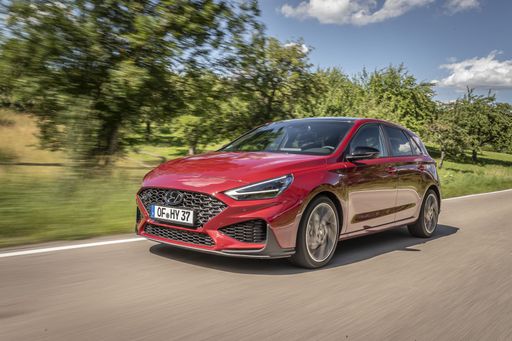
i30

The Battle of Hatchbacks: Hyundai i30 vs MG MG3

In the ever-competitive hatchback segment, the Hyundai i30 and the MG MG3 stand out for their blend of practicality, technology, and performance. Both models cater to a broad audience, offering a mix of efficiency and power. This article delves into the details of each vehicle to help you decide which hatchback might suit you best.
MG3

Performance and Powertrain

The Hyundai i30 offers a choice between petrol and mild-hybrid engines, ensuring a flexible selection for eco-conscious drivers or those who prefer traditional petrol power. Engine outputs range from 100 to 140 HP, with torque figures between 172-253 Nm. Depending on the configuration, the i30 can accelerate from 0-100 km/h in as low as 9.6 seconds, reaching a top speed of 197 km/h. Drivers can also choose between a manual gearbox and a dual-clutch automatic transmission, all configured with front-wheel drive ensuring a dynamic driving experience.

In contrast, the MG MG3 is available as both a petrol and a full hybrid variant, offering up to 194 HP and reaching 100 km/h in 8 seconds. This makes it the quicker of the two options in terms of straight-line speed. The MG MG3 utilizes either a manual or automatic gearbox, with power distributed to the front wheels.

i30

Fuel Efficiency and Environmental Impact

When it comes to fuel consumption, the MG3 takes the lead with its hybrid variant consuming just 4.4 L/100km, making it the more economical option in the longer run. Meanwhile, the Hyundai i30's consumption ranges from 5.6 to 5.9 L/100km. CO2 emissions from the MG3’s hybrid model are also significantly lower, giving it an edge in sustainability over the i30 which falls into CO2 efficiency class D.

MG3

Design and Practicality

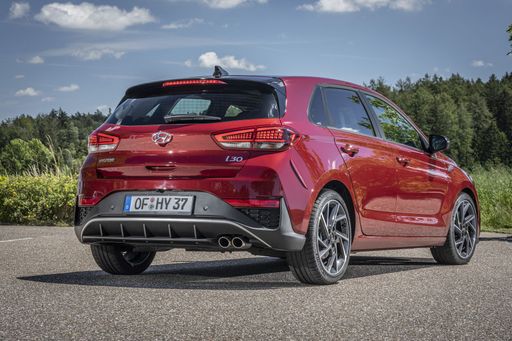
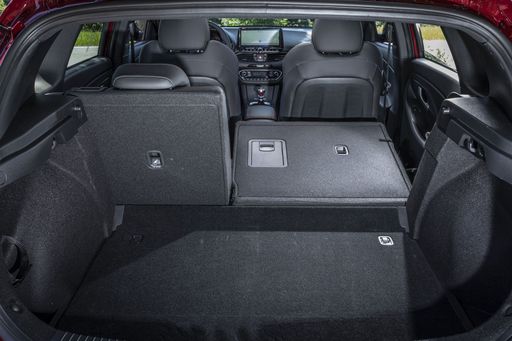
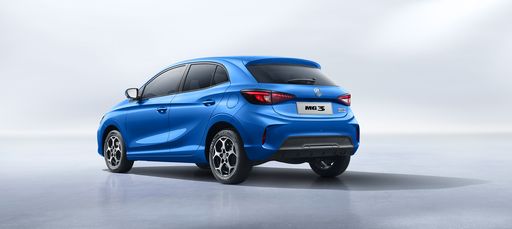
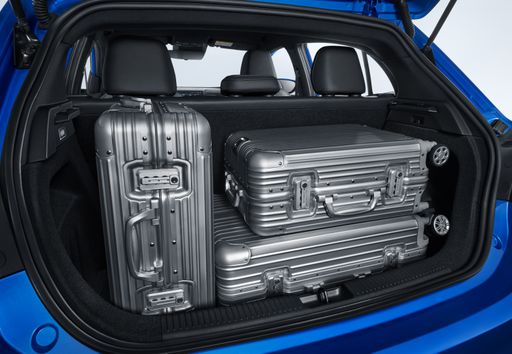
Hatchbacks are prized for their practicality and compact dimensions. The Hyundai i30 is slightly longer at 4340 mm, compared to the MG3's 4113 mm length, offering more interior space. The i30 boasts a larger trunk capacity with 395 liters against the MG3’s 293 liters, proving to be the more practical choice for those who need more storage space.

However, the MG3 does have a notable advantage in terms of payload, with a capacity of 448 kg versus the i30's best figure of 509 kg. Despite its smaller size, the MG3 can still hold its own when it comes to carrying capacity.

i30

Dimensions and Interior Comfort

The Hyundai i30 measures 1795 mm in width and 1455 mm in height, while the MG MG3 is slightly taller at 1502 mm but similar in width at 1797 mm. Both models are designed to seat five passengers comfortably, enhancing their appeal as practical family vehicles.

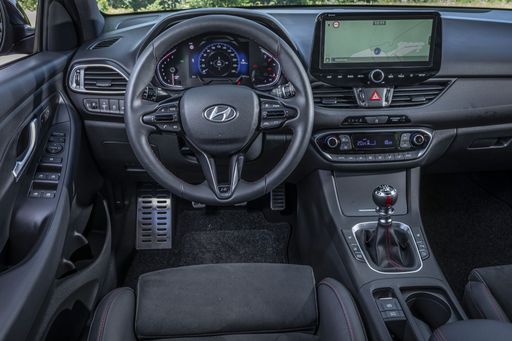
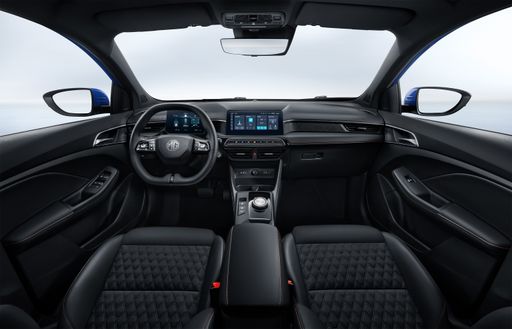
Interior comfort and build quality in the Hyundai i30 are often highlighted as superior, offering a more refined driving environment compared to the MG MG3’s straightforward and functional cabin design. However, the MG3 makes up for this with its user-friendly interface and modern tech features in the infotainment system.

MG3

Conclusion: Choosing Your Perfect Hatchback

The decision between the Hyundai i30 and the MG MG3 ultimately depends on individual priorities. If a larger interior and stylish cabin are important, the Hyundai i30 might be the better option. However, if fuel efficiency, environmental impact, and acceleration are more critical, then the MG3, particularly in its hybrid form, emerges as a strong contender.

Both vehicles offer compelling packages with advanced technological features and the reliability expected from their respective brands, making them both excellent choices in the hatchback market.

Hyundai i30 vs MG MG3: Key differences

Hyundai i30

4.4 (1 Reviews)
rate

MG MG3

5 (1 Reviews)
rate
  • decisively cheaper
  • noticeable more power
  • evident more efficient
  • somewhat quicker from 0–100 km/h
  • barely noticeable lighter

All details on performance, efficiency, range and trunk space can be found in the technical comparison below – including user reviews for both models.

Here’s where it gets real: The technical differences in detail

i30

Costs and Efficiency:

Price and efficiency are key factors when choosing a car – and this is often where the real differences emerge.

MG MG3 has a decisively advantage in terms of price – it starts at 15400 £ , while the Hyundai i30 costs 24600 £ . That’s a price difference of around 9137 £.

Fuel consumption also shows a difference: MG MG3 manages with 4.40 L and is therefore evident more efficient than the Hyundai i30 with 5.90 L. The difference is about 1.50 L per 100 km.

MG3

Engine and Performance:

Power, torque and acceleration are the classic benchmarks for car enthusiasts – and here, some clear differences start to show.

When it comes to engine power, the MG MG3 has a noticeable edge – offering 194 HP compared to 150 HP. That’s roughly 44 HP more horsepower.

In acceleration from 0 to 100 km/h, the MG MG3 is somewhat quicker – completing the sprint in 8 s, while the Hyundai i30 takes 8.90 s. That’s about 0.90 s faster.

There’s also a difference in torque: Hyundai i30 pulls clearly stronger with 250 Nm compared to 148 Nm. That’s about 102 Nm difference.

i30

Space and Everyday Use:

Whether family car or daily driver – which one offers more room, flexibility and comfort?

Both vehicles offer seating for 5 people.

In curb weight, MG MG3 is barely noticeable lighter – 1237 kg compared to 1315 kg. The difference is around 78 kg.

When it comes to payload, Hyundai i30 slight takes the win – 485 kg compared to 448 kg. That’s a difference of about 37 kg.

Who wins the race in the data check?

The MG MG3 sits well ahead of its rival in the objective data comparison.
This result only shows which model scores more points on paper – not which of the two cars feels right for you.

Hyundai i30
MG MG3

Costs and Consumption

View detailed analysis

Engine and Performance

View detailed analysis

Dimensions and Body

View detailed analysis
from about £15,400
MG3

MG MG3

  • Engine Type : Petrol, Full Hybrid
  • Transmission : Manuel, Automatic
  • Drive Type : Front-Wheel Drive
  • Power HP : 116 - 194 HP
  • Consumption L/100km : 4.4 - 6.1 L

Hyundai i30

4.4 (1 Reviews)
rate

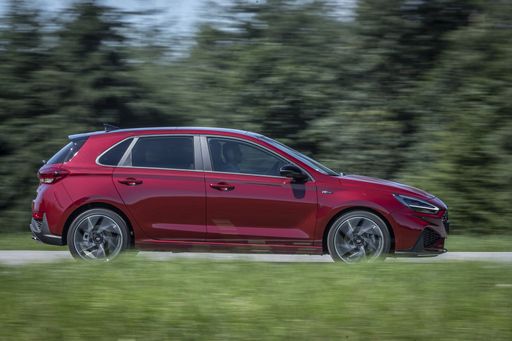
The Hyundai i30 proves that sensible can also be stylish, offering a confident driving character wrapped in neat, modern design. It serves up a roomy, well-equipped cabin and composed ride that make everyday motoring feel like a clever purchase rather than a compromise.

details

MG MG3

5 (1 Reviews)
rate

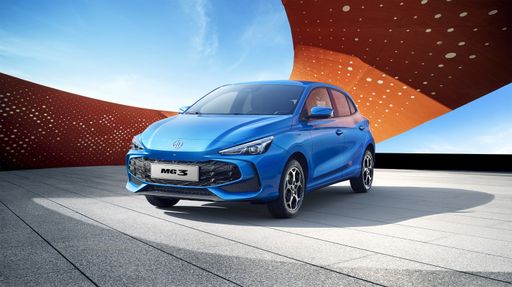
The MG3 is a cheeky city hatch that pairs bold, youthful styling with sprightly handling for drivers who want personality on a budget. Its cabin is bright and cleverly packaged, offering sensible space and a fun-to-drive character that turns mundane commutes into something a bit more enjoyable.

details
Hyundai i30
MG MG3

Costs and Consumption

Price
24600 - 31400 £
Price
15400 - 21400 £
Consumption L/100km
5.9 - 6.3 L
Consumption L/100km
4.4 - 6.1 L
Consumption kWh/100km
-
Consumption kWh/100km
-
Electric Range
-
Electric Range
-
Battery Capacity
-
Battery Capacity
-
co2
134 - 142 g/km
co2
100 - 137 g/km
Fuel tank capacity
-
Fuel tank capacity
-

Dimensions and Body

Body Type
Hatchback
Body Type
Hatchback
Seats
5
Seats
5
Doors
-
Doors
-
Curb weight
1315 - 1435 kg
Curb weight
1237 - 1285 kg
Trunk capacity
395 L
Trunk capacity
-
Length
-
Length
-
Width
1795 mm
Width
1797 mm
Height
-
Height
-
Max trunk capacity
-
Max trunk capacity
-
Payload
445 - 485 kg
Payload
373 - 448 kg

Engine and Performance

Engine Type
Petrol
Engine Type
Petrol, Full Hybrid
Transmission
Manuel, Automatic
Transmission
Manuel, Automatic
Transmission Detail
Manual Gearbox, Dual-Clutch Automatic
Transmission Detail
Manual Gearbox, Automatic Gearbox
Drive Type
Front-Wheel Drive
Drive Type
Front-Wheel Drive
Power HP
115 - 150 HP
Power HP
116 - 194 HP
Acceleration 0-100km/h
8.9 - 11.7 s
Acceleration 0-100km/h
8 - 10.8 s
Max Speed
-
Max Speed
-
Torque
172 - 250 Nm
Torque
148 Nm
Number of Cylinders
3 - 4
Number of Cylinders
4
Power kW
85 - 110 kW
Power kW
85 - 143 kW
Engine capacity
998 - 1598 cm3
Engine capacity
1490 - 1495 cm3

General

Model Year
2026
Model Year
2025
CO2 Efficiency Class
D, E
CO2 Efficiency Class
E, C
Brand
Hyundai
Brand
MG
What drive types are available for the Hyundai i30?

Available configurations include Front-Wheel Drive.

The prices shown are estimates based on German list prices, adjusted for local VAT. Local registration taxes (e.g. NoVA, BPM or CO2 malus) are not included. This information is not legally binding.