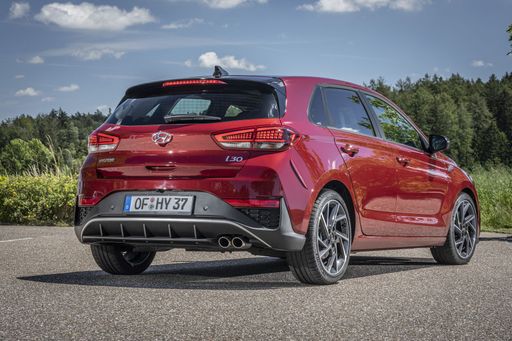
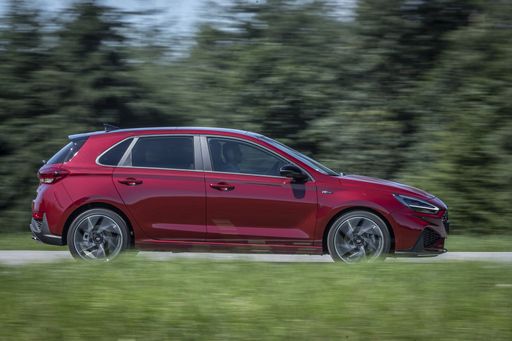
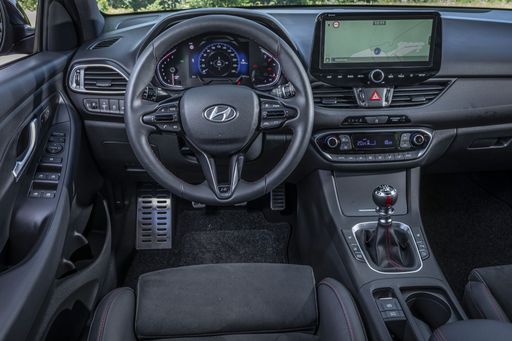
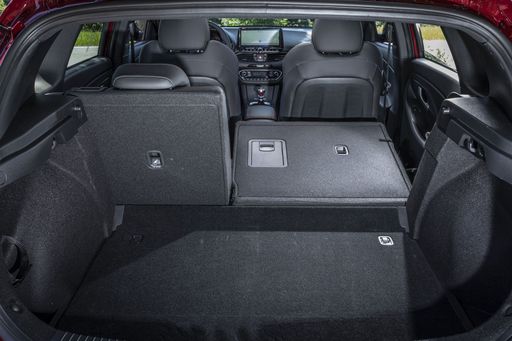
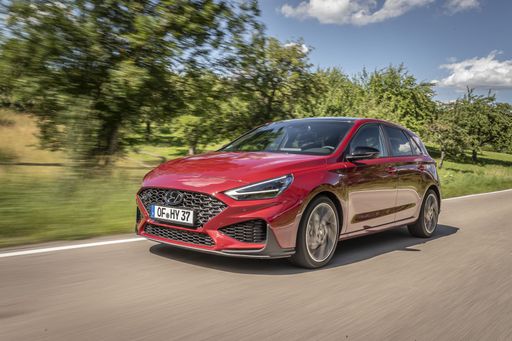
@ Hyundai Motor Company
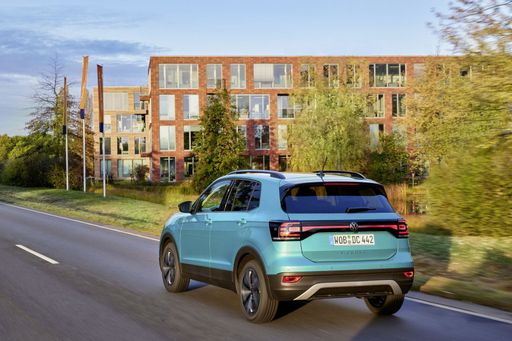
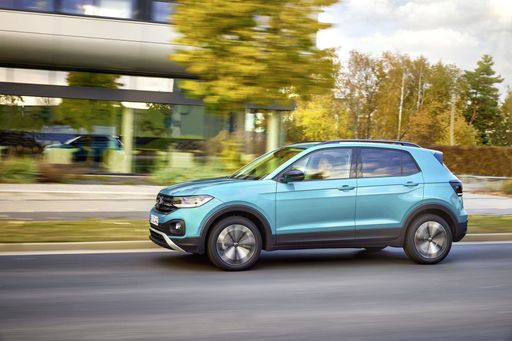
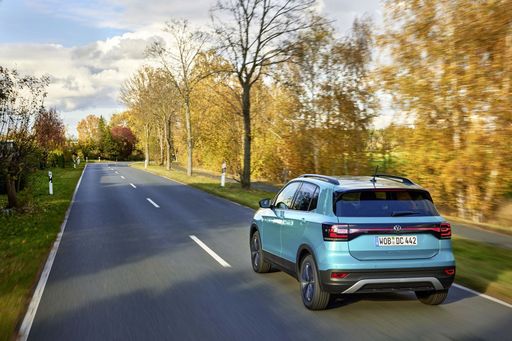
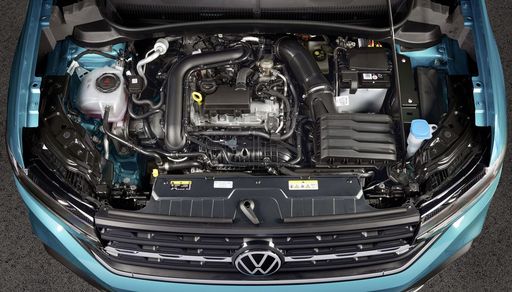
@ Volkswagen AG / VW Media
VS

Hyundai i30 vs VW T-Cross – Which model is better for everyday use?

Both models have their strengths – but which one suits you more?
Compare performance, efficiency, price and space directly: Hyundai i30 or VW T-Cross?

i30 @ Hyundai Motor Company

Hyundai i30 vs. VW T-Cross: A Battle of the Categories

In the ever-evolving automotive world, buyers today seek a blend of performance, economy, and features that suit their diverse lifestyle needs. When it comes to compact cars, the Hyundai i30 and the VW T-Cross have established themselves as serious contenders. But how do they stack up against each other in terms of technical prowess and innovative features? Let’s dive into this intriguing comparison.
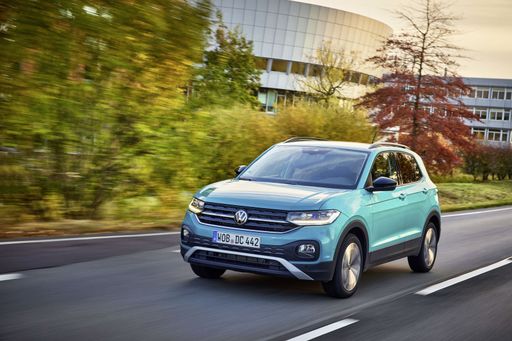
T-Cross @ Volkswagen AG / VW Media

Design and Build

The Hyundai i30, a compact hatchback, exudes a sleek aesthetic with dimensions measuring 4340 mm in length, 1795 mm in width, and 1455 mm in height. It's designed to offer a practical yet sporty look. On the other hand, the VW T-Cross, categorized as an SUV, features a taller stance with a length of 4127 mm, width of 1784 mm, and height of 1573 mm. Its design mantra integrates the robust flair typical of SUVs with an urban charm. While both vehicles accommodate five passengers comfortably, the T-Cross boasts a more generous trunk capacity of 455 liters against the i30's 395 liters, favoring those in need of extra cargo space.

i30 @ Hyundai Motor Company

Performance and Engine Options

The Hyundai i30 offers a range of engines, including petrol and a mild-hybrid petrol option, with power outputs ranging from 100 HP to 140 HP. With transmission choices that include a manual gearbox and a dual-clutch automatic, driving styles are well catered to. The quickest of the lineup sprints from 0 to 100 km/h in 9.6 seconds, aligning performance with practicality.

Enter the VW T-Cross, also petrol-powered, delivering power from 95 HP up to 150 HP. The T-Cross offers brisk acceleration, particularly with its top engine model reaching 100 km/h in just 8.4 seconds. This SUV’s power is complemented by a dynamic dual-clutch automatic transmission option that boosts its urban adaptability.

T-Cross @ Volkswagen AG / VW Media

Efficiency and Environmental Considerations

Fuel efficiency is a common ground between these contenders. The Hyundai i30 achieves a consumption rate as low as 5.6 L/100km, with CO2 emissions ranging from 126 to 133 g/km. As for the T-Cross, it matches the i30’s efficiency starting at 5.6 L/100km, with CO2 emissions stretching between 127 and 135 g/km. Both models fall into the CO2 efficiency class D, reflecting their status in the emission-conscious landscape.

i30 @ Hyundai Motor Company

Technical Innovations and Features

Hyundai's i30 integrates modern tech with its hybrid engine offering, appealing to those seeking both power and environmental consciousness. Meanwhile, the VW T-Cross capitalizes on a slightly more advanced tech suite, promising an intuitive driving experience with its dual-clutch automatic transmission—a boon for city drivers.

T-Cross @ Volkswagen AG / VW Media

Conclusion: Choosing Your Path

The decision between the Hyundai i30 and the VW T-Cross ultimately hinges on individual preferences and lifestyle needs. Those leaning towards a compact, sporty package might gravitate to the i30, while others who prefer an elevated driving position and more cargo space could find the T-Cross more appealing. Each vehicle brings a unique balance of performance, innovation, and practicality, ensuring that buyers find a fitting companion in either option.

Here’s where it gets real: The technical differences in detail

i30 @ Hyundai Motor Company

Costs and Efficiency:

Price and efficiency are key factors when choosing a car – and this is often where the real differences emerge.

VW T-Cross has a to a small extent advantage in terms of price – it starts at 21100 £, while the Hyundai i30 costs 24000 £. That’s a price difference of around 2914 £.

Fuel consumption also shows a difference: VW T-Cross manages with 5.40 L and is therefore minimal more efficient than the Hyundai i30 with 5.70 L. The difference is about 0.30 L per 100 km.

T-Cross @ Volkswagen AG / VW Media

Engine and Performance:

Power, torque and acceleration say a lot about how a car feels on the road. This is where you see which model delivers more driving dynamics.

When it comes to engine power, the VW T-Cross has a slight edge – offering 150 HP compared to 140 HP. That’s roughly 10 HP more horsepower.

In acceleration from 0 to 100 km/h, the VW T-Cross is somewhat quicker – completing the sprint in 8.40 s, while the Hyundai i30 takes 9.60 s. That’s about 1.20 s faster.

In terms of top speed, the VW T-Cross performs slight better – reaching 200 km/h, while the Hyundai i30 tops out at 197 km/h. The difference is around 3 km/h.

There’s also a difference in torque: Hyundai i30 pulls slight stronger with 253 Nm compared to 250 Nm. That’s about 3 Nm difference.

i30 @ Hyundai Motor Company

Space and Everyday Use:

Whether family car or daily driver – which one offers more room, flexibility and comfort?

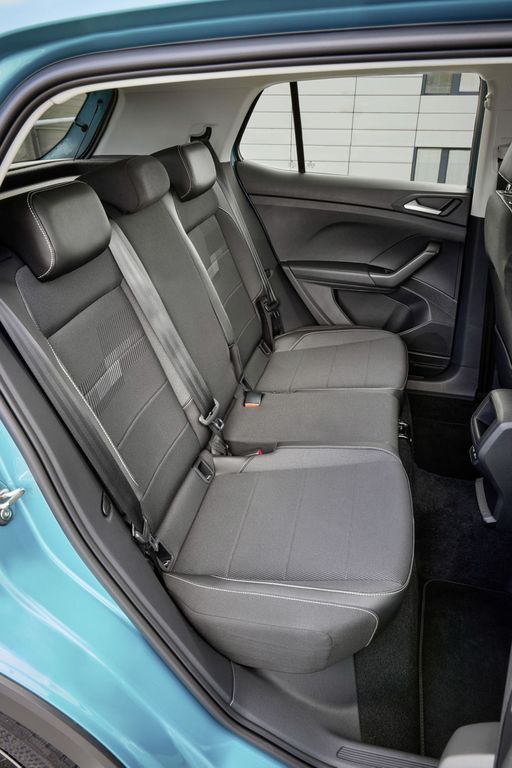
Both vehicles offer seating for 5 people.

In curb weight, VW T-Cross is slight lighter – 1267 kg compared to 1291 kg. The difference is around 24 kg.

In terms of boot space, the VW T-Cross offers a bit more room – 455 L compared to 395 L. That’s a difference of about 60 L.

In maximum load capacity, the Hyundai i30 performs minimal better – up to 1301 L, which is about 20 L more than the VW T-Cross.

When it comes to payload, Hyundai i30 hardly perceptible takes the win – 509 kg compared to 480 kg. That’s a difference of about 29 kg.

Who comes out on top?

Overall, the VW T-Cross shows itself to be performs better in key areas and secures the title of DriveDuel Champion.
It convinces with the more balanced overall package and proves to be the more versatile choice for everyday use.

from about £21,100
T-Cross @ Volkswagen AG / VW Media

VW T-Cross

  • Engine Type : Petrol
  • Transmission : Manuel, Automatic
  • Drive Type : Front-Wheel Drive
  • Power HP : 95 - 150 HP
  • Consumption L/100km : 5.4 - 6 L

Hyundai i30

The Hyundai i30 proves that sensible can also be stylish, offering a confident driving character wrapped in neat, modern design. It serves up a roomy, well-equipped cabin and composed ride that make everyday motoring feel like a clever purchase rather than a compromise.

details

VW T-Cross

4 (1)
rate

The VW T-Cross turns everyday practicality into a style statement, offering a roomy-feeling cabin, clever storage and playful design that suits town life and family duties alike. On the road it's composed and relaxed, rewarding buyers who want the raised seating and confident presence of an SUV without the weighty compromises.

details
Hyundai i30
VW T-Cross
i30 @ Hyundai Motor Company
T-Cross @ Volkswagen AG / VW Media

Costs and Consumption

Price
24000 - 29300 £
Price
21100 - 31500 £
Consumption L/100km
5.7 - 6 L
Consumption L/100km
5.4 - 6 L
Consumption kWh/100km
-
Consumption kWh/100km
-
Electric Range
-
Electric Range
-
Battery Capacity
-
Battery Capacity
-
co2
130 - 136 g/km
co2
124 - 136 g/km
Fuel tank capacity
50 L
Fuel tank capacity
40 L

Dimensions and Body

Body Type
Hatchback
Body Type
SUV
Seats
5
Seats
5
Doors
5
Doors
5
Curb weight
1291 - 1407 kg
Curb weight
1267 - 1338 kg
Trunk capacity
395 L
Trunk capacity
455 L
Length
4340 mm
Length
4127 mm
Width
1795 mm
Width
1784 mm
Height
1455 mm
Height
1573 mm
Max trunk capacity
1301 L
Max trunk capacity
1281 L
Payload
463 - 509 kg
Payload
463 - 480 kg

Engine and Performance

Engine Type
Petrol, Petrol MHEV
Engine Type
Petrol
Transmission
Manuel, Automatic
Transmission
Manuel, Automatic
Transmission Detail
Manual Gearbox, Dual-Clutch Automatic
Transmission Detail
Manual Gearbox, Dual-Clutch Automatic
Drive Type
Front-Wheel Drive
Drive Type
Front-Wheel Drive
Power HP
100 - 140 HP
Power HP
95 - 150 HP
Acceleration 0-100km/h
9.6 - 13.1 s
Acceleration 0-100km/h
8.4 - 11.3 s
Max Speed
178 - 197 km/h
Max Speed
180 - 200 km/h
Torque
172 - 253 Nm
Torque
175 - 250 Nm
Number of Cylinders
3 - 4
Number of Cylinders
3 - 4
Power kW
74 - 103 kW
Power kW
70 - 110 kW
Engine capacity
998 - 1482 cm3
Engine capacity
999 - 1498 cm3

General

Model Year
2024
Model Year
2024 - 2025
CO2 Efficiency Class
D, E
CO2 Efficiency Class
D, E
Brand
Hyundai
Brand
VW
What drive types are available for the Hyundai i30?

Available configurations include Front-Wheel Drive.

The prices and data displayed are estimates based on German list prices and may vary by country. This information is not legally binding.