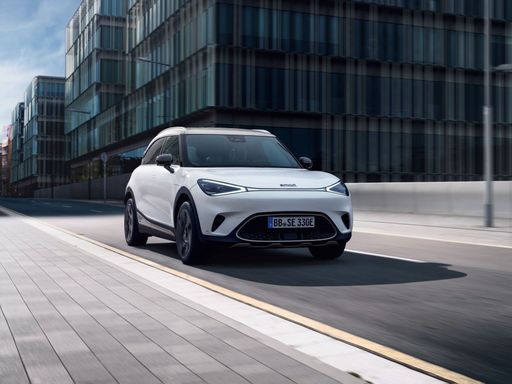
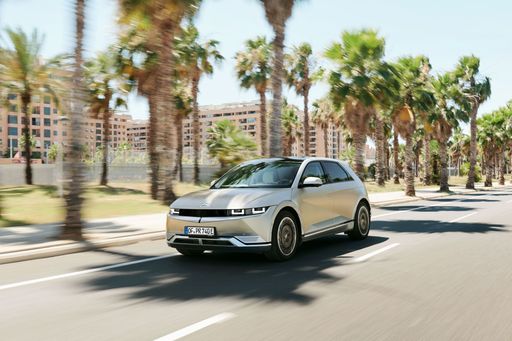
VS

Hyundai IONIQ 5 vs smart #1 - Differences and prices compared

Compare performance (650 HP vs 428 HP), boot space and price (38500 £ vs 31700 £) at a glance. Find out which car is the better choice for you – Hyundai IONIQ 5 or smart #1?

Hyundai IONIQ 5

5 (1 Reviews)
rate

smart #1

Here’s where it gets real: The technical differences in detail

IONIQ 5

Costs and Efficiency:

Price and efficiency are often the first things buyers look at. Here it becomes clear which model has the long-term edge – whether at the pump, the plug, or in purchase price.

smart #1 has a distinct advantage in terms of price – it starts at 31700 £, while the Hyundai IONIQ 5 costs 38500 £. That’s a price difference of around 6780 £.

In terms of energy consumption, the advantage goes to the Hyundai IONIQ 5: with 15.60 kWh per 100 km, it’s hardly perceptible more efficient than the smart #1 with 16.80 kWh. That’s a difference of about 1.20 kWh.

As for range, the Hyundai IONIQ 5 performs distinct better – achieving up to 570 km, about 130 km more than the smart #1.

#1

Engine and Performance:

Under the bonnet, it becomes clear which model is tuned for sportiness and which one takes the lead when you hit the accelerator.

When it comes to engine power, the Hyundai IONIQ 5 has a clearly perceptible edge – offering 650 HP compared to 428 HP. That’s roughly 222 HP more horsepower.

In acceleration from 0 to 100 km/h, the Hyundai IONIQ 5 is a bit quicker – completing the sprint in 3.50 s, while the smart #1 takes 3.90 s. That’s about 0.40 s faster.

In terms of top speed, the Hyundai IONIQ 5 performs evident better – reaching 260 km/h, while the smart #1 tops out at 180 km/h. The difference is around 80 km/h.

There’s also a difference in torque: Hyundai IONIQ 5 pulls evident stronger with 770 Nm compared to 584 Nm. That’s about 186 Nm difference.

IONIQ 5

Space and Everyday Use:

Beyond pure performance, interior space and usability matter most in daily life. This is where you see which car is more practical and versatile.

Both vehicles offer seating for 5 people.

In curb weight, smart #1 is slight lighter – 1780 kg compared to 1955 kg. The difference is around 175 kg.

In terms of boot space, the Hyundai IONIQ 5 offers distinct more room – 520 L compared to 323 L. That’s a difference of about 197 L.

In maximum load capacity, the Hyundai IONIQ 5 performs distinct better – up to 1580 L, which is about 594 L more than the smart #1.

When it comes to payload, Hyundai IONIQ 5 slightly takes the win – 530 kg compared to 470 kg. That’s a difference of about 60 kg.

Who comes out on top?

Overall, the Hyundai IONIQ 5 shows itself to be dominates this comparison and secures the title of DriveDuel Champion.
It convinces with the more balanced overall package and proves to be the more versatile choice for everyday use.

from about £38,500
IONIQ 5

Hyundai IONIQ 5

  • Engine Type : Electric
  • Transmission : Automatic
  • Drive Type : Rear-Wheel Drive, All-Wheel Drive
  • Power HP : 170 - 650 HP
  • Consumption kWh/100km : 15.6 - 21.2 kWh
  • Electric Range : 440 - 570 km
Hyundai IONIQ 5
smart #1

Costs and Consumption

View detailed analysis

Engine and Performance

View detailed analysis

Dimensions and Body

View detailed analysis

Hyundai IONIQ 5

5 (1 Reviews)
rate

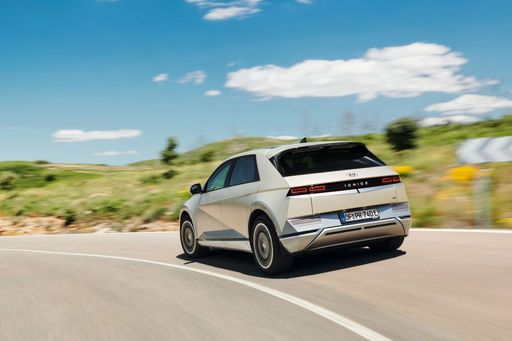
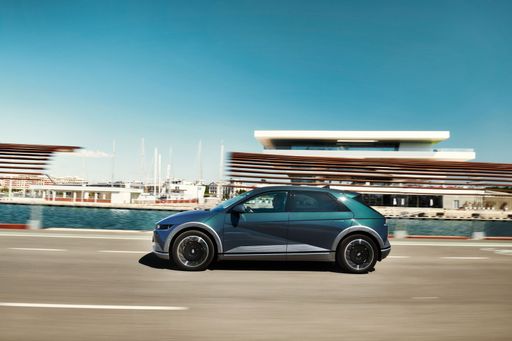
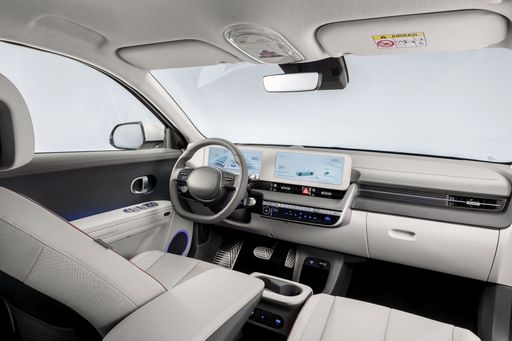
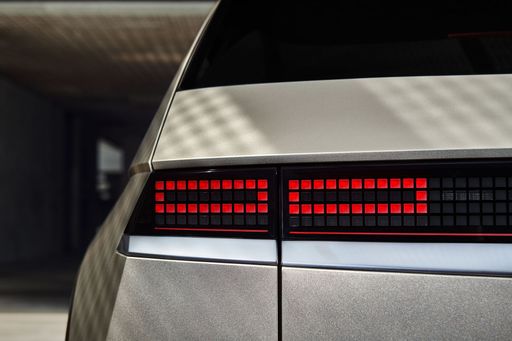
The Hyundai IONIQ 5 looks like a spaceship that moved into suburbia, pairing bold retro‑futuristic styling with a roomy, cleverly laid-out cabin that makes long trips surprisingly comfortable. Its electric character delivers instant, silky acceleration and low running costs, making it a smart, slightly cheeky pick for buyers who want tech, practicality and personality without the drama.

details

smart #1

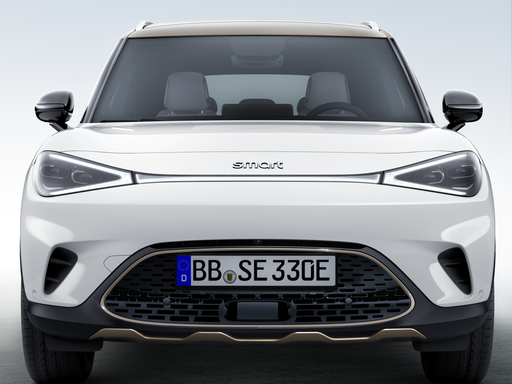
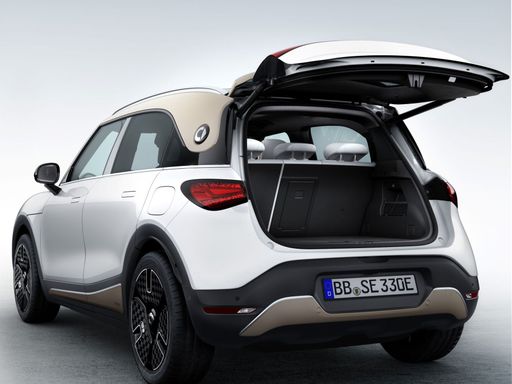
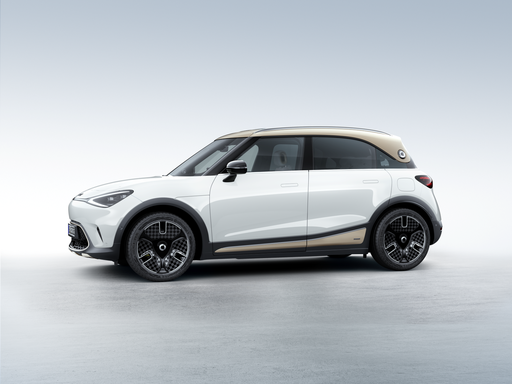
The Smart #1 feels like a breath of fresh air in the compact EV world, pairing playful styling with usable space and a cabin that punches above its size. It skips the fuss and delivers an easygoing, city-friendly driving experience with clever features that make it a sensible, slightly cheeky choice for everyday motoring.

details
Hyundai IONIQ 5
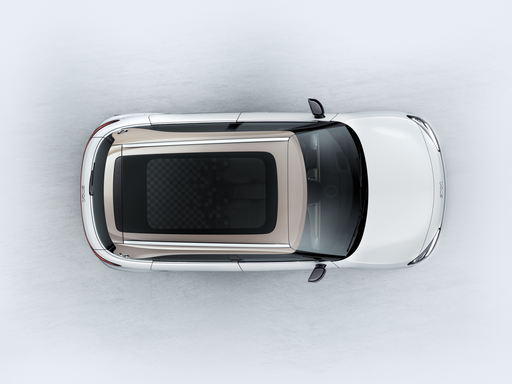
smart #1
IONIQ 5
#1

Costs and Consumption

Price
38500 - 64200 £
Price
31700 - 45000 £
Consumption L/100km
-
Consumption L/100km
-
Consumption kWh/100km
15.6 - 21.2 kWh
Consumption kWh/100km
16.8 - 18.2 kWh
Electric Range
440 - 570 km
Electric Range
310 - 440 km
Battery Capacity
63 - 84 kWh
Battery Capacity
47 - 62 kWh
co2
0 g/km
co2
0 g/km
Fuel tank capacity
-
Fuel tank capacity
-

Dimensions and Body

Body Type
SUV
Body Type
SUV
Seats
5
Seats
5
Doors
5
Doors
5
Curb weight
1955 - 2275 kg
Curb weight
1780 - 1900 kg
Trunk capacity
480 - 520 L
Trunk capacity
313 - 323 L
Length
4655 - 4715 mm
Length
4270 - 4300 mm
Width
1890 - 1940 mm
Width
1822 mm
Height
1585 - 1605 mm
Height
1636 mm
Max trunk capacity
1540 - 1580 L
Max trunk capacity
976 - 986 L
Payload
385 - 530 kg
Payload
425 - 470 kg

Engine and Performance

Engine Type
Electric
Engine Type
Electric
Transmission
Automatic
Transmission
Automatic
Transmission Detail
Reduction Gearbox
Transmission Detail
Reduction Gearbox
Drive Type
Rear-Wheel Drive, All-Wheel Drive
Drive Type
Rear-Wheel Drive, All-Wheel Drive
Power HP
170 - 650 HP
Power HP
272 - 428 HP
Acceleration 0-100km/h
3.5 - 8.5 s
Acceleration 0-100km/h
3.9 - 6.7 s
Max Speed
185 - 260 km/h
Max Speed
180 km/h
Torque
350 - 770 Nm
Torque
343 - 584 Nm
Number of Cylinders
-
Number of Cylinders
-
Power kW
125 - 478 kW
Power kW
200 - 315 kW
Engine capacity
-
Engine capacity
-

General

Model Year
2024 - 2025
Model Year
2023 - 2024
CO2 Efficiency Class
A
CO2 Efficiency Class
A
Brand
Hyundai
Brand
smart
What drive types are available for the Hyundai IONIQ 5?

The Hyundai IONIQ 5 is available as Rear-Wheel Drive or All-Wheel Drive.

The prices and data displayed are estimates based on German list prices and may vary by country. This information is not legally binding.