@ Hyundai Motor Company
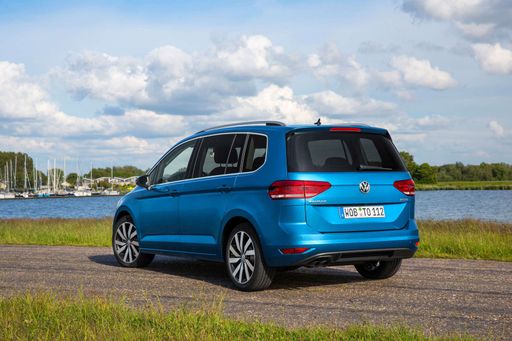
@ Volkswagen AG / VW Media
VS

Hyundai IONIQ 5 vs VW Touran – Which one offers the better deal?

Compare performance, boot capacity, efficiency and price at a glance.
Find out which car is the better choice for you – Hyundai IONIQ 5 or VW Touran?

Hyundai IONIQ 5

VW Touran

5 (1 Reviews)
rate
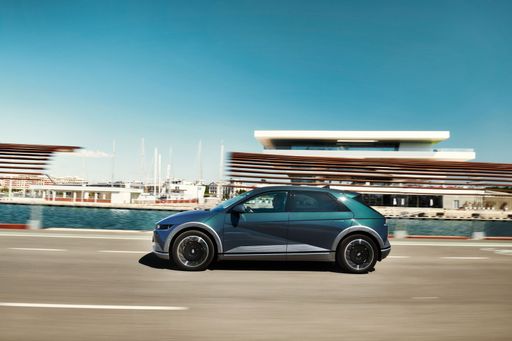
IONIQ 5 @ Hyundai Motor Company

In the ever-evolving world of automobiles, comparing models from different segments can provide valuable insights for potential buyers. In this article, we pit the Hyundai IONIQ 5 against the VW Touran, examining their specifications, innovations, and overall appeal to determine which one might suit your needs best.
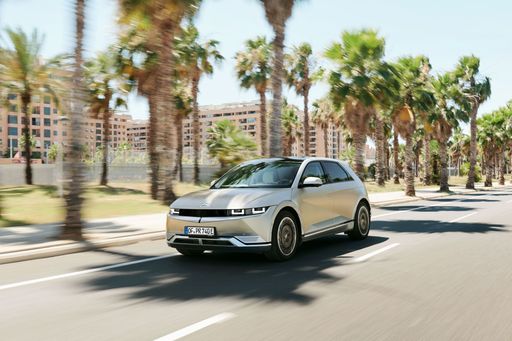
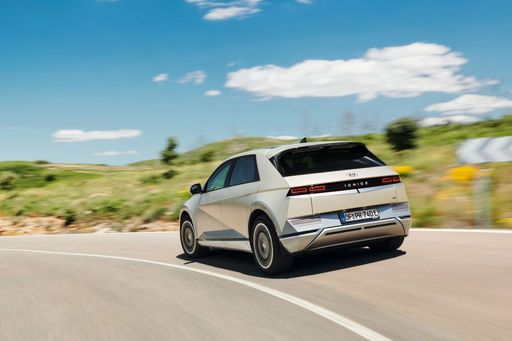
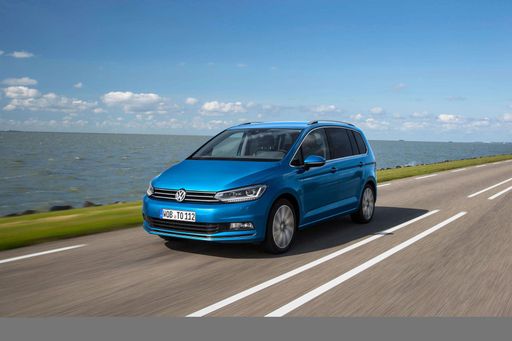
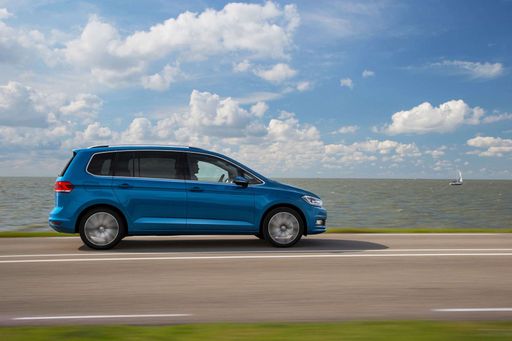
Touran @ Volkswagen AG / VW Media

A Look at Their Foundations

The Hyundai IONIQ 5 is a compact SUV that represents Hyundai's bold step into the world of electric vehicles. Launched with a futuristic design and cutting-edge technology, it caters to a growing audience of environmentally conscious drivers. Meanwhile, the VW Touran is a multi-purpose vehicle (MPV) that has earned a solid reputation for practicality and versatility. With a focus on family-friendly features, the Touran combines functionality with comfort.

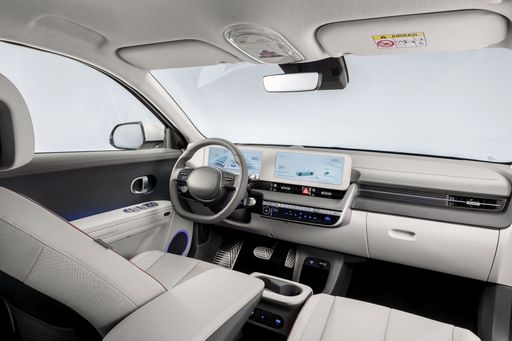
IONIQ 5 @ Hyundai Motor Company

Powertrain and Performance

When it comes to powertrains, the Hyundai IONIQ 5 offers a diverse range of electric options. The vehicle is equipped with rear-wheel or all-wheel drive configurations, with power outputs ranging from 170 HP to an impressive 609 HP. The IONIQ 5 can accelerate from 0-100 km/h in as little as 3.5 seconds, demonstrating its impressive performance capabilities. The electric consumption is also commendable, averaging between 15.6 to 21.2 kWh per 100 km, allowing a maximum electric range of 570 km on a single charge.

On the other hand, the VW Touran comes with multiple engine options, including petrol and diesel variants, with power outputs ranging from 122 HP to 150 HP. While it may not match the IONIQ 5 in terms of raw power or acceleration—achieving 0-100 km/h in approximately 8.9 to 10.8 seconds—the Touran is designed with efficiency in mind, boasting fuel consumption figures between 5.1 to 6.4 L per 100 km.

Touran @ Volkswagen AG / VW Media

Design and Dimensions

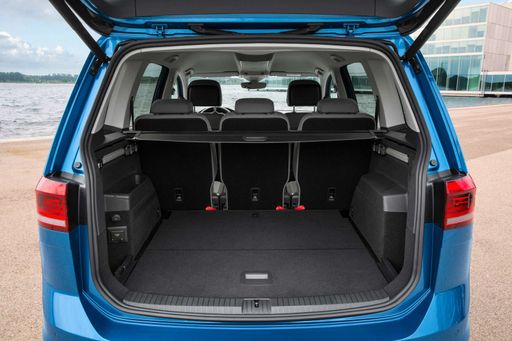
In terms of dimensions, the IONIQ 5 measures 4655 mm in length, 1890 mm in width, and stands 1605 mm tall. Its spacious interior offers a trunk capacity of 520 L, making it suitable for everyday use and longer journeys. The Touran, with its overall length of 4527 mm, width of 1829 mm, and height of 1668 mm, is slightly larger in height, giving it an edge in interior headroom. It boasts a substantial trunk capacity of 834 L, making it ideal for families requiring extra cargo space.

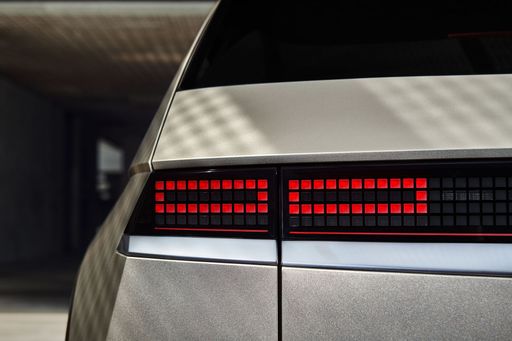
IONIQ 5 @ Hyundai Motor Company

Safety and Technology

Both vehicles come packed with safety features, but the IONIQ 5 leans heavily into technology. It offers advanced driver assistance systems, including highway driving assist, navigation-based smart cruise control, and vehicle-to-load (V2L) technology that allows users to power electrical devices using the car's battery. This innovation aligns with the growing need for electric vehicles to be practical beyond just transportation.

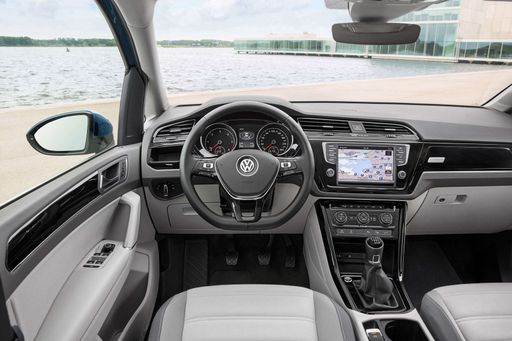
The VW Touran, known for its family-friendliness, features a range of safety features and driver aids, including adaptive cruise control, lane assist, and a robust infotainment system. While it may not have the futuristic innovations seen in the IONIQ 5, its reliability and ease of use make it a strong contender for families.

Touran @ Volkswagen AG / VW Media

Environmental Impact

One of the standout features of the Hyundai IONIQ 5 is its zero-emission electric powertrain, placing it in the CO2 efficiency class "A". This positions the IONIQ 5 as a compelling choice for eco-conscious buyers looking to minimize their carbon footprint. In contrast, the VW Touran, falling within CO2 efficiency classes "D" and "E," offers practicality but lacks the environmental benefits of an electric drivetrain.

IONIQ 5 @ Hyundai Motor Company

Conclusion: Which One Fits Your Needs?

In summary, the choice between the Hyundai IONIQ 5 and the VW Touran largely depends on the buyer's priorities. The IONIQ 5 dazzles with its electric performance, advanced technology, and zero emissions, appealing to those focused on sustainability and cutting-edge features. Alternatively, the VW Touran excels in practicality, spaciousness, and family-friendliness, making it an excellent choice for drivers who prioritize versatility and reliability. Ultimately, assessing your requirements will guide you in selecting the right vehicle for your lifestyle.

Here’s where it gets real: The technical differences in detail

Touran @ Volkswagen AG / VW Media

Costs and Efficiency:

Price and efficiency are key factors when choosing a car – and this is often where the real differences emerge.

VW Touran has a minimal advantage in terms of price – it starts at 35400 £, while the Hyundai IONIQ 5 costs 38500 £. That’s a price difference of around 3090 £.

IONIQ 5 @ Hyundai Motor Company

Engine and Performance:

Power, torque and acceleration are the classic benchmarks for car enthusiasts – and here, some clear differences start to show.

When it comes to engine power, the Hyundai IONIQ 5 has a significantly edge – offering 650 HP compared to 150 HP. That’s roughly 500 HP more horsepower.

In acceleration from 0 to 100 km/h, the Hyundai IONIQ 5 is clearly quicker – completing the sprint in 3.50 s, while the VW Touran takes 8.90 s. That’s about 5.40 s faster.

In terms of top speed, the Hyundai IONIQ 5 performs to a small extent better – reaching 260 km/h, while the VW Touran tops out at 209 km/h. The difference is around 51 km/h.

There’s also a difference in torque: Hyundai IONIQ 5 pulls convincingly stronger with 770 Nm compared to 360 Nm. That’s about 410 Nm difference.

Touran @ Volkswagen AG / VW Media

Space and Everyday Use:

Whether family car or daily driver – which one offers more room, flexibility and comfort?

Both vehicles offer seating for 5 people.

In curb weight, VW Touran is evident lighter – 1520 kg compared to 1955 kg. The difference is around 435 kg.

In terms of boot space, the VW Touran offers clearly perceptible more room – 834 L compared to 520 L. That’s a difference of about 314 L.

In maximum load capacity, the VW Touran performs distinct better – up to 1980 L, which is about 400 L more than the Hyundai IONIQ 5.

When it comes to payload, VW Touran a bit takes the win – 601 kg compared to 530 kg. That’s a difference of about 71 kg.

Who wins the race?

The Hyundai IONIQ 5 proves to be is largely superior and therefore becomes our DriveDuel Champion!
Hyundai IONIQ 5 is the better all-rounder in this comparison.

Hyundai IONIQ 5
VW Touran

Costs and Consumption

View detailed analysis

Engine and Performance

View detailed analysis

Dimensions and Body

View detailed analysis
from about £38,500
IONIQ 5 @ Hyundai Motor Company

Hyundai IONIQ 5

  • Engine Type : Electric
  • Transmission : Automatic
  • Drive Type : Rear-Wheel Drive, All-Wheel Drive
  • Power HP : 170 - 650 HP
  • Consumption kWh/100km : 15.6 - 21.2 kWh
  • Electric Range : 440 - 570 km

Hyundai IONIQ 5

The Hyundai IONIQ 5 looks like a spaceship that moved into suburbia, pairing bold retro‑futuristic styling with a roomy, cleverly laid-out cabin that makes long trips surprisingly comfortable. Its electric character delivers instant, silky acceleration and low running costs, making it a smart, slightly cheeky pick for buyers who want tech, practicality and personality without the drama.

details

VW Touran

5 (1 Reviews)
rate

The VW Touran is a sensible family people‑carrier that mixes practical packaging with tidy, German-built refinement, making everyday life with kids and shopping feel a lot less chaotic. If you want a reliable, no-nonsense companion that drives with surprising poise and values usefulness over flash, the Touran is a very persuasive choice.

details
Hyundai IONIQ 5
VW Touran
IONIQ 5 @ Hyundai Motor Company
Touran @ Volkswagen AG / VW Media

Costs and Consumption

Price
38500 - 64200 £
Price
35400 - 43900 £
Consumption L/100km
-
Consumption L/100km
5.2 - 6.5 L
Consumption kWh/100km
15.6 - 21.2 kWh
Consumption kWh/100km
-
Electric Range
440 - 570 km
Electric Range
-
Battery Capacity
63 - 84 kWh
Battery Capacity
-
co2
0 g/km
co2
136 - 149 g/km
Fuel tank capacity
-
Fuel tank capacity
58 L

Dimensions and Body

Body Type
SUV
Body Type
MPV
Seats
5
Seats
5
Doors
5
Doors
5
Curb weight
1955 - 2275 kg
Curb weight
1520 - 1631 kg
Trunk capacity
480 - 520 L
Trunk capacity
834 L
Length
4655 - 4715 mm
Length
4527 mm
Width
1890 - 1940 mm
Width
1829 mm
Height
1585 - 1605 mm
Height
1668 mm
Max trunk capacity
1540 - 1580 L
Max trunk capacity
1980 L
Payload
385 - 530 kg
Payload
590 - 601 kg

Engine and Performance

Engine Type
Electric
Engine Type
Petrol, Diesel
Transmission
Automatic
Transmission
Manuel, Automatic
Transmission Detail
Reduction Gearbox
Transmission Detail
Manual Gearbox, Dual-Clutch Automatic
Drive Type
Rear-Wheel Drive, All-Wheel Drive
Drive Type
Front-Wheel Drive
Power HP
170 - 650 HP
Power HP
122 - 150 HP
Acceleration 0-100km/h
3.5 - 8.5 s
Acceleration 0-100km/h
8.9 - 10.8 s
Max Speed
185 - 260 km/h
Max Speed
195 - 209 km/h
Torque
350 - 770 Nm
Torque
250 - 360 Nm
Number of Cylinders
-
Number of Cylinders
4
Power kW
125 - 478 kW
Power kW
90 - 110 kW
Engine capacity
-
Engine capacity
1498 - 1968 cm3

General

Model Year
2024 - 2025
Model Year
2024 - 2025
CO2 Efficiency Class
A
CO2 Efficiency Class
E
Brand
Hyundai
Brand
VW
What drive types are available for the Hyundai IONIQ 5?

The Hyundai IONIQ 5 is available as Rear-Wheel Drive or All-Wheel Drive.

The prices and data displayed are estimates based on German list prices and may vary by country. This information is not legally binding.