
 Deutschland
 France
 Nederland
 Great Britain
 Sverige
 Norge
Norge Danmark
 Suomi
Suomi Italia
 Polska
 España
VS
Hyundai IONIQ 6 vs XPeng G9 – Differences & prices compared
Two cars, one duel: Hyundai IONIQ 6 meets XPeng G9.
Which one wins in performance, efficiency and value for money? Find out now!
IONIQ 6
@ Hyundai Motor Company
Costs and Efficiency:
Looking at overall running costs, both models reveal some interesting differences in everyday economy.
Hyundai IONIQ 6 has a clearly perceptible advantage in terms of price – it starts at 37600 £, while the XPeng G9 costs 51100 £. That’s a price difference of around 13457 £.
In terms of energy consumption, the advantage goes to the Hyundai IONIQ 6: with 13.90 kWh per 100 km, it’s distinct more efficient than the XPeng G9 with 18.40 kWh. That’s a difference of about 4.50 kWh.
As for range, the Hyundai IONIQ 6 performs barely noticeable better – achieving up to 614 km, about 29 km more than the XPeng G9.
G9
@ XPeng Motors
Engine and Performance:
Power, torque and acceleration are the classic benchmarks for car enthusiasts – and here, some clear differences start to show.
When it comes to engine power, the Hyundai IONIQ 6 has a a bit edge – offering 650 HP compared to 575 HP. That’s roughly 75 HP more horsepower.
In acceleration from 0 to 100 km/h, the Hyundai IONIQ 6 is distinct quicker – completing the sprint in 3.20 s, while the XPeng G9 takes 4.20 s. That’s about 1 s faster.
In terms of top speed, the Hyundai IONIQ 6 performs noticeable better – reaching 257 km/h, while the XPeng G9 tops out at 200 km/h. The difference is around 57 km/h.
There’s also a difference in torque: Hyundai IONIQ 6 pulls hardly perceptible stronger with 770 Nm compared to 695 Nm. That’s about 75 Nm difference.
IONIQ 6
@ Hyundai Motor Company
Space and Everyday Use:
Cabin size, boot volume and payload all play a role in everyday practicality. Here, comfort and flexibility make the difference.
Both vehicles offer seating for 5 people.
In curb weight, Hyundai IONIQ 6 is a bit lighter – 1850 kg compared to 2210 kg. The difference is around 360 kg.
In terms of boot space, the XPeng G9 offers clearly perceptible more room – 660 L compared to 401 L. That’s a difference of about 259 L.
Who comes out on top?
Overall, the Hyundai IONIQ 6 shows itself to be is largely superior and secures the title of DriveDuel Champion.
It convinces with the more balanced overall package and proves to be the more versatile choice for everyday use.
from about £37,600
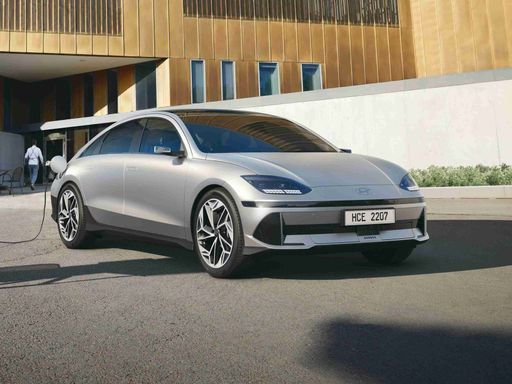 @ Hyundai Motor Company
Hyundai IONIQ 6
Hyundai IONIQ 6
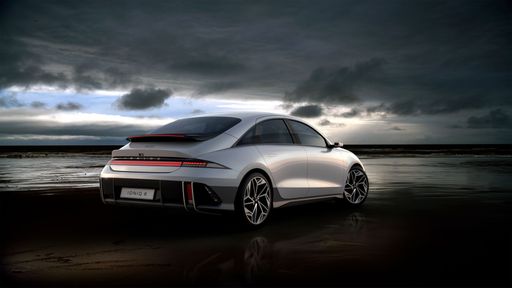
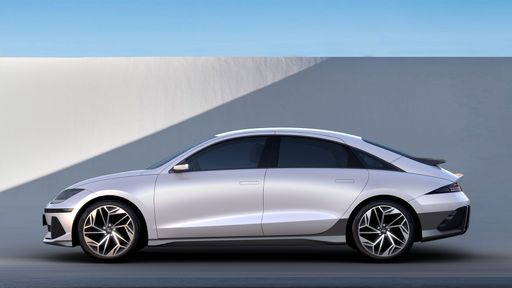
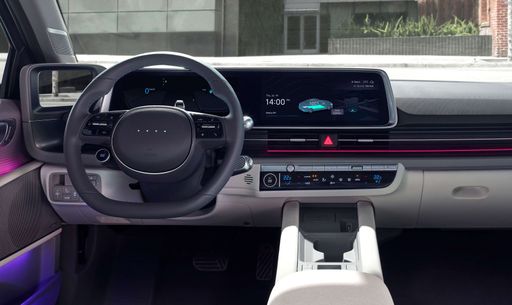
The Hyundai IONIQ 6 merges futuristic design with eco-friendly technology, offering a glimpse into the future of electric mobility. Its sleek silhouette and aerodynamic profile are sure to capture attention on the road, while the interior provides a seamless blend of comfort and cutting-edge digital features. With a focus on efficiency and sustainability, this model represents a significant step forward in the evolution of electric vehicles.
details
@ Hyundai Motor Company
 @ Hyundai Motor Company
 @ Hyundai Motor Company
 @ Hyundai Motor Company
XPeng G9
The XPeng G9 feels like a confident leap into the electric SUV world, with sleek, purposeful styling and an interior that mixes modern tech with everyday comfort. On the road it’s calm and composed, serving up effortless pace and hushed refinement that turns long commutes into something you might actually enjoy — a strong pick for buyers who want electric convenience without compromise.
details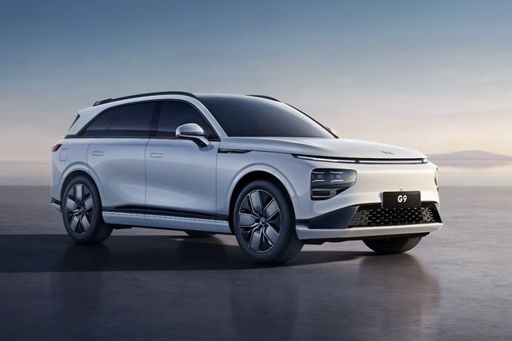 @ XPeng Motors
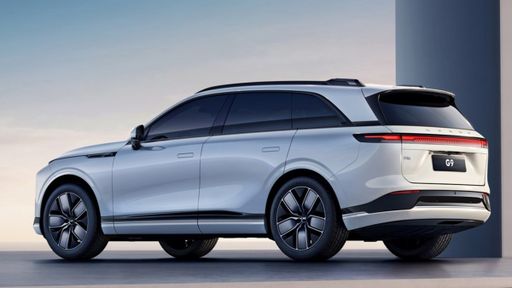 @ XPeng Motors
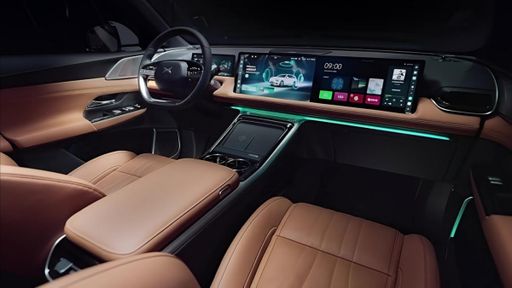 @ XPeng Motors
Hyundai IONIQ 6
XPeng G9
|
@ Hyundai Motor Company
|
@ XPeng Motors
|
|
|
|
Costs and Consumption |
|
|---|---|
|
Price
37600 - 64300 £
|
Price
51100 - 62200 £
|
|
Consumption L/100km
-
|
Consumption L/100km
-
|
|
Consumption kWh/100km
13.9 - 15.1 kWh
|
Consumption kWh/100km
18.4 - 20.1 kWh
|
|
Electric Range
429 - 614 km
|
Electric Range
502 - 585 km
|
|
Battery Capacity
53 - 84 kWh
|
Battery Capacity
78.2 - 92.2 kWh
|
|
co2
0 g/km
|
co2
0 g/km
|
|
Fuel tank capacity
-
|
Fuel tank capacity
-
|
Dimensions and Body |
|
|---|---|
|
Body Type
Hatchback
|
Body Type
SUV
|
|
Seats
5
|
Seats
5
|
|
Doors
4
|
Doors
5
|
|
Curb weight
1850 - 2095 kg
|
Curb weight
2210 - 2395 kg
|
|
Trunk capacity
401 L
|
Trunk capacity
660 L
|
|
Length
4855 - 4935 mm
|
Length
4891 mm
|
|
Width
1880 - 1940 mm
|
Width
1937 mm
|
|
Height
1495 mm
|
Height
1670 - 1680 mm
|
|
Max trunk capacity
-
|
Max trunk capacity
1576 L
|
|
Payload
425 - 430 kg
|
Payload
-
|
Engine and Performance |
|
|---|---|
|
Engine Type
Electric
|
Engine Type
Electric
|
|
Transmission
Automatic
|
Transmission
Automatic
|
|
Transmission Detail
Reduction Gearbox
|
Transmission Detail
Reduction Gearbox
|
|
Drive Type
Rear-Wheel Drive, All-Wheel Drive
|
Drive Type
Rear-Wheel Drive, All-Wheel Drive
|
|
Power HP
151 - 650 HP
|
Power HP
351 - 575 HP
|
|
Acceleration 0-100km/h
3.2 - 8.8 s
|
Acceleration 0-100km/h
4.2 - 6.6 s
|
|
Max Speed
185 - 257 km/h
|
Max Speed
200 km/h
|
|
Torque
350 - 770 Nm
|
Torque
465 - 695 Nm
|
|
Number of Cylinders
-
|
Number of Cylinders
-
|
|
Power kW
111 - 478 kW
|
Power kW
258 - 423 kW
|
|
Engine capacity
-
|
Engine capacity
-
|
General |
|
|---|---|
|
Model Year
2022 - 2025
|
Model Year
2025
|
|
CO2 Efficiency Class
A
|
CO2 Efficiency Class
A
|
|
Brand
Hyundai
|
Brand
XPeng
|
What drive types are available for the Hyundai IONIQ 6?
Available configurations include Rear-Wheel Drive or All-Wheel Drive.
The prices and data displayed are estimates based on German list prices and may vary by country. This information is not legally binding.