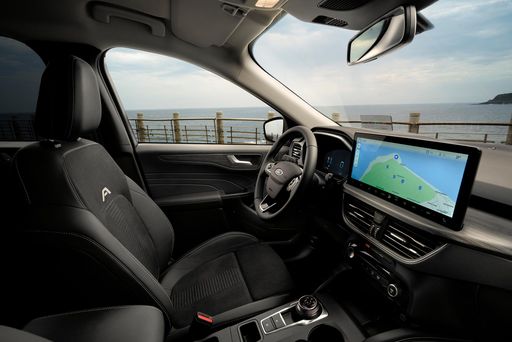
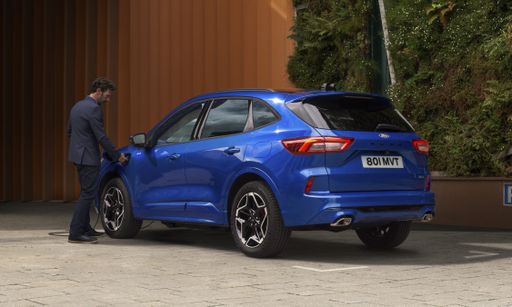
VS

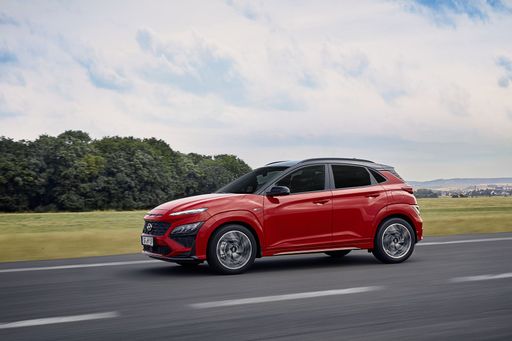
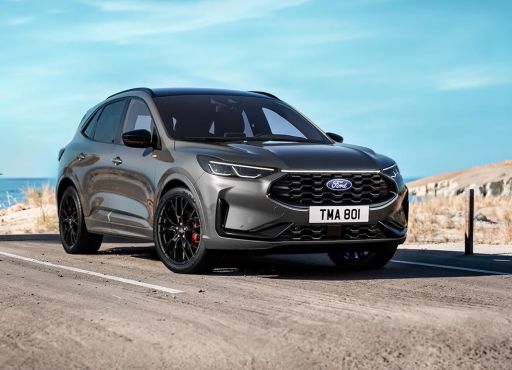
Hyundai Kona vs Ford Kuga comparison

Compare performance (204 HP vs 243 HP), boot space and price (23,600 £ vs 34,200 £ ) at a glance. Find out which car is the better choice for you – Hyundai Kona or Ford Kuga?

Hyundai Kona vs Ford Kuga: Key differences

Hyundai Kona

4.6 (10 Reviews)
rate
  • substantially cheaper
  • considerably more electric range
  • a bit lighter
details

Ford Kuga

4.3 (7 Reviews)
rate
  • a bit more power
  • substantially more efficient
  • moderately quicker 0–100 km/h
details

All details on performance, efficiency, range and trunk space can be found in the technical comparison below – including user reviews for both models.

By Achim Sedelmaier

Kona

Ford Kuga VS Hyundai Kona — quick take for shoppers

Ford Kuga and Hyundai Kona sit on opposite ends of the small-SUV spectrum: the Kuga drives with ambition, the Kona prioritises everyday calm and usable space. The Kuga feels more like a driver’s car in this class, with direct steering and a setup that rewards cornering and engagement. The Kona, by contrast, calms the day with an easy-to-read dash, physical controls and a more forgiving ride that suits routine commuting. Read on for how those different characters map to comfort, practicality and who each car actually fits best.
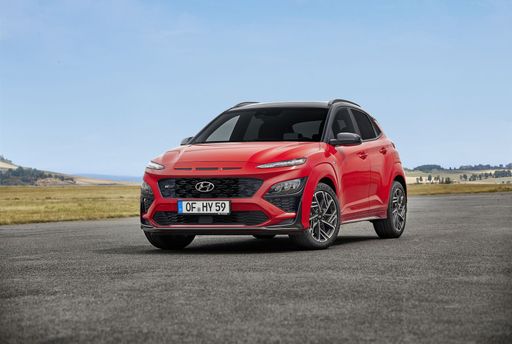
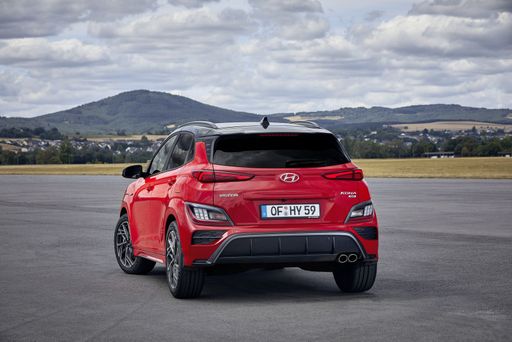
Kuga

Character and driving: engaged versus composed

The Ford Kuga pushes toward a sporty, taut character while the Hyundai Kona prefers composed, predictable behaviour. Kuga owners will notice a sharper steering response and a chassis that encourages confident cornering, making country roads more entertaining. Kona drivers get lighter steering, a quieter city demeanour and a setup that de-emphasises excitement in favour of reassurance. The trade-off is clear: Kuga rewards involvement at the cost of a firmer ride and occasional hybrid noise, whereas Kona trades that edge for relaxed daily manners.

Kona

Comfort and cabin feel: materials meet ergonomics

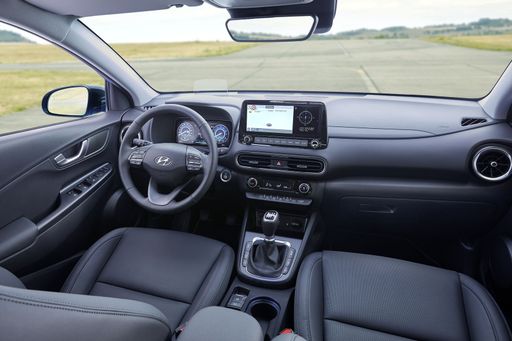
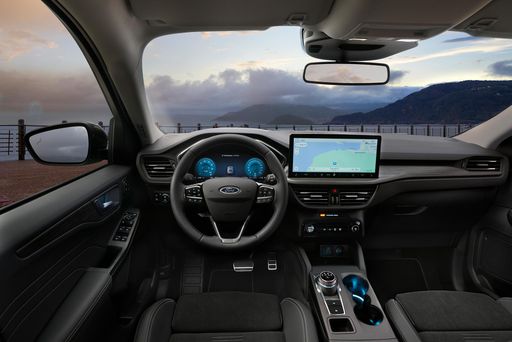
Inside, the Hyundai Kona leans on clarity and perceived quality; controls are more tactile and menus feel less fiddly than in the Ford Kuga. The Kuga’s cabin is functional and roomy but uses simpler surfaces and a touch-first climate control layout that some buyers find distracting on the move. Kona’s seats and suspension tuning generally make longer commutes feel less fatiguing, while Kuga’s firmer setup can feel sportier but harsher over poor surfaces. If cabin polish and straightforward ergonomics matter, the Kona will feel more settled; if you prefer a car that feels mechanically precise and driver-focused, the Kuga’s interior matches that spirit.

Kuga

Usability and practicality: flexibility versus outright volume

The Ford Kuga scores with practical touches for families — a sliding rear bench and very usable rear legroom give it day-to-day flexibility that the Hyundai Kona lacks. The Kona, however, offers a larger, more straightforward boot and clever folding options on higher trims, so it wins for raw luggage space and easy loading. Kuga’s plug-in variants eat into cargo space, which narrows its advantage for owners who need both electric range and maximum luggage capacity. In short, choose the Kuga if you value rear-seat adjustability and modularity; choose the Kona if maximum boot room and simple cargo handling are priorities.

Kona

City life and long distances: where each car shines

In town the Hyundai Kona is noticeably friendlier thanks to a tighter turning circle, lighter steering and a calm ride that takes the strain out of stop-start traffic. The Ford Kuga brings advantages for mixed urban/interurban drivers when fitted with hybrid technology — it can be extremely economical in everyday city use and offers strong forward visibility for maneuvering. On the motorway the Kuga cruises with composure but can reveal hybrid drivetrain noise under hard acceleration, while Kona’s electric and hybrid versions are generally refined and smooth at steady speeds. So urban commuters will prefer the Kona’s low-stress manners, whereas mixed-distance drivers who value driver engagement and hybrid city efficiency may lean toward the Kuga.

Kuga

Buyer fit: who should pick the Kuga or the Kona

Pick the Ford Kuga if you want a compact SUV with a driver-first feel, a sliding rear seat for flexible family life and strong hybrid credentials for mixed commuting. Opt for the Hyundai Kona if you prioritise perceived cabin quality, larger boot space, simple ergonomics and a relaxed, comfortable daily ride — especially if you favour an electric or efficient hybrid option. Both cars are sensible small-SUV choices, but their trade-offs are clear: Kuga for engagement and adaptability, Kona for comfort and cargo practicality. The technical comparison that follows will unpack drivetrain, efficiency and dimensions so you can match those real-world impressions to the numbers.

Here’s where it gets real: The technical differences in detail

Kona

Costs and Efficiency:

When it comes to price and running costs, the biggest differences usually appear. This is often where you see which car fits your budget better in the long run.

Hyundai Kona is substantially cheaper – starting at 23,600 £ , while the Ford Kuga costs 34,200 £ . That’s a price difference of around 10,671 £.

Fuel consumption also shows a difference: the Ford Kuga uses 2.8 L/100km and is substantially more efficient than the Hyundai Kona with 4.6 L/100km. The difference is about 1.8 L/100km.

As for electric range, the Hyundai Kona offers considerably more range – reaching up to 510 km, about 442 km more than the Ford Kuga.

Kuga

Engine and Performance:

Power, torque and acceleration say a lot about how a car feels on the road. This is where you see which model delivers more driving dynamics.

When it comes to engine power, the Ford Kuga offers a bit more power – delivering 243 HP compared to 204 HP. That’s roughly 39 HP more horsepower.

When accelerating from 0 to 100 km/h, the Ford Kuga is moderately quicker – completing the sprint in 7.3 s, while the Hyundai Kona takes 8.1 s. That’s about 0.8 s quicker.

There’s also a difference in torque: the Hyundai Kona delivers very slightly more torque with 265 Nm compared to 240 Nm. That’s about 25 Nm more.

Kona

Space and Everyday Use:

Beyond pure performance, interior space and usability matter most in daily life. This is where you see which car is more practical and versatile.

Both vehicles offer seating for 5 people.

In terms of curb weight, Hyundai Kona is a bit lighter – 1,370 kg compared to 1,526 kg. The difference is around 156 kg.

When it comes to payload, the Ford Kuga carries somewhat more – 550 kg compared to 490 kg. That’s a difference of about 60 kg.

Who wins the race in the data check?

The Hyundai Kona is decisively ahead in the objective data comparison.
This result only shows which model scores more points on paper – not which of the two cars feels right for you.

from £23,600
Kona

Hyundai Kona

  • Engine Type Petrol, Full Hybrid, Electric
  • Transmission Manuel, Automatic
  • Drive Type Front-Wheel Drive, All-Wheel Drive
  • Power HP 115 - 204 HP
  • Consumption L/100km 4.6 - 7 L/100km
  • Consumption kWh/100km 14.6 - 16.1 kWh/100km
  • Electric Range 380 - 510 km
Hyundai Kona
Ford Kuga

Costs and Consumption

View detailed analysis

Engine and Performance

View detailed analysis

Dimensions and Body

View detailed analysis

Hyundai Kona

The Hyundai Kona is a compact crossover that pairs bold styling with practical everyday usability, offering a comfortable cabin and intuitive tech for modern drivers. Available in both conventional and electrified versions, Kona brings lively handling and strong value for buyers who want crossover versatility and standout character.

details

Ford Kuga

The Ford Kuga is a practical and comfortable compact SUV that balances everyday usability with a composed ride and adaptable interior. It offers sensible tech and safety features, making it a solid choice for families or anyone seeking a versatile, easy-to-live-with crossover.

details
Hyundai Kona
Ford Kuga

Costs and Consumption

Price
23,600 - 41,900 £
Price
34,200 - 46,300 £
Consumption L/100km
4.6 - 7 L/100km
Consumption L/100km
2.8 - 6.8 L/100km
Consumption kWh/100km
14.6 - 16.1 kWh/100km
Consumption kWh/100km
-
Electric Range
380 - 510 km
Electric Range
68 km
Battery Capacity
-
Battery Capacity
-
co2
0 - 163 g/km
co2
55 - 154 g/km
Fuel tank capacity
-
Fuel tank capacity
-

Dimensions and Body

Body Type
SUV
Body Type
SUV
Seats
5
Seats
5
Doors
-
Doors
-
Curb weight
1,370 - 1,773 kg
Curb weight
1,526 - 1,859 kg
Trunk capacity
466 L
Trunk capacity
-
Length
-
Length
-
Width
1,825 mm
Width
1,882 mm
Height
-
Height
-
Max trunk capacity
-
Max trunk capacity
-
Payload
420 - 490 kg
Payload
541 - 550 kg

Engine and Performance

Engine Type
Petrol, Full Hybrid, Electric
Engine Type
Petrol, Full Hybrid, Plugin Hybrid
Transmission
Manuel, Automatic
Transmission
Manuel, Automatic
Transmission Detail
Manual Gearbox, Dual-Clutch Automatic, Reduction Gearbox
Transmission Detail
Manual Gearbox, CVT, Automatic Gearbox
Drive Type
Front-Wheel Drive, All-Wheel Drive
Drive Type
Front-Wheel Drive, All-Wheel Drive
Power HP
115 - 204 HP
Power HP
150 - 243 HP
Acceleration 0-100km/h
8.1 - 11.9 s
Acceleration 0-100km/h
7.3 - 9.9 s
Max Speed
-
Max Speed
-
Torque
200 - 265 Nm
Torque
240 Nm
Number of Cylinders
3 - 4
Number of Cylinders
3 - 4
Power kW
85 - 150 kW
Power kW
111 - 178 kW
Engine capacity
998 - 1,598 cm3
Engine capacity
1,496 - 2,488 cm3

General

Model Year
2025
Model Year
2025
CO2 Efficiency Class
D, C, E, F, A
CO2 Efficiency Class
E, D, B
Brand
Hyundai
Brand
Ford
DriveDuel uses data analysis and artificial intelligence to evaluate vehicle data and create content. Content is regularly reviewed and improved. The displayed prices are estimates based on German list prices, adjusted to the respective country’s VAT. Country-specific registration taxes are not included. This information is not legally binding.