
 Deutschland
 France
 Nederland
 Great Britain
 Sverige
 Danmark
 Suomi
Suomi Italia
 Polska
 España
VS
Hyundai Nexo vs Ferrari 849 Testarossa Roadster comparison
Compare performance (204 HP vs 1,050 HP), boot space and price (59,900 £ vs 420,000 £ ) at a glance. Find out which car is the better choice for you – Hyundai Nexo or Ferrari 849 Testarossa Roadster?
Nexo
Costs and Efficiency:
Price and efficiency are often the first things buyers look at. Here it becomes clear which model has the long-term edge – whether at the pump, the plug, or in purchase price.
Hyundai Nexo is clearly cheaper – starting at 59,900 £ , while the Ferrari 849 Testarossa Roadster costs 420,000 £ . That’s a price difference of around 360,086 £.
849 Testarossa Roadster
Engine and Performance:
Power, torque and acceleration say a lot about how a car feels on the road. This is where you see which model delivers more driving dynamics.
When it comes to engine power, the Ferrari 849 Testarossa Roadster offers considerably more power – delivering 1,050 HP compared to 204 HP. That’s roughly 846 HP more horsepower.
When accelerating from 0 to 100 km/h, the Ferrari 849 Testarossa Roadster is significantly quicker – completing the sprint in 2.3 s, while the Hyundai Nexo takes 7.8 s. That’s about 5.5 s quicker.
Nexo
Space and Everyday Use:
Beyond pure performance, interior space and usability matter most in daily life. This is where you see which car is more practical and versatile.
Seats: Hyundai Nexo offers more seats – 5 vs 2.
In terms of curb weight, Ferrari 849 Testarossa Roadster is somewhat lighter – 1,660 kg compared to 1,955 kg. The difference is around 295 kg.
Who wins the race in the data check?
The Hyundai Nexo holds a decisive overall lead in the objective data comparison.
This result only shows which model scores more points on paper – not which of the two cars feels right for you.
from £59,900
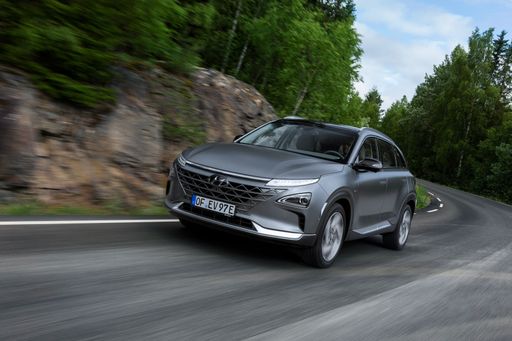
Hyundai Nexo
Hyundai Nexo
Ferrari 849 Testarossa Roadster
Costs and Consumption
View detailed analysis
View detailed analysis
Engine and Performance
View detailed analysis
View detailed analysis
Dimensions and Body
View detailed analysis
View detailed analysis
Hyundai Nexo
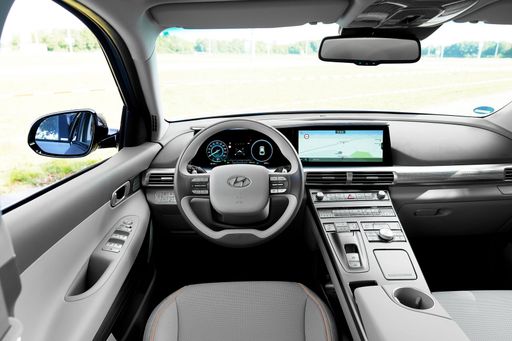
Hyundai Nexo looks like a quietly futuristic family car, gliding along with whisper-quiet refinement and a cabin that keeps long commutes pleasant. As a hydrogen-powered cruiser it delivers genuinely clean driving and a practical, slightly exotic alternative for buyers who want something clever without the fuss.
details


Ferrari 849 Testarossa Roadster
The Ferrari Testarossa Roadster strips the classic wedge-shaped drama down to open-top glamour, ensuring you arrive with presence and a grin. Behind the wheel it delivers a theatrical soundtrack and analogue charisma that will reward collectors and spirited drivers alike.
details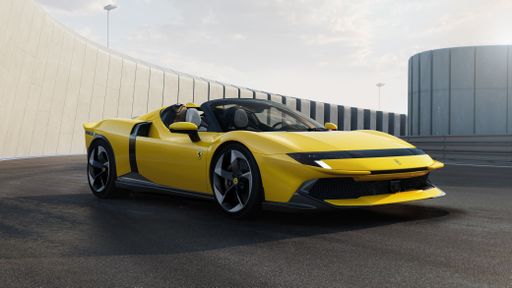
Hyundai Nexo
Ferrari 849 Testarossa Roadster
Costs and Consumption |
|
|---|---|
|
Price
59,900 - 66,500 £
|
Price
420,000 £
|
|
Consumption L/100km
-
|
Consumption L/100km
9.3 L/100km
|
|
Consumption kWh/100km
-
|
Consumption kWh/100km
-
|
|
Electric Range
-
|
Electric Range
25 km
|
|
Battery Capacity
-
|
Battery Capacity
-
|
|
co2
0 g/km
|
co2
212 g/km
|
|
Fuel tank capacity
-
|
Fuel tank capacity
-
|
Dimensions and Body |
|
|---|---|
|
Body Type
SUV
|
Body Type
Roadster
|
|
Seats
5
|
Seats
2
|
|
Doors
-
|
Doors
-
|
|
Curb weight
1,955 kg
|
Curb weight
1,660 kg
|
|
Trunk capacity
510 L
|
Trunk capacity
-
|
|
Length
-
|
Length
-
|
|
Width
1,865 mm
|
Width
1,999 mm
|
|
Height
-
|
Height
-
|
|
Max trunk capacity
-
|
Max trunk capacity
-
|
|
Payload
485 kg
|
Payload
-
|
Engine and Performance |
|
|---|---|
|
Engine Type
Hydrogen
|
Engine Type
Plugin Hybrid
|
|
Transmission
Automatic
|
Transmission
Automatic
|
|
Transmission Detail
Reduction Gearbox
|
Transmission Detail
Dual-Clutch Automatic
|
|
Drive Type
Front-Wheel Drive
|
Drive Type
All-Wheel Drive
|
|
Power HP
204 HP
|
Power HP
1,050 HP
|
|
Acceleration 0-100km/h
7.8 - 8.1 s
|
Acceleration 0-100km/h
2.3 s
|
|
Max Speed
-
|
Max Speed
-
|
|
Torque
350 Nm
|
Torque
-
|
|
Number of Cylinders
-
|
Number of Cylinders
8
|
|
Power kW
150 kW
|
Power kW
772 kW
|
|
Engine capacity
-
|
Engine capacity
3,990 cm3
|
General |
|
|---|---|
|
Model Year
2,026
|
Model Year
2,026
|
|
CO2 Efficiency Class
A
|
CO2 Efficiency Class
G
|
|
Brand
Hyundai
|
Brand
Ferrari
|
DriveDuel uses data analysis and artificial intelligence to evaluate vehicle data and create content. Content is regularly reviewed and improved.
The displayed prices are estimates based on German list prices, adjusted to the respective country’s VAT. Country-specific registration taxes are not included. This information is not legally binding.