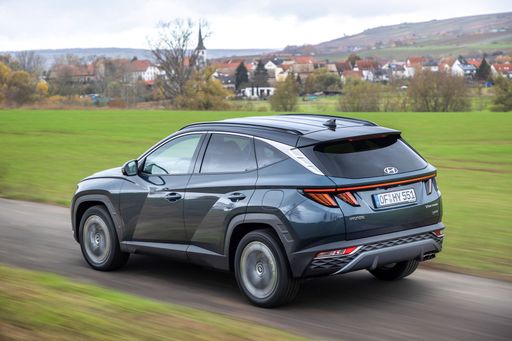
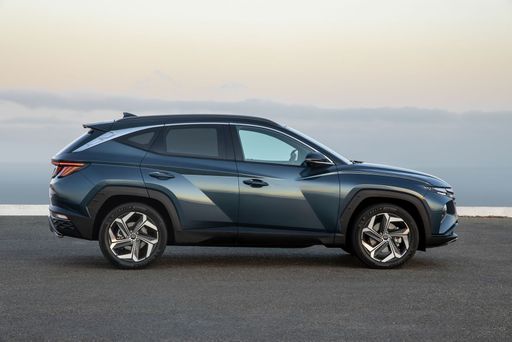
VS

Hyundai Tucson vs BMW 3 Series Touring comparison

Compare performance (288 HP vs 530 HP), boot space and price (20,900 £ vs 41,100 £ ) at a glance. Find out which car is the better choice for you – Hyundai Tucson or BMW 3 Series Touring?

Hyundai Tucson vs BMW 3 Series Touring: Key differences

Hyundai Tucson

4.6 (4 Reviews)
rate
  • significantly cheaper
  • marginally lighter
  • slightly more trunk space

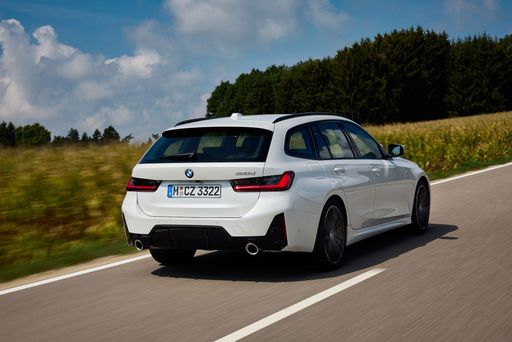
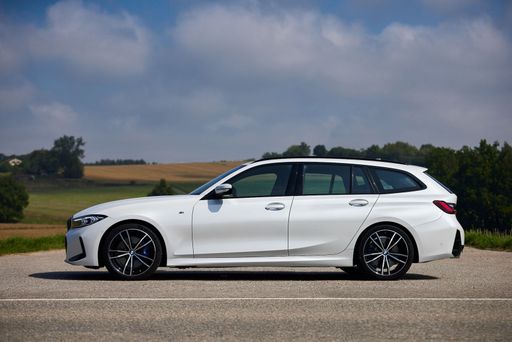
BMW 3 Series Touring

4.3 (1 Reviews)
rate
  • substantially more power
  • marginally more efficient
  • visibly more electric range
  • significantly quicker 0–100 km/h

All details on performance, efficiency, range and trunk space can be found in the technical comparison below – including user reviews for both models.

Tucson

BMW 3er Touring vs. Hyundai Tucson: Wagon vs. SUV Showdown

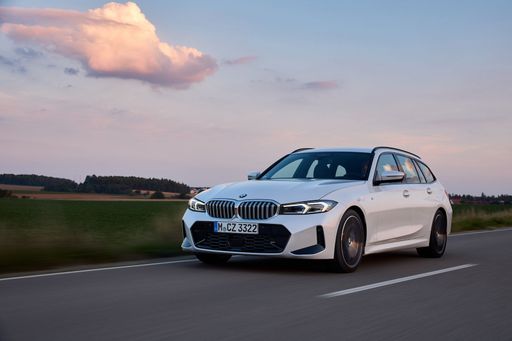
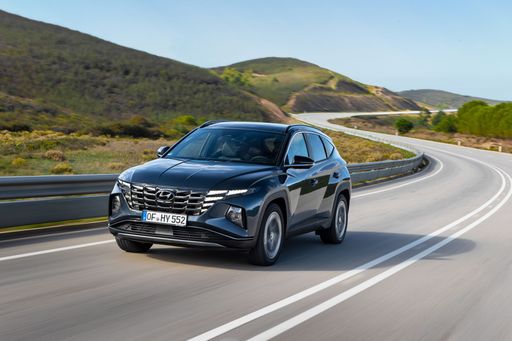
In the world of automobiles, the decision between a sleek wagon and a robust SUV is an age-old debate. Today, we put two popular models under the microscope: the BMW 3er Touring and the Hyundai Tucson. While the BMW 3er Touring is a masterclass in luxury wagons, the Hyundai Tucson cuts a formidable figure in the compact SUV segment. Let's delve into the specifics and see how these vehicles stack up against each other.
3 Series Touring

Performance and Drivetrain

Starting with the BMW 3er Touring, its performance credentials are nothing short of impressive. The range of engine options includes diesel MHEV, petrol, petrol MHEV, and plugin hybrid variants with power outputs ranging from 150 HP to a staggering 550 HP. Most models come with rear-wheel drive or all-wheel drive, coupled with a smooth automatic gearbox. Notably, the acceleration for the top-of-the-line models is blisteringly quick, with the 0-100 km/h sprint achieved in just 3.5 seconds for the most powerful variant.

Meanwhile, the Hyundai Tucson offers a rich variety of configurations with diesel MHEV, petrol MHEV, petrol, full hybrid, and plugin hybrid engines. Its power ranges from 136 HP to 252 HP, maintaining decent performance across the board. This SUV comes with front-wheel or all-wheel drive options and both automatic and manual transmissions. The Tucson's acceleration is respectable with a best time of 7.9 seconds for a 0-100 km/h sprint.

Tucson

Fuel Efficiency and Range

The BMW 3er Touring shows its engineering prowess with competitive fuel consumption figures, ranging from 0.9 L/100 km in hybrid modes up to 10.5 L/100 km for more powerful petrol engines. The hybrid variants offer an impressive electric-only range of up to 96 km with a 19.5 kWh battery capacity.

In comparison, the Hyundai Tucson presents itself as an efficient contender. The fuel consumption is also commendable, ranging from 1.0 L/100 km on hybrid modes to 6.8 L/100 km for traditional engines. Arizona's plugin hybrid models provide an electric range of up to 70 km, making it a great option for those mindful of the environment and fuel economy.

3 Series Touring

Dimensions and Cargo Space

Size often plays a crucial role in a vehicle choice, especially between a wagon and an SUV. The BMW 3er Touring measures up to 4801 mm in length, 1918 mm in width, and stands 1448 mm tall, emphasizing sleekness and aerodynamic prowess. It offers a trunk capacity of up to 500 liters, which efficiently caters to everyday needs, but slightly trails when compared to the Tucson.

The Hyundai Tucson, true to its SUV lineage, boasts larger dimensions, with a length of 4520 mm, a width of 1865 mm, and a height of 1650 mm. This translates into a superior trunk capacity of up to 620 liters, apt for bigger cargo loads and family expeditions, thereby enhancing its appeal to the adventurous at heart.

Tucson

Driving Experience and Comfort

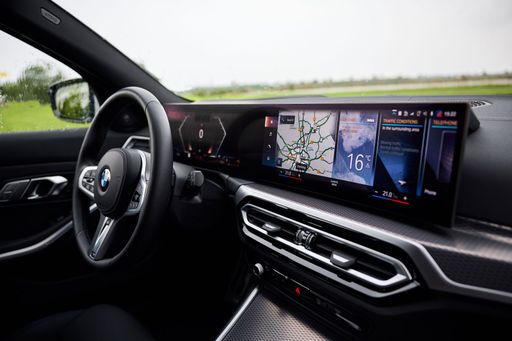
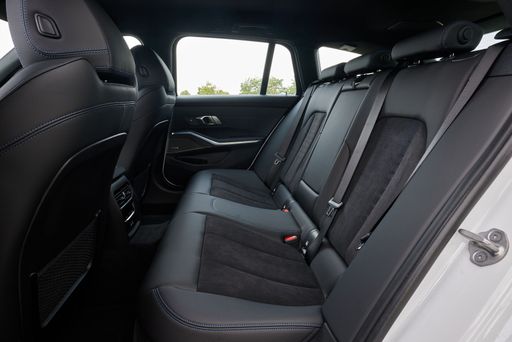
BMW sets a high bar with exceptional interior refinement, luxurious materials, and advanced technology features. The driving experience is further augmented by innovations in safety and driver assistance systems, ensuring a relaxed yet engaging drive. The seating capacity is five, offering comfortable accommodation for passengers.

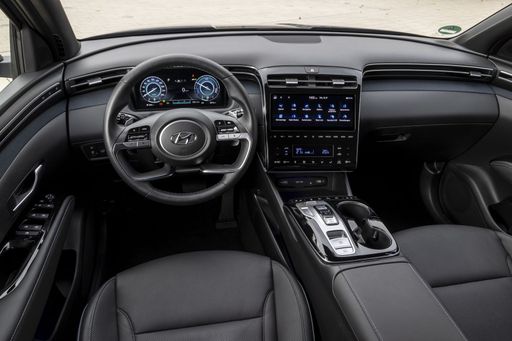
The Hyundai Tucson embraces a philosophy of practicality blended with elegance. It provides a versatile interior with a modern design, integrating intuitive technologies for an enhanced driving experience. The spacious cabin and high seating position provide excellent visibility and comfort for all occupants.

3 Series Touring

Conclusion: A Choice Between Luxury and Utility

In conclusion, if luxury, high performance, and a dynamic driving experience are at the top of your list, the BMW 3er Touring is hard to beat. Its diverse engine options and stellar driving dynamics make it a standout choice for those who relish driving pleasure.

On the flip side, the Hyundai Tucson is an excellent choice for those seeking comfort, spaciousness, and efficiency. Its superior cargo capacity and versatile hybrid options offer great appeal to families and adventure enthusiasts alike.

This comparison cements the notion that both the BMW 3er Touring and Hyundai Tucson cater to different segments and preferences. The choice between these two champions boils down to one's lifestyle needs and driving preferences.

Here’s where it gets real: The technical differences in detail

Tucson

Costs and Efficiency:

When it comes to price and running costs, the biggest differences usually appear. This is often where you see which car fits your budget better in the long run.

Hyundai Tucson is significantly cheaper – starting at 20,900 £ , while the BMW 3 Series Touring costs 41,100 £ . That’s a price difference of around 20,160 £.

Fuel consumption also shows a difference: the BMW 3 Series Touring uses 2.5 L/100km and is marginally more efficient than the Hyundai Tucson with 2.7 L/100km. The difference is about 0.2 L/100km.

As for electric range, the BMW 3 Series Touring offers visibly more range – reaching up to 97 km, about 27 km more than the Hyundai Tucson.

3 Series Touring

Engine and Performance:

Under the bonnet, it becomes clear which model is tuned for sportiness and which one takes the lead when you hit the accelerator.

When it comes to engine power, the BMW 3 Series Touring offers substantially more power – delivering 530 HP compared to 288 HP. That’s roughly 242 HP more horsepower.

When accelerating from 0 to 100 km/h, the BMW 3 Series Touring is significantly quicker – completing the sprint in 3.6 s, while the Hyundai Tucson takes 7.5 s. That’s about 3.9 s quicker.

Looking at top speed, the BMW 3 Series Touring is a bit faster – reaching 250 km/h, while the Hyundai Tucson tops out at 204 km/h. The difference is around 46 km/h.

There’s also a difference in torque: the BMW 3 Series Touring delivers substantially more torque with 700 Nm compared to 379 Nm. That’s about 321 Nm more.

Tucson

Space and Everyday Use:

Whether family car or daily driver – which one offers more room, flexibility and comfort?

Both vehicles offer seating for 5 people.

In terms of curb weight, Hyundai Tucson is marginally lighter – 1,542 kg compared to 1,650 kg. The difference is around 108 kg.

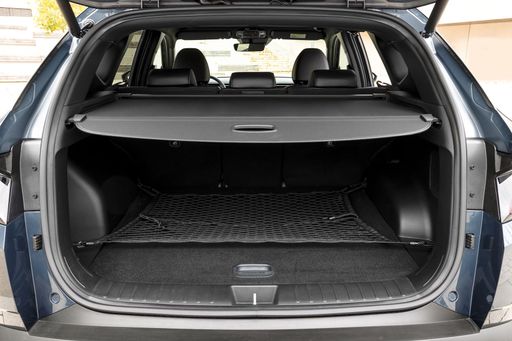
Looking at boot space, the Hyundai Tucson offers slightly more boot space – 620 L compared to 500 L. That’s a difference of about 120 L.

For maximum load capacity, the Hyundai Tucson offers moderately more capacity – up to 1,799 L, about 289 L more than the BMW 3 Series Touring.

When it comes to payload, the Hyundai Tucson carries very slightly more – 545 kg compared to 520 kg. That’s a difference of about 25 kg.

Who wins the race in the data check?

The BMW 3 Series Touring holds a decisive overall lead in the objective data comparison.
This result only shows which model scores more points on paper – not which of the two cars feels right for you.

from £41,100
3 Series Touring

BMW 3 Series Touring

  • Engine Type : Diesel MHEV, Petrol, Petrol MHEV, Plugin Hybrid
  • Transmission : Automatic
  • Drive Type : Rear-Wheel Drive, All-Wheel Drive
  • Power HP : 150 - 530 HP
  • Consumption L/100km : 2.5 - 10.3 L/100km
  • Electric Range : 91 - 97 km
Hyundai Tucson
BMW 3 Series Touring

Costs and Consumption

View detailed analysis

Engine and Performance

View detailed analysis

Dimensions and Body

View detailed analysis

Hyundai Tucson

Hyundai Tucson marries bold, sculpted looks with a clever, roomy cabin that feels smarter than its price tag suggests. It's composed on the road, easy to live with day-to-day, and a sensible choice for buyers who want SUV style without the showroom theatrics.

details

BMW 3 Series Touring

The BMW 3 Series Touring blends sporting poise with everyday practicality, wrapping sharp handling and a premium cabin into a wagon that actually makes errands feel enjoyable. It’s the kind of car that hides a family-hauler’s sense of duty beneath a driver's-car attitude — useful, classy, and just cheeky enough to make you smile on the open road.

details
Hyundai Tucson
BMW 3 Series Touring

Costs and Consumption

Price
20,900 - 47,900 £
Price
41,100 - 91,900 £
Consumption L/100km
2.7 - 7.6 L/100km
Consumption L/100km
2.5 - 10.3 L/100km
Consumption kWh/100km
-
Consumption kWh/100km
-
Electric Range
63 - 70 km
Electric Range
91 - 97 km
Battery Capacity
-
Battery Capacity
19.5 kWh
co2
62 - 172 g/km
co2
57 - 233 g/km
Fuel tank capacity
52 - 54 L
Fuel tank capacity
40 - 59 L

Dimensions and Body

Body Type
SUV
Body Type
Estate
Seats
5
Seats
5
Doors
5
Doors
5
Curb weight
1,542 - 1,893 kg
Curb weight
1,650 - 2,025 kg
Trunk capacity
546 - 620 L
Trunk capacity
410 - 500 L
Length
4,525 - 4,535 mm
Length
4,713 mm
Width
1,865 mm
Width
1,827 - 1,903 mm
Height
1,650 mm
Height
1,440 - 1,448 mm
Max trunk capacity
1,795 - 1,799 L
Max trunk capacity
1,420 - 1,510 L
Payload
518 - 545 kg
Payload
430 - 520 kg

Engine and Performance

Engine Type
Petrol, Full Hybrid, Plugin Hybrid, Diesel MHEV
Engine Type
Diesel MHEV, Petrol, Petrol MHEV, Plugin Hybrid
Transmission
Manuel, Automatic
Transmission
Automatic
Transmission Detail
Manual Gearbox, Dual-Clutch Automatic, Automatic Gearbox
Transmission Detail
Automatic Gearbox
Drive Type
Front-Wheel Drive, All-Wheel Drive
Drive Type
Rear-Wheel Drive, All-Wheel Drive
Power HP
136 - 288 HP
Power HP
150 - 530 HP
Acceleration 0-100km/h
7.5 - 11.6 s
Acceleration 0-100km/h
3.6 - 8.8 s
Max Speed
196 - 204 km/h
Max Speed
213 - 250 km/h
Torque
250 - 379 Nm
Torque
250 - 700 Nm
Number of Cylinders
4
Number of Cylinders
4 - 6
Power kW
100 - 212 kW
Power kW
110 - 390 kW
Engine capacity
1,598 cm3
Engine capacity
1,995 - 2,998 cm3

General

Model Year
2,025
Model Year
2,024 - 2,025
CO2 Efficiency Class
F, D, E, B
CO2 Efficiency Class
D, E, F, G, B
Brand
Hyundai
Brand
BMW
DriveDuel uses data analysis and artificial intelligence to evaluate vehicle data and create content. Content is regularly reviewed and improved. The displayed prices are estimates based on German list prices, adjusted to the respective country’s VAT. Country-specific registration taxes are not included. This information is not legally binding.