VS

Hyundai Tucson vs CUPRA Formentor comparison

Compare performance (288 HP vs 390 HP), boot space and price (31,300 £ vs 35,800 £ ) at a glance. Find out which car is the better choice for you – Hyundai Tucson or CUPRA Formentor?

Hyundai Tucson vs CUPRA Formentor: Key differences

Hyundai Tucson

4.8 (6 Reviews)
rate
  • a bit cheaper
  • noticeably more trunk space
details

CUPRA Formentor

4.9 (2 Reviews)
rate
  • noticeably more power
  • considerably more efficient
  • clearly more electric range
  • considerably quicker 0–100 km/h
  • only slightly lighter
details

All details on performance, efficiency, range and trunk space can be found in the technical comparison below – including user reviews for both models.

By Achim Sedelmaier

Tucson

Head-to-Head: CUPRA Formentor vs Hyundai Tucson

The automotive landscape is rich with choices, especially within the SUV segment. Two models that have recently taken center stage are the CUPRA Formentor and the Hyundai Tucson. Both are designed with distinct characteristics that cater to a diverse set of preferences. In this comprehensive comparison, we will explore their technical aspects, innovations, and overall performance to make an informed decision for potential buyers.
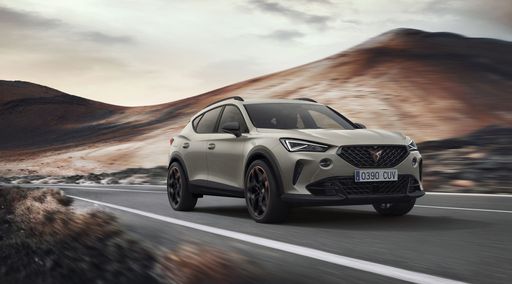
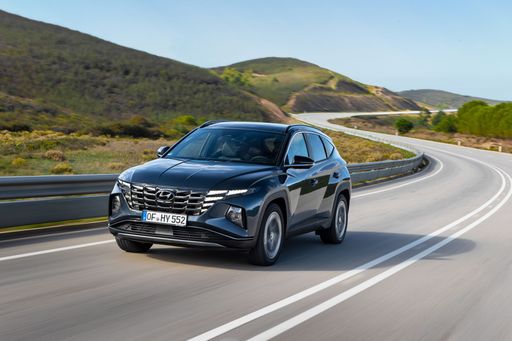
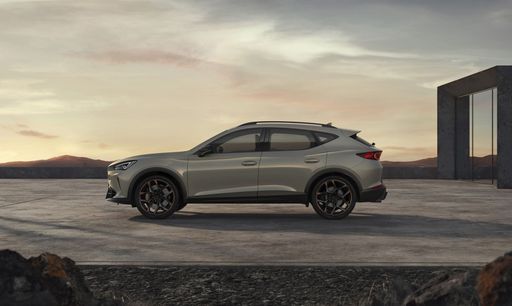
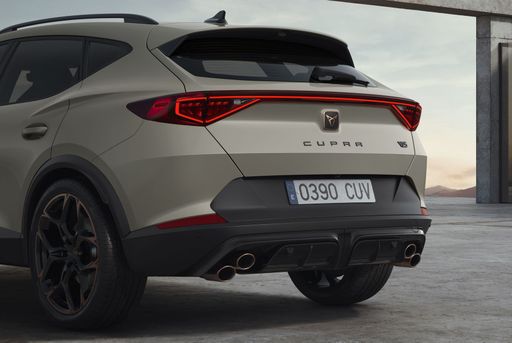
Formentor

Powertrains and Performance

Starting with the CUPRA Formentor, this SUV offers a diverse range of engine options that include petrol, diesel, and hybrid variants. The power ranges from a robust 150 HP to an impressive 333 HP in its top-tier configuration. The Formentor's acceleration figures are equally impressive, achieving 0-100 km/h in as low as 4.8 seconds. This model also caters to the eco-conscious driver, with a plug-in hybrid option that features an electric range of up to 125 km and a battery capacity of 19.7 kWh.

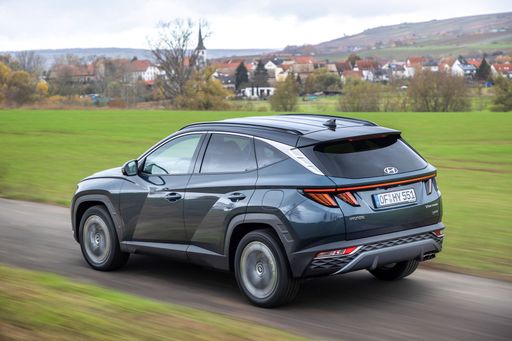
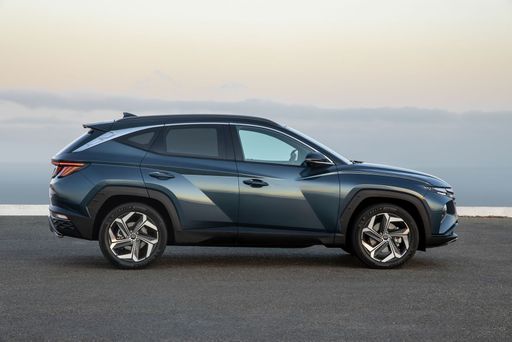
Meanwhile, the Hyundai Tucson boasts similarly versatile powertrains, featuring options from petrol and diesel to hybrid and plug-in hybrid configurations. The Tucson's power output peaks at 252 HP, and it can sprint from 0-100 km/h in as fast as 7.9 seconds. While the Tucson's electric range is slightly lower at 70 km, it compensates with a higher trunk capacity, making it well-suited for family trips.

Tucson

Fuel Efficiency and Sustainability

Fuel efficiency is a significant factor for many SUV buyers today. The CUPRA Formentor showcases impressive consumption figures, with values as low as 5.1 L/100 km for its diesel engine, alongside hybrid variants that return exceptional averages of 0.4 L/100 km in electric mode. CO2 emissions fluctuate from 131 to 199 g/km, depending on the variant, placing it in various efficiency classes.

The Hyundai Tucson, on the other hand, also highlights efficiency with consumption figures ranging from 5.1 L/100 km for diesel to just 1.0 L/100 km in electric mode for its plug-in hybrid variant. CO2 emissions range from 126 to 153 g/km, making both models competitive in terms of ecological impact.

Formentor

Dimensions and Practicality

When it comes to size, the CUPRA Formentor measures 4451 mm in length and 1839 mm in width. Its trunk capacity ranges from 345 to 450 liters, ensuring ample space for luggage and daily hauling needs. With a curb weight between 1434 kg and 1742 kg, the Formentor offers a sporty feel without losing practicality.

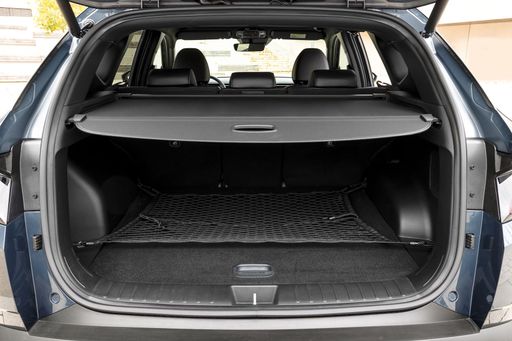
On the flip side, the Hyundai Tucson stands slightly larger at lengths of 4510 mm and 4520 mm, with a width of 1865 mm. Its trunk capacity edges out at an impressive 620 liters, making it ideal for families or those requiring extra storage. The Tucson's weight ranges from 1520 kg to 1889 kg, contributing to its stable road presence.

Tucson

Interior and Technology

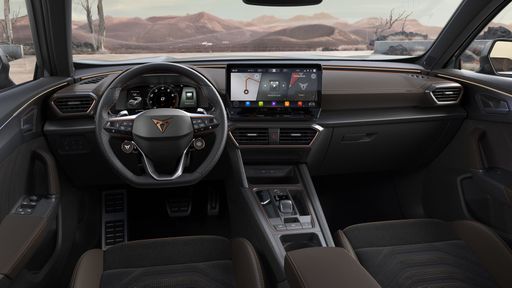
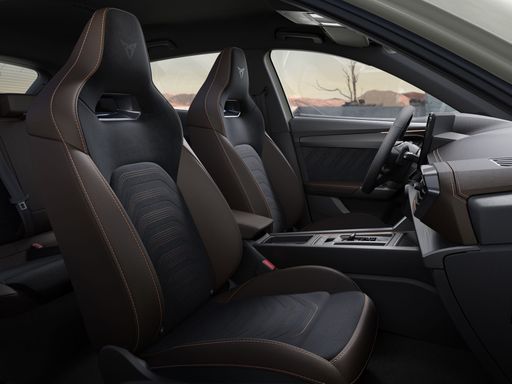
Both SUVs offer an array of cutting-edge technology designed to enhance the driving experience. The CUPRA Formentor emphasizes a sporty interior aesthetic, complete with high-end materials and a digital cockpit that includes a comprehensive infotainment system. It also features advanced driver assistance systems to improve safety and convenience on the road.

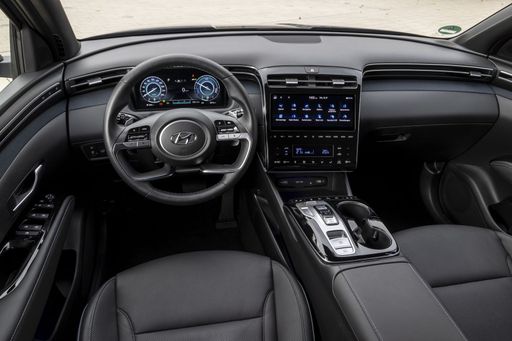
The Hyundai Tucson does not fall short in technological prowess either. Its interior is thoughtfully designed, providing a user-friendly interface with an extensive infotainment system. The Tucson focuses on comfort and practicality, with ample legroom and an intelligent layout that caters to the needs of all passengers.

Formentor

Final Thoughts

In summary, both the CUPRA Formentor and Hyundai Tucson offer unique advantages depending on what a buyer prioritizes. The Formentor appeals to those seeking performance and sportiness, while the Tucson excels in practicality and spaciousness. Ultimately, it comes down to personal preference and lifestyle needs whether one opts for CUPRA's spirited edge or Hyundai's family-friendly versatility.

Here’s where it gets real: The technical differences in detail

Tucson

Costs and Efficiency:

Looking at overall running costs, both models reveal some interesting differences in everyday economy.

Hyundai Tucson is a bit cheaper – starting at 31,300 £ , while the CUPRA Formentor costs 35,800 £ . That’s a price difference of around 4,474 £.

Fuel consumption also shows a difference: the CUPRA Formentor uses 1.4 L/100km and is considerably more efficient than the Hyundai Tucson with 2.7 L/100km. The difference is about 1.3 L/100km.

As for electric range, the CUPRA Formentor offers clearly more range – reaching up to 126 km, about 56 km more than the Hyundai Tucson.

Formentor

Engine and Performance:

Power, torque and acceleration are the classic benchmarks for car enthusiasts – and here, some clear differences start to show.

When it comes to engine power, the CUPRA Formentor offers noticeably more power – delivering 390 HP compared to 288 HP. That’s roughly 102 HP more horsepower.

When accelerating from 0 to 100 km/h, the CUPRA Formentor is considerably quicker – completing the sprint in 4.2 s, while the Hyundai Tucson takes 7.5 s. That’s about 3.3 s quicker.

There’s also a difference in torque: the CUPRA Formentor delivers clearly more torque with 480 Nm compared to 379 Nm. That’s about 101 Nm more.

Tucson

Space and Everyday Use:

Cabin size, boot volume and payload all play a role in everyday practicality. Here, comfort and flexibility make the difference.

Both vehicles offer seating for 5 people.

In terms of curb weight, CUPRA Formentor is only slightly lighter – 1,434 kg compared to 1,542 kg. The difference is around 108 kg.

Looking at boot space, the Hyundai Tucson offers noticeably more boot space – 620 L compared to 450 L. That’s a difference of about 170 L.

When it comes to payload, the Hyundai Tucson carries barely more – 545 kg compared to 526 kg. That’s a difference of about 19 kg.

Who wins the race in the data check?

The CUPRA Formentor is clearly superior overall in the objective data comparison.
This result only shows which model scores more points on paper – not which of the two cars feels right for you.

from £35,800
Formentor

CUPRA Formentor

  • Engine Type : Petrol, Petrol MHEV, Diesel, Plugin Hybrid
  • Transmission : Automatic, Manuel
  • Drive Type : Front-Wheel Drive, All-Wheel Drive
  • Power HP : 150 - 390 HP
  • Consumption L/100km : 1.4 - 10.1 L/100km
  • Electric Range : 117 - 126 km
Hyundai Tucson
CUPRA Formentor

Costs and Consumption

View detailed analysis

Engine and Performance

View detailed analysis

Dimensions and Body

View detailed analysis

Hyundai Tucson

The Hyundai Tucson is a well-rounded compact SUV that blends modern styling with a comfortable, thoughtfully laid-out interior, making it appealing for daily driving and family use. It delivers a calm ride, a generous level of equipment for the price, and sensible practicality, so it's a smart choice if you want a straightforward, dependable crossover without fuss.

details

CUPRA Formentor

The CUPRA Formentor blends sporty driving dynamics with crossover practicality, delivering sharp handling and an engaging character that makes it fun on twisty roads as well as in daily driving. Inside, it pairs a driver-focused cabin and premium materials with clever practicality, offering a confident, distinctive alternative to conventional SUVs.

details
Hyundai Tucson
CUPRA Formentor

Costs and Consumption

Price
31,300 - 48,800 £
Price
35,800 - 62,500 £
Consumption L/100km
2.7 - 7.6 L/100km
Consumption L/100km
1.4 - 10.1 L/100km
Consumption kWh/100km
-
Consumption kWh/100km
-
Electric Range
63 - 70 km
Electric Range
117 - 126 km
Battery Capacity
-
Battery Capacity
-
co2
62 - 172 g/km
co2
32 - 229 g/km
Fuel tank capacity
-
Fuel tank capacity
-

Dimensions and Body

Body Type
SUV
Body Type
SUV
Seats
5
Seats
5
Doors
-
Doors
-
Curb weight
1,542 - 1,893 kg
Curb weight
1,434 - 1,742 kg
Trunk capacity
546 - 620 L
Trunk capacity
345 - 450 L
Length
-
Length
-
Width
1,865 mm
Width
1,839 - 1,852 mm
Height
-
Height
-
Max trunk capacity
-
Max trunk capacity
-
Payload
518 - 545 kg
Payload
439 - 526 kg

Engine and Performance

Engine Type
Petrol, Full Hybrid, Plugin Hybrid, Diesel MHEV
Engine Type
Petrol, Petrol MHEV, Diesel, Plugin Hybrid
Transmission
Manuel, Automatic
Transmission
Automatic, Manuel
Transmission Detail
Manual Gearbox, Dual-Clutch Automatic, Automatic Gearbox
Transmission Detail
Dual-Clutch Automatic, Manual Gearbox
Drive Type
Front-Wheel Drive, All-Wheel Drive
Drive Type
Front-Wheel Drive, All-Wheel Drive
Power HP
136 - 288 HP
Power HP
150 - 390 HP
Acceleration 0-100km/h
7.5 - 11.6 s
Acceleration 0-100km/h
4.2 - 9 s
Max Speed
-
Max Speed
-
Torque
250 - 379 Nm
Torque
250 - 480 Nm
Number of Cylinders
4
Number of Cylinders
4 - 5
Power kW
100 - 212 kW
Power kW
110 - 287 kW
Engine capacity
1,598 cm3
Engine capacity
1,498 - 2,480 cm3

General

Model Year
2025
Model Year
2,024 - 2,026
CO2 Efficiency Class
F, D, E, B
CO2 Efficiency Class
G, E, D, F, B
Brand
Hyundai
Brand
CUPRA
DriveDuel uses data analysis and artificial intelligence to evaluate vehicle data and create content. Content is regularly reviewed and improved. The displayed prices are estimates based on German list prices, adjusted to the respective country’s VAT. Country-specific registration taxes are not included. This information is not legally binding.