@ Hyundai Motor Company
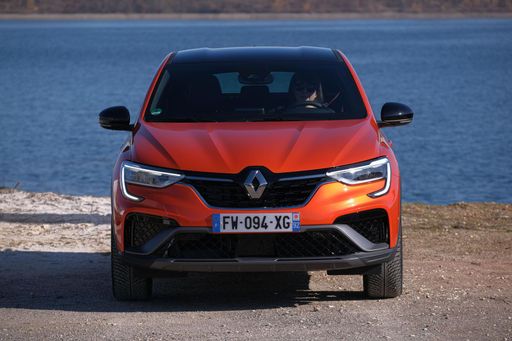
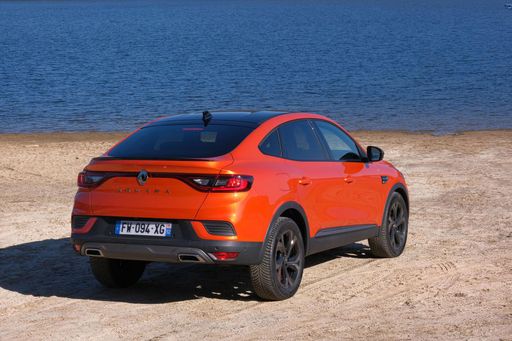
@ Renault Group Media
VS

Hyundai Tucson vs Renault Arkana – Performance, range & efficiency compared

Both models have their strengths – but which one suits you more?
Compare performance, efficiency, price and space directly: Hyundai Tucson or Renault Arkana?

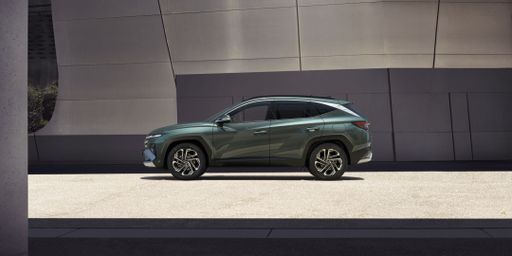
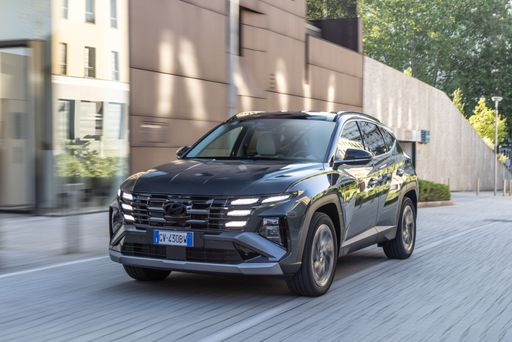
Tucson @ Hyundai Motor Company

Hyundai Tucson vs Renault Arkana: The SUV Standoff

In the dynamic landscape of SUVs, the Hyundai Tucson and Renault Arkana represent two compelling choices for automotive enthusiasts. As both strive for supremacy in the compact SUV segment, each vehicle showcases a myriad of features and technical innovations that make them stand out. Let's delve into what makes each model unique, comparing their technical specifications, design elements, and innovative features.
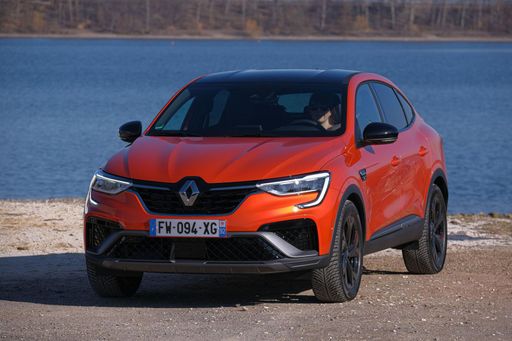
Arkana @ Renault Group Media

Design and Dimensions

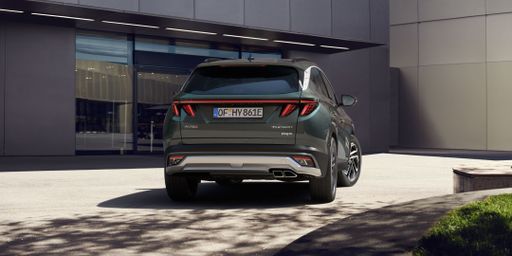
The Hyundai Tucson, with its aggressive and bold design, measures at a length of 4520 mm, a width of 1865 mm, and a height of 1650 mm. This model exudes a robust athleticism, aimed to attract those who appreciate a commanding road presence.

In contrast, the Renault Arkana boasts a sleek and sporty design with dimensions of 4568 mm in length, 1821 mm in width, and a height of 1576 mm. This vehicle cleverly combines coupe lines with SUV versatility, appealing to those seeking a blend of elegance and practicality.

Tucson @ Hyundai Motor Company

Engine and Performance

The Hyundai Tucson offers a diverse range of powertrains, including Diesel MHEV, Petrol MHEV, Petrol, Full Hybrid, and Plugin Hybrid options. This variety translates to power outputs ranging from 136 to 252 HP, catering to various driving preferences. Acceleration from 0-100 km/h varies from 7.9 to 11.4 seconds depending on the chosen powertrain, while the maximum speed peaks at 194 km/h. Additionally, Tucson models come with either a front-wheel drive or an all-wheel drive system, paired with automatic or manual transmission options.

The Renault Arkana primarily focuses on efficiency with its Full Hybrid and Petrol MHEV engines. It offers power outputs between 140 and 158 HP, with its fastest acceleration being 9.1 seconds from 0-100 km/h. The Arkana, with a top speed of 174 km/h, is designed for those who value eco-friendliness alongside performance. The exclusive front-wheel drive means it caters more to urban and on-road adventures.

Arkana @ Renault Group Media

Fuel Efficiency and Environmental Impact

Efficiency is a core aspect of Hyundai Tucson's charm, offering consumption figures that range from 1 L/100 km for plugin hybrids to 6.8 L/100 km for traditional petrol engines. The CO2 emissions reflect a greener ideology with values as low as 22 g/km, adhering to stricter environmental standards.

Renault Arkana excels in fuel economy, especially with its Full Hybrid variant consuming only 4.7 L/100 km. Its commitment to reducing carbon footprint is evident with CO2 emissions as low as 106 g/km, situated comfortably within the C efficiency class.

Tucson @ Hyundai Motor Company

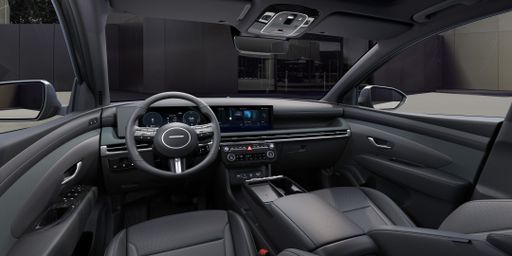
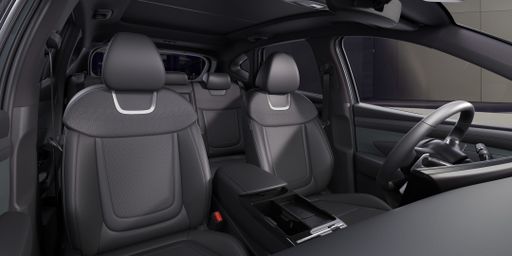
Interior Features and Driving Comfort

Inside, the Hyundai Tucson is designed with a focus on space and comfort, accommodating five seats with a generous trunk capacity ranging from 546 to 620 liters. Such accommodations make it suitable for family outings or adventures with ample cargo space.

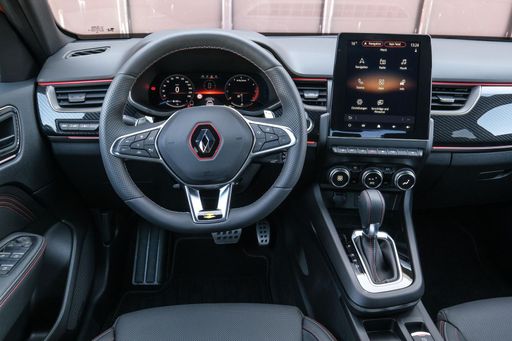
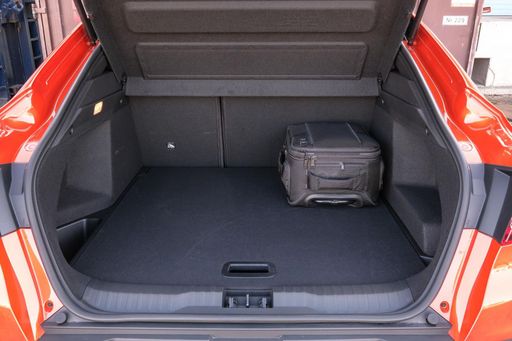
The Renault Arkana also provides a comfortable cabin with seating for five and a trunk capacity of up to 513 liters. Its interior is crafted to provide a balance between style and practicality, ensuring a comfortable ride for both drivers and passengers.

Arkana @ Renault Group Media

The Verdict

When choosing between the Hyundai Tucson and the Renault Arkana, the decision largely hinges on individual priorities. The Tucson offers a wider range of powertrains and drive types, suiting those who seek versatility in driving scenarios. It is the ideal choice for consumers who need power, efficiency, and space.

The Arkana, while offering fewer engine configurations, delivers exceptional fuel economy and a stylish design that appeals to eco-conscious drivers eager to stand out on the road. Its sleek, streamlined approach makes it perfect for urban commuters looking for both style and substance.

Ultimately, both SUVs bring something unique to the table, highlighting the growing diversity and innovation within the compact SUV market.

Here’s where it gets real: The technical differences in detail

Tucson @ Hyundai Motor Company

Costs and Efficiency:

Looking at overall running costs, both models reveal some interesting differences in everyday economy.

Renault Arkana has a barely noticeable advantage in terms of price – it starts at 28500 £, while the Hyundai Tucson costs 30600 £. That’s a price difference of around 2177 £.

Fuel consumption also shows a difference: Hyundai Tucson manages with 1 L and is therefore significantly more efficient than the Renault Arkana with 4.70 L. The difference is about 3.70 L per 100 km.

Arkana @ Renault Group Media

Engine and Performance:

Power, torque and acceleration are the classic benchmarks for car enthusiasts – and here, some clear differences start to show.

When it comes to engine power, the Hyundai Tucson has a clearly edge – offering 252 HP compared to 143 HP. That’s roughly 109 HP more horsepower.

In acceleration from 0 to 100 km/h, the Hyundai Tucson is distinct quicker – completing the sprint in 7.90 s, while the Renault Arkana takes 10.80 s. That’s about 2.90 s faster.

In terms of top speed, the Hyundai Tucson performs to a small extent better – reaching 204 km/h, while the Renault Arkana tops out at 172 km/h. The difference is around 32 km/h.

There’s also a difference in torque: Hyundai Tucson pulls significantly stronger with 379 Nm compared to 205 Nm. That’s about 174 Nm difference.

Tucson @ Hyundai Motor Company

Space and Everyday Use:

Whether family car or daily driver – which one offers more room, flexibility and comfort?

Both vehicles offer seating for 5 people.

In curb weight, Renault Arkana is slight lighter – 1510 kg compared to 1542 kg. The difference is around 32 kg.

In terms of boot space, the Hyundai Tucson offers evident more room – 620 L compared to 480 L. That’s a difference of about 140 L.

In maximum load capacity, the Hyundai Tucson performs clearly perceptible better – up to 1799 L, which is about 536 L more than the Renault Arkana.

When it comes to payload, Hyundai Tucson somewhat takes the win – 545 kg compared to 451 kg. That’s a difference of about 94 kg.

Who comes out on top?

Overall, the Hyundai Tucson shows itself to be outperforms in nearly all aspects and secures the title of DriveDuel Champion.
It convinces with the more balanced overall package and proves to be the more versatile choice for everyday use.

from about £30,600
Tucson @ Hyundai Motor Company

Hyundai Tucson

  • Engine Type : Diesel MHEV, Plugin Hybrid, Petrol, Full Hybrid
  • Transmission : Automatic, Manuel
  • Drive Type : Front-Wheel Drive, All-Wheel Drive
  • Power HP : 136 - 252 HP
  • Consumption L/100km : 1 - 7.6 L
  • Electric Range : 64 - 70 km

Hyundai Tucson

5 (2)
rate

Hyundai Tucson marries bold, sculpted looks with a clever, roomy cabin that feels smarter than its price tag suggests. It's composed on the road, easy to live with day-to-day, and a sensible choice for buyers who want SUV style without the showroom theatrics.

details

Renault Arkana

4 (1)
rate

The Arkana stands out with its striking coupe-SUV design, blending sporty aesthetics with practicality. Its bold silhouette and high ride height offer a unique presence on the road, attracting attention wherever it goes. Inside, the Arkana combines modern technology with comfort, making it a versatile choice for both city driving and weekend getaways.

details
Hyundai Tucson
Renault Arkana
Tucson @ Hyundai Motor Company
Arkana @ Renault Group Media

Costs and Consumption

Price
30600 - 46300 £
Price
28500 - 31900 £
Consumption L/100km
1 - 7.6 L
Consumption L/100km
4.70 L
Consumption kWh/100km
-
Consumption kWh/100km
-
Electric Range
64 - 70 km
Electric Range
-
Battery Capacity
-
Battery Capacity
0.60 kWh
co2
22 - 172 g/km
co2
106 g/km
Fuel tank capacity
42 - 54 L
Fuel tank capacity
50 L

Dimensions and Body

Body Type
SUV
Body Type
SUV
Seats
5
Seats
5
Doors
5
Doors
5
Curb weight
1542 - 1889 kg
Curb weight
1510 kg
Trunk capacity
546 - 620 L
Trunk capacity
480 L
Length
4510 - 4535 mm
Length
4568 mm
Width
1865 mm
Width
1821 mm
Height
1650 mm
Height
1576 mm
Max trunk capacity
1721 - 1799 L
Max trunk capacity
1263 L
Payload
523 - 545 kg
Payload
451 kg

Engine and Performance

Engine Type
Diesel MHEV, Plugin Hybrid, Petrol, Full Hybrid
Engine Type
Full Hybrid
Transmission
Automatic, Manuel
Transmission
Automatic
Transmission Detail
Dual-Clutch Automatic, Automatic Gearbox, Manual Gearbox
Transmission Detail
Automatic Gearbox
Drive Type
Front-Wheel Drive, All-Wheel Drive
Drive Type
Front-Wheel Drive
Power HP
136 - 252 HP
Power HP
143 HP
Acceleration 0-100km/h
7.9 - 11.6 s
Acceleration 0-100km/h
10.80 s
Max Speed
180 - 204 km/h
Max Speed
172 km/h
Torque
250 - 379 Nm
Torque
205 Nm
Number of Cylinders
4
Number of Cylinders
4
Power kW
100 - 185 kW
Power kW
105 kW
Engine capacity
1598 cm3
Engine capacity
1598 cm3

General

Model Year
2024 - 2025
Model Year
2025
CO2 Efficiency Class
E, B, F, D
CO2 Efficiency Class
C
Brand
Hyundai
Brand
Renault
What drive types are available for the Hyundai Tucson?

Available configurations include Front-Wheel Drive or All-Wheel Drive.

The prices and data displayed are estimates based on German list prices and may vary by country. This information is not legally binding.