
 Deutschland
 France
 Nederland
 Great Britain
 Sverige
 Norge
Norge Danmark
 Suomi
Suomi Italia
 Polska
 España
VS
Hyundai Tucson vs Renault Kangoo Compact Van - Differences and prices compared
Compare performance (288 HP vs 122 HP), boot space and price (20900 £ vs 22400 £ ) at a glance. Find out which car is the better choice for you – Hyundai Tucson or Renault Kangoo Compact Van?
Tucson
Costs and Efficiency:
When it comes to price and running costs, the biggest differences usually appear. This is often where you see which car fits your budget better in the long run.
Hyundai Tucson has a slight advantage in terms of price – it starts at 20900 £ , while the Renault Kangoo Compact Van costs 22400 £ . That’s a price difference of around 1543 £.
Fuel consumption also shows a difference: Hyundai Tucson manages with 2.70 L and is therefore convincingly more efficient than the Renault Kangoo Compact Van with 5.10 L. The difference is about 2.40 L per 100 km.
As for electric range, the Renault Kangoo Compact Van performs convincingly better – achieving up to 290 km, about 220 km more than the Hyundai Tucson.
Kangoo Compact Van
Engine and Performance:
Under the bonnet, it becomes clear which model is tuned for sportiness and which one takes the lead when you hit the accelerator.
When it comes to engine power, the Hyundai Tucson has a convincingly edge – offering 288 HP compared to 122 HP. That’s roughly 166 HP more horsepower.
In acceleration from 0 to 100 km/h, the Hyundai Tucson is convincingly quicker – completing the sprint in 7.50 s, while the Renault Kangoo Compact Van takes 11.60 s. That’s about 4.10 s faster.
In terms of top speed, the Hyundai Tucson performs somewhat better – reaching 204 km/h, while the Renault Kangoo Compact Van tops out at 176 km/h. The difference is around 28 km/h.
There’s also a difference in torque: Hyundai Tucson pulls distinct stronger with 379 Nm compared to 270 Nm. That’s about 109 Nm difference.
Ad · Affiliate

As an Amazon Associate, we earn from qualifying purchases.
Tucson
Space and Everyday Use:
Beyond pure performance, interior space and usability matter most in daily life. This is where you see which car is more practical and versatile.
Both vehicles offer seating for 5 people.
In curb weight, Renault Kangoo Compact Van is hardly perceptible lighter – 1493 kg compared to 1542 kg. The difference is around 49 kg.
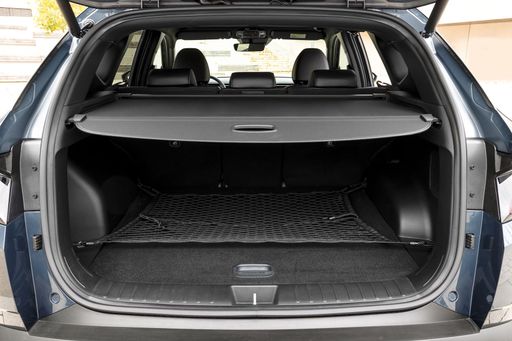
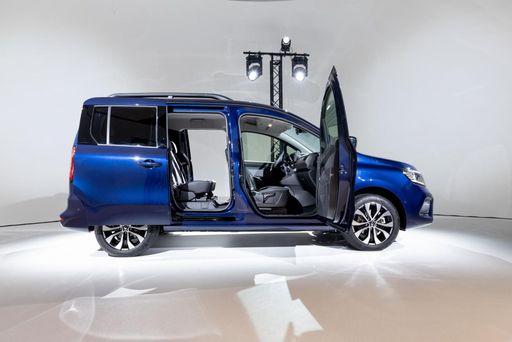
In maximum load capacity, the Renault Kangoo Compact Van performs significantly better – up to 4900 L, which is about 3101 L more than the Hyundai Tucson.
When it comes to payload, Renault Kangoo Compact Van noticeable takes the win – 901 kg compared to 545 kg. That’s a difference of about 356 kg.
Who wins the race?
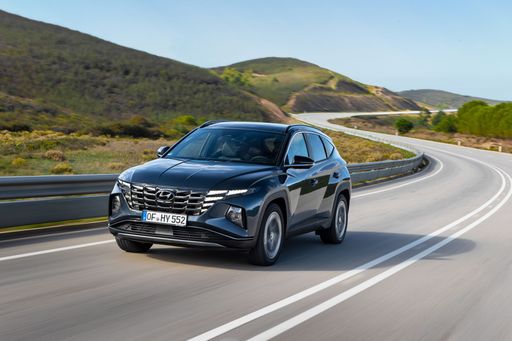
The Hyundai Tucson proves to be wins by a narrow margin and therefore becomes our DriveDuel Champion!
Hyundai Tucson is the better all-rounder in this comparison.
from about £20,900
Hyundai Tucson
Hyundai Tucson
Renault Kangoo Compact Van
Costs and Consumption
View detailed analysis
View detailed analysis
Engine and Performance
View detailed analysis
View detailed analysis
Dimensions and Body
View detailed analysis
View detailed analysis
Hyundai Tucson
5 (2 Reviews)
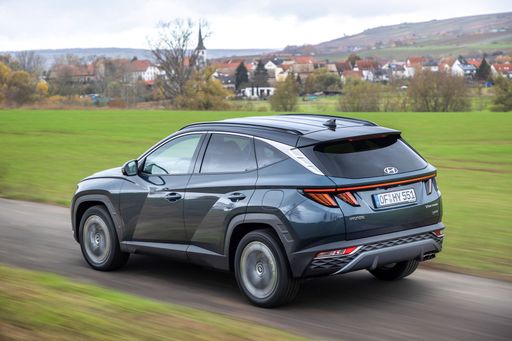
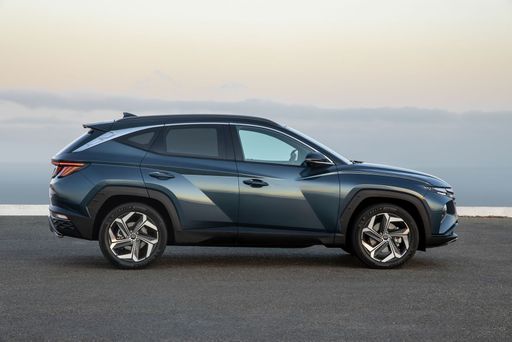
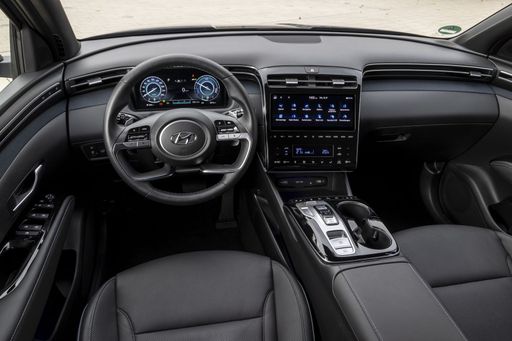
Hyundai Tucson marries bold, sculpted looks with a clever, roomy cabin that feels smarter than its price tag suggests. It's composed on the road, easy to live with day-to-day, and a sensible choice for buyers who want SUV style without the showroom theatrics.
details
Renault Kangoo Compact Van
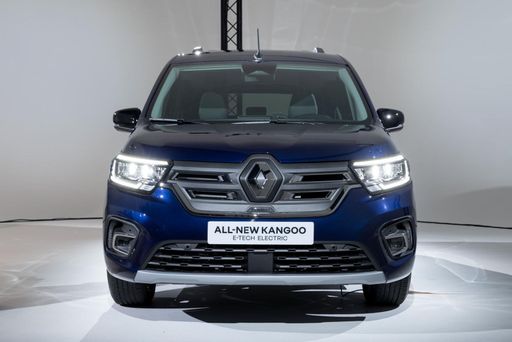
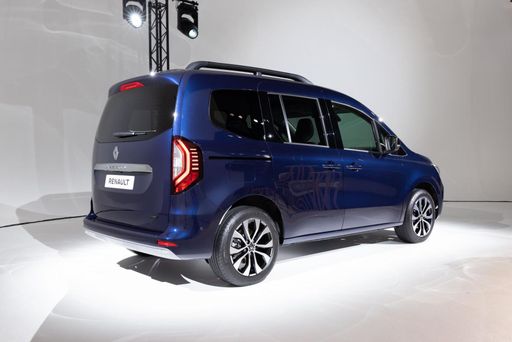
The Renault Kangoo is a practical, no-nonsense compact van that turns urban deliveries and weekend DIY runs into a surprisingly easy chore. Roomy for its size, comfortable to drive and brimming with smart storage solutions, it’s a sensible pick for anyone who needs honest utility without drama.
details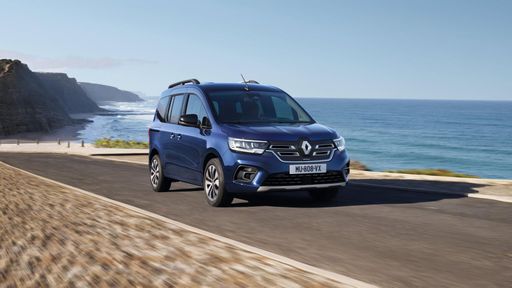


Hyundai Tucson
Renault Kangoo Compact Van
Costs and Consumption |
|
|---|---|
|
Price
20900 - 47900 £
|
Price
22400 - 37000 £
|
|
Consumption L/100km
2.7 - 7.6 L
|
Consumption L/100km
5.1 - 5.5 L
|
|
Consumption kWh/100km
-
|
Consumption kWh/100km
18.7 - 21.1 kWh
|
|
Electric Range
63 - 70 km
|
Electric Range
261 - 290 km
|
|
Battery Capacity
-
|
Battery Capacity
-
|
|
co2
62 - 172 g/km
|
co2
0 - 151 g/km
|
|
Fuel tank capacity
52 - 54 L
|
Fuel tank capacity
54 L
|
Dimensions and Body |
|
|---|---|
|
Body Type
SUV
|
Body Type
Cargo Van
|
|
Seats
5
|
Seats
2 - 5
|
|
Doors
5
|
Doors
4 - 5
|
|
Curb weight
1542 - 1893 kg
|
Curb weight
1493 - 1910 kg
|
|
Trunk capacity
546 - 620 L
|
Trunk capacity
-
|
|
Length
4525 - 4535 mm
|
Length
4486 - 4910 mm
|
|
Width
1865 mm
|
Width
1860 mm
|
|
Height
1650 mm
|
Height
1854 - 1864 mm
|
|
Max trunk capacity
1795 - 1799 L
|
Max trunk capacity
3000 - 4900 L
|
|
Payload
518 - 545 kg
|
Payload
498 - 901 kg
|
Engine and Performance |
|
|---|---|
|
Engine Type
Petrol, Full Hybrid, Plugin Hybrid, Diesel MHEV
|
Engine Type
Diesel, Electric
|
|
Transmission
Manuel, Automatic
|
Transmission
Manuel, Automatic
|
|
Transmission Detail
Manual Gearbox, Dual-Clutch Automatic, Automatic Gearbox
|
Transmission Detail
Manual Gearbox, Dual-Clutch Automatic, Reduction Gearbox
|
|
Drive Type
Front-Wheel Drive, All-Wheel Drive
|
Drive Type
Front-Wheel Drive
|
|
Power HP
136 - 288 HP
|
Power HP
75 - 122 HP
|
|
Acceleration 0-100km/h
7.5 - 11.6 s
|
Acceleration 0-100km/h
11.6 - 18.9 s
|
|
Max Speed
196 - 204 km/h
|
Max Speed
132 - 176 km/h
|
|
Torque
250 - 379 Nm
|
Torque
230 - 270 Nm
|
|
Number of Cylinders
4
|
Number of Cylinders
4
|
|
Power kW
100 - 212 kW
|
Power kW
55 - 90 kW
|
|
Engine capacity
1598 cm3
|
Engine capacity
1461 cm3
|
General |
|
|---|---|
|
Model Year
2025
|
Model Year
2022 - 2024
|
|
CO2 Efficiency Class
F, D, E, B
|
CO2 Efficiency Class
D, E, A
|
|
Brand
Hyundai
|
Brand
Renault
|
What drive types are available for the Hyundai Tucson?
Available configurations include Front-Wheel Drive or All-Wheel Drive.
The prices shown are estimates based on German list prices, adjusted for local VAT. Local registration taxes (e.g. NoVA, BPM or CO2 malus) are not included. This information is not legally binding.