VS

Jeep Grand Cherokee vs VW Tayron comparison

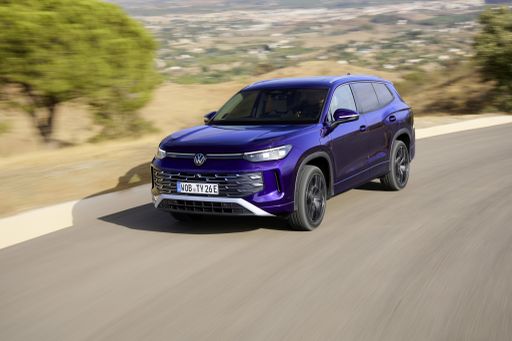
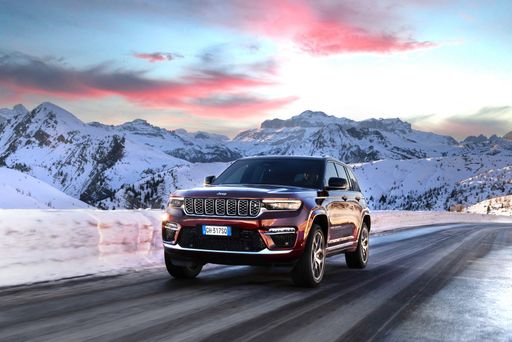
Compare performance (380 HP vs 272 HP), boot space and price (85,600 £ vs 39,600 £ ) at a glance. Find out which car is the better choice for you – Jeep Grand Cherokee or VW Tayron?

Jeep Grand Cherokee vs VW Tayron: Key differences

Jeep Grand Cherokee

  • visibly more power

VW Tayron

4.8 (2 Reviews)
rate
  • considerably cheaper
  • significantly more efficient
  • significantly more electric range
  • only slightly quicker 0–100 km/h
  • considerably lighter
  • substantially more trunk space

All details on performance, efficiency, range and trunk space can be found in the technical comparison below – including user reviews for both models.

Grand Cherokee

The automotive landscape is ever-evolving, and one of the compelling duels in the SUV segment is between the Jeep Grand Cherokee and the Volkswagen Tayron. Both vehicles offer a unique blend of performance, technology, and utility. This article dives deep into the technical aspects and innovations of these two models, providing potential buyers with everything they need to know.

Tayron

Design and Dimensions

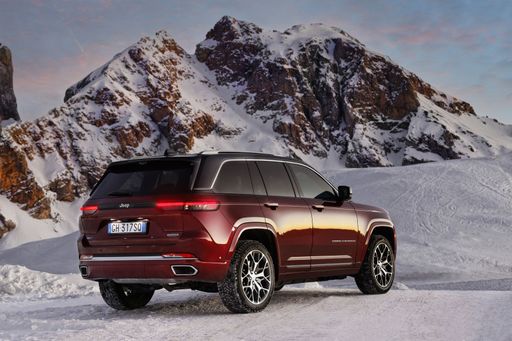
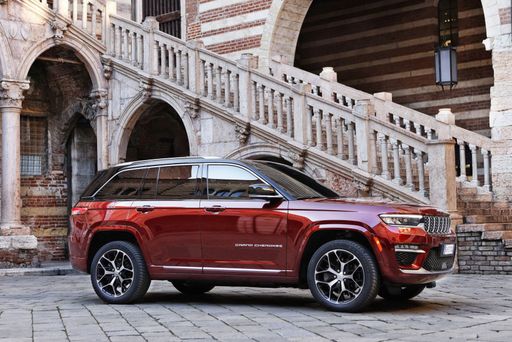
Starting with their dimensions, the Jeep Grand Cherokee stretches to a length of 4914 mm, with a width of 1968 mm and a height ranging between 1795 mm to 1858 mm, making it a robust presence on the road. Its trunk capacity of 520 liters is impressive, allowing ample space for all your adventures.

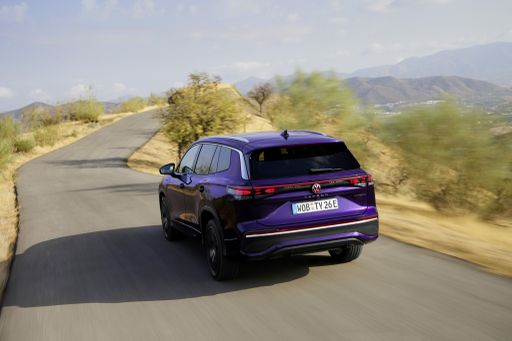
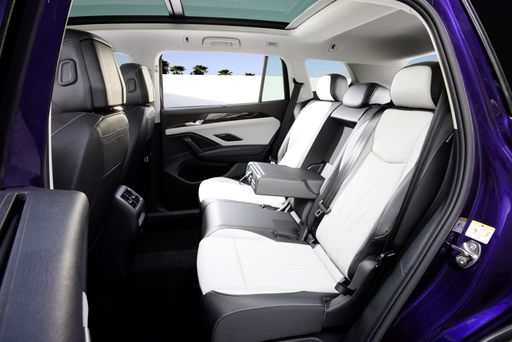
On the other hand, the Volkswagen Tayron is slightly more compact, measuring 4792 mm in length and 1853 mm in width. Its height sits at 1668 mm, and it boasts a larger trunk capacity of 885 liters, making it one of the most spacious options in its class. Both vehicles, with their five doors, offer easy access and practicality for families or individuals alike.

Grand Cherokee

Performance and Powertrains

The 2024 Jeep Grand Cherokee is equipped with a powerful 2.0L PHEV engine that produces a robust 380 HP (280 kW) and an impressive torque of 637 Nm. This model features an all-wheel-drive system, ensuring stability and control on various terrains. The automatic gearbox facilitates a smooth driving experience, while achieving an acceleration of 0-100 km/h in just 6.3 seconds. The Grand Cherokee also excels in fuel efficiency, with consumption figures as low as 2.9 L/100 km and an electric range of up to 45 km.

In contrast, the 2025 Volkswagen Tayron offers a range of engine options, from petrol and diesel to MHEV and plug-in hybrids. Power outputs vary significantly—from a base of 150 HP to a high-performance model at an impressive 272 HP. The Tayron features a dual-clutch automatic transmission for quick and responsive gear changes, with acceleration ranging from 6.1 seconds for its most powerful variant to 9.7 seconds for the base version. Depending on the engine type, fuel consumption figures can be as low as 5.4 L/100 km.

Tayron

Technology and Innovations

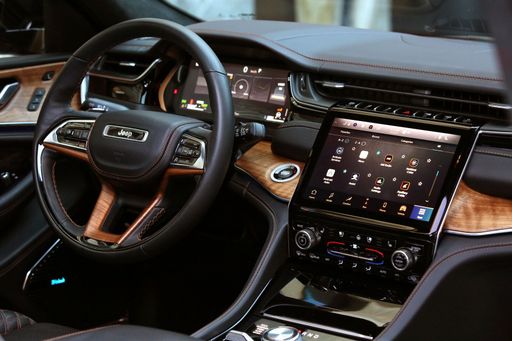
When it comes to technology, both SUVs offer an array of modern features that cater to driver convenience and comfort. The Jeep Grand Cherokee integrates advanced infotainment systems, including a large touchscreen and driver assistance technologies such as adaptive cruise control, lane assist, and automated parking. This model is designed, not just for rugged terrain, but for a luxurious driving experience as well.

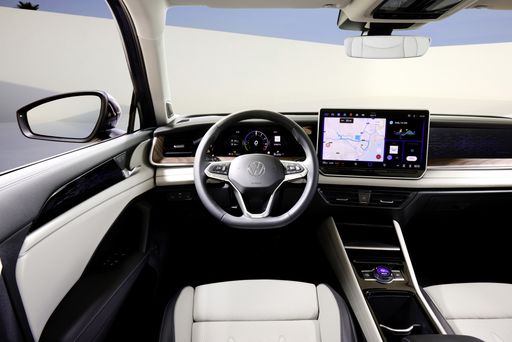
Conversely, the Volkswagen Tayron is designed for practicality and digital immersion. Its digital cockpit, with high-resolution displays, seamlessly integrates navigation and entertainment features. The Tayron also includes an extensive suite of safety features, enhancing both driver and passenger security. With its innovative powertrains, including hybrid technologies, the Tayron aims to attract environmentally conscious consumers without compromising on performance.


Grand Cherokee

Price and Value Proposition

The price points for both vehicles can vary based on specifications and optional features, but generally, the Jeep Grand Cherokee is positioned as a premium SUV, reflecting its luxury features and off-road capabilities. Meanwhile, the Volkswagen Tayron is available at a more accessible starting price, appealing to those seeking value without sacrificing quality or features.

Tayron

Conclusion

Ultimately, the choice between the Jeep Grand Cherokee and the Volkswagen Tayron boils down to personal preferences and requirements. The Grand Cherokee excels with its robust capabilities, luxury interior, and powerful plug-in hybrid engine, making it a formidable contender for off-road enthusiasts and luxury seekers alike. Meanwhile, the Tayron presents a versatile line-up with efficient engines and a spacious interior, appealing to families and everyday drivers. Whatever your needs may be, both models promise to deliver a remarkable driving experience.

Here’s where it gets real: The technical differences in detail

Grand Cherokee

Costs and Efficiency:

Price and efficiency are key factors when choosing a car – and this is often where the real differences emerge.

VW Tayron is considerably cheaper – starting at 39,600 £ , while the Jeep Grand Cherokee costs 85,600 £ . That’s a price difference of around 46,016 £.

Fuel consumption also shows a difference: the VW Tayron uses 1.5 L/100km and is significantly more efficient than the Jeep Grand Cherokee with 2.9 L/100km. The difference is about 1.4 L/100km.

As for electric range, the VW Tayron offers significantly more range – reaching up to 123 km, about 78 km more than the Jeep Grand Cherokee.

Tayron

Engine and Performance:

Power, torque and acceleration are the classic benchmarks for car enthusiasts – and here, some clear differences start to show.

When it comes to engine power, the Jeep Grand Cherokee offers visibly more power – delivering 380 HP compared to 272 HP. That’s roughly 108 HP more horsepower.

When accelerating from 0 to 100 km/h, the VW Tayron is only slightly quicker – completing the sprint in 6.1 s, while the Jeep Grand Cherokee takes 6.3 s. That’s about 0.2 s quicker.

Looking at top speed, the VW Tayron is barely faster – reaching 221 km/h, while the Jeep Grand Cherokee tops out at 210 km/h. The difference is around 11 km/h.

There’s also a difference in torque: the Jeep Grand Cherokee delivers noticeably more torque with 637 Nm compared to 400 Nm. That’s about 237 Nm more.

Grand Cherokee

Space and Everyday Use:

Beyond pure performance, interior space and usability matter most in daily life. This is where you see which car is more practical and versatile.

Both vehicles offer seating for 5 people.

In terms of curb weight, VW Tayron is considerably lighter – 1,682 kg compared to 2,434 kg. The difference is around 752 kg.

Looking at boot space, the VW Tayron offers substantially more boot space – 885 L compared to 520 L. That’s a difference of about 365 L.

For maximum load capacity, the VW Tayron offers marginally more capacity – up to 2,090 L, about 86 L more than the Jeep Grand Cherokee.

When it comes to payload, the Jeep Grand Cherokee carries moderately more – 641 kg compared to 566 kg. That’s a difference of about 75 kg.

Who wins the race in the data check?

The VW Tayron is clearly superior overall in the objective data comparison.
This result only shows which model scores more points on paper – not which of the two cars feels right for you.

from £39,600
Tayron

VW Tayron

  • Engine Type : Petrol MHEV, Diesel, Petrol, Plugin Hybrid
  • Transmission : Automatic
  • Drive Type : Front-Wheel Drive, All-Wheel Drive
  • Power HP : 150 - 272 HP
  • Consumption L/100km : 1.5 - 8.5 L/100km
  • Electric Range : 116 - 123 km
Jeep Grand Cherokee
VW Tayron

Costs and Consumption

View detailed analysis

Engine and Performance

View detailed analysis

Dimensions and Body

View detailed analysis

Jeep Grand Cherokee

The Jeep Grand Cherokee wears its trail-ready roots proudly while wrapping them in a surprisingly civilized and upscale package, so it can tackle rough tracks and the school run with the same swagger. Inside, plush materials and intuitive tech make it a comfortable place to spend time, giving buyers a practical yet characterful SUV that doesn’t take itself too seriously.

details

VW Tayron

The VW Tayron is Volkswagen's roomy, no-nonsense SUV that pairs clean, familiar styling with a practical cabin built for families and everyday use. It rides comfortably, packs sensible tech and creature comforts, and feels like the sensible sweater of SUVs for buyers who prefer steady value over headline-grabbing drama.

details
Jeep Grand Cherokee
VW Tayron

Costs and Consumption

Price
85,600 £
Price
39,600 - 56,000 £
Consumption L/100km
2.9 L/100km
Consumption L/100km
1.5 - 8.5 L/100km
Consumption kWh/100km
-
Consumption kWh/100km
-
Electric Range
45 km
Electric Range
116 - 123 km
Battery Capacity
-
Battery Capacity
19.7 kWh
co2
65 g/km
co2
33 - 192 g/km
Fuel tank capacity
72 L
Fuel tank capacity
45 - 58 L

Dimensions and Body

Body Type
SUV
Body Type
SUV
Seats
5
Seats
5
Doors
5
Doors
5
Curb weight
2,434 kg
Curb weight
1,682 - 1,948 kg
Trunk capacity
520 L
Trunk capacity
705 - 885 L
Length
4,914 mm
Length
4,792 mm
Width
1,968 mm
Width
1,853 - 1,866 mm
Height
1,858 mm
Height
1,666 - 1,668 mm
Max trunk capacity
2,004 L
Max trunk capacity
1,915 - 2,090 L
Payload
641 kg
Payload
489 - 566 kg

Engine and Performance

Engine Type
Plugin Hybrid
Engine Type
Petrol MHEV, Diesel, Petrol, Plugin Hybrid
Transmission
Automatic
Transmission
Automatic
Transmission Detail
Automatic Gearbox
Transmission Detail
Dual-Clutch Automatic
Drive Type
All-Wheel Drive
Drive Type
Front-Wheel Drive, All-Wheel Drive
Power HP
380 HP
Power HP
150 - 272 HP
Acceleration 0-100km/h
6.3 s
Acceleration 0-100km/h
6.1 - 9.7 s
Max Speed
210 km/h
Max Speed
204 - 221 km/h
Torque
637 Nm
Torque
250 - 400 Nm
Number of Cylinders
4
Number of Cylinders
4
Power kW
280 kW
Power kW
110 - 200 kW
Engine capacity
1,995 cm3
Engine capacity
1,498 - 1,984 cm3

General

Model Year
2,024
Model Year
2,025 - 2,026
CO2 Efficiency Class
B
CO2 Efficiency Class
E, F, G, B
Brand
Jeep
Brand
VW
DriveDuel uses data analysis and artificial intelligence to evaluate vehicle data and create content. Content is regularly reviewed and improved. The displayed prices are estimates based on German list prices, adjusted to the respective country’s VAT. Country-specific registration taxes are not included. This information is not legally binding.