VS

Kia Ceed vs VW Taigo comparison

Compare performance (140 HP vs 150 HP), boot space and price (23,500 £ vs 19,900 £ ) at a glance. Find out which car is the better choice for you – Kia Ceed or VW Taigo?

Kia Ceed vs VW Taigo: Key differences

Kia Ceed

details

VW Taigo

4.9 (3 Reviews)
rate
  • moderately cheaper
  • only slightly more power
  • slightly more efficient
  • slightly quicker 0–100 km/h
  • marginally lighter
details

By Achim Sedelmaier

Ceed

Compact Rivals: Kia Ceed vs. VW Taigo

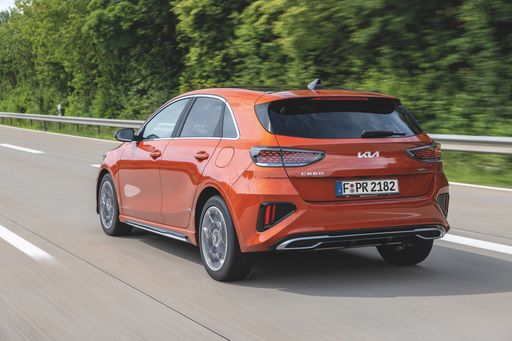
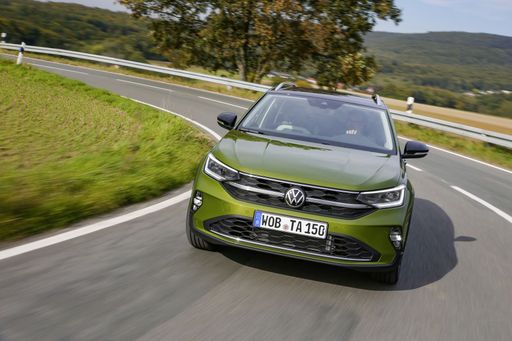
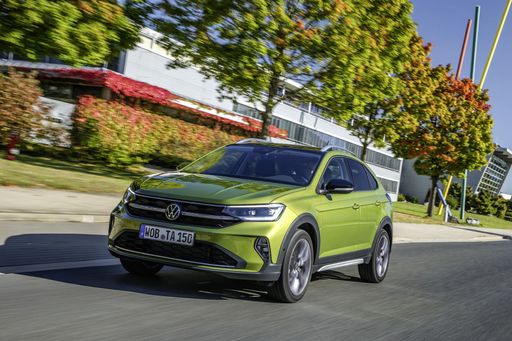
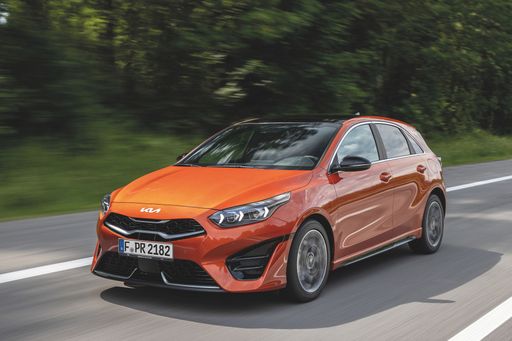
In the automotive world, the Kia Ceed and VW Taigo are two dynamic contenders vying for supremacy in their respective segments. While the Ceed presents itself as a practical hatchback, the Taigo ventures into the burgeoning SUV category. Let’s delve deep into the technical intricacies and innovations these models bring to the table.
Taigo

Powertrain and Performance

The Kia Ceed offers a range of power outputs, with options of 100 HP and 140 HP from its petrol MHEV and petrol engines. With the choice between a dual-clutch automatic and a manual gearbox, it caters to diverse driver preferences. In terms of acceleration, the Ceed delivers a range of 0-100 km/h from 13.1 seconds to an impressive 9.5 seconds, depending on the chosen configuration.

On the other hand, the VW Taigo steps in with slightly varied power levels offering 95 HP, 115 HP, and a robust 150 HP from its petrol engines. As with the Ceed, it provides both manual and dual-clutch automatic transmission options. Notably, the Taigo boasts an acceleration from 0-100 km/h in just 8.2 seconds with its top-power model, suggesting a sportier edge in its drive experience.

Ceed

Consumption and Efficiency

Considering fuel consumption, the Kia Ceed records figures ranging from 6 to 6.4 L/100km, making it moderately efficient. Its CO2 emissions stand between 137 and 146 g/km, placing it in the 'E' efficiency class.

The VW Taigo leads slightly in efficiency, with consumption figures between 5.4 and 5.8 L/100km. Its CO2 emissions, ranging from 123 to 132 g/km, classify it under the 'D' efficiency class, marking a more environmentally conscious choice compared to the Ceed.

Taigo

Dimensions and Practicality

The Kia Ceed features a body length of 4325 mm and a width of 1800 mm, offering a trunk capacity between 357 and 395 liters. This ensures ample storage for a hatchback, making it a practical family car.

Meanwhile, the VW Taigo, characterized by its SUV styling, measures 4266 mm in length and 1757 mm in width. It stands taller at 1518 mm. The Taigo surpasses the Ceed with a more generous trunk capacity of 440 liters, subtly highlighting its advantage in utility.

Ceed

Innovation and Technology

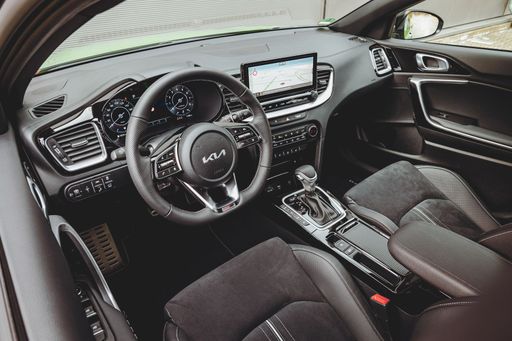
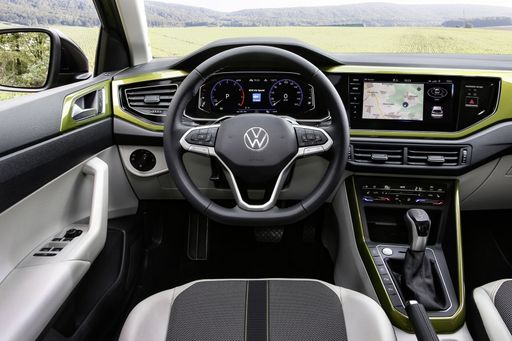
Both the Kia Ceed and the VW Taigo incorporate the latest technological advancements. From multi-infotainment systems and driver-assist features to comprehensive safety packages, the two models ensure that drivers and passengers enjoy both confidence and convenience on the road.

However, the notable difference lies in their approach to driving dynamics. The Ceed, with its hatchback design, offers a more grounded and traditional driving experience, perfect for urban commutes. In contrast, the Taigo provides a higher driving position and a more robust presence suited to a variety of terrains, enhancing its appeal to adventure-seekers.

Taigo

Final Thoughts

Choosing between the Kia Ceed and the VW Taigo ultimately depends on personal preferences and lifestyle needs. The Ceed stands out with its refined hatchback design, fuel-efficient engines, and innovative features, while the Taigo combines SUV practicality with efficient performance and a touch of sportiness. Whichever you choose, both models promise a satisfying driving experience with the reliability and assurance of their brands.

Here’s where it gets real: The technical differences in detail

Ceed

Costs and Efficiency:

Looking at overall running costs, both models reveal some interesting differences in everyday economy.

VW Taigo is moderately cheaper – starting at 19,900 £ , while the Kia Ceed costs 23,500 £ . That’s a price difference of around 3,557 £.

Fuel consumption also shows a difference: the VW Taigo uses 5.3 L/100km and is slightly more efficient than the Kia Ceed with 6 L/100km. The difference is about 0.7 L/100km.

Taigo

Engine and Performance:

Power, torque and acceleration say a lot about how a car feels on the road. This is where you see which model delivers more driving dynamics.

When it comes to engine power, the VW Taigo offers only slightly more power – delivering 150 HP compared to 140 HP. That’s roughly 10 HP more horsepower.

When accelerating from 0 to 100 km/h, the VW Taigo is slightly quicker – completing the sprint in 8.2 s, while the Kia Ceed takes 9.5 s. That’s about 1.3 s quicker.

There’s also a difference in torque: the Kia Ceed delivers very slightly more torque with 253 Nm compared to 250 Nm. That’s about 3 Nm more.

Ceed

Space and Everyday Use:

Cabin size, boot volume and payload all play a role in everyday practicality. Here, comfort and flexibility make the difference.

Both vehicles offer seating for 5 people.

In terms of curb weight, VW Taigo is marginally lighter – 1,229 kg compared to 1,298 kg. The difference is around 69 kg.

When it comes to payload, the Kia Ceed carries only slightly more – 490 kg compared to 457 kg. That’s a difference of about 33 kg.

Who wins the race in the data check?

The VW Taigo holds a decisive overall lead in the objective data comparison.
This result only shows which model scores more points on paper – not which of the two cars feels right for you.

from £19,900
Taigo

VW Taigo

  • Engine Type : Petrol
  • Transmission : Manuel, Automatic
  • Drive Type : Front-Wheel Drive
  • Power HP : 95 - 150 HP
  • Consumption L/100km : 5.3 - 5.8 L/100km
Kia Ceed
VW Taigo

Costs and Consumption

View detailed analysis

Engine and Performance

View detailed analysis

Dimensions and Body

View detailed analysis

Kia Ceed

The Kia Ceed is a sensible, stylish hatchback that gives buyers more than they'd expect for the money, blending practical space with crisp, modern looks. It drives with measured confidence and comes loaded with user-friendly kit, so you can enjoy daily life behind the wheel without breaking into a sweat.

details

VW Taigo

The VW Taigo brings coupe-like flair to the compact crossover scene with sharp styling and an interior that punches above its price, feeling smarter than you’d expect. It’s an easygoing daily companion that balances comfort and practicality with a playful wink, perfect for city drivers who want something livelier than a regular hatchback.

details
Kia Ceed
VW Taigo

Costs and Consumption

Price
23,500 - 26,300 £
Price
19,900 - 31,800 £
Consumption L/100km
6 - 6.4 L/100km
Consumption L/100km
5.3 - 5.8 L/100km
Consumption kWh/100km
-
Consumption kWh/100km
-
Electric Range
-
Electric Range
-
Battery Capacity
-
Battery Capacity
-
co2
137 - 146 g/km
co2
120 - 132 g/km
Fuel tank capacity
-
Fuel tank capacity
-

Dimensions and Body

Body Type
Hatchback
Body Type
SUV
Seats
5
Seats
5
Doors
-
Doors
-
Curb weight
1,298 - 1,372 kg
Curb weight
1,229 - 1,302 kg
Trunk capacity
-
Trunk capacity
440 L
Length
-
Length
-
Width
1,800 mm
Width
1,757 mm
Height
-
Height
-
Max trunk capacity
-
Max trunk capacity
-
Payload
478 - 490 kg
Payload
448 - 457 kg

Engine and Performance

Engine Type
Petrol, Petrol MHEV
Engine Type
Petrol
Transmission
Manuel, Automatic
Transmission
Manuel, Automatic
Transmission Detail
Manual Gearbox, Dual-Clutch Automatic
Transmission Detail
Manual Gearbox, Dual-Clutch Automatic
Drive Type
Front-Wheel Drive
Drive Type
Front-Wheel Drive
Power HP
100 - 140 HP
Power HP
95 - 150 HP
Acceleration 0-100km/h
9.5 - 13.2 s
Acceleration 0-100km/h
8.2 - 11.1 s
Max Speed
-
Max Speed
-
Torque
172 - 253 Nm
Torque
175 - 250 Nm
Number of Cylinders
3 - 4
Number of Cylinders
3 - 4
Power kW
74 - 103 kW
Power kW
70 - 110 kW
Engine capacity
998 - 1,482 cm3
Engine capacity
999 - 1,498 cm3

General

Model Year
2024
Model Year
2,024 - 2,025
CO2 Efficiency Class
E
CO2 Efficiency Class
D
Brand
Kia
Brand
VW
DriveDuel uses data analysis and artificial intelligence to evaluate vehicle data and create content. Content is regularly reviewed and improved. The displayed prices are estimates based on German list prices, adjusted to the respective country’s VAT. Country-specific registration taxes are not included. This information is not legally binding.