VS

Kia EV2 vs Hyundai Kona comparison

Compare performance (147 HP vs 204 HP), boot space and price (22,800 £ vs 23,600 £ ) at a glance. Find out which car is the better choice for you – Kia EV2 or Hyundai Kona?

Kia EV2 vs Hyundai Kona: Key differences

Kia EV2

3.8 (1 Reviews)
rate
  • marginally cheaper
details

Hyundai Kona

4.6 (10 Reviews)
rate
  • markedly more power
  • barely more efficient
  • a bit more electric range
  • barely quicker 0–100 km/h
  • slightly lighter
details

All details on performance, efficiency, range and trunk space can be found in the technical comparison below – including user reviews for both models.

By Achim Sedelmaier

EV2

Quick take: Hyundai Kona VS Kia EV2

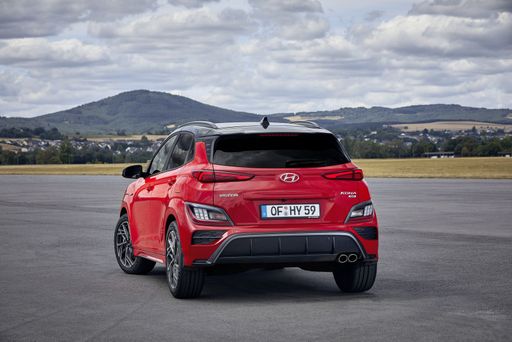
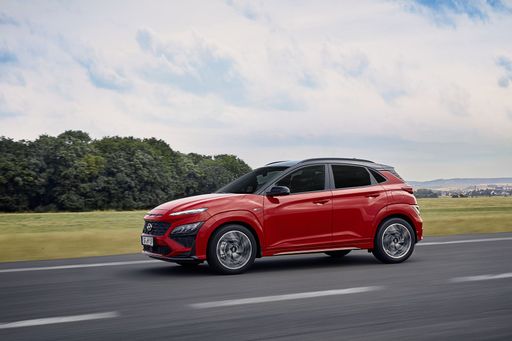
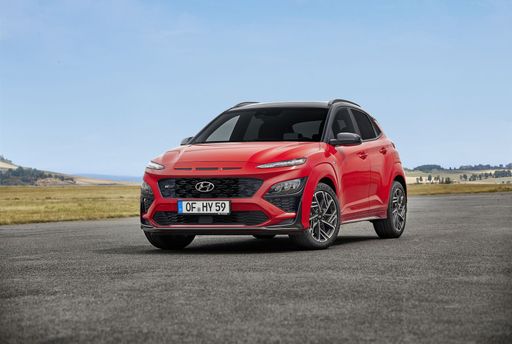
Hyundai Kona and Kia EV2 present two sensible B‑SUV choices with distinct priorities: the Kona pushes space and everyday utility, while the EV2 doubles down on serene comfort and urban efficiency. This Hyundai Kona VS Kia EV2 comparison shows how those priorities change real ownership questions — from school runs to motorway overtakes. Expect the Kona to feel more practical and slightly livelier when you need it, and the EV2 to feel calmer, better insulated and easier to live with in tight city routines. Read on to see which strengths match your day-to-day needs rather than a spec sheet.
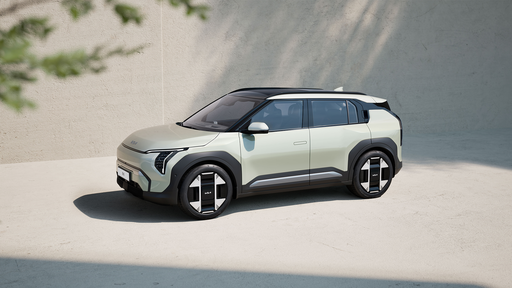
Kona

Character and driving feel

The Hyundai Kona drives like an assured, no‑nonsense compact SUV: predictable steering, composed ride and enough pep when you ask for it, but it stops short of being sporty. By contrast, the Kia EV2 rewards relaxed inputs — the suspension soaks up imperfections and the cabin feels more like a small comfort cruiser than a driver's car. Kona will suit buyers who want a bit more responsiveness and a car that can cope with mixed driving without feeling soft, whereas the EV2 is for those who prioritise a hushed, effortless commute. Both are safe and confidence‑inspiring, but the Kona leans toward utility while the EV2 leans toward serenity.

Cabin feel, controls and perceived quality

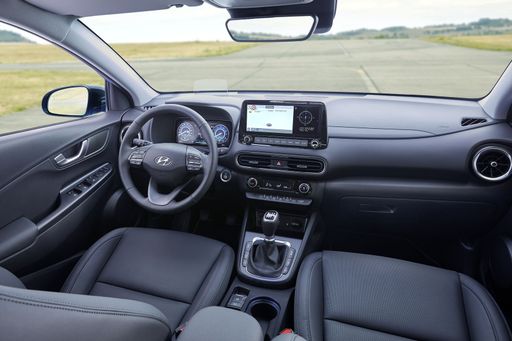
Inside, the Hyundai Kona emphasises space and straightforward ergonomics: large displays married to physical controls and a sense of usable volume that makes loading and organising everyday items easier. The Kia EV2 trades some of that outright cargo space for a quieter, more cocooned cabin and an HMI that feels deliberately calm — three screens and clear physical climate buttons give it a modern, tidy presence. Kona’s materials and layout feel a touch more family‑oriented and practical, whereas EV2 aims for a softer, more refined atmosphere that rewards longer drives. In everyday use the Kona reads as the more utilitarian of the two; the EV2 reads as the more grown‑up, relaxed one.

Usability and practicality in daily life

For small families and anyone who hauls pushchairs or shopping often, the Hyundai Kona’s interior packaging and larger boot make life simpler: wider openings, a lower loading lip and useful seat configurations in higher trims. The Kia EV2 makes its living in the city — shorter overall length, excellent visibility and clever options like sliding seats (where available) and stronger AC charging that cut time spent parked topping up. Kona wins on straightforward luggage and passenger flexibility, while EV2 wins on urban manoeuvrability and charging convenience when you can access higher‑power AC. Your routine decides the trade‑off: Kona for cargo and space-minded owners, EV2 for tight streets and faster everyday recharges.

Long‑distance behaviour and running costs

On longer trips the Hyundai Kona feels more willing: a livelier power delivery and the option set give it a more confident overtaking manner and extra range buffer if you push on. The Kia EV2 is quieter and very efficient in steady cruising, but its shorter standard range in base form makes frequent long motorway stints more of a planning exercise unless you choose the larger battery. Ownership costs tilt in the EV2’s favour at entry‑level thanks to competitive pricing, yet that advantage narrows as you add items that many buyers will want — bigger battery, faster AC or comfort packs. In short, Kona is the more flexible long‑trip partner; EV2 is the better commuter with caveats for extended motorway use unless specified otherwise.

Buyer fit: which one suits you best

If your priority is roomy practicality, family flexibility and a car that can tackle mixed use without fuss, the Hyundai Kona will feel like the more sensible pick — it gives a bit more elbow room and a touch more drive when you need it. If you live in the city, value a hushed cabin, prefer a shorter car with clever interior options and want a strong entry price with useful charging options, the Kia EV2 is tailored to that life. Neither choice is objectively better; they simply solve different daily problems, so your decision should start with whether you need cargo space and occasional motorway confidence (Kona) or urban calm and efficient everyday charging (EV2). The next technical section breaks down range, power and charging details so you can match those real‑world conclusions to the numbers that matter.

Here’s where it gets real: The technical differences in detail

EV2

Costs and Efficiency:

Price and efficiency are often the first things buyers look at. Here it becomes clear which model has the long-term edge – whether at the pump, the plug, or in purchase price.

Kia EV2 is marginally cheaper – starting at 22,800 £ , while the Hyundai Kona costs 23,600 £ . That’s a price difference of around 771 £.

In terms of energy consumption, the Hyundai Kona is barely more efficient: consuming 14.6 kWh/100km compared to 15.1 kWh/100km for the Kia EV2. That’s a difference of about 0.5 kWh/100km.

As for electric range, the Hyundai Kona offers a bit more range – reaching up to 510 km, about 57 km more than the Kia EV2.

Kona

Engine and Performance:

Power, torque and acceleration say a lot about how a car feels on the road. This is where you see which model delivers more driving dynamics.

When it comes to engine power, the Hyundai Kona offers markedly more power – delivering 204 HP compared to 147 HP. That’s roughly 57 HP more horsepower.

When accelerating from 0 to 100 km/h, the Hyundai Kona is barely quicker – completing the sprint in 8.1 s, while the Kia EV2 takes 8.7 s. That’s about 0.6 s quicker.

There’s also a difference in torque: the Hyundai Kona delivers barely more torque with 265 Nm compared to 250 Nm. That’s about 15 Nm more.

Space and Everyday Use:

Cabin size, boot volume and payload all play a role in everyday practicality. Here, comfort and flexibility make the difference.

Both vehicles offer seating for 5 people.

In terms of curb weight, Hyundai Kona is slightly lighter – 1,370 kg compared to 1,620 kg. The difference is around 250 kg.

When it comes to payload, the Hyundai Kona carries only slightly more – 490 kg compared to 475 kg. That’s a difference of about 15 kg.

Who wins the race in the data check?

The Hyundai Kona is far ahead overall in the objective data comparison.
This result only shows which model scores more points on paper – not which of the two cars feels right for you.

from £23,600
Kona

Hyundai Kona

  • Engine Type Petrol, Full Hybrid, Electric
  • Transmission Manuel, Automatic
  • Drive Type Front-Wheel Drive, All-Wheel Drive
  • Power HP 115 - 204 HP
  • Consumption L/100km 4.6 - 7 L/100km
  • Consumption kWh/100km 14.6 - 16.1 kWh/100km
  • Electric Range 380 - 510 km
Kia EV2
Hyundai Kona

Costs and Consumption

View detailed analysis

Engine and Performance

View detailed analysis

Dimensions and Body

View detailed analysis

Kia EV2

The Kia EV2 is a compact electric crossover aimed at buyers who want a practical, affordable EV with a modern, well-appointed cabin. It combines comfortable, predictable handling with straightforward tech and efficient everyday usability, making it a sensible choice for daily driving.

details

Hyundai Kona

The Hyundai Kona is a compact crossover that pairs bold styling with practical everyday usability, offering a comfortable cabin and intuitive tech for modern drivers. Available in both conventional and electrified versions, Kona brings lively handling and strong value for buyers who want crossover versatility and standout character.

details
Kia EV2
Hyundai Kona

Costs and Consumption

Price
22,800 - 31,600 £
Price
23,600 - 41,900 £
Consumption L/100km
-
Consumption L/100km
4.6 - 7 L/100km
Consumption kWh/100km
15.1 - 16.3 kWh/100km
Consumption kWh/100km
14.6 - 16.1 kWh/100km
Electric Range
317 - 453 km
Electric Range
380 - 510 km
Battery Capacity
-
Battery Capacity
-
co2
0 g/km
co2
0 - 163 g/km
Fuel tank capacity
-
Fuel tank capacity
-

Dimensions and Body

Body Type
SUV
Body Type
SUV
Seats
4 - 5
Seats
5
Doors
-
Doors
-
Curb weight
1,620 - 1,625 kg
Curb weight
1,370 - 1,773 kg
Trunk capacity
-
Trunk capacity
466 L
Length
-
Length
-
Width
1,800 mm
Width
1,825 mm
Height
-
Height
-
Max trunk capacity
-
Max trunk capacity
-
Payload
400 - 475 kg
Payload
420 - 490 kg

Engine and Performance

Engine Type
Electric
Engine Type
Petrol, Full Hybrid, Electric
Transmission
Automatic
Transmission
Manuel, Automatic
Transmission Detail
Reduction Gearbox
Transmission Detail
Manual Gearbox, Dual-Clutch Automatic, Reduction Gearbox
Drive Type
Front-Wheel Drive
Drive Type
Front-Wheel Drive, All-Wheel Drive
Power HP
135 - 147 HP
Power HP
115 - 204 HP
Acceleration 0-100km/h
8.7 - 9.7 s
Acceleration 0-100km/h
8.1 - 11.9 s
Max Speed
-
Max Speed
-
Torque
250 Nm
Torque
200 - 265 Nm
Number of Cylinders
-
Number of Cylinders
3 - 4
Power kW
100 - 108 kW
Power kW
85 - 150 kW
Engine capacity
-
Engine capacity
998 - 1,598 cm3

General

Model Year
2026
Model Year
2025
CO2 Efficiency Class
A
CO2 Efficiency Class
D, C, E, F, A
Brand
Kia
Brand
Hyundai
DriveDuel uses data analysis and artificial intelligence to evaluate vehicle data and create content. Content is regularly reviewed and improved. The displayed prices are estimates based on German list prices, adjusted to the respective country’s VAT. Country-specific registration taxes are not included. This information is not legally binding.