VS

Kia K4 vs Skoda Octavia Combi comparison

Compare performance (180 HP vs 204 HP), boot space and price (24,800 £ vs 25,600 £ ) at a glance. Find out which car is the better choice for you – Kia K4 or Skoda Octavia Combi?

Kia K4 vs Skoda Octavia Combi: Key differences

Kia K4

4.4 (6 Reviews)
rate
  • barely cheaper
details

Skoda Octavia Combi

4.6 (3 Reviews)
rate
  • somewhat more power
  • markedly more efficient
  • visibly quicker 0–100 km/h
  • barely lighter
  • marginally more trunk space
details

All details on performance, efficiency, range and trunk space can be found in the technical comparison below – including user reviews for both models.

By Achim Sedelmaier

K4

Skoda Octavia Combi VS Kia K4 — which suits your everyday life?

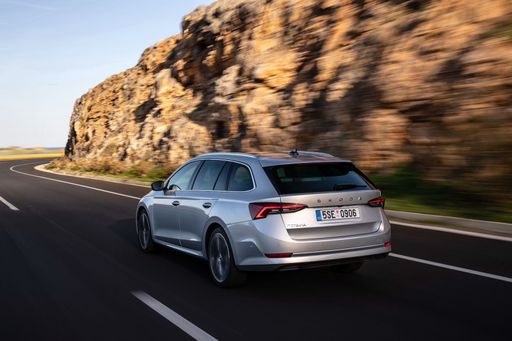
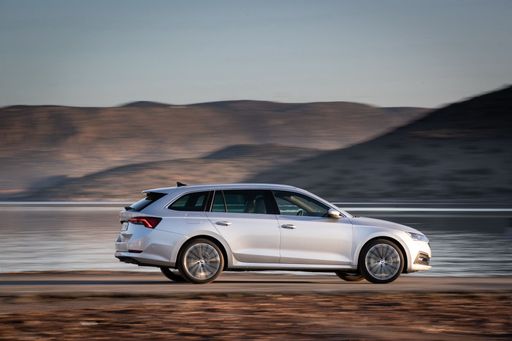
Skoda Octavia Combi VS Kia K4 sets up a clear contrast: the Octavia Combi arrives as the pragmatic, space-first estate while the Kia K4 presents itself as a roomy, value-driven hatchback with strong rear-seat appeal. The Skoda trades a bit of city nimbleness for class‑leading luggage capacity and long‑distance calm, whereas the Kia trades ultimate cargo volume for a lower list price and reassuring warranty coverage. Buyers who prioritise hauling, motorway comfort and low running stress will immediately notice why the Octavia leans that way. Those after simple daily usability, generous rear legroom and a friendlier purchase package will find the Kia’s offer easier to justify. This comparison teases out how those different priorities play out day-to-day before we dig into the technical side.
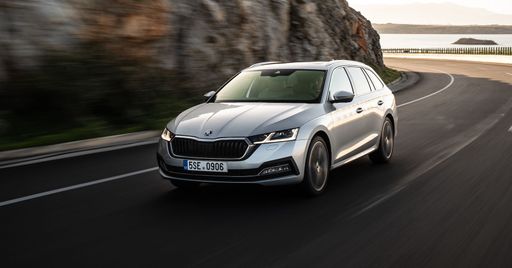
Octavia Combi

Character and driving feel

The Skoda Octavia Combi feels composed and steady, geared toward predictable reactions and confident high‑speed cruising, while the Kia K4 drives lighter and more relaxed but never especially engaging. Skoda’s stronger engine options give the Octavia a keener shove when you need overtaking or motorway progress, so it feels more effortless on long runs; the Kia’s gearbox and lighter steering make for an easy, if slightly inert, city-to-country experience. On twisty roads the Octavia maintains poise, whereas the Kia lets the body move more and rewards a gentler pace. If you want a car that masks speed and effort, the Octavia leans that way; if you prefer an uncomplicated, undemanding driving posture, the K4 is the straightforward choice.

Comfort and long-distance behavior

For long trips the Skoda Octavia Combi tends to be the more relaxed companion thanks to a suspension and seat setup that favour sustained comfort and a calmer noise atmosphere at speed. The Kia K4 has comfortable, supportive seating and excellent rear legroom, but on coarser surfaces and with larger wheels it can feel firmer and transmit more tyre roar. Octavia’s optional comfort tuning smooths highway miles and reduces fatigue, while the Kia rewards occupants with a pleasantly upright seating position and easy-to-use controls that suit long family runs. Choose the Octavia if motorway serenity and endurance matter most; pick the K4 if rear-seat space and everyday ergonomics outweigh ultimate refinement.

Practicality, family use and cargo usability

The Skoda Octavia Combi is the pragmatic heavyweight here: a low loading lip, a wide, usable boot and smart cargo solutions make it the easier car to pack for holidays, DIY trips or bulky cargo. The Kia K4 impresses with exceptional rear passenger space—teenagers and tall adults will thank you—but some K4 powertrain choices reduce boot flexibility, so buyers must check the exact spec for luggage needs. Families who load strollers, suitcases and sports kit regularly will find the Octavia’s cargo practicality more forgiving, whereas families prioritising rear-seat comfort, easy ingress and a tidy cabin will like the K4’s proportions. Both cars have sensible safety and storage touches, but the Octavia’s layout is specifically tuned to heavy-duty day-to-day hauling.

Usability, controls and city friendliness

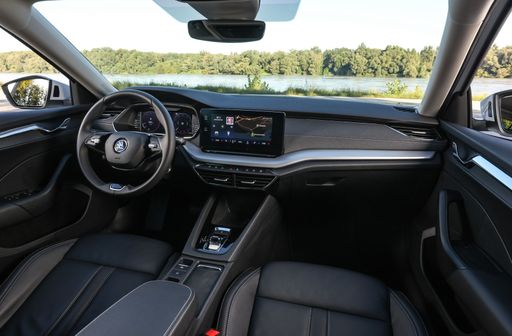
In urban use the Kia K4’s tactile buttons and clear ergonomics feel immediately friendlier than the Octavia Combi’s more touch‑centric interface, so quick adjustments at traffic lights are less distracting in the K4. The Octavia fights back with more advanced driver aids and parking help that compensate for its larger footprint, but its climate and shortcut logic can demand a little more attention. Maneuvering a narrow city street highlights the trade-off: the Octavia’s size asks for more planning, while the K4’s lighter steering and standard camera/sensors make low‑speed work easier. If your day is full of tight parking spaces and hurried controls, the Kia’s simplicity is useful; if you value parking aids and motorway calm over instant button feedback, the Octavia still copes very well.

Ownership, perceived quality and who should choose which

Perceived cabin quality tilts slightly toward the Skoda Octavia Combi with a more purposeful, functional finish that rewards buyers who value utility over flash, while the Kia K4 undercuts on price and soothes ownership nerves with a long manufacturer warranty. The Octavia expects you to pay for convenience through option packs if you want every gadget, but it repays that with stronger efficiency and higher load tolerance on long trips. The Kia is a sensible pick for budget‑aware families who prioritise rear passenger comfort, clear controls and lower entry cost, whereas the Octavia suits buyers who need maximum luggage space, motorway serenity and stronger performance when loaded. Read the upcoming technical comparison to see how the powertrains, boot dimensions and economy figures translate into real‑world trade-offs for your use case.

Here’s where it gets real: The technical differences in detail

K4

Costs and Efficiency:

Looking at overall running costs, both models reveal some interesting differences in everyday economy.

Kia K4 is barely cheaper – starting at 24,800 £ , while the Skoda Octavia Combi costs 25,600 £ . That’s a price difference of around 815 £.

Fuel consumption also shows a difference: the Skoda Octavia Combi uses 4.4 L/100km and is markedly more efficient than the Kia K4 with 5.8 L/100km. The difference is about 1.4 L/100km.

Octavia Combi

Engine and Performance:

Power, torque and acceleration are the classic benchmarks for car enthusiasts – and here, some clear differences start to show.

When it comes to engine power, the Skoda Octavia Combi offers somewhat more power – delivering 204 HP compared to 180 HP. That’s roughly 24 HP more horsepower.

When accelerating from 0 to 100 km/h, the Skoda Octavia Combi is visibly quicker – completing the sprint in 6.7 s, while the Kia K4 takes 8.4 s. That’s about 1.7 s quicker.

There’s also a difference in torque: the Skoda Octavia Combi delivers noticeably more torque with 360 Nm compared to 265 Nm. That’s about 95 Nm more.

Space and Everyday Use:

Cabin size, boot volume and payload all play a role in everyday practicality. Here, comfort and flexibility make the difference.

Both vehicles offer seating for 5 people.

In terms of curb weight, Skoda Octavia Combi is barely lighter – 1,366 kg compared to 1,415 kg. The difference is around 49 kg.

Looking at boot space, the Skoda Octavia Combi offers marginally more boot space – 640 L compared to 604 L. That’s a difference of about 36 L.

When it comes to payload, the Skoda Octavia Combi carries somewhat more – 534 kg compared to 455 kg. That’s a difference of about 79 kg.

Who wins the race in the data check?

The Skoda Octavia Combi holds a decisive overall lead in the objective data comparison.
This result only shows which model scores more points on paper – not which of the two cars feels right for you.

from £25,600
Octavia Combi

Skoda Octavia Combi

  • Engine Type Petrol, Petrol MHEV, Diesel
  • Transmission Automatic, Manuel
  • Drive Type All-Wheel Drive, Front-Wheel Drive
  • Power HP 116 - 204 HP
  • Consumption L/100km 4.4 - 6.9 L/100km
Kia K4
Skoda Octavia Combi

Costs and Consumption

View detailed analysis

Engine and Performance

View detailed analysis

Dimensions and Body

View detailed analysis

Kia K4

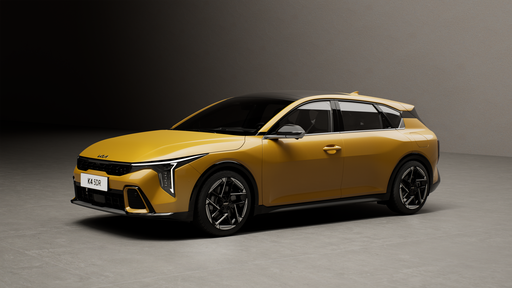
Kia K4 shakes up the compact-sedan crowd with concept-car looks, a smartly packaged cabin, and the kind of easygoing refinement that makes rush hour feel less like a chore. It blends value, tech, and a dash of attitude, serving up a smooth, confident drive that might have you taking the long way home just to show off those angles.

details

Skoda Octavia Combi

The Skoda Octavia Combi is a practical, well‑packaged estate that delivers generous and flexible interior space ideal for families or active owners. Its sensible cabin layout, comfortable ride and solid reputation for reliability make it a pragmatic choice for buyers who value utility over flash.

details
Kia K4
Skoda Octavia Combi

Costs and Consumption

Price
24,800 - 34,200 £
Price
25,600 - 39,600 £
Consumption L/100km
5.8 - 7.1 L/100km
Consumption L/100km
4.4 - 6.9 L/100km
Consumption kWh/100km
-
Consumption kWh/100km
-
Electric Range
-
Electric Range
-
Battery Capacity
-
Battery Capacity
-
co2
132 - 161 g/km
co2
113 - 157 g/km
Fuel tank capacity
-
Fuel tank capacity
-

Dimensions and Body

Body Type
Hatchback, Estate
Body Type
Estate
Seats
5
Seats
5
Doors
-
Doors
-
Curb weight
1,415 - 1,540 kg
Curb weight
1,366 - 1,553 kg
Trunk capacity
328 - 604 L
Trunk capacity
640 L
Length
-
Length
-
Width
1,850 mm
Width
1,829 mm
Height
-
Height
-
Max trunk capacity
-
Max trunk capacity
-
Payload
435 - 455 kg
Payload
502 - 534 kg

Engine and Performance

Engine Type
Petrol, Petrol MHEV
Engine Type
Petrol, Petrol MHEV, Diesel
Transmission
Manuel, Automatic
Transmission
Automatic, Manuel
Transmission Detail
Manual Gearbox, Dual-Clutch Automatic
Transmission Detail
Dual-Clutch Automatic, Manual Gearbox
Drive Type
Front-Wheel Drive
Drive Type
All-Wheel Drive, Front-Wheel Drive
Power HP
115 - 180 HP
Power HP
116 - 204 HP
Acceleration 0-100km/h
8.4 - 12.3 s
Acceleration 0-100km/h
6.7 - 10.7 s
Max Speed
-
Max Speed
-
Torque
200 - 265 Nm
Torque
220 - 360 Nm
Number of Cylinders
3 - 4
Number of Cylinders
4
Power kW
85 - 132 kW
Power kW
85 - 150 kW
Engine capacity
998 - 1,598 cm3
Engine capacity
1,498 - 1,984 cm3

General

Model Year
2,025 - 2,026
Model Year
2025
CO2 Efficiency Class
D, E, F
CO2 Efficiency Class
E, F, D, C
Brand
Kia
Brand
Skoda
DriveDuel uses data analysis and artificial intelligence to evaluate vehicle data and create content. Content is regularly reviewed and improved. The displayed prices are estimates based on German list prices, adjusted to the respective country’s VAT. Country-specific registration taxes are not included. This information is not legally binding.