
 Deutschland
 France
 Nederland
 Great Britain
 Sverige
 Danmark
 Suomi
Suomi Italia
 Polska
 Česko
Česko España
VS
Kia PV5 vs Toyota Proace Bus comparison
Compare performance (163 HP vs 180 HP), boot space and price (32,800 £ vs 31,600 £ ) at a glance. Find out which car is the better choice for you – Kia PV5 or Toyota Proace Bus?
Kia PV5 vs Toyota Proace Bus: Key differences
PV5
Costs and Efficiency:
Price and efficiency are key factors when choosing a car – and this is often where the real differences emerge.
Toyota Proace Bus is only slightly cheaper – starting at 31,600 £ , while the Kia PV5 costs 32,800 £ . That’s a price difference of around 1,256 £.
In terms of energy consumption, the Kia PV5 is noticeably more efficient: consuming 19 kWh/100km compared to 24.2 kWh/100km for the Toyota Proace Bus. That’s a difference of about 5.2 kWh/100km.
As for electric range, the Kia PV5 offers slightly more range – reaching up to 416 km, about 73 km more than the Toyota Proace Bus.
Proace Bus
Engine and Performance:
Power, torque and acceleration say a lot about how a car feels on the road. This is where you see which model delivers more driving dynamics.
When it comes to engine power, the Toyota Proace Bus offers barely more power – delivering 180 HP compared to 163 HP. That’s roughly 17 HP more horsepower.
When accelerating from 0 to 100 km/h, the Kia PV5 is noticeably quicker – completing the sprint in 10.6 s, while the Toyota Proace Bus takes 13.3 s. That’s about 2.7 s quicker.
There’s also a difference in torque: the Toyota Proace Bus delivers visibly more torque with 400 Nm compared to 250 Nm. That’s about 150 Nm more.
PV5
Space and Everyday Use:
Whether family car or daily driver – which one offers more room, flexibility and comfort?
Seats: Toyota Proace Bus offers more seats – 9 vs 5.
In terms of curb weight, Toyota Proace Bus is very slightly lighter – 1,835 kg compared to 1,860 kg. The difference is around 25 kg.
When it comes to payload, the Toyota Proace Bus carries clearly more – 1,265 kg compared to 790 kg. That’s a difference of about 475 kg.
Who wins the race in the data check?
The Toyota Proace Bus is clearly superior overall in the objective data comparison.
This result only shows which model scores more points on paper – not which of the two cars feels right for you.
from £31,600
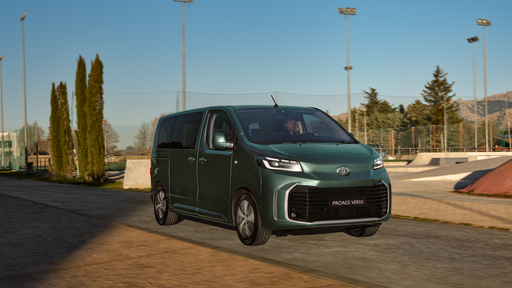
Toyota Proace Bus
Kia PV5
Toyota Proace Bus
Costs and Consumption
View detailed analysis
View detailed analysis
Engine and Performance
View detailed analysis
View detailed analysis
Dimensions and Body
View detailed analysis
View detailed analysis
Kia PV5
The Kia EV5 is an exciting new entrant in the landscape of electric SUVs, promising a blend of style and innovation that captures attention. It boasts a sleek and modern design that aligns with Kia's evolving aesthetic identity, blending practicality with eye-catching details. With its foray into the electric vehicle segment, the EV5 is set to offer a highly competitive option for those looking to embrace sustainable mobility without compromising on comfort or tech features.
details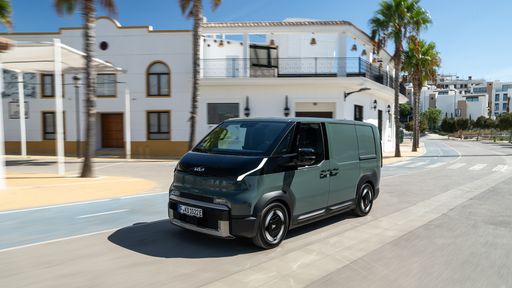
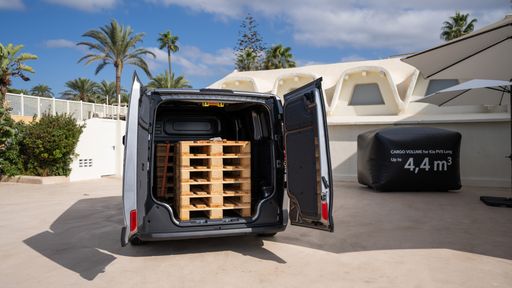


Toyota Proace Bus
The Toyota Proace Bus is a pragmatic people‑mover that swallows passengers and luggage with the kind of everyday practicality fleet managers and large families will appreciate. It may not thrill the enthusiast, but its sensible layout, sturdy build and Toyota badge make it a dependable, no-nonsense choice for anyone needing space and reliability rather than flash.
details
Kia PV5
Toyota Proace Bus
Costs and Consumption |
|
|---|---|
|
Price
32,800 - 38,900 £
|
Price
31,600 - 57,100 £
|
|
Consumption L/100km
-
|
Consumption L/100km
6.5 - 6.7 L/100km
|
|
Consumption kWh/100km
19 - 19.3 kWh/100km
|
Consumption kWh/100km
24.2 - 24.3 kWh/100km
|
|
Electric Range
295 - 416 km
|
Electric Range
218 - 343 km
|
|
Battery Capacity
-
|
Battery Capacity
-
|
|
co2
0 g/km
|
co2
0 - 177 g/km
|
|
Fuel tank capacity
-
|
Fuel tank capacity
-
|
Dimensions and Body |
|
|---|---|
|
Body Type
Cargo Van, Bus
|
Body Type
Bus
|
|
Seats
2 - 5
|
Seats
5 - 9
|
|
Doors
-
|
Doors
-
|
|
Curb weight
1,860 - 2,145 kg
|
Curb weight
1,835 - 2,140 kg
|
|
Trunk capacity
1,330 L
|
Trunk capacity
-
|
|
Length
-
|
Length
-
|
|
Width
1,895 mm
|
Width
1,920 mm
|
|
Height
-
|
Height
-
|
|
Max trunk capacity
-
|
Max trunk capacity
-
|
|
Payload
455 - 790 kg
|
Payload
825 - 1,265 kg
|
Engine and Performance |
|
|---|---|
|
Engine Type
Electric
|
Engine Type
Electric, Diesel
|
|
Transmission
Automatic
|
Transmission
Automatic, Manuel
|
|
Transmission Detail
Reduction Gearbox
|
Transmission Detail
Reduction Gearbox, Manual Gearbox, Automatic Gearbox
|
|
Drive Type
Front-Wheel Drive
|
Drive Type
Front-Wheel Drive
|
|
Power HP
121 - 163 HP
|
Power HP
136 - 180 HP
|
|
Acceleration 0-100km/h
10.6 - 16.2 s
|
Acceleration 0-100km/h
13.3 s
|
|
Max Speed
-
|
Max Speed
-
|
|
Torque
250 Nm
|
Torque
260 - 400 Nm
|
|
Number of Cylinders
-
|
Number of Cylinders
4
|
|
Power kW
89 - 120 kW
|
Power kW
100 - 132 kW
|
|
Engine capacity
-
|
Engine capacity
2,184 cm3
|
General |
|
|---|---|
|
Model Year
2025
|
Model Year
2,024 - 2,025
|
|
CO2 Efficiency Class
A
|
CO2 Efficiency Class
A, F, G
|
|
Brand
Kia
|
Brand
Toyota
|
DriveDuel uses data analysis and artificial intelligence to evaluate vehicle data and create content. Content is regularly reviewed and improved.
The displayed prices are estimates based on German list prices, adjusted to the respective country’s VAT. Country-specific registration taxes are not included. This information is not legally binding.