@ Kia Corporation
@ Volkswagen AG / VW Media
VS

Kia Sportage vs VW Tayron – Performance, range & efficiency compared

Two cars, one duel: Kia Sportage meets VW Tayron.
Which one wins in performance, efficiency and value for money? Find out now!

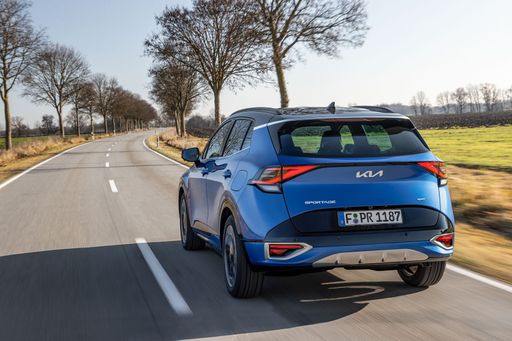
Sportage @ Kia Corporation

Comparing the Roads: Kia Sportage vs. VW Tayron

In the ever-evolving segment of SUVs, two heavyweight contenders have emerged: the Kia Sportage and the VW Tayron. Both vehicles pack an array of features, innovative technologies, and diverse powertrains. This article compares these two SUVs, emphasizing their technical aspects, highlights, and innovations.
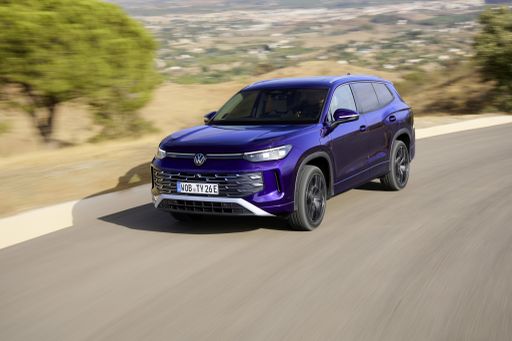
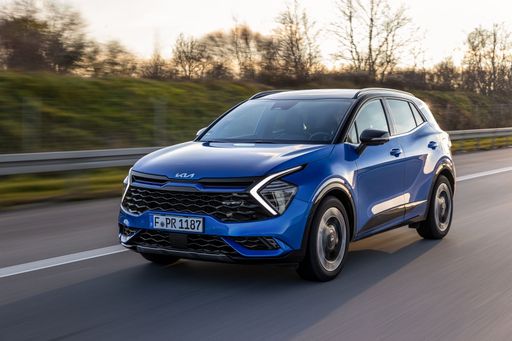
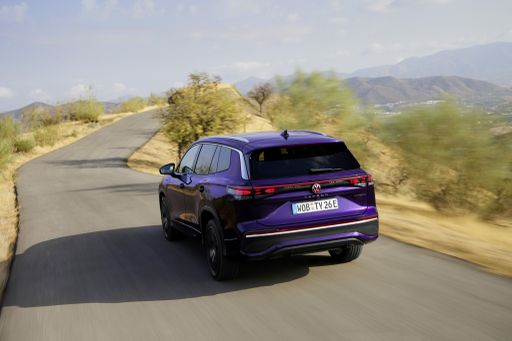
Tayron @ Volkswagen AG / VW Media

Powertrain and Performance

The Kia Sportage offers a versatile selection of engines, ranging from diesel mild hybrid electric vehicles (MHEV) to full hybrids, petrol, and plug-in hybrids. The power output varies from 136 to 252 horsepower, with torque figures reaching up to 350 Nm. It offers both front-wheel and all-wheel drive options, catering to different driving preferences. The acceleration ranges between 8.3 to 11.6 seconds from 0 to 100 km/h, while its top speed peaks at 194 km/h.

On the other hand, the VW Tayron stands out with its primarily petrol and petrol MHEV powertrains, along with a robust plug-in hybrid version. Tantalizing enthusiasts with its top power option of 272 horsepower, this SUV can accelerate from 0 to 100 km/h in just 6.1 seconds, reaching top speeds of up to an impressive 240 km/h. Torque ranges from 250 to 400 Nm, ensuring a dynamic drive in various conditions.

Sportage @ Kia Corporation

Fuel Efficiency and Environmental Impact

The Kia Sportage, mindful of its ecological footprint, flaunts a CO2 efficiency class ranging from D to B. Its fuel consumption is as low as 1.2 liters per 100 km in its plug-in hybrid variant, with an electric range of 64 km. Meanwhile, its petrol and diesel engines consume between 5 and 7.2 liters per 100 km, demonstrating Kia's commitment to offering eco-friendly options without compromising performance.

VW Tayron's plug-in hybrid variants boast an outstanding electric range of up to 126 km and remarkably low fuel consumption figures of 0.4 liters per 100 km. The CO2 efficiency classes range from E to B, with standard petrol and diesel engines consuming between 5.4 and 7.8 liters per 100 km. This focus on efficiency reflects VW's strategy to lead the charge in hybrid technology in the SUV market.

Tayron @ Volkswagen AG / VW Media

Design and Dimensions

The Kia Sportage stands at 4515 mm in length, offering generous cargo space with a trunk capacity ranging from 526 to 587 liters, providing ample room for family adventures and city errands alike. At 1865 mm in width and 1650 mm in height, it presents a commanding road presence without sacrificing agility.

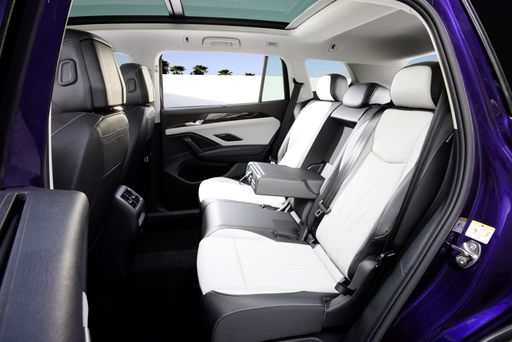
In contrast, the VW Tayron features a longer body at 4792 mm and includes a larger trunk capacity of up to 885 liters. With dimensions of 1866 mm in width and 1668 mm in height, the Tayron offers a spacious interior, accommodating modern families and adventurers who value comfort and storage without compromise.

Sportage @ Kia Corporation

Technological Innovations

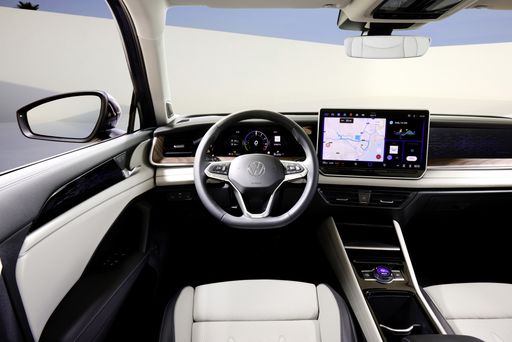
Both the Sportage and Tayron come equipped with the latest infotainment and safety technologies. The Kia Sportage integrates modern driver-assist features and connectivity options, ensuring a safer and more enjoyable drive. Meanwhile, the VW Tayron leverages Volkswagen’s rich history of innovation with advanced safety systems, high-definition infotainment displays, and a suite of connectivity features designed for the contemporary driver.

Tayron @ Volkswagen AG / VW Media

Conclusion

The Kia Sportage offers diversity in powertrains and a robust set of features, appealing to those who want flexibility and eco-friendly options. Its slightly more compact design makes it ideal for city dwellers. On the other hand, the VW Tayron impresses with its potent engine options, larger size, and cutting-edge technology, perfect for those who want an SUV with a strong performance edge and ample space.

Choosing between the Kia Sportage and VW Tayron boils down to individual preferences and priorities—whether it's eco-friendliness, performance, space, or technological features, both vehicles stand tall in the competitive SUV arena.

Here’s where it gets real: The technical differences in detail

Sportage @ Kia Corporation

Costs and Efficiency:

When it comes to price and running costs, the biggest differences usually appear. This is often where you see which car fits your budget better in the long run.

Kia Sportage has a evident advantage in terms of price – it starts at 30200 £, while the VW Tayron costs 39600 £. That’s a price difference of around 9450 £.

Fuel consumption also shows a difference: VW Tayron manages with 1.50 L and is therefore decisively more efficient than the Kia Sportage with 5 L. The difference is about 3.50 L per 100 km.

Tayron @ Volkswagen AG / VW Media

Engine and Performance:

Under the bonnet, it becomes clear which model is tuned for sportiness and which one takes the lead when you hit the accelerator.

When it comes to engine power, the VW Tayron has a slightly edge – offering 272 HP compared to 239 HP. That’s roughly 33 HP more horsepower.

In acceleration from 0 to 100 km/h, the VW Tayron is distinct quicker – completing the sprint in 6.10 s, while the Kia Sportage takes 7.90 s. That’s about 1.80 s faster.

In terms of top speed, the VW Tayron performs to a small extent better – reaching 240 km/h, while the Kia Sportage tops out at 203 km/h. The difference is around 37 km/h.

There’s also a difference in torque: VW Tayron pulls to a small extent stronger with 400 Nm compared to 320 Nm. That’s about 80 Nm difference.

Space and Everyday Use:

Beyond pure performance, interior space and usability matter most in daily life. This is where you see which car is more practical and versatile.

Both vehicles offer seating for 5 people.

In curb weight, Kia Sportage is slight lighter – 1552 kg compared to 1682 kg. The difference is around 130 kg.

In terms of boot space, the VW Tayron offers noticeable more room – 885 L compared to 587 L. That’s a difference of about 298 L.

In maximum load capacity, the VW Tayron performs to a small extent better – up to 2090 L, which is about 314 L more than the Kia Sportage.

When it comes to payload, Kia Sportage slight takes the win – 580 kg compared to 566 kg. That’s a difference of about 14 kg.

Who comes out on top?

Overall, the VW Tayron shows itself to be wins the duel decisively and secures the title of DriveDuel Champion.
It convinces with the more balanced overall package and proves to be the more versatile choice for everyday use.

from about £39,600
Tayron @ Volkswagen AG / VW Media

VW Tayron

  • Engine Type : Petrol MHEV, Diesel, Petrol, Plugin Hybrid
  • Transmission : Automatic
  • Drive Type : Front-Wheel Drive, All-Wheel Drive
  • Power HP : 150 - 272 HP
  • Consumption L/100km : 1.5 - 8.5 L
  • Electric Range : 116 - 123 km

Kia Sportage

5 (1)
rate

The Kia Sportage proves you don't have to choose between style and sensible family motoring, wrapping modern, confident looks around a roomy, well-equipped cabin. It's an easy car to live with — comfortable on daily runs, pleasantly engaging when you want a bit of fun, and kind to your wallet so you can keep smiling at the fuel pump.

details

VW Tayron

The VW Tayron is Volkswagen's roomy, no-nonsense SUV that pairs clean, familiar styling with a practical cabin built for families and everyday use. It rides comfortably, packs sensible tech and creature comforts, and feels like the sensible sweater of SUVs for buyers who prefer steady value over headline-grabbing drama.

details
Kia Sportage
VW Tayron
Sportage @ Kia Corporation
Tayron @ Volkswagen AG / VW Media

Costs and Consumption

Price
30200 - 43900 £
Price
39600 - 53300 £
Consumption L/100km
5 - 7.9 L
Consumption L/100km
1.5 - 8.5 L
Consumption kWh/100km
-
Consumption kWh/100km
-
Electric Range
-
Electric Range
116 - 123 km
Battery Capacity
-
Battery Capacity
19.70 kWh
co2
132 - 180 g/km
co2
33 - 192 g/km
Fuel tank capacity
52 - 54 L
Fuel tank capacity
45 - 58 L

Dimensions and Body

Body Type
SUV
Body Type
SUV
Seats
5
Seats
5
Doors
5
Doors
5
Curb weight
1552 - 1733 kg
Curb weight
1682 - 1948 kg
Trunk capacity
526 - 587 L
Trunk capacity
705 - 885 L
Length
4540 mm
Length
4792 mm
Width
1865 mm
Width
1853 - 1866 mm
Height
1645 mm
Height
1666 - 1668 mm
Max trunk capacity
1715 - 1776 L
Max trunk capacity
1915 - 2090 L
Payload
543 - 580 kg
Payload
489 - 566 kg

Engine and Performance

Engine Type
Petrol, Full Hybrid, Diesel MHEV
Engine Type
Petrol MHEV, Diesel, Petrol, Plugin Hybrid
Transmission
Manuel, Automatic
Transmission
Automatic
Transmission Detail
Manual Gearbox, Dual-Clutch Automatic, Automatic Gearbox
Transmission Detail
Dual-Clutch Automatic
Drive Type
Front-Wheel Drive, All-Wheel Drive
Drive Type
Front-Wheel Drive, All-Wheel Drive
Power HP
136 - 239 HP
Power HP
150 - 272 HP
Acceleration 0-100km/h
7.9 - 11.6 s
Acceleration 0-100km/h
6.1 - 9.7 s
Max Speed
180 - 203 km/h
Max Speed
204 - 240 km/h
Torque
250 - 320 Nm
Torque
250 - 400 Nm
Number of Cylinders
4
Number of Cylinders
4
Power kW
100 - 176 kW
Power kW
110 - 200 kW
Engine capacity
1598 cm3
Engine capacity
1498 - 1984 cm3

General

Model Year
2025
Model Year
2025
CO2 Efficiency Class
F, D, E, G
CO2 Efficiency Class
E, F, G, B
Brand
Kia
Brand
VW
Is the Kia Sportage offered with different drivetrains?

The Kia Sportage is offered with Front-Wheel Drive or All-Wheel Drive.

The prices and data displayed are estimates based on German list prices and may vary by country. This information is not legally binding.