@ Automobili Lamborghini S.p.A.
@ Dr. Ing. h.c. F. Porsche AG
VS

Lamborghini Urus vs Porsche Cayenne – Which model is better for everyday use?

Compare performance, boot capacity, efficiency and price at a glance.
Find out which car is the better choice for you – Lamborghini Urus or Porsche Cayenne?

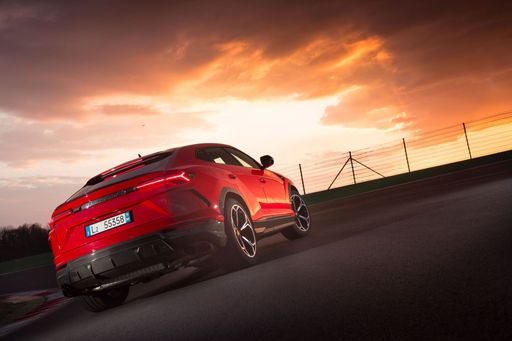
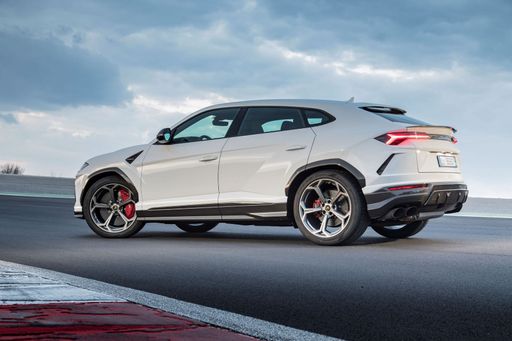
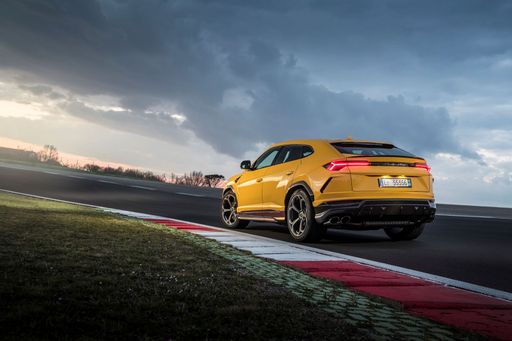
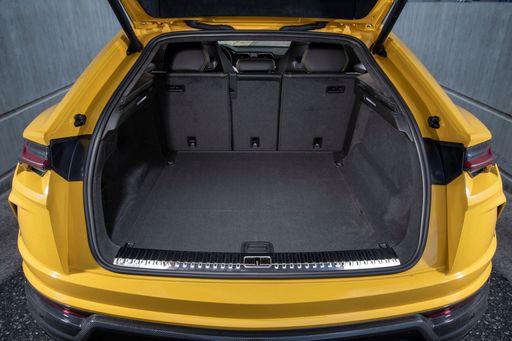
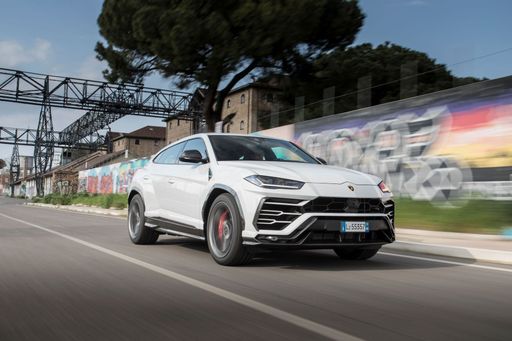
Urus @ Automobili Lamborghini S.p.A.

The Battle of the Titans: Lamborghini Urus VS Porsche Cayenne

In the high-octane world of luxury SUVs, two titans regularly clash in the quest for dominance: the Lamborghini Urus and the Porsche Cayenne. Both vehicles boast an enviable blend of performance and opulence, making them stalwarts in the automotive arena. Let's delve into the technical aspects and innovations defining these formidable machines.
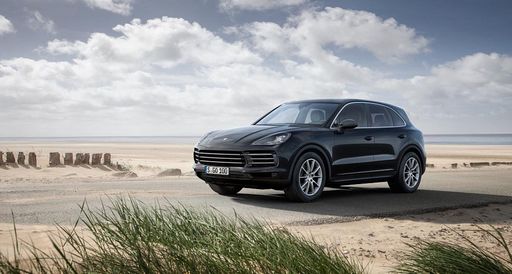
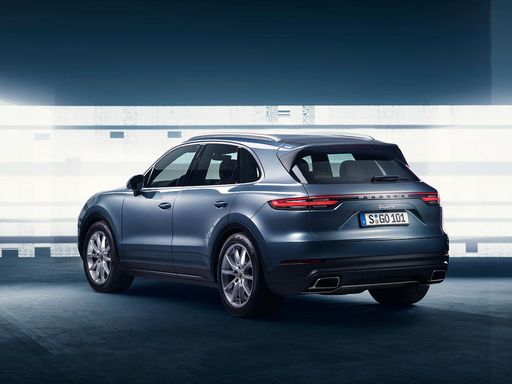
Cayenne @ Dr. Ing. h.c. F. Porsche AG

Performance and Power

When it comes to raw power, the Lamborghini Urus takes center stage. The Urus offers a V8 engine producing up to 800 horsepower, with torque reaching 950 Nm. This SUV rockets from 0 to 100 km/h in a staggering 3.3 seconds, clearly demonstrating its supercar heritage. The top speed peaks at a breath-taking 312 km/h, with the Urus effectively bridging the gap between exhilarating performance and SUV practicality.

Not to be outdone, the Porsche Cayenne delivers its own adrenaline-pumping experience. Its best iteration boasts a potent V8 engine generating up to 739 horsepower and 950 Nm of torque. The acceleration from 0 to 100 km/h is impressively brisk at 3.6 seconds, with a top speed reaching 305 km/h. Porsche has expertly crafted a vehicle that melds performance with refined engineering.

Urus @ Automobili Lamborghini S.p.A.

Efficiency and Sustainability

In today's environmentally-conscious world, efficiency is a critical metric. The Lamborghini Urus offers a plug-in hybrid variant, demonstrating Lamborghini's commitment to innovation. It offers a combined consumption as low as 2.1 L/100km and CO2 emissions measured at just 51 g/km. With an electric range of 60 km, the Urus hybrid provides a more sustainable driving option without compromising the brand's high-performance pedigree.

The Porsche Cayenne similarly features multiple plug-in hybrid variants. These models achieve an impressive electric range of up to 78 km. The consumption figures are remarkable, starting at a mere 1.4 L/100km, and producing minimal emissions of 31 g/km, underscoring Porsche's dedication to pioneering eco-friendly technologies without sacrificing speed or luxury.

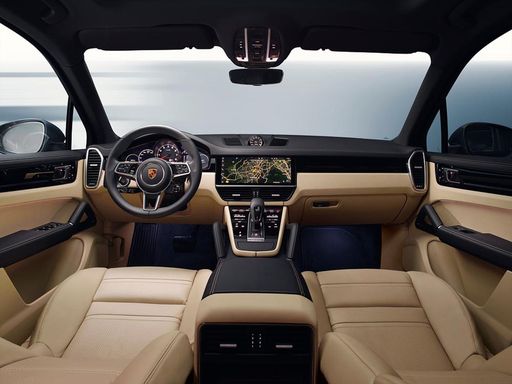
Cayenne @ Dr. Ing. h.c. F. Porsche AG

Innovative Features and Design

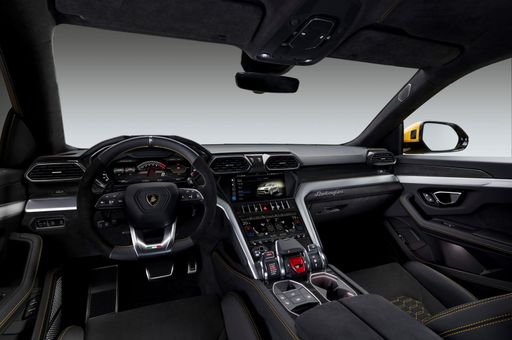
Lamborghini's Urus is not just about power; it's also about lavish innovation. The elegant, aerodynamic design and sumptuous interiors are coupled with advanced technology, including a state-of-the-art infotainment system and adaptive driving modes that customize the driving experience to suit any road or mood.

The Porsche Cayenne is renowned for its meticulous attention to detail and advanced safety systems. With a variety of seating configurations for ultimate passenger comfort and a comprehensive suite of driving aids, the Cayenne seamlessly integrates luxury with practical functionality.

Urus @ Automobili Lamborghini S.p.A.

Practicality and Functionality

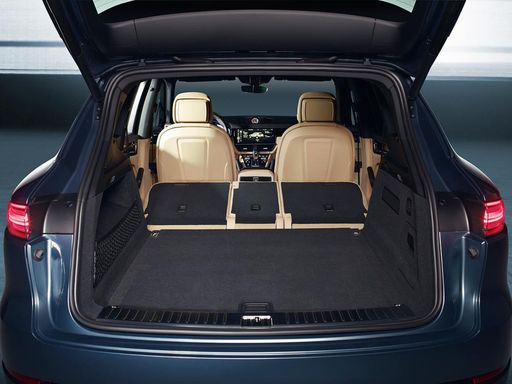
Both SUVs offer ample space and comfort for passengers. The Lamborghini Urus accommodates up to five passengers with a trunk capacity ranging between 454 and 616 liters. The design harmonizes practicality with a stylish and dynamic frame.

Porsche's Cayenne ensures versatility, with seating options for four or five passengers. The trunk space ranges from 434 to 772 liters, catering to various storage needs. With a payload capacity varying up to 705 kg, it is as robust in function as in form.

Cayenne @ Dr. Ing. h.c. F. Porsche AG

Final Verdict

Choosing between the Lamborghini Urus and the Porsche Cayenne ultimately comes down to personal preference. The Urus promises an unparalleled blend of performance and luxury with a more aggressive, supercar-like vibe, while the Cayenne offers a balanced approach with emphasis on efficiency, practicality, and cutting-edge luxury.

In the realm of premium SUVs, both the Lamborghini Urus and Porsche Cayenne continue to push the envelope, setting benchmarks that redefine what these luxury behemoths can achieve.

Here’s where it gets real: The technical differences in detail

Urus @ Automobili Lamborghini S.p.A.

Costs and Efficiency:

When it comes to price and running costs, the biggest differences usually appear. This is often where you see which car fits your budget better in the long run.

Porsche Cayenne has a significantly advantage in terms of price – it starts at 87000 £, while the Lamborghini Urus costs 199400 £. That’s a price difference of around 112448 £.

Fuel consumption also shows a difference: Lamborghini Urus manages with 2.10 L and is therefore convincingly more efficient than the Porsche Cayenne with 4 L. The difference is about 1.90 L per 100 km.

As for range, the Porsche Cayenne performs noticeable better – achieving up to 83 km, about 23 km more than the Lamborghini Urus.

Cayenne @ Dr. Ing. h.c. F. Porsche AG

Engine and Performance:

Power, torque and acceleration are the classic benchmarks for car enthusiasts – and here, some clear differences start to show.

When it comes to engine power, the Lamborghini Urus has a barely noticeable edge – offering 800 HP compared to 739 HP. That’s roughly 61 HP more horsepower.

In acceleration from 0 to 100 km/h, the Lamborghini Urus is slight quicker – completing the sprint in 3.30 s, while the Porsche Cayenne takes 3.60 s. That’s about 0.30 s faster.

In terms of top speed, the Lamborghini Urus performs slight better – reaching 312 km/h, while the Porsche Cayenne tops out at 305 km/h. The difference is around 7 km/h.

Both models offer the same torque – 950 Nm.

Urus @ Automobili Lamborghini S.p.A.

Space and Everyday Use:

Whether family car or daily driver – which one offers more room, flexibility and comfort?

Both vehicles offer seating for 5 people.

In curb weight, Porsche Cayenne is hardly perceptible lighter – 2130 kg compared to 2150 kg. The difference is around 20 kg.

In terms of boot space, the Porsche Cayenne offers noticeable more room – 772 L compared to 616 L. That’s a difference of about 156 L.

In maximum load capacity, the Porsche Cayenne performs barely noticeable better – up to 1708 L, which is about 112 L more than the Lamborghini Urus.

When it comes to payload, Porsche Cayenne convincingly takes the win – 705 kg compared to 350 kg. That’s a difference of about 355 kg.

Who wins the race?

The Porsche Cayenne proves to be offers a more balanced package and therefore becomes our DriveDuel Champion!
Porsche Cayenne is the better all-rounder in this comparison.

from about £87,000
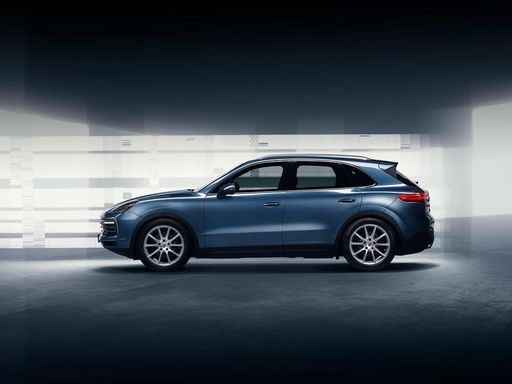
Cayenne @ Dr. Ing. h.c. F. Porsche AG

Porsche Cayenne

  • Engine Type : Petrol, Plugin Hybrid
  • Transmission : Automatic
  • Drive Type : All-Wheel Drive
  • Power HP : 353 - 739 HP
  • Consumption L/100km : 4 - 12.2 L
  • Electric Range : 74 - 83 km

Lamborghini Urus

The Lamborghini Urus is a striking blend of performance, luxury, and versatility, embodying the spirit of a supercar in a high-performance SUV form. Its bold design and aggressive lines make a statement on the road, ensuring it stands out in any environment. Inside, the Urus combines premium materials with cutting-edge technology, offering a driving experience that is both exhilarating and comfortable.

details

Porsche Cayenne

Few SUVs blend athletic poise and Teutonic precision like the Porsche Cayenne, putting genuine sports‑car feeling into a roomy, everyday package. If you want a practical family hauler that still makes you grin every time you merge, the Cayenne delivers — turning errands into an excuse for a spirited drive.

details
Lamborghini Urus
Porsche Cayenne
Urus @ Automobili Lamborghini S.p.A.
Cayenne @ Dr. Ing. h.c. F. Porsche AG

Costs and Consumption

Price
199400 - 257100 £
Price
87000 - 186400 £
Consumption L/100km
2.1 - 14.1 L
Consumption L/100km
4 - 12.2 L
Consumption kWh/100km
-
Consumption kWh/100km
-
Electric Range
60 km
Electric Range
74 - 83 km
Battery Capacity
-
Battery Capacity
21.80 kWh
co2
51 - 320 g/km
co2
90 - 277 g/km
Fuel tank capacity
85 L
Fuel tank capacity
70 - 90 L

Dimensions and Body

Body Type
SUV
Body Type
SUV
Seats
5
Seats
4 - 5
Doors
5
Doors
5
Curb weight
2150 - 2405 kg
Curb weight
2130 - 2670 kg
Trunk capacity
454 - 616 L
Trunk capacity
434 - 772 L
Length
5112 - 5137 mm
Length
4930 mm
Width
2018 - 2026 mm
Width
1983 - 1989 mm
Height
1618 - 1638 mm
Height
1652 - 1698 mm
Max trunk capacity
1596 L
Max trunk capacity
1344 - 1708 L
Payload
100 - 350 kg
Payload
365 - 705 kg

Engine and Performance

Engine Type
Petrol, Plugin Hybrid
Engine Type
Petrol, Plugin Hybrid
Transmission
Automatic
Transmission
Automatic
Transmission Detail
Automatic Gearbox
Transmission Detail
Automatic Gearbox
Drive Type
All-Wheel Drive
Drive Type
All-Wheel Drive
Power HP
666 - 800 HP
Power HP
353 - 739 HP
Acceleration 0-100km/h
3.3 - 3.5 s
Acceleration 0-100km/h
3.6 - 6 s
Max Speed
305 - 312 km/h
Max Speed
248 - 305 km/h
Torque
850 - 950 Nm
Torque
500 - 950 Nm
Number of Cylinders
8
Number of Cylinders
6 - 8
Power kW
490 - 588 kW
Power kW
260 - 544 kW
Engine capacity
3996 cm3
Engine capacity
2995 - 3996 cm3

General

Model Year
2022 - 2024
Model Year
2025
CO2 Efficiency Class
G, B
CO2 Efficiency Class
G, B, C
Brand
Lamborghini
Brand
Porsche
Is the Lamborghini Urus offered with different drivetrains?

The Lamborghini Urus is offered with All-Wheel Drive.

The prices and data displayed are estimates based on German list prices and may vary by country. This information is not legally binding.