VS

Land Rover Range Rover Evoque vs Hyundai Inster comparison

Compare performance (269 HP vs 115 HP), boot space and price (43,300 £ vs 20,900 £ ) at a glance. Find out which car is the better choice for you – Land Rover Range Rover Evoque or Hyundai Inster?

Land Rover Range Rover Evoque vs Hyundai Inster: Key differences

Land Rover Range Rover Evoque

1.4 (2 Reviews)
rate
  • considerably more power
  • considerably quicker 0–100 km/h
  • clearly more trunk space
details

Hyundai Inster

4.5 (3 Reviews)
rate
  • considerably cheaper
  • considerably more electric range
  • clearly lighter
details

All details on performance, efficiency, range and trunk space can be found in the technical comparison below – including user reviews for both models.

By Achim Sedelmaier

Range Rover Evoque

Urban Elegance Meets Electric Innovation: Range Rover Evoque vs. Hyundai Inster

The world of compact SUVs is continuously evolving, with luxury meets practicality dominating the scene. Today, we explore an intriguing comparison between two potent contenders: the esteemed Range Rover Evoque and the new electric Hyundai Inster. These vehicles, while sharing an SUV body type, bring unique qualities to the table that cater to different driving preferences and lifestyle needs. Here, we delve into their technical aspects and innovations to uncover what makes each stand out.
Inster

Engine and Performance: MHEV Meets Pure Electric

The 2024 Range Rover Evoque offers a multi-engine lineup, including Diesel MHEV, Petrol MHEV, and Plugin Hybrid options. Its power spectrum ranges from 160 to 269 horsepower, providing robust performance across the board. With an acceleration range from 7.2 to 10.3 seconds for 0-100 km/h, the Evoque ensures a dynamic driving experience. Complemented by various drive types, including All-Wheel Drive and Front-Wheel Drive, it promises versatility on and off-road.

In contrast, the Hyundai Inster is entirely electric, reflecting a commitment to zero emissions with its 0 g/km CO2 rating. It features two power options, 97 and 115 horsepower, with a front-wheel drive system. Despite its modest acceleration of 10.6 to 11.7 seconds, the Inster provides a silent and smooth ride experience, reaching a maximum speed of up to 150 km/h. It aims squarely at eco-conscious urban drivers with a commendable electric range of up to 370 km.

Range Rover Evoque

Interior and Space: Luxury vs. Compact Practicality

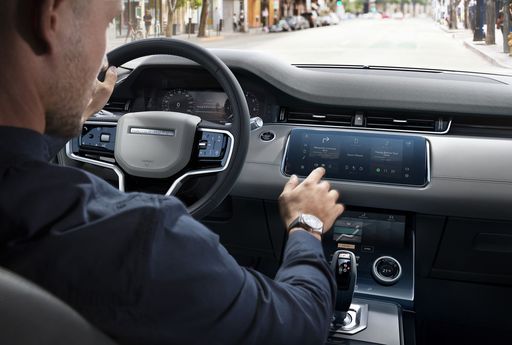
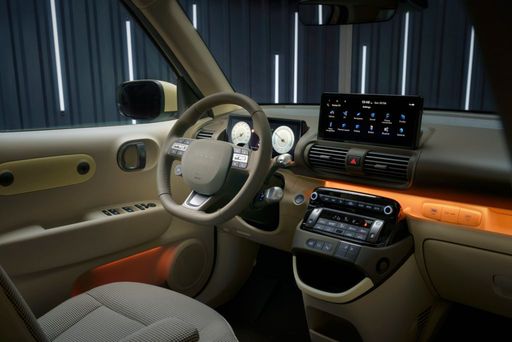
Step inside the Range Rover Evoque, and you'll find a luxurious cabin designed for comfort and technology. It comfortably seats five occupants, providing generous trunk space of 472 liters. The Evoque is perfect for families or individuals who enjoy traveling with ample luggage room.

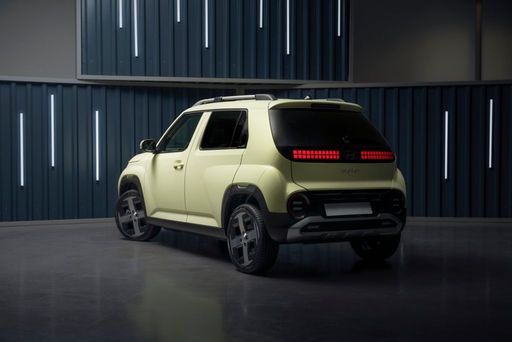
The Hyundai Inster, though more compact, efficiently utilizes space to its advantage. Accommodating four seats, it offers a trunk space between 238 to 280 liters. While it prioritizes compact design, the Inster doesn't compromise on comfort, apt for city dwellers seeking an environmentally friendly vehicle with practicality at its core.

Inster

Dimensions and Design: Bold vs. Streamlined

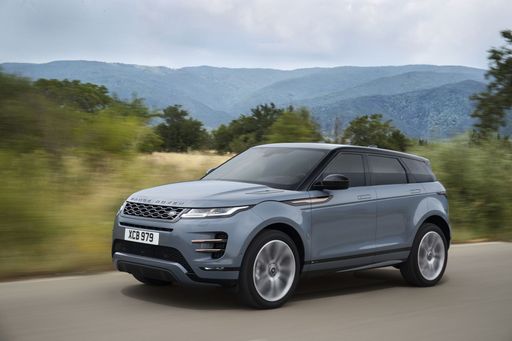
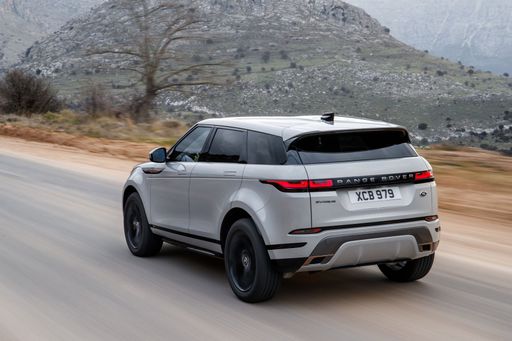
With a length of 4371 mm and a width of 1900 mm, the Range Rover Evoque presents a robust and commanding presence on the road. Its height of 1649 mm adds to its overall grand design, projecting a majestic SUV that turns heads wherever it ventures.

On the other hand, the Hyundai Inster emphasizes a streamlined approach with its shorter length of up to 3845 mm and a width of 1610 mm. Sporting a height up to 1610 mm, it features a maneuverable and agile frame perfect for navigating crowded city streets and tight parking spaces.

Range Rover Evoque

Efficiency and Sustainability: A Hot Topic

The Evoque’s hybrid models boast fuel consumption as low as 1.4 L/100km and an electric range of 68 km, courtesy of its 11.5 kWh battery capacity. This makes it an attractive option for those who wish for electrified efficiency without sacrificing range.

With the Inster, the spotlight is on full-electric functionality, with efficiency ratings between 14.3 to 15.1 kWh/100km. Its significant battery capacity of up to 49 kWh supports its noteworthy range, affirming Hyundai’s dedication to sustainable driving solutions.

Inster

The Verdict: Choosing the Right Fit

The Range Rover Evoque and Hyundai Inster cater to different niches within the SUV market. For traditional luxury and flexibility mixed with hybrid innovation, the Evoque stands out. It offers a powerful mix of performance, comfort, and the latest vehicle technology.

The Hyundai Inster appeals to the modern urbanite, delivering eco-friendly all-electric performance with a compact yet efficient design. Its CO2-free output championed by sustainability-driven innovation marks it as a winner for environmentally-conscious consumers.

Whether drawn to the refined elegance and versatility of the Evoque or the efficient and forward-thinking nature of the Inster, both models represent the evolving landscape of the modern SUV. Your choice will reflect where your priorities lie in this exciting era of automotive innovation.

Here’s where it gets real: The technical differences in detail

Range Rover Evoque

Costs and Efficiency:

When it comes to price and running costs, the biggest differences usually appear. This is often where you see which car fits your budget better in the long run.

Hyundai Inster is considerably cheaper – starting at 20,900 £ , while the Land Rover Range Rover Evoque costs 43,300 £ . That’s a price difference of around 22,371 £.

As for electric range, the Hyundai Inster offers considerably more range – reaching up to 370 km, about 303 km more than the Land Rover Range Rover Evoque.

Inster

Engine and Performance:

Power, torque and acceleration say a lot about how a car feels on the road. This is where you see which model delivers more driving dynamics.

When it comes to engine power, the Land Rover Range Rover Evoque offers considerably more power – delivering 269 HP compared to 115 HP. That’s roughly 154 HP more horsepower.

When accelerating from 0 to 100 km/h, the Land Rover Range Rover Evoque is considerably quicker – completing the sprint in 7.2 s, while the Hyundai Inster takes 10.6 s. That’s about 3.4 s quicker.

There’s also a difference in torque: the Land Rover Range Rover Evoque delivers significantly more torque with 540 Nm compared to 147 Nm. That’s about 393 Nm more.

Range Rover Evoque

Space and Everyday Use:

Cabin size, boot volume and payload all play a role in everyday practicality. Here, comfort and flexibility make the difference.

Seats: Land Rover Range Rover Evoque offers more seats – 5 vs 4.

In terms of curb weight, Hyundai Inster is clearly lighter – 1,380 kg compared to 1,792 kg. The difference is around 412 kg.

Looking at boot space, the Land Rover Range Rover Evoque offers clearly more boot space – 472 L compared to 280 L. That’s a difference of about 192 L.

When it comes to payload, the Land Rover Range Rover Evoque carries clearly more – 600 kg compared to 357 kg. That’s a difference of about 243 kg.

Who wins the race in the data check?

The Land Rover Range Rover Evoque is barely ahead in the objective data comparison.
This result only shows which model scores more points on paper – not which of the two cars feels right for you.

from £43,300
Range Rover Evoque

Land Rover Range Rover Evoque

  • Engine Type Petrol MHEV, Diesel MHEV, Plugin Hybrid
  • Transmission Automatic
  • Drive Type Front-Wheel Drive, All-Wheel Drive
  • Power HP 160 - 269 HP
  • Consumption L/100km 3.7 - 7.8 L/100km
  • Electric Range 67 km
Land Rover Range Rover Evoque
Hyundai Inster

Costs and Consumption

View detailed analysis

Engine and Performance

View detailed analysis

Dimensions and Body

View detailed analysis

Land Rover Range Rover Evoque

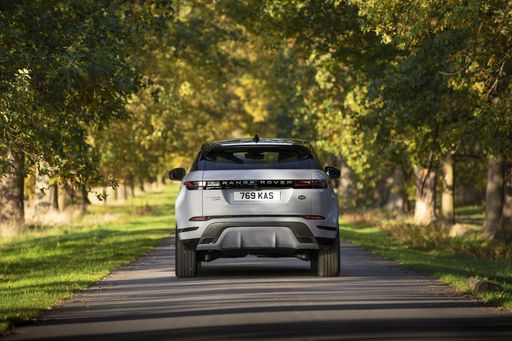
The Range Rover Evoque turns heads with a compact, sculpted silhouette and an interior that feels more boutique hotel than utility vehicle. It delivers composed, playful handling around town while keeping enough ruggedness for weekend escapes — perfect for buyers who want luxury without the ostentation.

details

Hyundai Inster

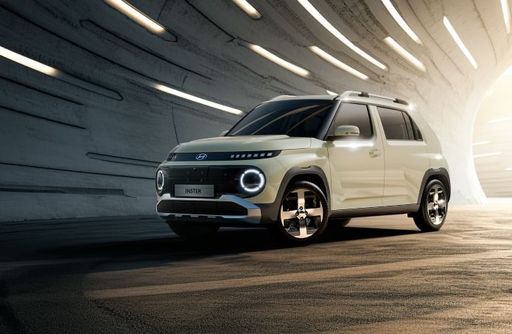
The Inster has quickly captured the attention of automotive enthusiasts with its striking design and dynamic performance. This model seamlessly blends advanced technology with comfort, making it an ideal choice for both daily commutes and adventurous road trips. With its spacious interior and innovative features, the Inster promises an exhilarating driving experience that doesn’t compromise on practicality.

details
Land Rover Range Rover Evoque
Hyundai Inster

Costs and Consumption

Price
43,300 - 64,800 £
Price
20,900 - 26,200 £
Consumption L/100km
3.7 - 7.8 L/100km
Consumption L/100km
-
Consumption kWh/100km
-
Consumption kWh/100km
14.3 - 15.1 kWh/100km
Electric Range
67 km
Electric Range
327 - 370 km
Battery Capacity
-
Battery Capacity
-
co2
85 - 177 g/km
co2
0 g/km
Fuel tank capacity
-
Fuel tank capacity
-

Dimensions and Body

Body Type
SUV
Body Type
SUV
Seats
5
Seats
4
Doors
-
Doors
-
Curb weight
1,792 - 2,157 kg
Curb weight
1,380 - 1,433 kg
Trunk capacity
472 L
Trunk capacity
238 - 280 L
Length
-
Length
-
Width
1,900 mm
Width
1,610 mm
Height
-
Height
-
Max trunk capacity
-
Max trunk capacity
-
Payload
503 - 600 kg
Payload
317 - 357 kg

Engine and Performance

Engine Type
Petrol MHEV, Diesel MHEV, Plugin Hybrid
Engine Type
Electric
Transmission
Automatic
Transmission
Automatic
Transmission Detail
Automatic Gearbox
Transmission Detail
Reduction Gearbox
Drive Type
Front-Wheel Drive, All-Wheel Drive
Drive Type
Front-Wheel Drive
Power HP
160 - 269 HP
Power HP
97 - 115 HP
Acceleration 0-100km/h
7.2 - 10.3 s
Acceleration 0-100km/h
10.6 - 11.7 s
Max Speed
-
Max Speed
-
Torque
260 - 540 Nm
Torque
147 Nm
Number of Cylinders
3 - 4
Number of Cylinders
-
Power kW
118 - 198 kW
Power kW
71 - 85 kW
Engine capacity
1,498 - 1,998 cm3
Engine capacity
-

General

Model Year
2,025 - 2,026
Model Year
2025
CO2 Efficiency Class
G, F, B
CO2 Efficiency Class
A
Brand
Land Rover
Brand
Hyundai
DriveDuel uses data analysis and artificial intelligence to evaluate vehicle data and create content. Content is regularly reviewed and improved. The displayed prices are estimates based on German list prices, adjusted to the respective country’s VAT. Country-specific registration taxes are not included. This information is not legally binding.