VS

Lexus UX vs Mercedes B Class comparison

Compare performance (199 HP vs 238 HP), boot space and price (37,900 £ vs 33,100 £ ) at a glance. Find out which car is the better choice for you – Lexus UX or Mercedes B Class?

Lexus UX vs Mercedes B Class: Key differences

Lexus UX

4.6 (4 Reviews)
rate

Mercedes B Class

4.9 (5 Reviews)
rate
  • somewhat cheaper
  • a bit more power
  • clearly more efficient
  • markedly quicker 0–100 km/h
  • only slightly lighter

All details on performance, efficiency, range and trunk space can be found in the technical comparison below – including user reviews for both models.

By Achim Sedelmaier

UX

The automotive landscape is filled with options for potential buyers, but when it comes to the compact luxury segment, the battle between the Lexus UX and the Mercedes B-Class stands out. Each vehicle boasts distinctive designs, innovative features, and impressive performance metrics. In this comparison, we will delve into the technical aspects and innovations that make these vehicles appealing to modern drivers.
B Class

Design and Dimensions

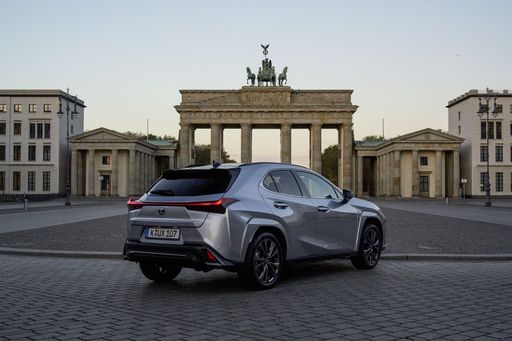
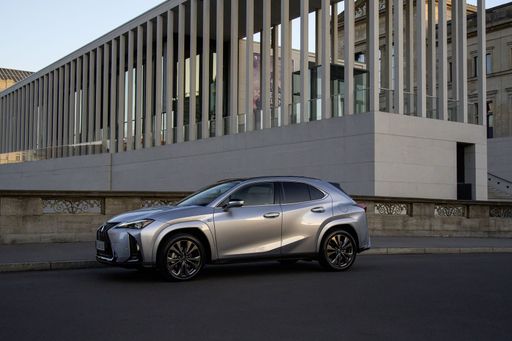
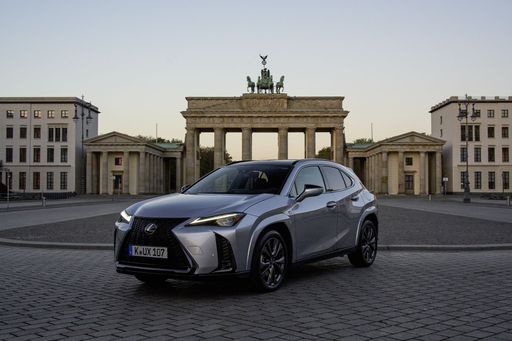
The Lexus UX is an SUV with a sleek and edgy design that embodies the brand’s modern aesthetic. Measuring 4,495 mm in length, 1,840 mm in width, and 1,545 mm in height, it provides ample road presence along with a distinctive trademark grille and striking LED lighting.

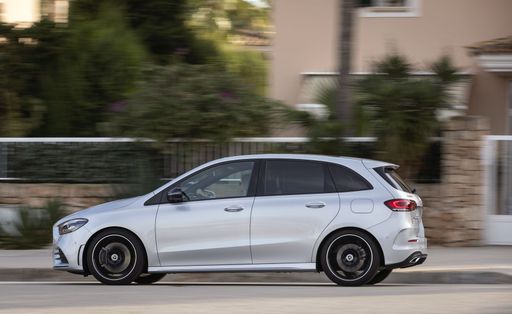
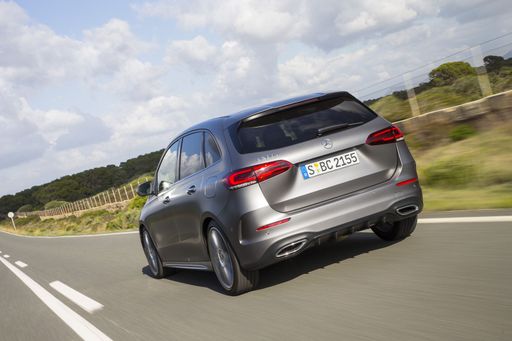
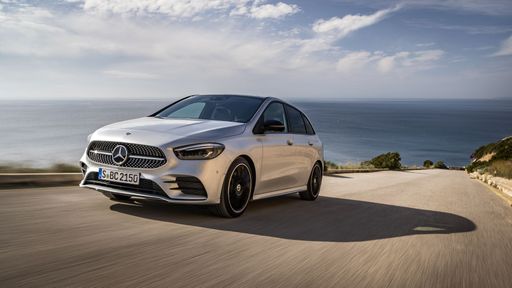
On the other hand, the Mercedes B-Class serves as a multi-purpose vehicle (MPV) with a more rounded appearance. Slightly shorter at 4,419 mm in length and wider at 1,796 mm, its 1,562 mm height promotes a spacious feel, making it a practical choice for families seeking comfort and functionality.

UX

Powertrain Options

The powertrain configurations of both vehicles cater to a range of driving preferences. The Lexus UX offers a combination of electric and full hybrid powertrains. With the electric variant providing up to 204 HP and a torque of 300 Nm, it achieves a zero to 100 km/h acceleration in as little as 7.5 seconds. Fuel consumption stands at an impressive 5.0 L/100 km and boasts an electric range of 449 km, perfectly suited for environmentally-conscious consumers.

Contrastingly, the B-Class presents a diverse range of engine choices, including petrol MHEV, diesel, and plug-in hybrids. Power outputs range from 116 HP to a robust 238 HP, catering to both conservative and performance-driven drivers. The B-Class is also equipped with a dual-clutch automatic transmission, ensuring a smooth and responsive driving experience. Acceleration figures can reach as low as 6.5 seconds for the higher-powered variants, displaying an exciting prowess.

B Class

Interior Technology and Comfort

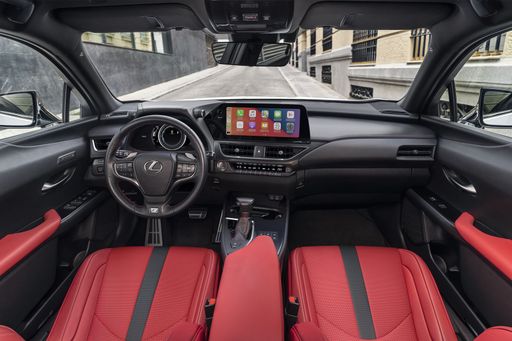
Both vehicles prioritize driver and passenger comfort through innovative interior technology. The Lexus UX features a refined cabin with quality materials and seamless integration of advanced tech, including a high-resolution infotainment system, premium audio options, and driver assistance features to enhance safety.

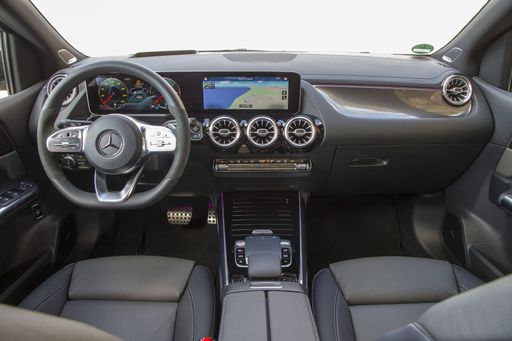
In comparison, the Mercedes B-Class shines with its user-friendly MBUX (Mercedes-Benz User Experience) system, providing intuitive voice control, navigation, and seamless smartphone connectivity. Its spacious interior can comfortably seat up to five passengers, making it a quintessential family vehicle.

UX

Storage and Practicality

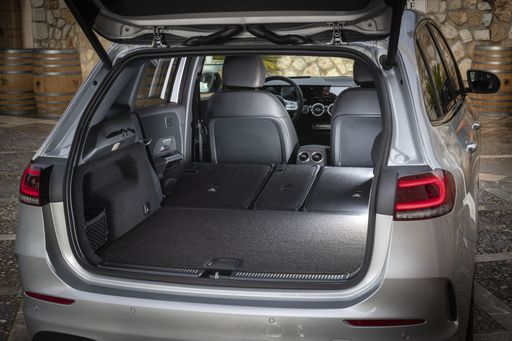
Storage capabilities are vital in compact vehicles, and both the Lexus UX and B-Class provide adequate trunk space. The Lexus UX has a trunk capacity of 367 liters, which is suited for city driving and weekend getaways. On the other side, the B-Class offers a more generous capacity of 455 liters, proving itself as a practical choice for families or frequent travelers.

B Class

Efficiency and Emissions

Efficiency remains a key consideration in automotive design. The Lexus UX outshines with its exceptional fuel efficiency and electric range, categorized as Class A in CO2 emissions, while its hybrid variant emits only 113 g/km. This makes it a great choice for eco-minded consumers.

The B-Class, while still efficient, has a wider range of CO2 emissions classified between B to E, depending on the chosen powertrain. The best performing versions can achieve a respectable 5.1 L/100 km, but the higher-performance variants come with increased emissions, which may concern some eco-conscious buyers.

UX

Conclusion

Ultimately, the choice between the Lexus UX and the Mercedes B-Class boils down to personal preferences and lifestyle needs. The UX is ideal for those drawn to electrification and sporty handling, while the B-Class excels in practicality and a versatile array of powertrains. Both vehicles deliver luxury, performance, and innovative features, making the compact luxury segment an exciting choice for consumers today.

Here’s where it gets real: The technical differences in detail

UX

Costs and Efficiency:

Looking at overall running costs, both models reveal some interesting differences in everyday economy.

Mercedes B Class is somewhat cheaper – starting at 33,100 £ , while the Lexus UX costs 37,900 £ . That’s a price difference of around 4,799 £.

Fuel consumption also shows a difference: the Mercedes B Class uses 2.5 L/100km and is clearly more efficient than the Lexus UX with 5 L/100km. The difference is about 2.5 L/100km.

B Class

Engine and Performance:

Under the bonnet, it becomes clear which model is tuned for sportiness and which one takes the lead when you hit the accelerator.

When it comes to engine power, the Mercedes B Class offers a bit more power – delivering 238 HP compared to 199 HP. That’s roughly 39 HP more horsepower.

When accelerating from 0 to 100 km/h, the Mercedes B Class is markedly quicker – completing the sprint in 6.5 s, while the Lexus UX takes 7.9 s. That’s about 1.4 s quicker.

UX

Space and Everyday Use:

Beyond pure performance, interior space and usability matter most in daily life. This is where you see which car is more practical and versatile.

Both vehicles offer seating for 5 people.

In terms of curb weight, Mercedes B Class is only slightly lighter – 1,405 kg compared to 1,495 kg. The difference is around 90 kg.

When it comes to payload, the Lexus UX carries moderately more – 615 kg compared to 550 kg. That’s a difference of about 65 kg.

Who wins the race in the data check?

The Mercedes B Class is far ahead overall in the objective data comparison.
This result only shows which model scores more points on paper – not which of the two cars feels right for you.

from £33,100
B Class

Mercedes B Class

  • Engine Type : Plugin Hybrid, Petrol MHEV, Diesel
  • Transmission : Automatic
  • Drive Type : Front-Wheel Drive, All-Wheel Drive
  • Power HP : 116 - 238 HP
  • Consumption L/100km : 2.5 - 6.9 L/100km
  • Electric Range : 83 km
Lexus UX
Mercedes B Class

Costs and Consumption

View detailed analysis

Engine and Performance

View detailed analysis

Dimensions and Body

View detailed analysis

Lexus UX

The Lexus UX is a compact luxury crossover that blends sharp styling with a quiet, comfortable cabin, perfect for urban buyers who want premium feel without shouting about it. It rides with poise, serves up plush materials and thoughtful tech, and—while it won’t satisfy anyone chasing track thrills—it's a smart, stylish choice for everyday driving.

details

Mercedes B Class

The Mercedes B-Class is a smart, grown-up compact people carrier that dresses everyday practicality in a near‑premium polish, perfect for buyers who want comfort and a classy badge without the theatrics. It won’t set your pulse racing on a back road, but it will make school runs, commutes and grocery hauls feel pleasantly civilized — a reliable, slightly posh companion for real life.

details
Lexus UX
Mercedes B Class

Costs and Consumption

Price
37,900 - 54,100 £
Price
33,100 - 52,500 £
Consumption L/100km
5 - 5.6 L/100km
Consumption L/100km
2.5 - 6.9 L/100km
Consumption kWh/100km
-
Consumption kWh/100km
-
Electric Range
-
Electric Range
83 km
Battery Capacity
-
Battery Capacity
12.9 kWh
co2
113 - 127 g/km
co2
56 - 156 g/km
Fuel tank capacity
-
Fuel tank capacity
35 L

Dimensions and Body

Body Type
SUV
Body Type
MPV
Seats
5
Seats
5
Doors
-
Doors
5
Curb weight
1,495 - 1,555 kg
Curb weight
1,405 - 1,745 kg
Trunk capacity
-
Trunk capacity
405 - 455 L
Length
-
Length
4,419 mm
Width
1,840 mm
Width
1,796 mm
Height
-
Height
1,562 mm
Max trunk capacity
-
Max trunk capacity
1,440 L
Payload
555 - 615 kg
Payload
505 - 550 kg

Engine and Performance

Engine Type
Full Hybrid
Engine Type
Plugin Hybrid, Petrol MHEV, Diesel
Transmission
Automatic
Transmission
Automatic
Transmission Detail
CVT
Transmission Detail
Dual-Clutch Automatic
Drive Type
Front-Wheel Drive, All-Wheel Drive
Drive Type
Front-Wheel Drive, All-Wheel Drive
Power HP
199 HP
Power HP
116 - 238 HP
Acceleration 0-100km/h
7.9 - 8.1 s
Acceleration 0-100km/h
6.5 - 10 s
Max Speed
-
Max Speed
223 km/h
Torque
-
Torque
200 - 450 Nm
Number of Cylinders
4
Number of Cylinders
4
Power kW
146 kW
Power kW
85 - 175 kW
Engine capacity
1,987 cm3
Engine capacity
1,332 - 1,991 cm3

General

Model Year
2,025
Model Year
2,024 - 2,025
CO2 Efficiency Class
C, D
CO2 Efficiency Class
B, D, E, F
Brand
Lexus
Brand
Mercedes-Benz
DriveDuel uses data analysis and artificial intelligence to evaluate vehicle data and create content. Content is regularly reviewed and improved. The displayed prices are estimates based on German list prices, adjusted to the respective country’s VAT. Country-specific registration taxes are not included. This information is not legally binding.