VS

Mazda CX-5 vs Audi Q3 comparison

Compare performance (141 HP vs 272 HP), boot space and price (30,000 £ vs 38,200 £ ) at a glance. Find out which car is the better choice for you – Mazda CX-5 or Audi Q3?

Mazda CX-5 vs Audi Q3: Key differences

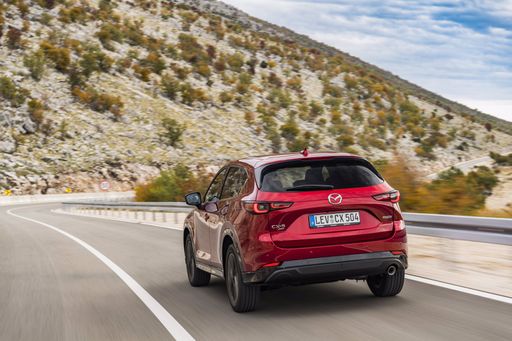
Mazda CX-5

4.6 (7 Reviews)
rate
  • markedly cheaper
  • only slightly lighter
  • moderately more trunk space

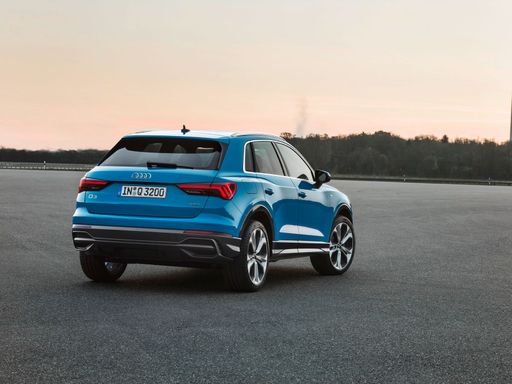
Audi Q3

5 (1 Reviews)
rate
  • considerably more power
  • considerably more efficient
  • substantially quicker 0–100 km/h

All details on performance, efficiency, range and trunk space can be found in the technical comparison below – including user reviews for both models.

CX-5

The compact SUV segment is a fiercely competitive arena, with manufacturers constantly raising the bar for performance, comfort, and technology. Today, we pit the Audi Q3 against the Mazda CX-5, two models known for their distinctive features and engineering excellence. In this comparison, we'll delve into the technical specifications and innovations that each vehicle brings to the table.
Q3

Design and Dimensions

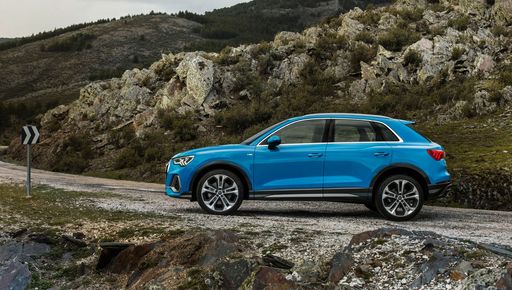
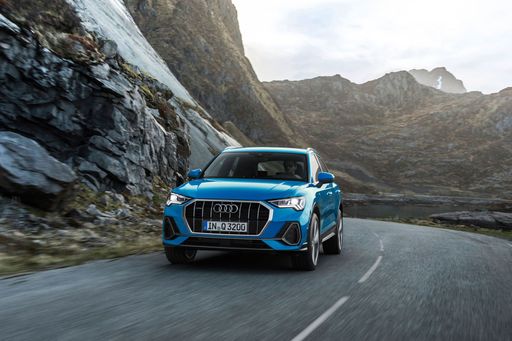
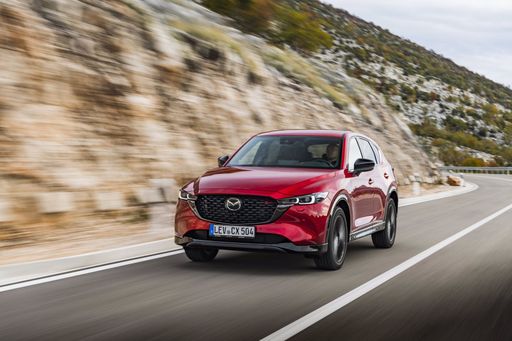
Both the Audi Q3 and the Mazda CX-5 boast sleek designs and spacious interiors, but they cater to slightly different aesthetics. The Q3, measuring 4484 mm in length, 1849 mm in width, and 1585 mm in height, exudes a modern, sporty vibe. On the other hand, the CX-5 is larger in length at 4575 mm and stands taller at 1680 mm, giving it a more commanding presence on the road.

CX-5

Engine and Performance

The Audi Q3 offers a selection of petrol and diesel engines with power outputs ranging from 150 hp to a robust 245 hp. This engine lineup comes with efficient fuel consumption rates, with the most economical variant achieving only 5.5 L/100km. The Q3's acceleration from 0 to 100 km/h can be as swift as 5.8 seconds, making it a dynamic choice for those seeking performance.

Meanwhile, the Mazda CX-5 features petrol and diesel engines as well, delivering power output between 150 hp and 194 hp. The CX-5 is not far behind in fuel efficiency, registering a minimum consumption of 5.6 L/100km. However, it lags slightly in acceleration, with the best performing variant reaching 100 km/h in 9.2 seconds.

Q3

Transmission and Handling

The Q3 offers both manual and automatic transmissions, including a sophisticated dual-clutch system. This results in smooth gear transitions and an engaging driving experience. The Q3 is available in both front-wheel drive and all-wheel drive configurations, enhancing its versatility on various terrains.

The CX-5 also comes with manual and automatic transmission options. However, its focus on driver engagement shines through its well-tuned chassis and steering feel, which are especially appealing to enthusiasts. Like the Q3, the CX-5 offers all-wheel drive, making it a capable performer in challenging conditions.

CX-5

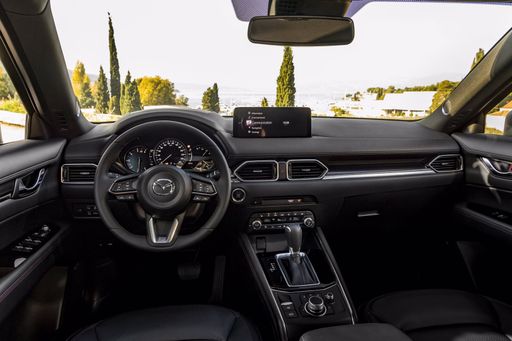
Interior Comfort and Technology

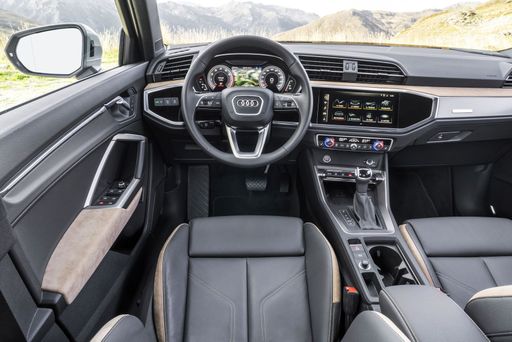
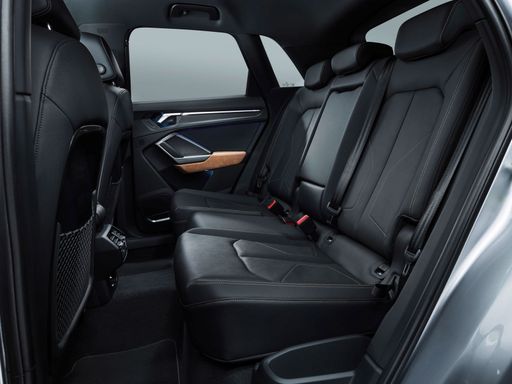
Stepping inside the Audi Q3, you'll be met with a luxurious cabin adorned with high-quality materials and state-of-the-art technology. With a trunk capacity of 530 liters, it comfortably accommodates luggage and groceries alike. Additional features like a customizable digital cockpit and advanced infotainment systems reflect Audi's commitment to innovation.

The Mazda CX-5 does not fall short either, with a well-designed interior and a user-friendly infotainment system. Its trunk capacity is also impressive at 522 liters. The SUV's minimalist design philosophy ensures a comfortable ride, complemented by ergonomic seating and high-quality materials used throughout the cabin.

Q3

Safety and Assistance Features

Both models come equipped with an array of safety features. The Q3's advanced driver assistance systems, including adaptive cruise control and lane-keeping assist, provide an added layer of security for passengers. Furthermore, the Q3 excels in crash test ratings, further solidifying its reputation as a safe choice.

The CX-5 features Mazda's i-Activsense technologies, which include smart brake support and blind-spot monitoring. These systems help to enhance the driver’s awareness and the vehicle's overall safety. Both SUVs have performed admirably in safety tests, with the CX-5 also boasting commendable ratings.

Conclusion

Choosing between the Audi Q3 and the Mazda CX-5 ultimately comes down to personal preferences and priorities. If you desire a sportier performance with luxury touches, the Q3 is a compelling finalist. However, if you value practicality and engaging driving experiences, the CX-5 stands out as a remarkable contender. Both vehicles represent excellence in the compact SUV segment, catering to a range of needs and desires amongst drivers.

Here’s where it gets real: The technical differences in detail

CX-5

Costs and Efficiency:

Looking at overall running costs, both models reveal some interesting differences in everyday economy.

Mazda CX-5 is markedly cheaper – starting at 30,000 £ , while the Audi Q3 costs 38,200 £ . That’s a price difference of around 8,237 £.

Fuel consumption also shows a difference: the Audi Q3 uses 1.7 L/100km and is considerably more efficient than the Mazda CX-5 with 7 L/100km. The difference is about 5.3 L/100km.

Q3

Engine and Performance:

Under the bonnet, it becomes clear which model is tuned for sportiness and which one takes the lead when you hit the accelerator.

When it comes to engine power, the Audi Q3 offers considerably more power – delivering 272 HP compared to 141 HP. That’s roughly 131 HP more horsepower.

When accelerating from 0 to 100 km/h, the Audi Q3 is substantially quicker – completing the sprint in 5.7 s, while the Mazda CX-5 takes 10.5 s. That’s about 4.8 s quicker.

There’s also a difference in torque: the Audi Q3 delivers significantly more torque with 400 Nm compared to 238 Nm. That’s about 162 Nm more.

CX-5

Space and Everyday Use:

Beyond pure performance, interior space and usability matter most in daily life. This is where you see which car is more practical and versatile.

Both vehicles offer seating for 5 people.

In terms of curb weight, Mazda CX-5 is only slightly lighter – 1,629 kg compared to 1,635 kg. The difference is around 6 kg.

Looking at boot space, the Mazda CX-5 offers moderately more boot space – 583 L compared to 488 L. That’s a difference of about 95 L.

When it comes to payload, the Mazda CX-5 carries slightly more – 601 kg compared to 535 kg. That’s a difference of about 66 kg.

Who wins the race in the data check?

The Audi Q3 is decisively ahead in the objective data comparison.
This result only shows which model scores more points on paper – not which of the two cars feels right for you.

from £38,200
Q3

Audi Q3

  • Engine Type : Petrol MHEV, Petrol, Plugin Hybrid, Diesel
  • Transmission : Automatic
  • Drive Type : Front-Wheel Drive, All-Wheel Drive
  • Power HP : 150 - 272 HP
  • Consumption L/100km : 1.7 - 8.6 L/100km
  • Electric Range : 118 - 119 km
Mazda CX-5
Audi Q3

Costs and Consumption

View detailed analysis

Engine and Performance

View detailed analysis

Dimensions and Body

View detailed analysis

Mazda CX-5

The Mazda CX-5 blends elegant, athletic styling with a surprisingly engaging driving character, turning routine trips into small, satisfying adventures. Inside it feels thoughtfully built and comfortable, offering sensible practicality and a premium feel that punches above its price.

details

Audi Q3

The Audi Q3 feels like a grown-up compact SUV with premium polish and city-friendly agility, the sort of car that makes weekend escapes and daily commutes equally satisfying. Inside, you get quality materials and smart packaging that keep things practical without skimping on style, so it’s an easy pick for buyers who want luxury without the drama.

details
Mazda CX-5
Audi Q3

Costs and Consumption

Price
30,000 - 39,500 £
Price
38,200 - 52,900 £
Consumption L/100km
7 - 7.4 L/100km
Consumption L/100km
1.7 - 8.6 L/100km
Consumption kWh/100km
-
Consumption kWh/100km
-
Electric Range
-
Electric Range
118 - 119 km
Battery Capacity
-
Battery Capacity
-
co2
157 - 168 g/km
co2
39 - 195 g/km
Fuel tank capacity
56 - 58 L
Fuel tank capacity
-

Dimensions and Body

Body Type
SUV
Body Type
SUV
Seats
5
Seats
5
Doors
5
Doors
-
Curb weight
1,629 - 1,671 kg
Curb weight
1,635 - 1,900 kg
Trunk capacity
466 - 583 L
Trunk capacity
375 - 488 L
Length
4,690 mm
Length
-
Width
1,860 mm
Width
1,859 mm
Height
1,695 mm
Height
-
Max trunk capacity
2,019 L
Max trunk capacity
-
Payload
601 kg
Payload
505 - 535 kg

Engine and Performance

Engine Type
Petrol MHEV
Engine Type
Petrol MHEV, Petrol, Plugin Hybrid, Diesel
Transmission
Automatic
Transmission
Automatic
Transmission Detail
Automatic Gearbox
Transmission Detail
Dual-Clutch Automatic
Drive Type
Front-Wheel Drive, All-Wheel Drive
Drive Type
Front-Wheel Drive, All-Wheel Drive
Power HP
141 HP
Power HP
150 - 272 HP
Acceleration 0-100km/h
10.5 - 10.9 s
Acceleration 0-100km/h
5.7 - 9.2 s
Max Speed
195 km/h
Max Speed
-
Torque
238 Nm
Torque
250 - 400 Nm
Number of Cylinders
4
Number of Cylinders
4
Power kW
104 kW
Power kW
110 - 200 kW
Engine capacity
2,488 cm3
Engine capacity
1,498 - 1,984 cm3

General

Model Year
2,025
Model Year
2,025
CO2 Efficiency Class
F
CO2 Efficiency Class
E, G, B
Brand
Mazda
Brand
Audi
DriveDuel uses data analysis and artificial intelligence to evaluate vehicle data and create content. Content is regularly reviewed and improved. The displayed prices are estimates based on German list prices, adjusted to the respective country’s VAT. Country-specific registration taxes are not included. This information is not legally binding.