VS

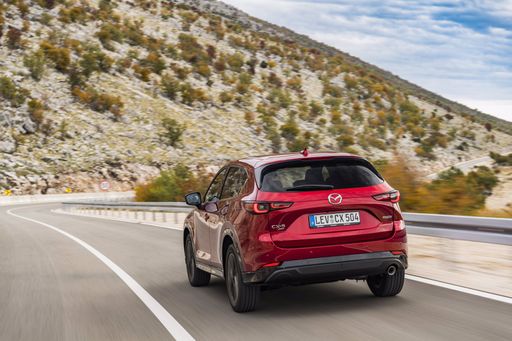
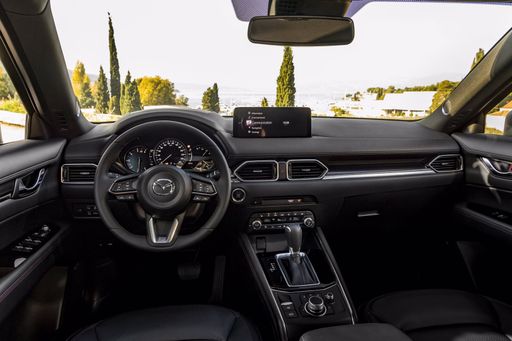
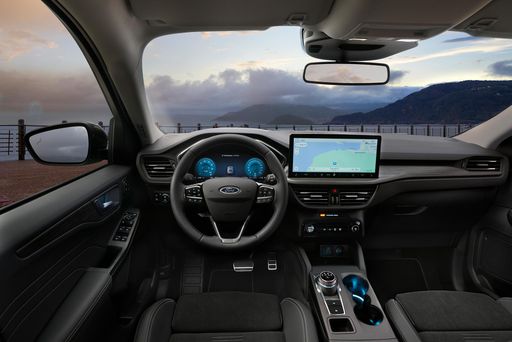
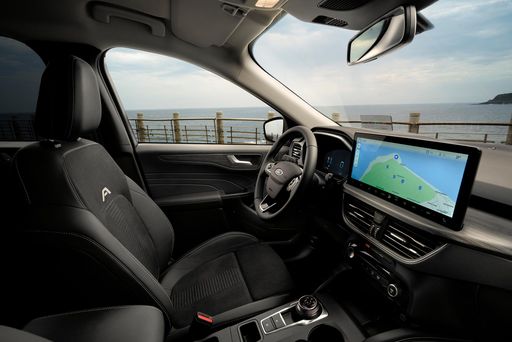
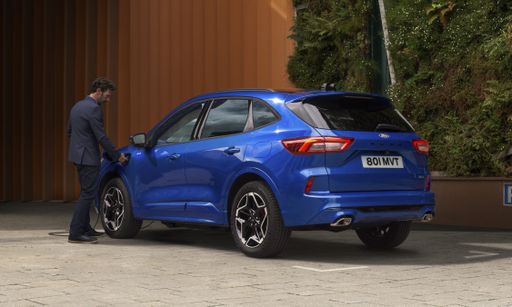
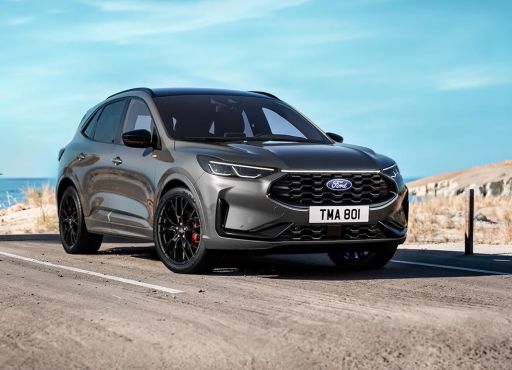
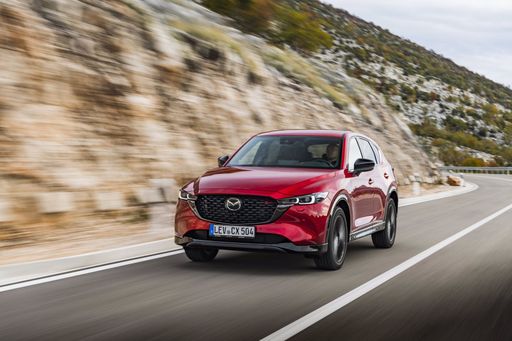
Mazda CX-5 vs Ford Kuga comparison

Compare performance (141 HP vs 243 HP), boot space and price (30,000 £ vs 34,200 £ ) at a glance. Find out which car is the better choice for you – Mazda CX-5 or Ford Kuga?

Mazda CX-5 vs Ford Kuga: Key differences

Mazda CX-5

4.6 (7 Reviews)
rate
  • moderately cheaper

Ford Kuga

4.2 (6 Reviews)
rate
  • considerably more power
  • considerably more efficient
  • considerably quicker 0–100 km/h
  • marginally lighter

All details on performance, efficiency, range and trunk space can be found in the technical comparison below – including user reviews for both models.

CX-5

Ford Kuga VS Mazda CX-5: the compact SUV clash for buyers who care

If you’re deciding between the Ford Kuga and the Mazda CX-5, you’ve landed on one of the liveliest crossover matchups in the segment. This direct crossover comparison pits two compact SUVs with very different attitudes against each other, and the contrast is exactly what matters in the showroom and on the commute. The Ford Kuga tends to announce itself with a more dynamic, driver-focused note, while the Mazda CX-5 plays the card of composed space and upscale polish. If you search for a no-nonsense comparison of handling, comfort and everyday usability, you’ll want both the feel and the facts — and that’s what this matchup is all about.
Kuga

Street personality: punchy contender vs composed stylist

The Ford Kuga arrives with a sportier posture and a slightly more assertive demeanor, making you feel like you’ve chosen a car that wants to be driven. By contrast the Mazda CX-5 trades bravado for quiet refinement, delivering a more reserved, premium aura that ages well in tight neighborhoods and city streets. Inside, the Mazda leans toward tactile quality and an understated cabin, while the Ford pushes a more modern, energetic interior vibe that rewards more engaged drivers. Both have character — the Kuga is the confident extrovert, the CX-5 the assured minimalist — so your choice is as much about attitude as it is about features.

CX-5

Daily life: which one fits your real routine?

For daily commutes and motorway runs, the Ford Kuga feels like the pick for drivers who want a livelier on-road presence and a car that responds when the pace picks up. The Mazda CX-5 proves its worth for families and anyone prioritising usable space and a calm cabin on long trips where serenity matters more than thrill. In tight urban blocks the Mazda’s composure and more generous cargo thinking make life easier, while the Kuga’s sharper manners make it more engaging for those who slice through traffic with intent. Both handle the practicalities of kid seats, groceries and weekend gear — they just do it with different emphases: one leans toward involvement, the other toward everyday usability.

Kuga

Why you’ll justify the purchase to yourself (and your partner)

You’ll tell your friends you chose the Ford Kuga because it’s more exciting to drive and feels like a step up in dynamism without buying a coupe; it’s the kind of choice that satisfies when you want something that’s both useful and a bit spirited. The Mazda CX-5 gets the same justification delivered with a different accent: “I wanted a refined, roomy SUV that never looks out of place at a school run or a dinner reservation.” For image-conscious buyers, the Kuga reads as youthful and assertive, while the CX-5 projects considered taste and longevity. In short, you buy the Kuga to feel connected to the road and the CX-5 to feel comfortably confident in everyday life.

CX-5

Who should shortlist the Ford Kuga?

If you’re the sort who weighs running costs and wants a car that reacts crisply when asked, the Ford Kuga is the obvious first test drive — it suits buyers who value efficiency married to a sporty edge, and those who like their compact SUV to feel alive on twisty roads or long commutes. The Kuga also clicks with drivers who enjoy a bolder on-road presence and want a car that looks purposeful without shouting. Practical enough for weekly chores yet eager enough for weekend drives, this one will appeal to commuters who care about both economy and energy. Take it for a spin if you favour engagement with your daily transport rather than pure tranquillity.

Kuga

Who should shortlist the Mazda CX-5 (and why the Kuga still matters)

The Mazda CX-5 is the ticket for buyers who put family life, cabin quality and luggage space high on the priority list — it’s a comfortable, composed companion for school runs, road trips and anyone who prefers refinement to theatrics. Style-conscious shoppers will appreciate the CX-5’s tasteful interior and flattering presence, while pragmatists will like how easily it swallows real-world cargo without fuss; meanwhile, don’t forget the Ford Kuga if you crave a more immediate driving feel. Neither car is a one-size-fits-all winner, so read the numbers and take both on a proper test drive to see which personality wins you over.

Here’s where it gets real: The technical differences in detail

CX-5

Costs and Efficiency:

Looking at overall running costs, both models reveal some interesting differences in everyday economy.

Mazda CX-5 is moderately cheaper – starting at 30,000 £ , while the Ford Kuga costs 34,200 £ . That’s a price difference of around 4,251 £.

Fuel consumption also shows a difference: the Ford Kuga uses 2.8 L/100km and is considerably more efficient than the Mazda CX-5 with 7 L/100km. The difference is about 4.2 L/100km.

Kuga

Engine and Performance:

Power, torque and acceleration say a lot about how a car feels on the road. This is where you see which model delivers more driving dynamics.

When it comes to engine power, the Ford Kuga offers considerably more power – delivering 243 HP compared to 141 HP. That’s roughly 102 HP more horsepower.

When accelerating from 0 to 100 km/h, the Ford Kuga is considerably quicker – completing the sprint in 7.3 s, while the Mazda CX-5 takes 10.5 s. That’s about 3.2 s quicker.

There’s also a difference in torque: the Ford Kuga delivers marginally more torque with 240 Nm compared to 238 Nm. That’s about 2 Nm more.

CX-5

Space and Everyday Use:

Beyond pure performance, interior space and usability matter most in daily life. This is where you see which car is more practical and versatile.

Both vehicles offer seating for 5 people.

In terms of curb weight, Ford Kuga is marginally lighter – 1,526 kg compared to 1,629 kg. The difference is around 103 kg.

When it comes to payload, the Mazda CX-5 carries barely more – 601 kg compared to 550 kg. That’s a difference of about 51 kg.

Who wins the race in the data check?

The Ford Kuga holds a decisive overall lead in the objective data comparison.
This result only shows which model scores more points on paper – not which of the two cars feels right for you.

from £34,200
Kuga

Ford Kuga

  • Engine Type : Petrol, Full Hybrid, Plugin Hybrid
  • Transmission : Manuel, Automatic
  • Drive Type : Front-Wheel Drive, All-Wheel Drive
  • Power HP : 150 - 243 HP
  • Consumption L/100km : 2.8 - 6.8 L/100km
  • Electric Range : 68 km
Mazda CX-5
Ford Kuga

Costs and Consumption

View detailed analysis

Engine and Performance

View detailed analysis

Dimensions and Body

View detailed analysis

Mazda CX-5

The Mazda CX-5 blends elegant, athletic styling with a surprisingly engaging driving character, turning routine trips into small, satisfying adventures. Inside it feels thoughtfully built and comfortable, offering sensible practicality and a premium feel that punches above its price.

details

Ford Kuga

The Kuga is Ford’s adaptable family SUV that blends usable space with a surprisingly lively driving character, making daily commutes and weekend escapes equally enjoyable. With smart interior packaging, an easy-to-use infotainment setup and composed road manners, it’s a sensible choice for buyers who want a bit of fun without the fuss.

details
Mazda CX-5
Ford Kuga

Costs and Consumption

Price
30,000 - 39,500 £
Price
34,200 - 46,300 £
Consumption L/100km
7 - 7.4 L/100km
Consumption L/100km
2.8 - 6.8 L/100km
Consumption kWh/100km
-
Consumption kWh/100km
-
Electric Range
-
Electric Range
68 km
Battery Capacity
-
Battery Capacity
-
co2
157 - 168 g/km
co2
55 - 154 g/km
Fuel tank capacity
56 - 58 L
Fuel tank capacity
-

Dimensions and Body

Body Type
SUV
Body Type
SUV
Seats
5
Seats
5
Doors
5
Doors
-
Curb weight
1,629 - 1,671 kg
Curb weight
1,526 - 1,859 kg
Trunk capacity
466 - 583 L
Trunk capacity
-
Length
4,690 mm
Length
-
Width
1,860 mm
Width
1,882 mm
Height
1,695 mm
Height
-
Max trunk capacity
2,019 L
Max trunk capacity
-
Payload
601 kg
Payload
541 - 550 kg

Engine and Performance

Engine Type
Petrol MHEV
Engine Type
Petrol, Full Hybrid, Plugin Hybrid
Transmission
Automatic
Transmission
Manuel, Automatic
Transmission Detail
Automatic Gearbox
Transmission Detail
Manual Gearbox, CVT, Automatic Gearbox
Drive Type
Front-Wheel Drive, All-Wheel Drive
Drive Type
Front-Wheel Drive, All-Wheel Drive
Power HP
141 HP
Power HP
150 - 243 HP
Acceleration 0-100km/h
10.5 - 10.9 s
Acceleration 0-100km/h
7.3 - 9.9 s
Max Speed
195 km/h
Max Speed
-
Torque
238 Nm
Torque
240 Nm
Number of Cylinders
4
Number of Cylinders
3 - 4
Power kW
104 kW
Power kW
111 - 178 kW
Engine capacity
2,488 cm3
Engine capacity
1,496 - 2,488 cm3

General

Model Year
2,025
Model Year
2,025
CO2 Efficiency Class
F
CO2 Efficiency Class
E, D, B
Brand
Mazda
Brand
Ford
DriveDuel uses data analysis and artificial intelligence to evaluate vehicle data and create content. Content is regularly reviewed and improved. The displayed prices are estimates based on German list prices, adjusted to the respective country’s VAT. Country-specific registration taxes are not included. This information is not legally binding.