VS

Mazda CX-5 vs Honda HR-V comparison

Compare performance (141 HP vs 131 HP), boot space and price (30,000 £ vs 29,700 £ ) at a glance. Find out which car is the better choice for you – Mazda CX-5 or Honda HR-V?

Mazda CX-5 vs Honda HR-V: Key differences

Mazda CX-5

4.6 (7 Reviews)
rate
  • very slightly more power
  • marginally quicker 0–100 km/h
  • significantly more trunk space

Honda HR-V

4 (9 Reviews)
rate
  • barely cheaper
  • markedly more efficient
  • slightly lighter
Overall, owners tend to find the Honda HR‑V a practical, reliable and economical compact SUV that’s easy to live with in town and for family duties, offering predictable handling and a comfortable ride. Common positives include good fuel economy, roomy/intuive packaging and reassuring manners; common negatives some owners mention are noticeable noise under brisk acceleration or low‑speed maneuvers and a tendency to feel underpowered on sustained highway runs. So while feedback is broadly favorable for city and everyday use, opinions are more mixed on long‑distance refinement — worth a motorway run during your test drive if that’s your regular terrain.

All details on performance, efficiency, range and trunk space can be found in the technical comparison below – including user reviews for both models.

CX-5

Honda HR-V vs. Mazda CX-5: The Battle of the Compact SUVs

In the competitive landscape of compact SUVs, two models consistently draw attention: the Honda HR-V and the Mazda CX-5. Each brings its unique spin on style, performance, and technology. Let's embark on a detailed exploration of what these contenders offer, highlighting key technical aspects and innovations.
HR-V

Performance and Engine Specifications

The Honda HR-V is outfitted with a full hybrid engine that delivers 130 horsepower. Its hybrid system is paired with an automatic Continuously Variable Transmission (CVT) and sports a front-wheel drive configuration. The engine boasts a modest fuel consumption of 5.4 L/100km, making it a fantastic choice for those focused on efficiency. Torque reaches 253 Nm, providing reasonable acceleration, with the HR-V managing 0-100 km/h in approximately 10.6 seconds.

In contrast, the Mazda CX-5 offers a broader spectrum of engine options. With power outputs ranging from 150 to 194 horsepower, it caters to both petrol MHEV and diesel preferences. Transmission options include both manual and automatic gearboxes, with the additional choice of front-wheel or all-wheel drive configurations. The CX-5's acceleration varies between models, typical times ranging around 9.2 to 11.1 seconds for 0-100 km/h, influenced by the engine variant selected.

CX-5

Design and Comfort

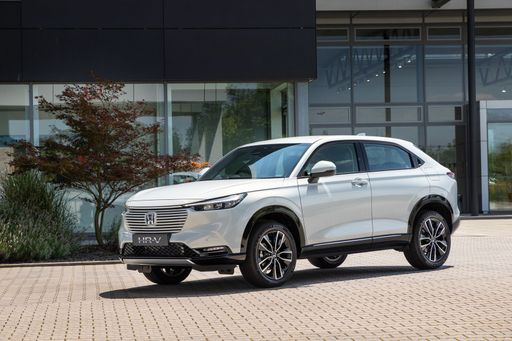
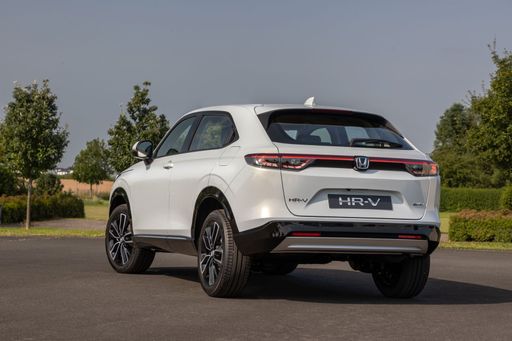
Both SUVs accommodate five passengers and provide an appealing mix of practicality and style. The HR-V has a total length of 4,340 mm and a height of 1,582 mm, making it slightly more compact and easier to maneuver through urban settings. Its trunk space of up to 335 liters, however, may feel limited for those accustomed to more extensive cargo room.

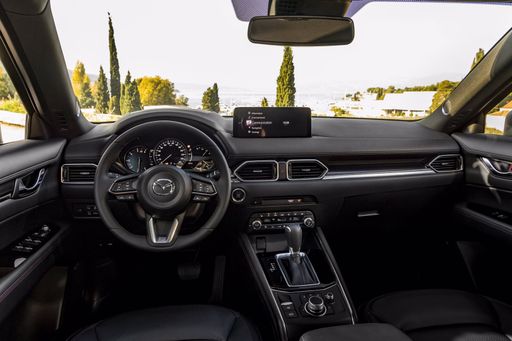
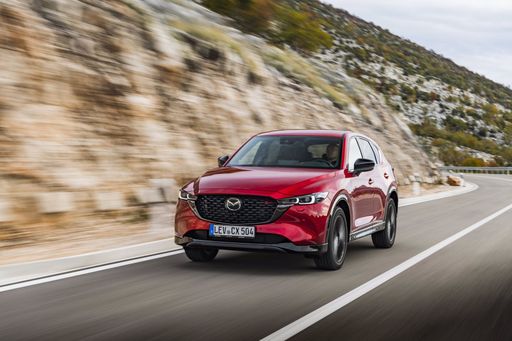
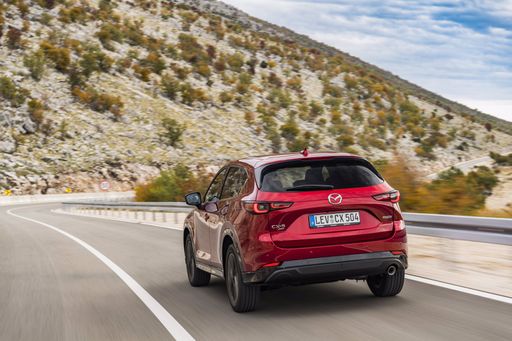
The Mazda CX-5, with its length of 4,575 mm and height of 1,680 mm, offers a more spacious interior feel. Its trunk capacity significantly outmatches the HR-V, providing up to 522 liters, appealing to those needing increased storage, especially for family expeditions or outdoor adventures.

HR-V

Fuel Efficiency and Environmental Impact

When it comes to environmental footprint, the Honda HR-V demonstrates a commendable CO2 emission rating of 122 g/km, securing a CO2 efficiency class of D. This full hybrid model stands as a testament to Honda's commitment to eco-friendliness while maintaining operational efficiency.

The Mazda CX-5, across its model variants, emits between 146 to 173 g/km of CO2, thus primarily falling into E or F efficiency classes. This suggests a higher environmental impact, which is an essential consideration for eco-conscious consumers.

CX-5

Driving Experience and Features

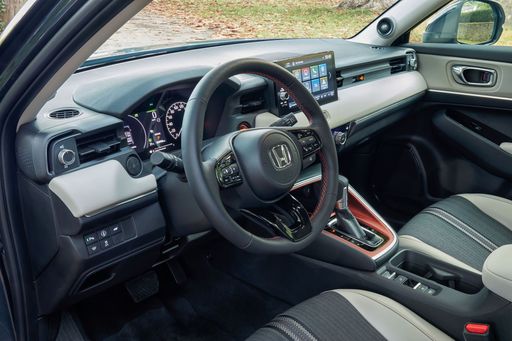
Honda's flagship HR-V offers a smooth and serene driving experience, courtesy of its hybrid technology, which emphasizes quiet operation and linear acceleration. Innovative safety features and a strategically designed interior enhance the overall comfort and driving satisfaction.

Meanwhile, the Mazda CX-5 places a stronger emphasis on exhilarating performance and dynamic handling. It integrates advanced driver-assistance systems and intuitive infotainment options, appealing to tech-savvy drivers who prioritize both safety and entertainment on the road.

HR-V

Conclusion: Which SUV Reigns Supreme?

Choosing between the Honda HR-V and Mazda CX-5 boils down to personal preferences and priorities. The Honda HR-V is an excellent choice for those who value fuel efficiency, eco-friendliness, and urban maneuverability. On the other hand, the Mazda CX-5 caters to drivers seeking a broader power spectrum, superior cargo capacity, and a more engaging driving experience.

Both models bring distinct characteristics to the table, reflecting the diverse needs of today's SUV enthusiasts. Whether it's the HR-V's environmental consciousness or the CX-5's robust versatility, each offers compelling reasons to earn its place in the garage of discerning drivers.

Here’s where it gets real: The technical differences in detail

CX-5

Costs and Efficiency:

Price and efficiency are key factors when choosing a car – and this is often where the real differences emerge.

Honda HR-V is barely cheaper – starting at 29,700 £ , while the Mazda CX-5 costs 30,000 £ . That’s a price difference of around 249 £.

Fuel consumption also shows a difference: the Honda HR-V uses 5.4 L/100km and is markedly more efficient than the Mazda CX-5 with 7 L/100km. The difference is about 1.6 L/100km.

HR-V

Engine and Performance:

Under the bonnet, it becomes clear which model is tuned for sportiness and which one takes the lead when you hit the accelerator.

When it comes to engine power, the Mazda CX-5 offers very slightly more power – delivering 141 HP compared to 131 HP. That’s roughly 10 HP more horsepower.

When accelerating from 0 to 100 km/h, the Mazda CX-5 is marginally quicker – completing the sprint in 10.5 s, while the Honda HR-V takes 10.6 s. That’s about 0.1 s quicker.

There’s also a difference in torque: the Honda HR-V delivers very slightly more torque with 253 Nm compared to 238 Nm. That’s about 15 Nm more.

CX-5

Space and Everyday Use:

Beyond pure performance, interior space and usability matter most in daily life. This is where you see which car is more practical and versatile.

Both vehicles offer seating for 5 people.

In terms of curb weight, Honda HR-V is slightly lighter – 1,452 kg compared to 1,629 kg. The difference is around 177 kg.

Looking at boot space, the Mazda CX-5 offers significantly more boot space – 583 L compared to 319 L. That’s a difference of about 264 L.

When it comes to payload, the Mazda CX-5 carries clearly more – 601 kg compared to 418 kg. That’s a difference of about 183 kg.

Who wins the race in the data check?

The Mazda CX-5 stands out in the key areas in the objective data comparison.
This result only shows which model scores more points on paper – not which of the two cars feels right for you.

from £30,000
CX-5

Mazda CX-5

  • Engine Type : Petrol MHEV
  • Transmission : Automatic
  • Drive Type : Front-Wheel Drive, All-Wheel Drive
  • Power HP : 141 HP
  • Consumption L/100km : 7 - 7.4 L/100km
Mazda CX-5
Honda HR-V

Costs and Consumption

View detailed analysis

Engine and Performance

View detailed analysis

Dimensions and Body

View detailed analysis

Mazda CX-5

The Mazda CX-5 blends elegant, athletic styling with a surprisingly engaging driving character, turning routine trips into small, satisfying adventures. Inside it feels thoughtfully built and comfortable, offering sensible practicality and a premium feel that punches above its price.

details

Honda HR-V

The Honda HR-V is the sensible compact crossover that blends roomy practicality with a composed, friendly drive, making it an easy pick for buyers who want everyday usability without fuss. It won’t thrill hardcore enthusiasts, but its clever packaging, comfortable cabin and low-key styling make life simpler — and that’s exactly the point.

details
Mazda CX-5
Honda HR-V

Costs and Consumption

Price
30,000 - 39,500 £
Price
29,700 - 35,400 £
Consumption L/100km
7 - 7.4 L/100km
Consumption L/100km
5.4 L/100km
Consumption kWh/100km
-
Consumption kWh/100km
-
Electric Range
-
Electric Range
-
Battery Capacity
-
Battery Capacity
-
co2
157 - 168 g/km
co2
122 g/km
Fuel tank capacity
56 - 58 L
Fuel tank capacity
-

Dimensions and Body

Body Type
SUV
Body Type
SUV
Seats
5
Seats
5
Doors
5
Doors
-
Curb weight
1,629 - 1,671 kg
Curb weight
1,452 kg
Trunk capacity
466 - 583 L
Trunk capacity
319 L
Length
4,690 mm
Length
-
Width
1,860 mm
Width
-
Height
1,695 mm
Height
-
Max trunk capacity
2,019 L
Max trunk capacity
-
Payload
601 kg
Payload
418 kg

Engine and Performance

Engine Type
Petrol MHEV
Engine Type
Full Hybrid
Transmission
Automatic
Transmission
Automatic
Transmission Detail
Automatic Gearbox
Transmission Detail
CVT
Drive Type
Front-Wheel Drive, All-Wheel Drive
Drive Type
Front-Wheel Drive
Power HP
141 HP
Power HP
131 HP
Acceleration 0-100km/h
10.5 - 10.9 s
Acceleration 0-100km/h
10.6 - 10.8 s
Max Speed
195 km/h
Max Speed
-
Torque
238 Nm
Torque
253 Nm
Number of Cylinders
4
Number of Cylinders
4
Power kW
104 kW
Power kW
96 kW
Engine capacity
2,488 cm3
Engine capacity
1,498 cm3

General

Model Year
2,025
Model Year
2,025
CO2 Efficiency Class
F
CO2 Efficiency Class
D
Brand
Mazda
Brand
Honda
DriveDuel uses data analysis and artificial intelligence to evaluate vehicle data and create content. Content is regularly reviewed and improved. The displayed prices are estimates based on German list prices, adjusted to the respective country’s VAT. Country-specific registration taxes are not included. This information is not legally binding.