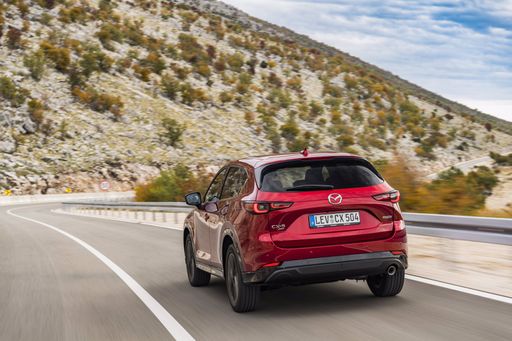
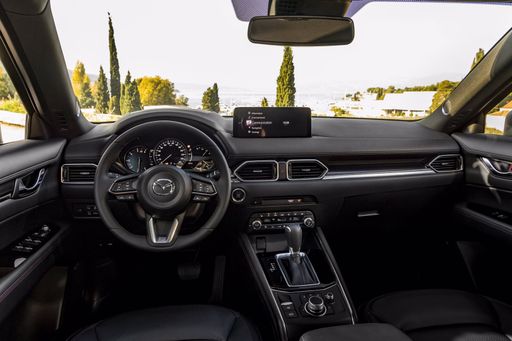
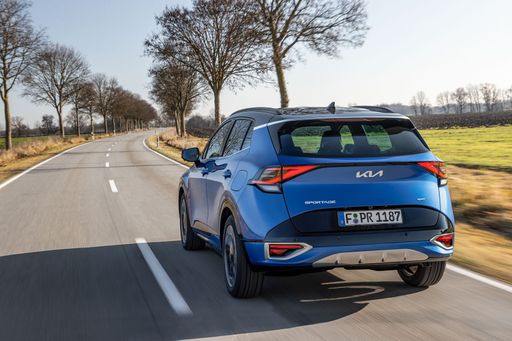
VS

Mazda CX-5 vs Kia Sportage comparison

Compare performance (141 HP vs 288 HP), boot space and price (30,000 £ vs 30,200 £ ) at a glance. Find out which car is the better choice for you – Mazda CX-5 or Kia Sportage?

Mazda CX-5 vs Kia Sportage: Key differences

Mazda CX-5

4.6 (7 Reviews)
rate
  • marginally cheaper

Kia Sportage

4.9 (2 Reviews)
rate
  • significantly more power
  • significantly more efficient
  • visibly quicker 0–100 km/h
  • marginally lighter
  • very slightly more trunk space

All details on performance, efficiency, range and trunk space can be found in the technical comparison below – including user reviews for both models.

CX-5

Kia Sportage vs. Mazda CX-5: A Detailed Comparison

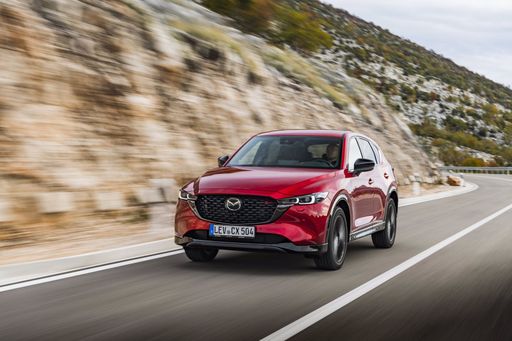
The competition in the compact SUV segment has never been more intense, and two standout contenders are the Kia Sportage and Mazda CX-5. Both vehicles have earned a solid reputation for their performance, technology, and comfort. In this article, we’ll dive deep into their technical specifications, innovations, and what sets them apart in the crowded automotive landscape.
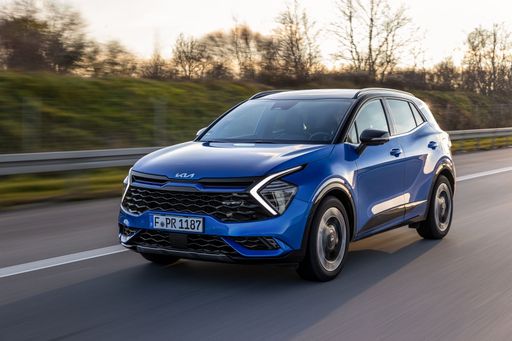
Sportage

Performance and Engine Options

The Kia Sportage offers a variety of engine choices to cater to varying consumer needs. Prospective buyers can choose from diesel and petrol options, including a diesel mild-hybrid (MHEV), a full hybrid, and a plug-in hybrid. Power outputs range from 136 HP to an impressive 252 HP, with torque figures peaking at 350 Nm. The Sportage's fuel consumption is commendable, with ratings ranging from 5.0 L/100km to 7.2 L/100km, depending on the engine configuration.

On the other side, the Mazda CX-5 presents its own robust lineup. The CX-5 offers petrol and diesel variants, with power outputs from 150 HP to 184 HP. The CX-5's fuel efficiency is slightly higher than the Sportage, with figures from 5.6 L/100km to 7.6 L/100km. While the Sportage’s engine lineup includes hybrid options, the CX-5 remains solely focused on traditional combustion engines.

CX-5

Acceleration and Speed

When it comes to acceleration, the Kia Sportage showcases impressive numbers, with a 0-100 km/h time as low as 8.3 seconds in its turbocharged variants. For performance enthusiasts, its top speed can reach up to 194 km/h.

The Mazda CX-5 is not far behind, with its swiftest variants managing to accelerate from 0 to 100 km/h in just 9.2 seconds, topping out at a maximum speed of 208 km/h. While the CX-5 edges ahead in top speed, the Sportage claims supremacy in acceleration across various trims.

Sportage

Dimensions and Comfort

In terms of size, the Kia Sportage measures 4515 mm in length, 1865 mm in width, and stands at 1650 mm tall. The spacious interior is designed for five passengers, boasting a trunk capacity that ranges from 526 L to 587 L, depending on the trim and configuration.

The Mazda CX-5, while slightly longer at 4575 mm, is narrower at 1845 mm and taller at 1680 mm. The trunk size is competitive at 510 to 522 L, making it a well-suited option for families or those with active lifestyles. Both vehicles are designed with comfort in mind, offering ample legroom and cargo space for daily use.

CX-5

Driving Assistance and Innovations

Both SUVs come equipped with advanced safety and technological features. The Kia Sportage includes a generous suite of driver assistance technologies, such as Forward Collision Avoidance Assist, Blind-Spot Monitoring, and Smart Cruise Control. Its latest models leverage Kia's evolving smart infotainment systems which provide seamless connectivity and ease of use.

The Mazda CX-5 also boasts a comprehensive array of safety technologies. Its advanced i-ACTIVSENSE suite includes features such as Lane Departure Warning, Adaptive Front Lighting, and a 360-degree view monitor. The lining of the cabin is designed to create a premium feel, incorporating quality materials that exemplify Mazda's attention to detail.

Sportage

Conclusion: Which SUV Reigns Supreme?

Ultimately, choosing between the Kia Sportage and Mazda CX-5 boils down to personal preferences and priorities. The Sportage provides versatility with its hybrid options and superior trunk capacity, while the CX-5 impresses with its top-end speed and upscale interior quality.

Both vehicles shine in terms of performance, comfort, and technology. For buyers leaning towards a more environmentally friendly option, the Sportage offers a definite advantage. Conversely, for those who prioritize driving dynamics and an elegant design, the CX-5 stands strong. Whichever SUV you choose, both will deliver a satisfying driving experience on and off the road.

Here’s where it gets real: The technical differences in detail

CX-5

Costs and Efficiency:

Price and efficiency are key factors when choosing a car – and this is often where the real differences emerge.

Mazda CX-5 is marginally cheaper – starting at 30,000 £ , while the Kia Sportage costs 30,200 £ . That’s a price difference of around 171 £.

Fuel consumption also shows a difference: the Kia Sportage uses 2.9 L/100km and is significantly more efficient than the Mazda CX-5 with 7 L/100km. The difference is about 4.1 L/100km.

Sportage

Engine and Performance:

Power, torque and acceleration say a lot about how a car feels on the road. This is where you see which model delivers more driving dynamics.

When it comes to engine power, the Kia Sportage offers significantly more power – delivering 288 HP compared to 141 HP. That’s roughly 147 HP more horsepower.

When accelerating from 0 to 100 km/h, the Kia Sportage is visibly quicker – completing the sprint in 7.5 s, while the Mazda CX-5 takes 10.5 s. That’s about 3 s quicker.

There’s also a difference in torque: the Kia Sportage delivers visibly more torque with 380 Nm compared to 238 Nm. That’s about 142 Nm more.

CX-5

Space and Everyday Use:

Cabin size, boot volume and payload all play a role in everyday practicality. Here, comfort and flexibility make the difference.

Both vehicles offer seating for 5 people.

In terms of curb weight, Kia Sportage is marginally lighter – 1,552 kg compared to 1,629 kg. The difference is around 77 kg.

Looking at boot space, the Kia Sportage offers very slightly more boot space – 587 L compared to 583 L. That’s a difference of about 4 L.

When it comes to payload, the Mazda CX-5 carries very slightly more – 601 kg compared to 580 kg. That’s a difference of about 21 kg.

Who wins the race in the data check?

The Kia Sportage is far ahead overall in the objective data comparison.
This result only shows which model scores more points on paper – not which of the two cars feels right for you.

from £30,200
Sportage

Kia Sportage

  • Engine Type : Petrol, Full Hybrid, Diesel MHEV, Plugin Hybrid
  • Transmission : Manuel, Automatic
  • Drive Type : Front-Wheel Drive, All-Wheel Drive
  • Power HP : 136 - 288 HP
  • Consumption L/100km : 2.9 - 7.8 L/100km
  • Electric Range : 63 - 66 km
Mazda CX-5
Kia Sportage

Costs and Consumption

View detailed analysis

Engine and Performance

View detailed analysis

Dimensions and Body

View detailed analysis

Mazda CX-5

The Mazda CX-5 blends elegant, athletic styling with a surprisingly engaging driving character, turning routine trips into small, satisfying adventures. Inside it feels thoughtfully built and comfortable, offering sensible practicality and a premium feel that punches above its price.

details

Kia Sportage

The Kia Sportage proves you don't have to choose between style and sensible family motoring, wrapping modern, confident looks around a roomy, well-equipped cabin. It's an easy car to live with — comfortable on daily runs, pleasantly engaging when you want a bit of fun, and kind to your wallet so you can keep smiling at the fuel pump.

details
Mazda CX-5
Kia Sportage

Costs and Consumption

Price
30,000 - 39,500 £
Price
30,200 - 47,100 £
Consumption L/100km
7 - 7.4 L/100km
Consumption L/100km
2.9 - 7.8 L/100km
Consumption kWh/100km
-
Consumption kWh/100km
-
Electric Range
-
Electric Range
63 - 66 km
Battery Capacity
-
Battery Capacity
-
co2
157 - 168 g/km
co2
67 - 177 g/km
Fuel tank capacity
56 - 58 L
Fuel tank capacity
-

Dimensions and Body

Body Type
SUV
Body Type
SUV
Seats
5
Seats
5
Doors
5
Doors
-
Curb weight
1,629 - 1,671 kg
Curb weight
1,552 - 1,896 kg
Trunk capacity
466 - 583 L
Trunk capacity
526 - 587 L
Length
4,690 mm
Length
-
Width
1,860 mm
Width
1,865 mm
Height
1,695 mm
Height
-
Max trunk capacity
2,019 L
Max trunk capacity
-
Payload
601 kg
Payload
533 - 580 kg

Engine and Performance

Engine Type
Petrol MHEV
Engine Type
Petrol, Full Hybrid, Diesel MHEV, Plugin Hybrid
Transmission
Automatic
Transmission
Manuel, Automatic
Transmission Detail
Automatic Gearbox
Transmission Detail
Manual Gearbox, Dual-Clutch Automatic, Automatic Gearbox
Drive Type
Front-Wheel Drive, All-Wheel Drive
Drive Type
Front-Wheel Drive, All-Wheel Drive
Power HP
141 HP
Power HP
136 - 288 HP
Acceleration 0-100km/h
10.5 - 10.9 s
Acceleration 0-100km/h
7.5 - 11.6 s
Max Speed
195 km/h
Max Speed
-
Torque
238 Nm
Torque
250 - 380 Nm
Number of Cylinders
4
Number of Cylinders
4
Power kW
104 kW
Power kW
100 - 212 kW
Engine capacity
2,488 cm3
Engine capacity
1,598 cm3

General

Model Year
2,025
Model Year
2,025 - 2,026
CO2 Efficiency Class
F
CO2 Efficiency Class
F, D, E, G, B
Brand
Mazda
Brand
Kia
DriveDuel uses data analysis and artificial intelligence to evaluate vehicle data and create content. Content is regularly reviewed and improved. The displayed prices are estimates based on German list prices, adjusted to the respective country’s VAT. Country-specific registration taxes are not included. This information is not legally binding.