VS

Mazda CX-80 vs Lexus RX comparison

Compare performance (327 HP vs 371 HP), boot space and price (49,300 £ vs 63,300 £ ) at a glance. Find out which car is the better choice for you – Mazda CX-80 or Lexus RX?

Mazda CX-80 vs Lexus RX: Key differences

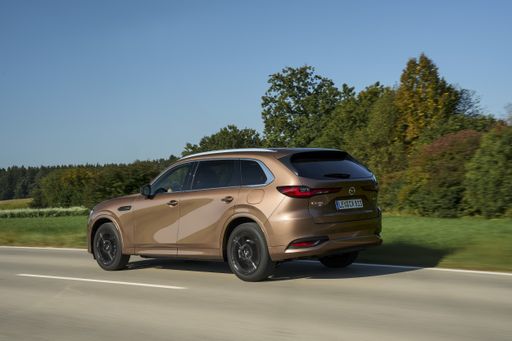
Mazda CX-80

3.1 (1 Reviews)
rate
  • noticeably cheaper
details

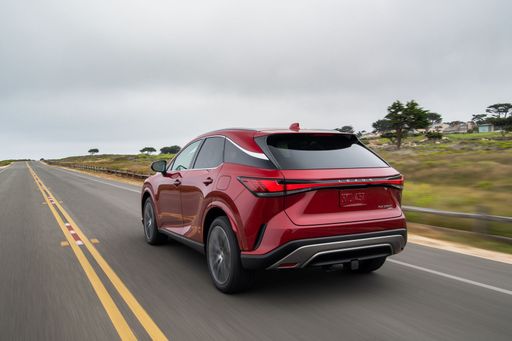
Lexus RX

5 (1 Reviews)
rate
  • slightly more power
  • visibly more efficient
  • moderately more electric range
  • very slightly quicker 0–100 km/h
  • marginally lighter
  • clearly more trunk space
details

All details on performance, efficiency, range and trunk space can be found in the technical comparison below – including user reviews for both models.

By Achim Sedelmaier

CX-80

When comparing two formidable contenders in the SUV market, the Lexus RX and Mazda CX-80, it’s clear that innovation, performance, and practicality play crucial roles in defining their appeal. Both vehicles offer rich features and advanced engineering, but which one truly stands out? Let’s dive into their technical specifications and innovations to unveil their strengths.
RX

Performance and Powertrains

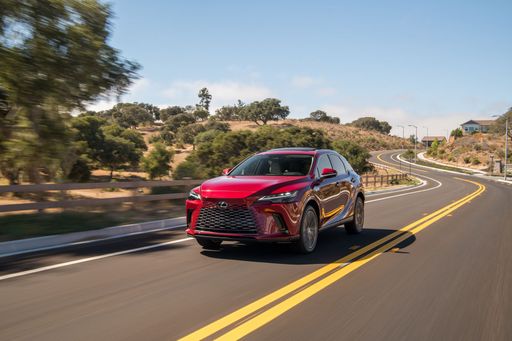
The Lexus RX offers a versatile range of powertrains, including full hybrid and plug-in hybrid options, with outputs ranging from 250 HP to a staggering 371 HP. Its engines, culminating in the robust 371 HP variant, provide a seamless blend of power and efficiency, optimized with a Continuously Variable Transmission (CVT) that promises smooth acceleration from 0-100 km/h in as few as 6.2 seconds.

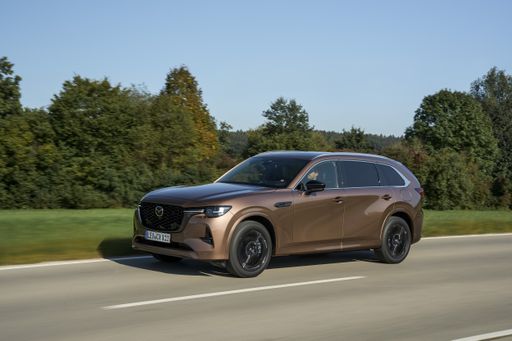
In contrast, the Mazda CX-80, being a newcomer for 2024, presents a choice between a plug-in hybrid and a Diesel MHEV, with its maximum power reaching 327 HP. The CX-80 matches the RX’s all-wheel-drive capability, ensuring all-weather performance, but slightly lags in acceleration with the 0-100 km/h time at 6.8 seconds for the more powerful variant.

CX-80

Fuel Efficiency and Emissions

Fuel efficiency is a critical factor for many buyers, and here the Lexus RX showcases impressive capabilities, especially in its hybrid configurations, which consume as little as 1.1 L/100 km in electric mode, translating to CO2 emissions as low as 25 g/km. This makes it an excellent choice for eco-conscious consumers.

The Mazda CX-80, with an electric range of 60 km, supports efficient driving at lower speeds but has a higher overall consumption of 5.7 L/100 km in its more powerful diesel variant. Its CO2 emissions peak at 148 g/km, which is still commendable but less competitive compared to the Lexus RX.

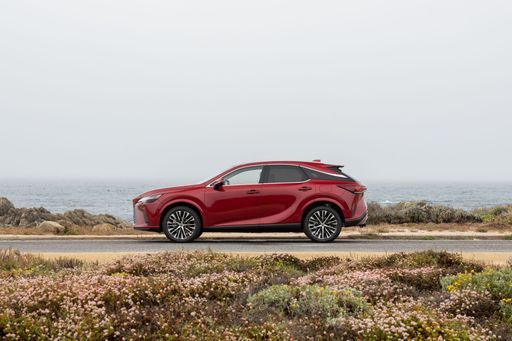
RX

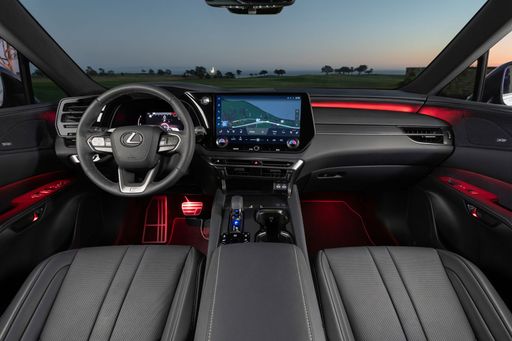
Interior Space and Comfort

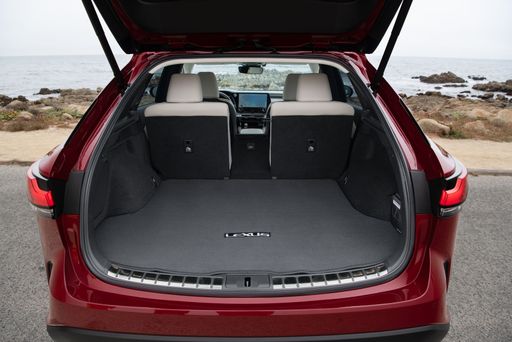
One of the significant differences between these two SUVs is the seating capacity. The Lexus RX comfortably seats five, while the Mazda CX-80 expands that to seven, making it an appealing choice for families or those needing extra passenger space. However, this comes at the cost of trunk capacity—where the RX boasts a more robust 461 L compared to the CX-80's 258 L, reflecting its focus on luxury over utility.

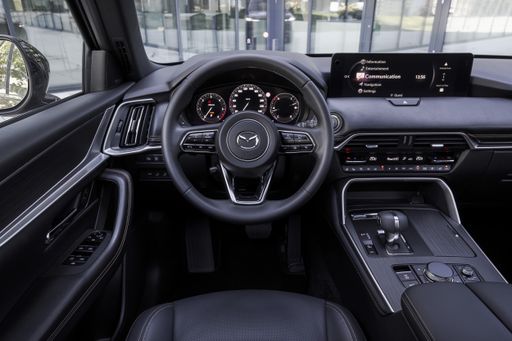
Interior quality is paramount for both brands, and Lexus is renowned for its opulent finishes and premium materials. The RX interiors offer an elegant design, emphasizing a serene and comfortable ride. Meanwhile, Mazda leans towards a sporty aesthetic that resonates with driving enthusiasts but may lack some of the high-end touches present in the RX.

CX-80

Technological Innovations

Both models are equipped with a variety of cutting-edge technologies. The Lexus RX features the latest in infotainment with a user-friendly touchscreen and advanced voice recognition systems, making navigation and multimedia access smooth and intuitive. Additionally, it comes with advanced safety features, such as adaptive cruise control and lane-keeping assistance, ensuring a secure driving experience.

The Mazda CX-80 is equally impressive, boasting intelligent connectivity features that integrate seamlessly with smartphones. The vehicle also includes a comprehensive suite of safety technologies, although its activation might require an initial learning curve due to its unique interface.

RX

Conclusion

In conclusion, the choice between the Lexus RX and Mazda CX-80 ultimately comes down to individual needs and preferences. If you prioritize a more luxurious experience with robust hybrid technology and superior trunk space, the Lexus RX emerges as the front-runner. However, if seating capacity, utility, and a sporty drive are higher on your list, the Mazda CX-80 presents a compelling argument. Both vehicles underscore their manufacturers' commitment to innovation, efficiency, and safety, promising an exhilarating driving experience in their own rights.

Here’s where it gets real: The technical differences in detail

CX-80

Costs and Efficiency:

Price and efficiency are key factors when choosing a car – and this is often where the real differences emerge.

Mazda CX-80 is noticeably cheaper – starting at 49,300 £ , while the Lexus RX costs 63,300 £ . That’s a price difference of around 13,972 £.

Fuel consumption also shows a difference: the Lexus RX uses 3.3 L/100km and is visibly more efficient than the Mazda CX-80 with 4 L/100km. The difference is about 0.7 L/100km.

As for electric range, the Lexus RX offers moderately more range – reaching up to 67 km, about 7 km more than the Mazda CX-80.

RX

Engine and Performance:

Under the bonnet, it becomes clear which model is tuned for sportiness and which one takes the lead when you hit the accelerator.

When it comes to engine power, the Lexus RX offers slightly more power – delivering 371 HP compared to 327 HP. That’s roughly 44 HP more horsepower.

When accelerating from 0 to 100 km/h, the Lexus RX is very slightly quicker – completing the sprint in 6.2 s, while the Mazda CX-80 takes 6.8 s. That’s about 0.6 s quicker.

There’s also a difference in torque: the Lexus RX delivers marginally more torque with 551 Nm compared to 550 Nm. That’s about 1 Nm more.

CX-80

Space and Everyday Use:

Cabin size, boot volume and payload all play a role in everyday practicality. Here, comfort and flexibility make the difference.

Seats: Mazda CX-80 offers more seats – 7 vs 5.

In terms of curb weight, Lexus RX is marginally lighter – 2,040 kg compared to 2,131 kg. The difference is around 91 kg.

Looking at boot space, the Lexus RX offers clearly more boot space – 461 L compared to 258 L. That’s a difference of about 203 L.

When it comes to payload, the Mazda CX-80 carries only slightly more – 650 kg compared to 620 kg. That’s a difference of about 30 kg.

Who wins the race in the data check?

The Lexus RX has only a minor advantage in the objective data comparison.
This result only shows which model scores more points on paper – not which of the two cars feels right for you.

from £63,300
RX

Lexus RX

  • Engine Type Full Hybrid, Plugin Hybrid
  • Transmission Automatic
  • Drive Type All-Wheel Drive
  • Power HP 207 - 371 HP
  • Consumption L/100km 3.3 - 8.1 L/100km
  • Electric Range 67 km
Mazda CX-80
Lexus RX

Costs and Consumption

View detailed analysis

Engine and Performance

View detailed analysis

Dimensions and Body

View detailed analysis

Mazda CX-80

The Mazda CX-80 brings polished, near-premium styling and a cabin that feels far classier than its badge might imply. It steers with a composed, engaging character and packs the sensible practicality families want — with just enough flair to make school runs feel a little less ordinary.

details

Lexus RX

The Lexus RX glides through city streets with the kind of hushed refinement that turns mundane commutes into a private lounge. It mixes plush comfort and polished practicality in a package that suits buyers who want to arrive relaxed and a touch smug.

details
Mazda CX-80
Lexus RX

Costs and Consumption

Price
49,300 - 61,400 £
Price
63,300 - 87,400 £
Consumption L/100km
4 - 5.6 L/100km
Consumption L/100km
3.3 - 8.1 L/100km
Consumption kWh/100km
-
Consumption kWh/100km
-
Electric Range
60 km
Electric Range
67 km
Battery Capacity
-
Battery Capacity
-
co2
91 - 146 g/km
co2
75 - 183 g/km
Fuel tank capacity
-
Fuel tank capacity
-

Dimensions and Body

Body Type
SUV
Body Type
SUV
Seats
7
Seats
5
Doors
-
Doors
-
Curb weight
2,131 - 2,240 kg
Curb weight
2,040 - 2,185 kg
Trunk capacity
258 L
Trunk capacity
461 L
Length
-
Length
-
Width
1,890 mm
Width
1,920 mm
Height
-
Height
-
Max trunk capacity
-
Max trunk capacity
-
Payload
649 - 650 kg
Payload
575 - 620 kg

Engine and Performance

Engine Type
Plugin Hybrid, Diesel MHEV
Engine Type
Full Hybrid, Plugin Hybrid
Transmission
Automatic
Transmission
Automatic
Transmission Detail
Automatic Gearbox
Transmission Detail
Automatic Gearbox, CVT
Drive Type
All-Wheel Drive
Drive Type
All-Wheel Drive
Power HP
254 - 327 HP
Power HP
207 - 371 HP
Acceleration 0-100km/h
6.8 - 8.4 s
Acceleration 0-100km/h
6.2 - 7.9 s
Max Speed
-
Max Speed
-
Torque
500 - 550 Nm
Torque
551 Nm
Number of Cylinders
4 - 6
Number of Cylinders
4
Power kW
187 - 241 kW
Power kW
152 - 273 kW
Engine capacity
2,488 - 3,283 cm3
Engine capacity
2,393 - 2,487 cm3

General

Model Year
2025
Model Year
2,024 - 2,025
CO2 Efficiency Class
B, E
CO2 Efficiency Class
G, E, B
Brand
Mazda
Brand
Lexus
DriveDuel uses data analysis and artificial intelligence to evaluate vehicle data and create content. Content is regularly reviewed and improved. The displayed prices are estimates based on German list prices, adjusted to the respective country’s VAT. Country-specific registration taxes are not included. This information is not legally binding.