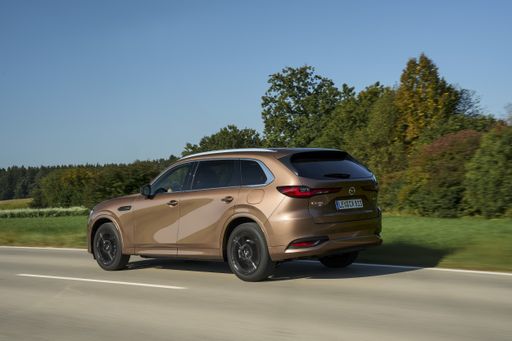
VS

Mazda CX-80 vs Peugeot 5008 comparison

Compare performance (327 HP vs 325 HP), boot space and price (49,300 £ vs 38,900 £ ) at a glance. Find out which car is the better choice for you – Mazda CX-80 or Peugeot 5008?

Mazda CX-80 vs Peugeot 5008: Key differences

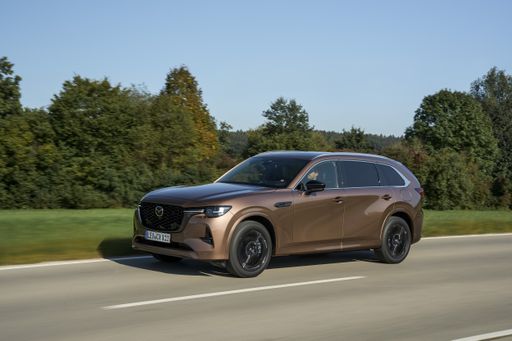
Mazda CX-80

3.1 (1 Reviews)
rate
  • only slightly more power
details

Peugeot 5008

4.7 (1 Reviews)
rate
  • noticeably cheaper
  • clearly more efficient
  • significantly more electric range
  • marginally quicker 0–100 km/h
  • visibly lighter
  • markedly more trunk space
details

All details on performance, efficiency, range and trunk space can be found in the technical comparison below – including user reviews for both models.

By Achim Sedelmaier

CX-80

Head-to-Head: Mazda CX-80 vs. Peugeot 5008

In the SUV market, competition is fierce as manufacturers strive to offer the perfect blend of performance, style, and innovation. Two notable contenders, the Mazda CX-80 and Peugeot 5008, both represent impressive entries in the segment, tailored for families and adventure lovers alike. Here, we'll delve into their technical prowess and innovative features to determine which of these two heavyweight champions comes out on top.
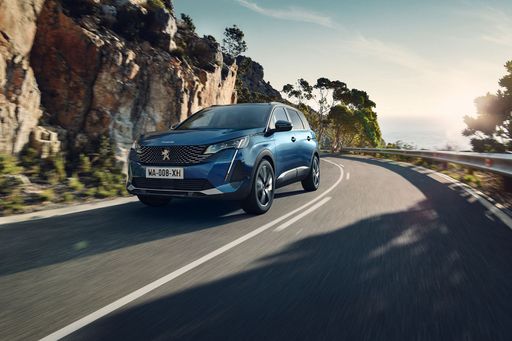
5008

Powertrain and Performance

The Mazda CX-80 offers two powertrain options: a Plug-in Hybrid that churns out 327 HP and a 6-cylinder Diesel MHEV producing 254 HP. This power translates to a thrilling 0-100 km/h acceleration in just 6.8 seconds for the hybrid version with a top speed of up to 219 km/h. With these specifications, the CX-80 promises an exhilarating drive synonymous with Mazda's reputation for crafting vehicles that deliver both power and poise.

On the other hand, the Peugeot 5008 also provides a range of engine choices, including Petrol MHEV, Plugin Hybrid, and Electric variants. The most potent model boasts 231 HP with an acceleration from 0-100 km/h in 8.8 seconds, reaching a maximum speed of 220 km/h. Though not as robust as the CX-80, the 5008 offers a balanced mix of mild-hybrid technology and cutting-edge electric drivetrains for efficiency-conscious buyers.

CX-80

Efficiency and Environmental Impact

Fuel efficiency is a defining factor in the modern SUV market. The Mazda CX-80 plugin hybrid variant showcases exceptional fuel economy with a consumption of just 1.6 L/100km and CO2 emissions rated at 35 g/km. Its electric range stands at 60 km, providing ample room for short, emissions-free commutes.

Peugeot's 5008, specifically in its Electric variant, offers a zero-emission option with an impressive range of up to 664 km. The Plugin Hybrid flaunts combined fuel consumption of only 1 L/100km and CO2 emissions at just 23 g/km, underlining its environmentally friendly credentials.

5008

Interior and Practicality

Both SUVs are built to accommodate large families, providing seating for seven passengers. When it comes to cargo space, the CX-80 slightly falls behind with a trunk capacity of 258 liters. In contrast, the 5008 impresses with a generous trunk space of 748 liters, which could be a critical factor for family road trips and everyday convenience.

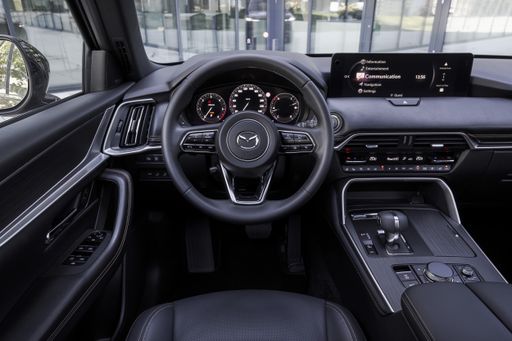
The interior for both models is laden with modern comforts and technology, but Mazda's focus on design is evident with its upscale materials and driver-centric layout. Meanwhile, Peugeot's bold, futuristic dashboard design and incorporation of advanced tech features cater to drivers seeking a modern cabin experience.

CX-80

Dimensions and Design

The Mazda CX-80, at 4995 mm in length, provides a longer wheelbase aimed at enhancing passenger comfort across all three rows. Its sleek design and aerodynamic form offer a stylish yet practical approach to the family SUV.

Peugeot's 5008, slightly shorter at 4791 mm, emphasizes a sporty and modern aesthetic. Its design is both chic and purposeful, allowing for convenient urban maneuverability while retaining that classic SUV presence.

5008

Final Verdict

Choosing between the Mazda CX-80 and the Peugeot 5008 will hinge on specific needs and preferences. If you prioritize sporty performance and dynamic driving, the CX-80 is the clear partner. For those focused on efficiency, practicality, and interior space with a dash of style, the Peugeot 5008 stands out.

In the end, whichever model you choose, both the Mazda CX-80 and Peugeot 5008 offer substantial value and excitement, elevating the SUV experience with their unique blend of attributes.

Here’s where it gets real: The technical differences in detail

CX-80

Costs and Efficiency:

Price and efficiency are often the first things buyers look at. Here it becomes clear which model has the long-term edge – whether at the pump, the plug, or in purchase price.

Peugeot 5008 is noticeably cheaper – starting at 38,900 £ , while the Mazda CX-80 costs 49,300 £ . That’s a price difference of around 10,406 £.

Fuel consumption also shows a difference: the Peugeot 5008 uses 2.7 L/100km and is clearly more efficient than the Mazda CX-80 with 4 L/100km. The difference is about 1.3 L/100km.

As for electric range, the Peugeot 5008 offers significantly more range – reaching up to 669 km, about 609 km more than the Mazda CX-80.

5008

Engine and Performance:

Power, torque and acceleration are the classic benchmarks for car enthusiasts – and here, some clear differences start to show.

When it comes to engine power, the Mazda CX-80 offers only slightly more power – delivering 327 HP compared to 325 HP. That’s roughly 2 HP more horsepower.

When accelerating from 0 to 100 km/h, the Peugeot 5008 is marginally quicker – completing the sprint in 6.5 s, while the Mazda CX-80 takes 6.8 s. That’s about 0.3 s quicker.

There’s also a difference in torque: the Mazda CX-80 delivers very slightly more torque with 550 Nm compared to 511 Nm. That’s about 39 Nm more.

CX-80

Space and Everyday Use:

Whether family car or daily driver – which one offers more room, flexibility and comfort?

Both vehicles offer seating for 7 people.

In terms of curb weight, Peugeot 5008 is visibly lighter – 1,700 kg compared to 2,131 kg. The difference is around 431 kg.

Looking at boot space, the Peugeot 5008 offers markedly more boot space – 348 L compared to 258 L. That’s a difference of about 90 L.

When it comes to payload, the Mazda CX-80 carries barely more – 650 kg compared to 640 kg. That’s a difference of about 10 kg.

Who wins the race in the data check?

The Peugeot 5008 is clearly superior overall in the objective data comparison.
This result only shows which model scores more points on paper – not which of the two cars feels right for you.

from £38,900
5008

Peugeot 5008

  • Engine Type : Electric, Petrol MHEV, Plugin Hybrid
  • Transmission : Automatic
  • Drive Type : Front-Wheel Drive, All-Wheel Drive
  • Power HP : 145 - 325 HP
  • Consumption L/100km : 2.7 - 5.6 L/100km
  • Consumption kWh/100km : 17.8 - 18.1 kWh/100km
  • Electric Range : 78 - 669 km
Mazda CX-80
Peugeot 5008

Costs and Consumption

View detailed analysis

Engine and Performance

View detailed analysis

Dimensions and Body

View detailed analysis

Mazda CX-80

The Mazda CX-80 brings polished, near-premium styling and a cabin that feels far classier than its badge might imply. It steers with a composed, engaging character and packs the sensible practicality families want — with just enough flair to make school runs feel a little less ordinary.

details

Peugeot 5008

The Peugeot 5008 blends Peugeot's sharp design with the space and versatility families actually need, wrapping clever packaging and a premium-feeling cabin in a crisp, SUV-like silhouette. It drives with more poise than you'd expect from a people carrier, serves up practical touches and flexible seating for everyday chaos, and still looks good when parked outside the school gates.

details
Mazda CX-80
Peugeot 5008

Costs and Consumption

Price
49,300 - 61,400 £
Price
38,900 - 54,300 £
Consumption L/100km
4 - 5.6 L/100km
Consumption L/100km
2.7 - 5.6 L/100km
Consumption kWh/100km
-
Consumption kWh/100km
17.8 - 18.1 kWh/100km
Electric Range
60 km
Electric Range
78 - 669 km
Battery Capacity
-
Battery Capacity
96.9 kWh
co2
91 - 146 g/km
co2
0 - 127 g/km
Fuel tank capacity
-
Fuel tank capacity
-

Dimensions and Body

Body Type
SUV
Body Type
SUV
Seats
7
Seats
7
Doors
-
Doors
5
Curb weight
2,131 - 2,240 kg
Curb weight
1,700 - 2,344 kg
Trunk capacity
258 L
Trunk capacity
348 L
Length
-
Length
4,791 mm
Width
1,890 mm
Width
1,895 mm
Height
-
Height
1,694 mm
Max trunk capacity
-
Max trunk capacity
2,232 L
Payload
649 - 650 kg
Payload
596 - 640 kg

Engine and Performance

Engine Type
Plugin Hybrid, Diesel MHEV
Engine Type
Electric, Petrol MHEV, Plugin Hybrid
Transmission
Automatic
Transmission
Automatic
Transmission Detail
Automatic Gearbox
Transmission Detail
Reduction Gearbox, Dual-Clutch Automatic
Drive Type
All-Wheel Drive
Drive Type
Front-Wheel Drive, All-Wheel Drive
Power HP
254 - 327 HP
Power HP
145 - 325 HP
Acceleration 0-100km/h
6.8 - 8.4 s
Acceleration 0-100km/h
6.5 - 10.2 s
Max Speed
-
Max Speed
170 km/h
Torque
500 - 550 Nm
Torque
230 - 511 Nm
Number of Cylinders
4 - 6
Number of Cylinders
3 - 4
Power kW
187 - 241 kW
Power kW
107 - 239 kW
Engine capacity
2,488 - 3,283 cm3
Engine capacity
1,199 - 1,598 cm3

General

Model Year
2025
Model Year
2,024 - 2,026
CO2 Efficiency Class
B, E
CO2 Efficiency Class
A, D, B
Brand
Mazda
Brand
Peugeot
DriveDuel uses data analysis and artificial intelligence to evaluate vehicle data and create content. Content is regularly reviewed and improved. The displayed prices are estimates based on German list prices, adjusted to the respective country’s VAT. Country-specific registration taxes are not included. This information is not legally binding.