VS

Mazda CX-80 vs Toyota Land Cruiser comparison

Compare performance (327 HP vs 205 HP), boot space and price (49,300 £ vs 72,000 £ ) at a glance. Find out which car is the better choice for you – Mazda CX-80 or Toyota Land Cruiser?

Mazda CX-80 vs Toyota Land Cruiser: Key differences

Mazda CX-80

3.1 (1 Reviews)
rate
  • substantially cheaper
  • noticeably more power
  • substantially more efficient
  • significantly quicker 0–100 km/h
  • moderately lighter
details

Toyota Land Cruiser

5 (1 Reviews)
rate
  • substantially more trunk space
details

All details on performance, efficiency, range and trunk space can be found in the technical comparison below – including user reviews for both models.

By Achim Sedelmaier

CX-80

Tale of Two Titans: Mazda CX-80 vs Toyota Land Cruiser

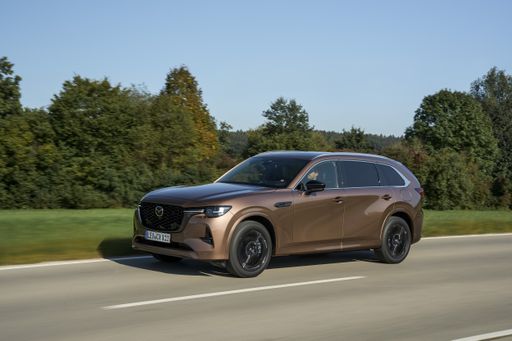
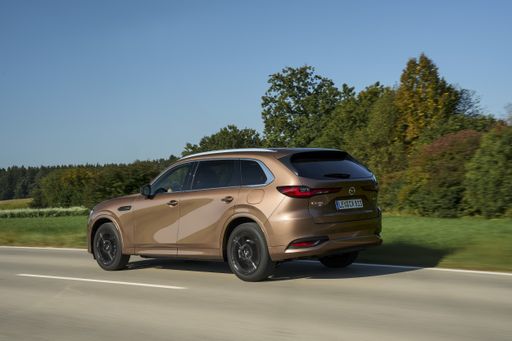
When it comes to the world of SUVs and off-roaders, few names evoke as much admiration as Mazda and Toyota. In our latest comparison, we pit the balanced prowess of the Mazda CX-80 against the rugged determination of the Toyota Land Cruiser. Both exemplifying their respective brand's heritage, they promise performance, innovation, and distinct driving experiences. Let's delve into the details to discern which car captivates your automotive soul.
Land Cruiser

Engine and Performance

The Mazda CX-80 offers a choice between a Plug-in Hybrid and a Diesel Mild-Hybrid Electric Vehicle (MHEV) engine, allowing drivers to prioritize eco-friendliness or traditional power. With engines boasting up to 327 horsepower and acceleration from 0 to 100 km/h in 6.8 seconds, the CX-80 is made for those who appreciate swift responsiveness. The top speed of 219 km/h further emphasizes its on-road vigor.

In contrast, the Toyota Land Cruiser keeps things simple yet powerful with its 205 horsepower diesel engine, delivering a solid 500 Nm of torque. While it doesn't match the acceleration of the CX-80, reaching its top speed at 170 km/h, the Land Cruiser is designed for durability and off-road resilience, making it ideal for adventurers who crave the path less traveled.

CX-80

Efficiency and Sustainability

Mazda's innovative approach is evident in the CX-80's fuel consumption figures. The Plug-in Hybrid boasts an impressive 1.6 L/100 km and a 60 km fully electric range, positioning it as a leader in efficiency. Its CO2 emissions are considerably low, ranging from 35 to 148 g/km, making it more environment-friendly.

The Land Cruiser, built for rugged terrains, records a higher fuel consumption at 10.3 L/100 km with CO2 emissions of 272 g/km. While these figures highlight its traditional off-road character, Toyota enthusiasts value its time-tested reliability over fuel savings.

Land Cruiser

Space and Practicality

The Mazda CX-80 offers a comfortable seven-seat configuration within its 4995 mm length. With a trunk capacity of 258 liters, it caters more to family-oriented adventures with a balanced attention to luxury and utility.

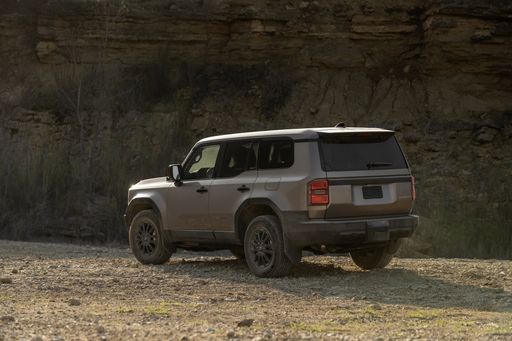
The Land Cruiser stands tall at 1935 mm in height, with a 4925 mm length and a commanding road presence. Although configured for five passengers, its 742-liter trunk capacity underscores its practicality for carrying substantial gear, a boon for frequent travelers and explorers.

CX-80

Technological Innovations

Mazda's CX-80 exemplifies cutting-edge technology, with its hybrid systems and advanced safety features. The integration of an automatic gearbox enhances its driving ease, ensuring a seamless transition between city roads and open highways.

The Land Cruiser, with its automatic transmission, emphasizes long-haul reliability and mechanical simplicity. Its robust build is complemented by the Toyota brand's legendary durability and a design DNA fine-tuned over decades.

Land Cruiser

Final Verdict

Choosing between the Mazda CX-80 and the Toyota Land Cruiser depends largely on your lifestyle and driving needs. The CX-80, with its modern hybrid technology and fuel efficiency, is built for the eco-conscious driver who demands performance. If your pursuits involve off-the-beaten-path explorations and supreme reliability, the Land Cruiser is your steadfast companion.

Ultimately, each vehicle symbolizes its brand's philosophy, catering to a unique set of automotive desires. Whether you opt for the sophistication of Mazda or the ruggedness of Toyota, the choice is bound to thrill and inspire.

Here’s where it gets real: The technical differences in detail

CX-80

Costs and Efficiency:

When it comes to price and running costs, the biggest differences usually appear. This is often where you see which car fits your budget better in the long run.

Mazda CX-80 is substantially cheaper – starting at 49,300 £ , while the Toyota Land Cruiser costs 72,000 £ . That’s a price difference of around 22,663 £.

Fuel consumption also shows a difference: the Mazda CX-80 uses 4 L/100km and is substantially more efficient than the Toyota Land Cruiser with 10.6 L/100km. The difference is about 6.6 L/100km.

Land Cruiser

Engine and Performance:

Under the bonnet, it becomes clear which model is tuned for sportiness and which one takes the lead when you hit the accelerator.

When it comes to engine power, the Mazda CX-80 offers noticeably more power – delivering 327 HP compared to 205 HP. That’s roughly 122 HP more horsepower.

When accelerating from 0 to 100 km/h, the Mazda CX-80 is significantly quicker – completing the sprint in 6.8 s, while the Toyota Land Cruiser takes 12.3 s. That’s about 5.5 s quicker.

There’s also a difference in torque: the Mazda CX-80 delivers only slightly more torque with 550 Nm compared to 500 Nm. That’s about 50 Nm more.

CX-80

Space and Everyday Use:

Whether family car or daily driver – which one offers more room, flexibility and comfort?

Both vehicles offer seating for 7 people.

In terms of curb weight, Mazda CX-80 is moderately lighter – 2,131 kg compared to 2,415 kg. The difference is around 284 kg.

Looking at boot space, the Toyota Land Cruiser offers substantially more boot space – 742 L compared to 258 L. That’s a difference of about 484 L.

When it comes to payload, the Toyota Land Cruiser carries slightly more – 750 kg compared to 650 kg. That’s a difference of about 100 kg.

Who wins the race in the data check?

The Mazda CX-80 is far ahead overall in the objective data comparison.
This result only shows which model scores more points on paper – not which of the two cars feels right for you.

from £49,300
CX-80

Mazda CX-80

  • Engine Type : Plugin Hybrid, Diesel MHEV
  • Transmission : Automatic
  • Drive Type : All-Wheel Drive
  • Power HP : 254 - 327 HP
  • Consumption L/100km : 4 - 5.6 L/100km
  • Electric Range : 60 km
Mazda CX-80
Toyota Land Cruiser

Costs and Consumption

View detailed analysis

Engine and Performance

View detailed analysis

Dimensions and Body

View detailed analysis

Mazda CX-80

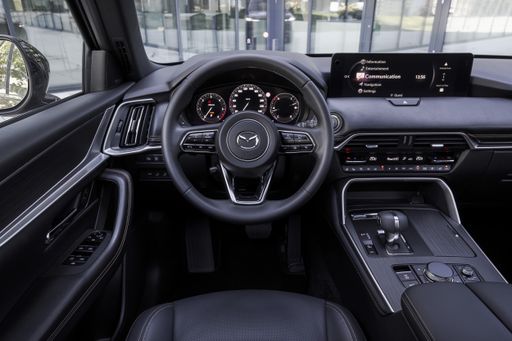
The Mazda CX-80 brings polished, near-premium styling and a cabin that feels far classier than its badge might imply. It steers with a composed, engaging character and packs the sensible practicality families want — with just enough flair to make school runs feel a little less ordinary.

details

Toyota Land Cruiser

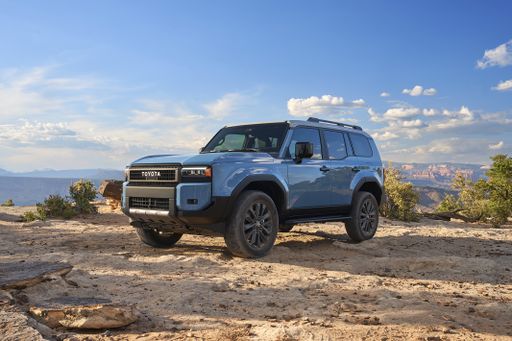
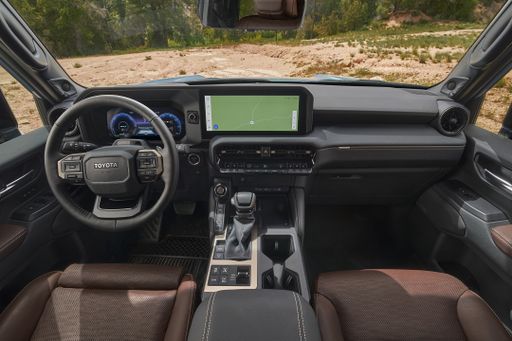
The Toyota Land Cruiser is the kind of SUV that makes you feel ready to abandon the map and take the long way home, with legendary go-anywhere capability wrapped in reassuringly solid build quality. Inside it's surprisingly comfortable and grown-up — a practical luxury for buyers who want reliability and presence rather than fleeting flash.

details
Mazda CX-80
Toyota Land Cruiser

Costs and Consumption

Price
49,300 - 61,400 £
Price
72,000 - 79,700 £
Consumption L/100km
4 - 5.6 L/100km
Consumption L/100km
10.6 - 10.7 L/100km
Consumption kWh/100km
-
Consumption kWh/100km
-
Electric Range
60 km
Electric Range
-
Battery Capacity
-
Battery Capacity
-
co2
91 - 146 g/km
co2
278 - 282 g/km
Fuel tank capacity
-
Fuel tank capacity
-

Dimensions and Body

Body Type
SUV
Body Type
Off-Roader
Seats
7
Seats
5 - 7
Doors
-
Doors
-
Curb weight
2,131 - 2,240 kg
Curb weight
2,415 - 2,450 kg
Trunk capacity
258 L
Trunk capacity
143 - 742 L
Length
-
Length
-
Width
1,890 mm
Width
1,980 mm
Height
-
Height
-
Max trunk capacity
-
Max trunk capacity
-
Payload
649 - 650 kg
Payload
685 - 750 kg

Engine and Performance

Engine Type
Plugin Hybrid, Diesel MHEV
Engine Type
Diesel MHEV
Transmission
Automatic
Transmission
Automatic
Transmission Detail
Automatic Gearbox
Transmission Detail
Automatic Gearbox
Drive Type
All-Wheel Drive
Drive Type
All-Wheel Drive
Power HP
254 - 327 HP
Power HP
205 HP
Acceleration 0-100km/h
6.8 - 8.4 s
Acceleration 0-100km/h
12.3 s
Max Speed
-
Max Speed
-
Torque
500 - 550 Nm
Torque
500 Nm
Number of Cylinders
4 - 6
Number of Cylinders
4
Power kW
187 - 241 kW
Power kW
151 kW
Engine capacity
2,488 - 3,283 cm3
Engine capacity
2,755 cm3

General

Model Year
2025
Model Year
2025
CO2 Efficiency Class
B, E
CO2 Efficiency Class
G
Brand
Mazda
Brand
Toyota
DriveDuel uses data analysis and artificial intelligence to evaluate vehicle data and create content. Content is regularly reviewed and improved. The displayed prices are estimates based on German list prices, adjusted to the respective country’s VAT. Country-specific registration taxes are not included. This information is not legally binding.