VS

Mercedes A Class vs Vauxhall Mokka comparison

Compare performance (421 HP vs 281 HP), boot space and price (32,600 £ vs 23,000 £ ) at a glance. Find out which car is the better choice for you – Mercedes A Class or Vauxhall Mokka?

Mercedes A Class vs Vauxhall Mokka: Key differences

Mercedes A Class

  • clearly more power
  • significantly more efficient
  • considerably quicker 0–100 km/h

Vauxhall Mokka

4.3 (3 Reviews)
rate
  • clearly cheaper
  • substantially more electric range
  • somewhat lighter
A Class

Compact Luxury Meets Dynamic Efficiency: Mercedes A-Klasse vs. Vauxhall Mokka

The automotive industry is experiencing a renaissance, with cars being more than just a means of transportation. Today, we're comparing two popular models in the compact segment that embody this transformation: the Mercedes A-Klasse and the Vauxhall Mokka. These vehicles offer unique attributes, technical specifications, and innovative features suiting different preferences and needs. Let's delve into what makes each of them a standout choice.
Mokka

Exterior Design and Dimensions

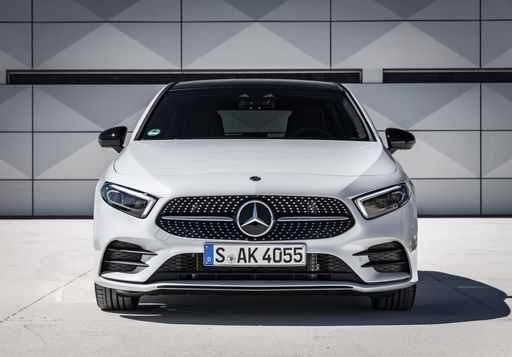
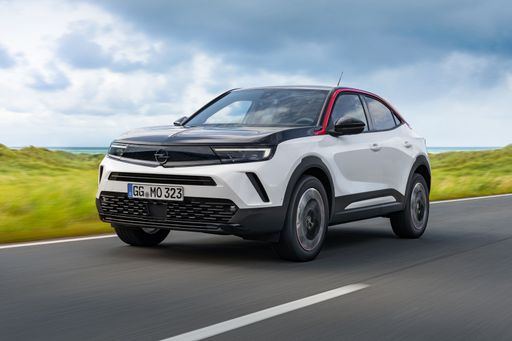
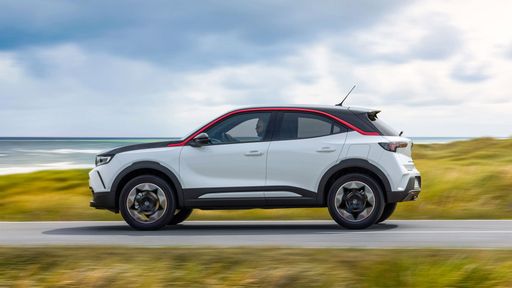
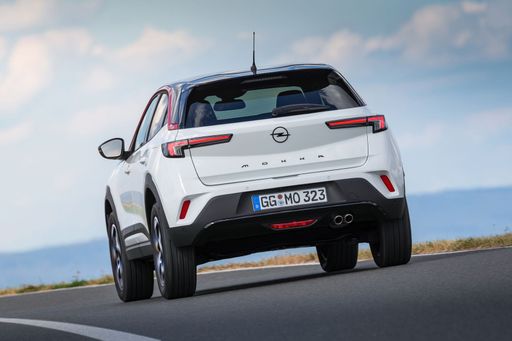
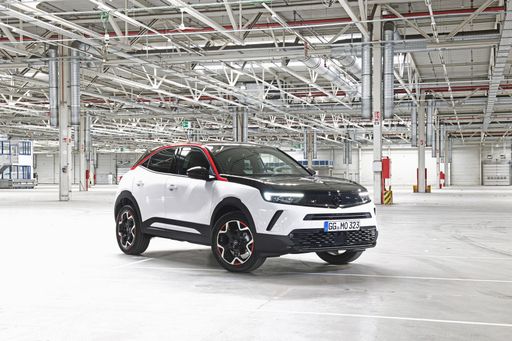
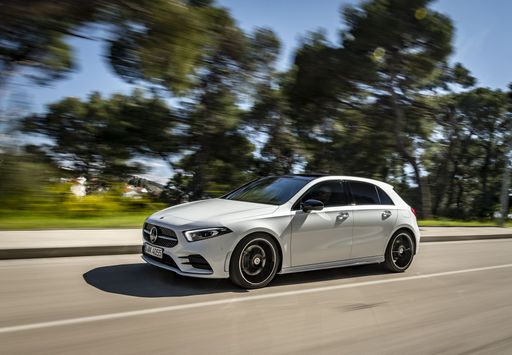
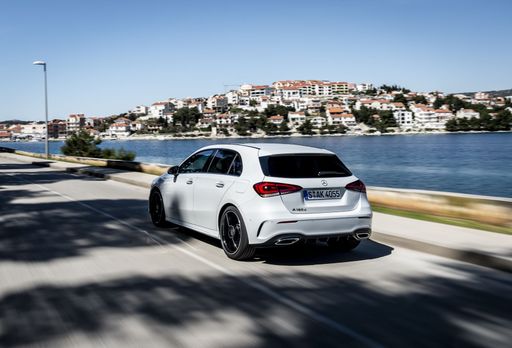
The Mercedes A-Klasse, with its sleek hatchback design, stretches between 4428 mm and 4453 mm in length. It is slightly wider, measuring up to 1850 mm, and features a height range of 1407 mm to 1423 mm, giving it a sporty yet elegant stance. In contrast, the Vauxhall Mokka is an SUV, standing taller at 1535 mm. Measuring 4150 mm in length and 1787 mm in width, it's compact and nimble, ideal for urban driving while offering a higher seating position.

A Class

Performance and Powertrains

Mercedes A-Klasse offers a myriad of engine options, including petrol mild hybrid, diesel, plug-in hybrid, and pure petrol engines, delivering power outputs ranging from 116 HP to an exhilarating 421 HP. It features a front-wheel drive and an option for all-wheel drive with dual-clutch automatic transmissions, achieving speeds up to 270 km/h. Notably, the plug-in hybrid variant provides an electric range of 86 km, with a battery capacity of 12.9 kWh.

On the other hand, the Vauxhall Mokka presents petrol, petrol mild hybrid, and fully electric options with power outputs from 130 HP to 156 HP. The Mokka’s electric model is particularly notable, boasting a range of over 400 km with a 51 kWh battery. This makes it a compelling option for environmentally conscious drivers. The Mokka's maximum speed is a respectable 207 km/h, with acceleration reaching 0-100 km/h in around 9 seconds.

Mokka

Efficiency and Emissions

Efficiency is one area where both vehicles shine in their categories. The A-Klasse demonstrates outstanding hybrid efficiency with consumption as low as 0.7 L/100km in its plug-in variant, while the petrol MHEV variant offers a balanced 5.9 L/100km. In terms of CO2 emissions, the A-Klasse ranges from 17 to 205 g/km, reflecting its diverse powertrain lineup.

For the Vauxhall Mokka, its electric model operates at an economical 15.4 kWh/100km, whereas the petrol options show a range of 4.8 to 6.2 L/100km. Its CO2 emissions are kept commendably low, with the electric model naturally emitting zero and the petrol variants releasing between 127 and 139 g/km.

A Class

Interior and Practicality

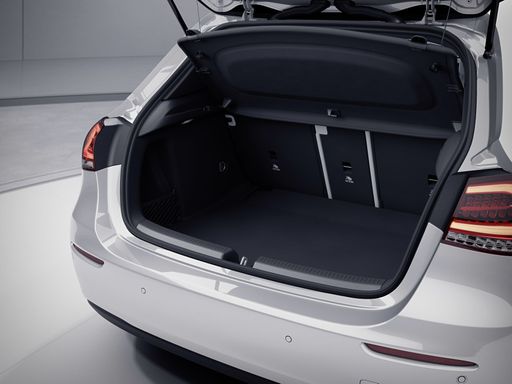
Both models offer a comfortable seating arrangement for five passengers. The A-Klasse presents a more traditional luxury experience, with high-quality materials and advanced connectivity features that have become synonymous with Mercedes-Benz. With a trunk capacity of up to 350 liters, it accommodates urban lifestyles efficiently.

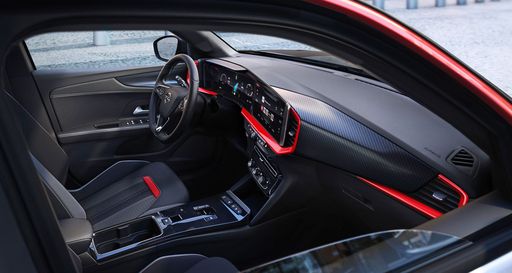
The Mokka, while maintaining a focus on style and comfort, complements its interior with practicality. Its slightly higher payload capacity underscores its utility value, and its trunk also offers up to 350 liters of space. The user-friendly infotainment system and innovative features like a digital cockpit appeal to tech-savvy consumers.

Mokka

Conclusion: A Tailor-Made Choice

The choice between the Mercedes A-Klasse and Vauxhall Mokka ultimately depends on individual priorities. The A-Klasse is perfect for those seeking luxury, a range of powerful engines, and high-tech innovations. In contrast, the Vauxhall Mokka excels with its eco-friendly electric option, stylish design, and practical urban-friendly dimensions, making it an excellent choice for the modern motorist.

Both vehicles provide compelling options in the compact segment, proving that sophistication, performance, and efficiency can coexist. Whether you lean towards the opulence of Mercedes or the progressive appeal of Vauxhall, you're guaranteed a ride that redefines the joy of driving.

Here’s where it gets real: The technical differences in detail

A Class

Costs and Efficiency:

Price and efficiency are key factors when choosing a car – and this is often where the real differences emerge.

Vauxhall Mokka is clearly cheaper – starting at 23,000 £ , while the Mercedes A Class costs 32,600 £ . That’s a price difference of around 9,520 £.

Fuel consumption also shows a difference: the Mercedes A Class uses 2.3 L/100km and is significantly more efficient than the Vauxhall Mokka with 4.9 L/100km. The difference is about 2.6 L/100km.

As for electric range, the Vauxhall Mokka offers substantially more range – reaching up to 403 km, about 318 km more than the Mercedes A Class.

Mokka

Engine and Performance:

Power, torque and acceleration are the classic benchmarks for car enthusiasts – and here, some clear differences start to show.

When it comes to engine power, the Mercedes A Class offers clearly more power – delivering 421 HP compared to 281 HP. That’s roughly 140 HP more horsepower.

When accelerating from 0 to 100 km/h, the Mercedes A Class is considerably quicker – completing the sprint in 3.9 s, while the Vauxhall Mokka takes 5.9 s. That’s about 2 s quicker.

Looking at top speed, the Mercedes A Class is marginally faster – reaching 225 km/h, while the Vauxhall Mokka tops out at 209 km/h. The difference is around 16 km/h.

There’s also a difference in torque: the Mercedes A Class delivers clearly more torque with 500 Nm compared to 345 Nm. That’s about 155 Nm more.

A Class

Space and Everyday Use:

Cabin size, boot volume and payload all play a role in everyday practicality. Here, comfort and flexibility make the difference.

Both vehicles offer seating for 5 people.

In terms of curb weight, Vauxhall Mokka is somewhat lighter – 1,294 kg compared to 1,440 kg. The difference is around 146 kg.

Boot capacity is identical – both offer 350 L of storage.

For maximum load capacity, the Mercedes A Class offers barely more capacity – up to 1,125 L, about 20 L more than the Vauxhall Mokka.

When it comes to payload, the Mercedes A Class carries slightly more – 485 kg compared to 400 kg. That’s a difference of about 85 kg.

Who wins the race in the data check?

The Mercedes A Class comes out modestly ahead in the objective data comparison.
This result only shows which model scores more points on paper – not which of the two cars feels right for you.

from £32,600
A Class

Mercedes A Class

  • Engine Type : Plugin Hybrid, Petrol MHEV, Diesel, Petrol
  • Transmission : Automatic
  • Drive Type : Front-Wheel Drive, All-Wheel Drive
  • Power HP : 116 - 421 HP
  • Consumption L/100km : 2.3 - 9 L/100km
  • Electric Range : 85 km
Mercedes A Class
Vauxhall Mokka

Costs and Consumption

View detailed analysis

Engine and Performance

View detailed analysis

Dimensions and Body

View detailed analysis

Mercedes A Class

The Mercedes A‑Class arrives as a compact charmer that dresses premium materials and a cockpit full of screens in a tidy, city-friendly package, delivering surprising agility and poise. For buyers who want a luxury badge, clever tech and a car that's equally happy in tight streets or on a spirited country run, the A‑Class offers a grown-up feel with a cheeky streak.

details

Vauxhall Mokka

The Opel Mokka cuts a smart, modern silhouette that feels right at home in the city while still turning heads on the open road. It's a practical, easy-to-live-with crossover that blends comfy driving manners with enough flair and tech to keep daily commutes interesting — and it won’t make you regret trading up.

details
Mercedes A Class
Vauxhall Mokka

Costs and Consumption

Price
32,600 - 66,500 £
Price
23,000 - 40,500 £
Consumption L/100km
2.3 - 9 L/100km
Consumption L/100km
4.9 - 5.7 L/100km
Consumption kWh/100km
-
Consumption kWh/100km
15.4 - 18.5 kWh/100km
Electric Range
85 km
Electric Range
336 - 403 km
Battery Capacity
12.9 kWh
Battery Capacity
51 kWh
co2
53 - 205 g/km
co2
0 - 129 g/km
Fuel tank capacity
35 L
Fuel tank capacity
44 L

Dimensions and Body

Body Type
Hatchback
Body Type
SUV
Seats
5
Seats
5
Doors
5
Doors
5
Curb weight
1,440 - 1,695 kg
Curb weight
1,294 - 1,672 kg
Trunk capacity
310 - 350 L
Trunk capacity
310 - 350 L
Length
4,428 mm
Length
4,150 mm
Width
1,796 - 1,850 mm
Width
1,787 mm
Height
1,423 mm
Height
1,515 - 1,535 mm
Max trunk capacity
1,125 L
Max trunk capacity
1,060 - 1,105 L
Payload
450 - 485 kg
Payload
388 - 400 kg

Engine and Performance

Engine Type
Plugin Hybrid, Petrol MHEV, Diesel, Petrol
Engine Type
Electric, Petrol MHEV, Petrol
Transmission
Automatic
Transmission
Automatic, Manuel
Transmission Detail
Dual-Clutch Automatic
Transmission Detail
Reduction Gearbox, Dual-Clutch Automatic, Manual Gearbox
Drive Type
Front-Wheel Drive, All-Wheel Drive
Drive Type
Front-Wheel Drive
Power HP
116 - 421 HP
Power HP
136 - 281 HP
Acceleration 0-100km/h
3.9 - 9.7 s
Acceleration 0-100km/h
5.9 - 9 s
Max Speed
225 km/h
Max Speed
150 - 209 km/h
Torque
200 - 500 Nm
Torque
230 - 345 Nm
Number of Cylinders
4
Number of Cylinders
3
Power kW
85 - 310 kW
Power kW
100 - 207 kW
Engine capacity
1,332 - 1,991 cm3
Engine capacity
1,199 cm3

General

Model Year
2,024 - 2,025
Model Year
2,024 - 2,025
CO2 Efficiency Class
B, D, E, G
CO2 Efficiency Class
A, C, D
Brand
Mercedes-Benz
Brand
Vauxhall
DriveDuel uses data analysis and artificial intelligence to evaluate vehicle data and create content. Content is regularly reviewed and improved. The displayed prices are estimates based on German list prices, adjusted to the respective country’s VAT. Country-specific registration taxes are not included. This information is not legally binding.