VS

Mercedes B Class vs BMW 2 Series Active Tourer comparison

Compare performance (238 HP vs 326 HP), boot space and price (33,100 £ vs 31,500 £ ) at a glance. Find out which car is the better choice for you – Mercedes B Class or BMW 2 Series Active Tourer?

Mercedes B Class vs BMW 2 Series Active Tourer: Key differences

Mercedes B Class

4.9 (5 Reviews)
rate
  • barely lighter
details

BMW 2 Series Active Tourer

4.1 (2 Reviews)
rate
  • barely cheaper
  • visibly more power
  • clearly more efficient
  • slightly quicker 0–100 km/h
  • very slightly more trunk space
details

All details on performance, efficiency, range and trunk space can be found in the technical comparison below – including user reviews for both models.

By Achim Sedelmaier

B Class

BMW 2 Series Active Tourer VS Mercedes B Class: concise real-world comparison

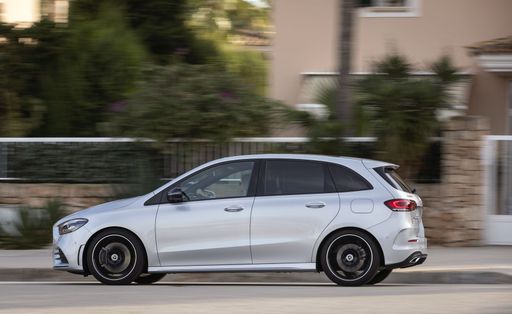
BMW 2 Series Active Tourer VS Mercedes B Class pits two premium compact vans against each other with different priorities: the BMW aims for a hushed, high-quality long-distance experience while the Mercedes trades a touch of flair for sheer everyday comfort and ease of use. The BMW feels like a refined touring car with carefully engineered quietness and a modern cabin, whereas the Mercedes focuses on simple accessibility, plush seats and a family-friendly entry experience. Both cars wear premium badges, but they deliver that premium feeling in different ways — BMW via materials and isolation, Mercedes via seating ergonomics and user-facing features. That trade-off between serene refinement and approachable comfort is the theme buyers should keep in mind before diving into stats.
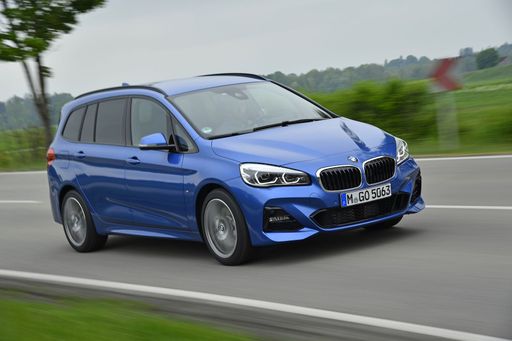
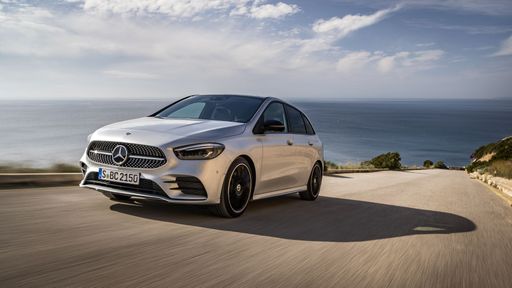
2 Series Active Tourer

On the road: motorway calm versus cushioned cruising

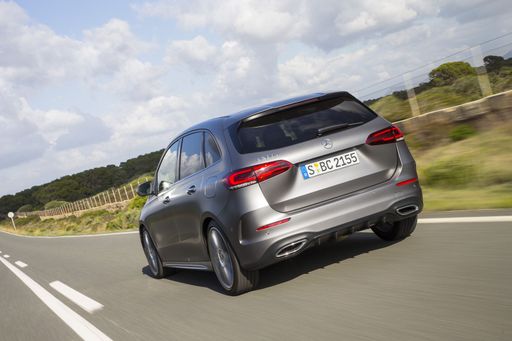
The BMW 2 Series Active Tourer is the one you’ll appreciate on long motorway runs where low noise and composure reduce fatigue and make hours behind the wheel feel easier. By contrast, the Mercedes B Class leans into cushioned suspension and comfortable damping that smooths urban imperfections and makes shorter trips relaxed, though sportier wheel choices can blunt that advantage. BMW’s steering is light and tuned for smoothness rather than sparkle, which helps in traffic but won’t satisfy someone chasing engagement; the B‑Class is similarly undemanding but tends to feel more traditionally soft and comforting. In short, pick the BMW if highway serenity is a priority, and the Mercedes if you want a floaty, easy-going cruiser for mixed use and town driving.

B Class

Cabin feel and perceived quality: modern minimalism versus familiar warmth

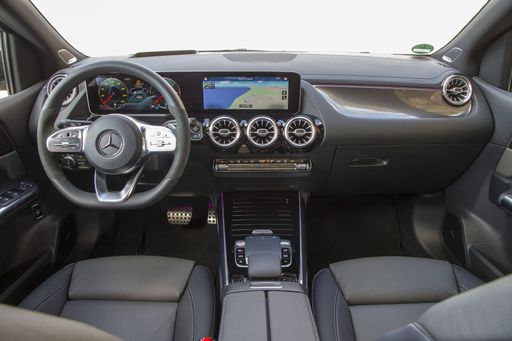
Step into the BMW 2 Series Active Tourer and the impression is modern, taut and carefully finished — materials, joins and surface treatments aim above its class and make the cabin feel like a small premium lounge. The Mercedes B Class presents a warmer, more familiar interior that prioritises comfortable surfaces and seats that feel immediately inviting, even if some lower trim plastics don’t shout luxury. Both cabins are well thought through, but BMW’s contemporary presentation can feel a touch cooler and more deliberate, while Mercedes trades that edge for a softer, cozier ambience. That difference matters if tactile quality and a quiet cocoon are important versus wanting an immediately comfortable, fuss-free interior for family life.

2 Series Active Tourer

Practicality and family usability: sliding flexibility versus straightforward accessibility

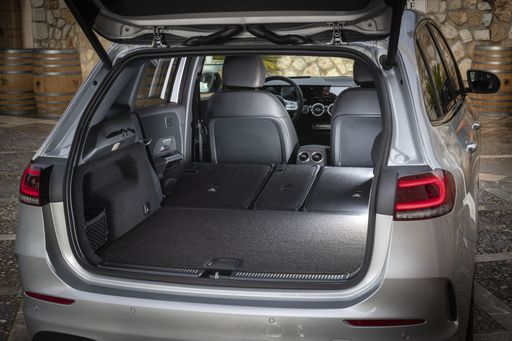
Practicality is where the contrast becomes tangible: the BMW 2 Series Active Tourer offers greater flexibility with a sliding rear bench and multi-split seatbacks that let you adapt space between passengers and luggage on the fly. The Mercedes B Class counters with an easier step-in, a low loading lip and a very usable cargo floor that makes daily loading chores less fiddly, especially with children and shopping. Both are competent family cars, but the BMW rewards owners who value adjustable seating layouts and modularity, while the Mercedes rewards those who prioritise simple, reliably practical loading and rear-seat comfort. For families who routinely swap seats and bags, BMW’s flexibility wins points; for those who want hassle-free loading and comfortable rear seats, the B‑Class is the clearer fit.

B Class

Daily ergonomics and infotainment: touch-first tech that divides opinion

Both cars have moved toward touch‑centric interfaces, and that shift changes daily life: the BMW 2 Series Active Tourer wraps modern screens and fewer physical controls into a sleek cockpit that looks advanced but can demand more attention for routine tasks. The Mercedes B Class offers a powerful MBUX ecosystem that feels capable and polished, yet recent simplifications in physical controls mean it too can frustrate users who prefer tactile immediacy. In practice, drivers who frequently tweak climate settings or audio will find both cabins require a learning curve, with Mercedes perhaps offering a slightly more intuitive voice assistant while BMW rewards those who value a tidy, high-tech layout. Visibility and rearward sightlines are limited on both models, so camera systems and parking aids are practical necessities rather than optional luxuries.

2 Series Active Tourer

Who should choose which: clear buyer fits and the trade-offs to weigh

If you’re a motorway mile‑eater who wants a quiet, premium-feeling cabin and modular rear seating that adapts to family life, the BMW 2 Series Active Tourer will suit you better. If your priority is easy access, plush day-to-day comfort, and a straightforward cargo setup where loading and rear-seat comfort matter most, the Mercedes B Class is likely the more natural choice. Buyers sensitive to running costs and outright efficiency may tilt toward specific BMW powertrains, while those watching purchase price and option inflation should be mindful that Mercedes extras add up quickly. Both cars have clear strengths and different compromises — the technical comparison that follows will help you map those qualitative choices onto concrete specs so you can decide which trade-offs you prefer.

Here’s where it gets real: The technical differences in detail

B Class

Costs and Efficiency:

Looking at overall running costs, both models reveal some interesting differences in everyday economy.

BMW 2 Series Active Tourer is barely cheaper – starting at 31,500 £ , while the Mercedes B Class costs 33,100 £ . That’s a price difference of around 1,629 £.

Fuel consumption also shows a difference: the BMW 2 Series Active Tourer uses 2.9 L/100km and is clearly more efficient than the Mercedes B Class with 5.1 L/100km. The difference is about 2.2 L/100km.

2 Series Active Tourer

Engine and Performance:

Power, torque and acceleration say a lot about how a car feels on the road. This is where you see which model delivers more driving dynamics.

When it comes to engine power, the BMW 2 Series Active Tourer offers visibly more power – delivering 326 HP compared to 238 HP. That’s roughly 88 HP more horsepower.

When accelerating from 0 to 100 km/h, the BMW 2 Series Active Tourer is slightly quicker – completing the sprint in 5.5 s, while the Mercedes B Class takes 6.5 s. That’s about 1 s quicker.

There’s also a difference in torque: the BMW 2 Series Active Tourer delivers a bit more torque with 477 Nm compared to 400 Nm. That’s about 77 Nm more.

B Class

Space and Everyday Use:

Beyond pure performance, interior space and usability matter most in daily life. This is where you see which car is more practical and versatile.

Both vehicles offer seating for 5 people.

In terms of curb weight, Mercedes B Class is barely lighter – 1,405 kg compared to 1,545 kg. The difference is around 140 kg.

Looking at boot space, the BMW 2 Series Active Tourer offers very slightly more boot space – 470 L compared to 455 L. That’s a difference of about 15 L.

When it comes to payload, the Mercedes B Class carries only slightly more – 550 kg compared to 505 kg. That’s a difference of about 45 kg.

Who wins the race in the data check?

The BMW 2 Series Active Tourer is decisively ahead in the objective data comparison.
This result only shows which model scores more points on paper – not which of the two cars feels right for you.

from £31,500
2 Series Active Tourer

BMW 2 Series Active Tourer

  • Engine Type Petrol, Petrol MHEV, Diesel, Diesel MHEV, Plugin Hybrid
  • Transmission Automatic
  • Drive Type Front-Wheel Drive, All-Wheel Drive
  • Power HP 122 - 326 HP
  • Consumption L/100km 2.9 - 6.2 L/100km
  • Electric Range 82 km
Mercedes B Class
BMW 2 Series Active Tourer

Costs and Consumption

View detailed analysis

Engine and Performance

View detailed analysis

Dimensions and Body

View detailed analysis

Mercedes B Class

The Mercedes B-Class is a smart, grown-up compact people carrier that dresses everyday practicality in a near‑premium polish, perfect for buyers who want comfort and a classy badge without the theatrics. It won’t set your pulse racing on a back road, but it will make school runs, commutes and grocery hauls feel pleasantly civilized — a reliable, slightly posh companion for real life.

details

BMW 2 Series Active Tourer

The BMW 2 Series Active Tourer turns the family MPV into something you’d actually want to park outside a café, pairing compact practicality with surprisingly premium cabin flair. It won’t thrill like a sports car, but it drives with the composed poise you expect from the badge and keeps daily life easy and un-fussy.

details
Mercedes B Class
BMW 2 Series Active Tourer

Costs and Consumption

Price
33,100 - 52,500 £
Price
31,500 - 48,500 £
Consumption L/100km
5.1 - 6.9 L/100km
Consumption L/100km
2.9 - 6.2 L/100km
Consumption kWh/100km
-
Consumption kWh/100km
-
Electric Range
-
Electric Range
82 km
Battery Capacity
-
Battery Capacity
-
co2
133 - 156 g/km
co2
65 - 140 g/km
Fuel tank capacity
-
Fuel tank capacity
-

Dimensions and Body

Body Type
MPV
Body Type
MPV
Seats
5
Seats
5
Doors
-
Doors
-
Curb weight
1,405 - 1,565 kg
Curb weight
1,545 - 1,920 kg
Trunk capacity
445 - 455 L
Trunk capacity
406 - 470 L
Length
-
Length
-
Width
1,796 mm
Width
1,824 mm
Height
-
Height
-
Max trunk capacity
-
Max trunk capacity
-
Payload
515 - 550 kg
Payload
465 - 505 kg

Engine and Performance

Engine Type
Petrol MHEV, Diesel
Engine Type
Petrol, Petrol MHEV, Diesel, Diesel MHEV, Plugin Hybrid
Transmission
Automatic
Transmission
Automatic
Transmission Detail
Dual-Clutch Automatic
Transmission Detail
Dual-Clutch Automatic
Drive Type
Front-Wheel Drive, All-Wheel Drive
Drive Type
Front-Wheel Drive, All-Wheel Drive
Power HP
116 - 238 HP
Power HP
122 - 326 HP
Acceleration 0-100km/h
6.5 - 10 s
Acceleration 0-100km/h
5.5 - 10.3 s
Max Speed
-
Max Speed
-
Torque
200 - 400 Nm
Torque
230 - 477 Nm
Number of Cylinders
4
Number of Cylinders
3 - 4
Power kW
85 - 175 kW
Power kW
90 - 240 kW
Engine capacity
1,332 - 1,991 cm3
Engine capacity
1,499 - 1,998 cm3

General

Model Year
2025
Model Year
2,024 - 2,025
CO2 Efficiency Class
D, E, F
CO2 Efficiency Class
E, D, B
Brand
Mercedes-Benz
Brand
BMW
DriveDuel uses data analysis and artificial intelligence to evaluate vehicle data and create content. Content is regularly reviewed and improved. The displayed prices are estimates based on German list prices, adjusted to the respective country’s VAT. Country-specific registration taxes are not included. This information is not legally binding.