@ Mercedes-Benz Group Media
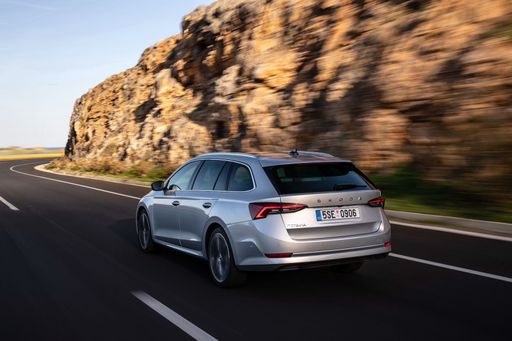
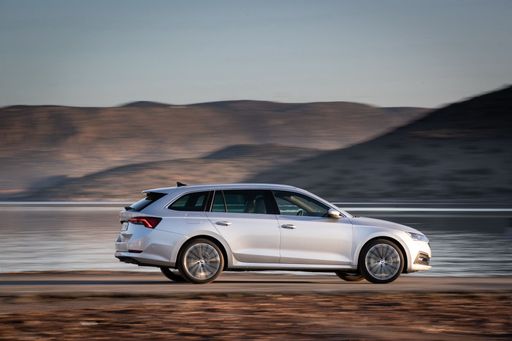
@ Škoda Auto a.s. / Škoda Storyboard
VS

Mercedes CLA Shooting Brake vs Skoda Octavia Combi – Differences & prices compared

Everyday use, family trips or long-distance drives – here’s where the differences show.
Discover whether Mercedes CLA Shooting Brake or Skoda Octavia Combi fits your lifestyle better.

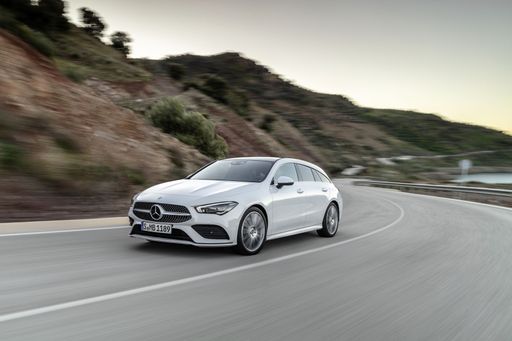
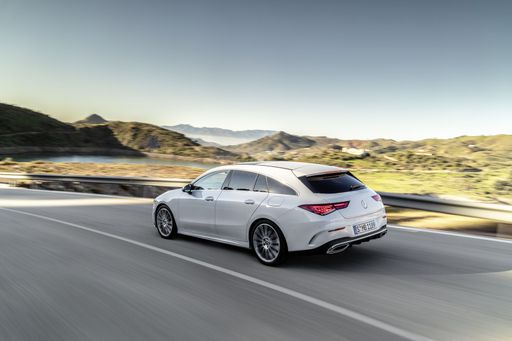
CLA Shooting Brake @ Mercedes-Benz Group Media

Innovation Meets Tradition: Mercedes CLA Shooting Brake vs Skoda Octavia Combi

The wagon market has long been a battleground for automotive finesse, where innovation meets tradition. This is vividly captured by two iconic candidates: the Mercedes CLA Shooting Brake and the Skoda Octavia Combi. Both vehicles, embodying their respective brands' ethos, offer a seamless blend of performance, versatility, and advanced features. Let's delve into their offerings and see how they stack up against each other.
Octavia Combi @ Škoda Auto a.s. / Škoda Storyboard

Design and Dimensions

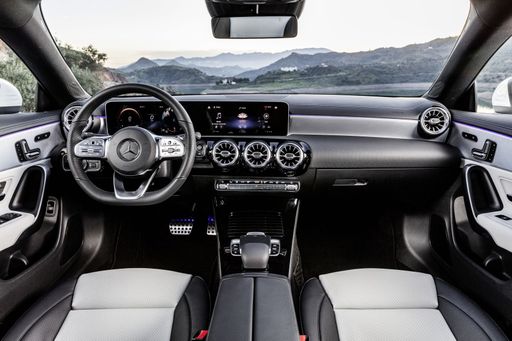
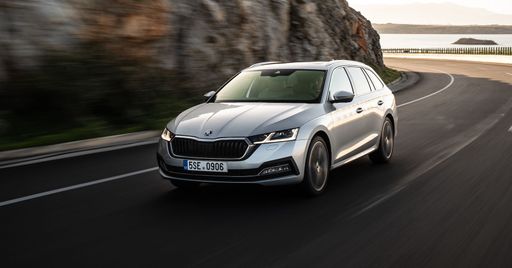
The Mercedes CLA Shooting Brake exudes a blend of elegance and sportiness with dimensions of 4693 mm in length, 1834 mm in width, and a height of 1415 mm. Its aerodynamic curves and the luxurious build are unmistakably Mercedes. In contrast, the Skoda Octavia Combi boasts slightly larger dimensions, measuring 4709 mm in length, 1829 mm in width, and 1468 mm in height, providing a more practical and spacious design.

CLA Shooting Brake @ Mercedes-Benz Group Media

Powertrain and Performance

The CLA Shooting Brake offers a diverse lineup of power units, featuring petrol, diesel, and plug-in hybrid options. The performance-oriented AMG model delivers up to 421 HP, accelerating from 0-100 km/h in a mere 4.1 seconds. All models come with a dual-clutch automatic transmission, ensuring smooth gear changes. The plug-in hybrid variant stands out with a combined fuel consumption of 0.8 L/100 km and an electric range of 85 km.

The Octavia Combi, on the other hand, caters to a broad audience with offerings in petrol, diesel, and mild hybrid leverages. Its spectrum of power extends to 265 HP, achieving a 0-100 km/h acceleration in 6.7 seconds. Both manual and dual-clutch automatic transmissions are available to suit different driving preferences. With a fuel consumption range averaging between 4.4 and 6.9 L/100 km, the Octavia maintains an eco-conscious edge.

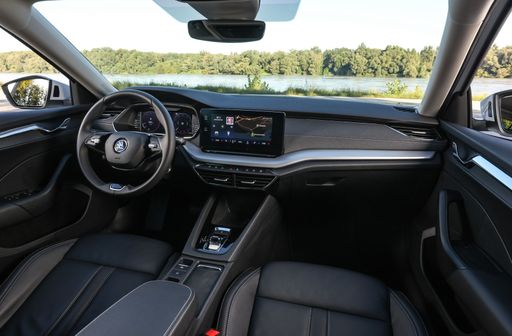
Octavia Combi @ Škoda Auto a.s. / Škoda Storyboard

Interior Comfort and Technology

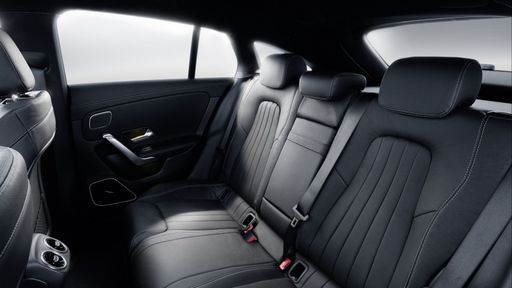
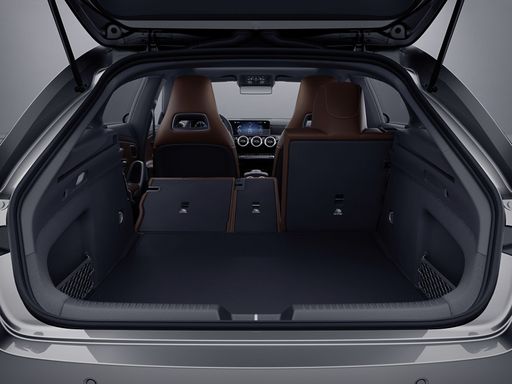
Both vehicles prioritize passenger comfort with seating arrangements for five, yet they differ in trunk capacity. The CLA Shooting Brake provides up to 505 liters, whereas the Octavia Combi goes further with an outstanding 640 liters. This substantial difference underscores the Skoda's practicality advantage for family outings and cargo utility.

On the tech front, Mercedes Benz's CLA Shooting Brake is packed with infotainment and driver-assist features, drawing enthusiasts in with its sleek MBUX system and an array of semi-autonomous driving capabilities. Meanwhile, the Skoda Octavia Combi offers a refined infotainment system and smart connectivity features, ensuring drivers stay in touch with the outside world without sacrificing focus on the road.

CLA Shooting Brake @ Mercedes-Benz Group Media

Environmental Impact

Both models exhibit varying CO2 emissions. The CLA Shooting Brake records figures ranging from 17 to 206 g/km, emphasizing its commitment to lower emissions, particularly in the hybrid version. Conversely, the Octavia Combi showcases CO2 outputs between 114 and 157 g/km, maintaining a balanced approach to environmental considerations.

Octavia Combi @ Škoda Auto a.s. / Škoda Storyboard

Conclusion: Luxury Meets Practicality

The contest between the Mercedes CLA Shooting Brake and the Skoda Octavia Combi exemplifies the clash of luxury and practicality. The Mercedes, with its luxurious build and power-packed variations, appeals to those seeking performance and refinement. In contrast, the Skoda Octavia Combi stands as a testament to pragmatic design and efficiency, ideal for families and pragmatic drivers.

Ultimately, the choice hinges on individual needs and preferences, whether prioritizing technological innovation, fuel efficiency, or sheer capacity for life's adventures.

Here’s where it gets real: The technical differences in detail

CLA Shooting Brake @ Mercedes-Benz Group Media

Costs and Efficiency:

Price and efficiency are often the first things buyers look at. Here it becomes clear which model has the long-term edge – whether at the pump, the plug, or in purchase price.

Skoda Octavia Combi has a clearly advantage in terms of price – it starts at 24400 £, while the Mercedes CLA Shooting Brake costs 37700 £. That’s a price difference of around 13314 £.

Fuel consumption also shows a difference: Mercedes CLA Shooting Brake manages with 2.40 L and is therefore clearly more efficient than the Skoda Octavia Combi with 4.40 L. The difference is about 2 L per 100 km.

Octavia Combi @ Škoda Auto a.s. / Škoda Storyboard

Engine and Performance:

Power, torque and acceleration are the classic benchmarks for car enthusiasts – and here, some clear differences start to show.

When it comes to engine power, the Mercedes CLA Shooting Brake has a clearly perceptible edge – offering 421 HP compared to 265 HP. That’s roughly 156 HP more horsepower.

In acceleration from 0 to 100 km/h, the Mercedes CLA Shooting Brake is clearly quicker – completing the sprint in 4.10 s, while the Skoda Octavia Combi takes 6.50 s. That’s about 2.40 s faster.

In terms of top speed, the Mercedes CLA Shooting Brake performs hardly perceptible better – reaching 270 km/h, while the Skoda Octavia Combi tops out at 250 km/h. The difference is around 20 km/h.

There’s also a difference in torque: Mercedes CLA Shooting Brake pulls clearly perceptible stronger with 500 Nm compared to 370 Nm. That’s about 130 Nm difference.

CLA Shooting Brake @ Mercedes-Benz Group Media

Space and Everyday Use:

Whether family car or daily driver – which one offers more room, flexibility and comfort?

Both vehicles offer seating for 5 people.

In curb weight, Skoda Octavia Combi is somewhat lighter – 1366 kg compared to 1530 kg. The difference is around 164 kg.

In terms of boot space, the Skoda Octavia Combi offers clearly perceptible more room – 640 L compared to 505 L. That’s a difference of about 135 L.

In maximum load capacity, the Skoda Octavia Combi performs a bit better – up to 1700 L, which is about 330 L more than the Mercedes CLA Shooting Brake.

When it comes to payload, Skoda Octavia Combi hardly perceptible takes the win – 534 kg compared to 520 kg. That’s a difference of about 14 kg.

Who wins the race?

The Mercedes CLA Shooting Brake proves to be dominates this comparison and therefore becomes our DriveDuel Champion!
Mercedes CLA Shooting Brake is the better all-rounder in this comparison.

from about £37,700
CLA Shooting Brake @ Mercedes-Benz Group Media

Mercedes CLA Shooting Brake

  • Engine Type : Plugin Hybrid, Petrol MHEV, Diesel, Petrol
  • Transmission : Automatic
  • Drive Type : Front-Wheel Drive, All-Wheel Drive
  • Power HP : 116 - 421 HP
  • Consumption L/100km : 2.4 - 9.1 L
  • Electric Range : 84 km

Mercedes CLA Shooting Brake

5 (1)
rate

The Mercedes CLA Shooting Brake turns estate practicality into runway-ready style with a swooping roofline and coupe-like silhouette that makes even mundane errands feel a little more glamorous. Inside it pairs clever packaging with premium flair, so you get useful load space and a grown-up cabin — ideal if you want a car that looks like a showroom trophy but still handles the weekly shop without sulking.

details

Skoda Octavia Combi

The Skoda Octavia Combi is the sensible family wagon that somehow turns grocery runs and long trips into a pleasant, unshowy experience — spacious, practical and built like it prefers reliability over flash. With smart touches, clever storage and a cabin that feels grown-up rather than frugal, it’s an easy recommendation for buyers who want maximum utility without sacrificing comfort or style.

details
Mercedes CLA Shooting Brake
Skoda Octavia Combi
CLA Shooting Brake @ Mercedes-Benz Group Media
Octavia Combi @ Škoda Auto a.s. / Škoda Storyboard

Costs and Consumption

Price
37700 - 74700 £
Price
24400 - 42300 £
Consumption L/100km
2.4 - 9.1 L
Consumption L/100km
4.4 - 6.9 L
Consumption kWh/100km
-
Consumption kWh/100km
-
Electric Range
84 km
Electric Range
-
Battery Capacity
12.90 kWh
Battery Capacity
-
co2
55 - 206 g/km
co2
113 - 157 g/km
Fuel tank capacity
35 - 51 L
Fuel tank capacity
45 - 55 L

Dimensions and Body

Body Type
Estate
Body Type
Estate
Seats
5
Seats
5
Doors
5
Doors
5
Curb weight
1530 - 1775 kg
Curb weight
1366 - 1553 kg
Trunk capacity
445 - 505 L
Trunk capacity
640 L
Length
4692 - 4695 mm
Length
4698 - 4709 mm
Width
1834 - 1857 mm
Width
1829 mm
Height
1405 - 1433 mm
Height
1455 - 1468 mm
Max trunk capacity
1310 - 1370 L
Max trunk capacity
1700 L
Payload
460 - 520 kg
Payload
471 - 534 kg

Engine and Performance

Engine Type
Plugin Hybrid, Petrol MHEV, Diesel, Petrol
Engine Type
Petrol, Petrol MHEV, Diesel
Transmission
Automatic
Transmission
Automatic, Manuel
Transmission Detail
Dual-Clutch Automatic
Transmission Detail
Dual-Clutch Automatic, Manual Gearbox
Drive Type
Front-Wheel Drive, All-Wheel Drive
Drive Type
Front-Wheel Drive, All-Wheel Drive
Power HP
116 - 421 HP
Power HP
116 - 265 HP
Acceleration 0-100km/h
4.1 - 10.1 s
Acceleration 0-100km/h
6.5 - 10.7 s
Max Speed
203 - 270 km/h
Max Speed
203 - 250 km/h
Torque
230 - 500 Nm
Torque
220 - 370 Nm
Number of Cylinders
4
Number of Cylinders
4
Power kW
85 - 310 kW
Power kW
85 - 195 kW
Engine capacity
1332 - 1991 cm3
Engine capacity
1498 - 1984 cm3

General

Model Year
2024 - 2025
Model Year
2024 - 2025
CO2 Efficiency Class
B, D, E, G
CO2 Efficiency Class
E, F, D, C
Brand
Mercedes-Benz
Brand
Skoda
What drivetrain options does the Mercedes CLA Shooting Brake have?

The Mercedes CLA Shooting Brake is offered with Front-Wheel Drive or All-Wheel Drive.

The prices and data displayed are estimates based on German list prices and may vary by country. This information is not legally binding.