@ Mercedes-Benz Group Media
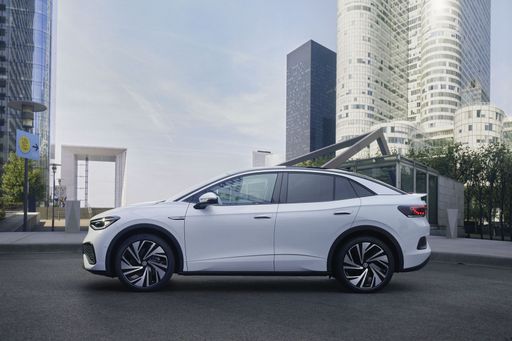
@ Volkswagen AG / VW Media
VS

Mercedes EQA vs VW ID.5 – Which one offers the better deal?

Everyday use, family trips or long-distance drives – here’s where the differences show.
Discover whether Mercedes EQA or VW ID.5 fits your lifestyle better.

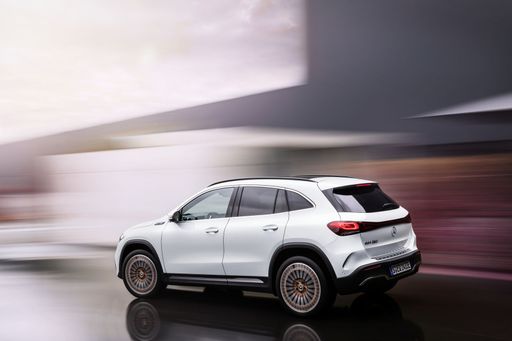
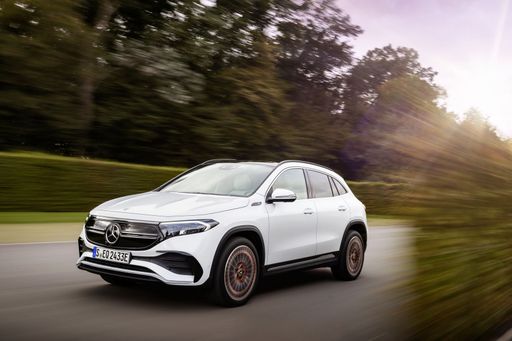
EQA @ Mercedes-Benz Group Media

The electric vehicle market is evolving rapidly, and two strong contenders making waves in the SUV segment are the Mercedes EQA and the Volkswagen ID.5. Both models cater to the modern driver's need for sustainability combined with luxury and performance. In this head-to-head comparison, we’ll delve into their technical aspects, innovations, and what makes each of them worth considering in today’s automotive landscape.
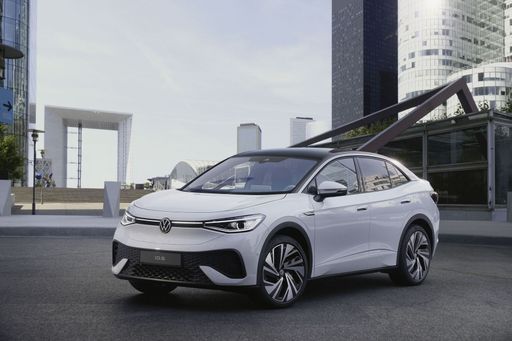
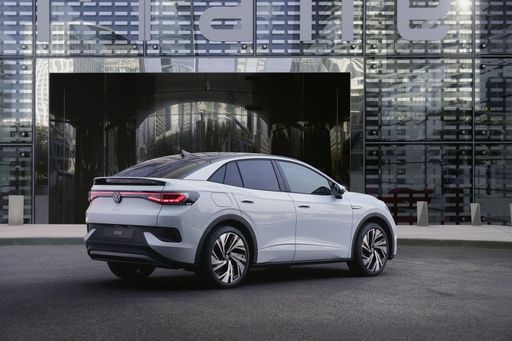
ID.5 @ Volkswagen AG / VW Media

Powertrains and Performance

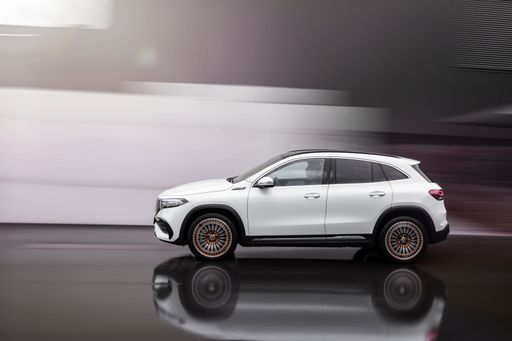
The Mercedes EQA offers a versatile lineup of power options with outputs ranging from 190 to 292 horsepower, available in both Front-Wheel Drive (FWD) and All-Wheel Drive (AWD) configurations. The EQA is equipped with a reduction gearbox to ensure dynamic performance, achieving acceleration from 0-100 km/h in as fast as 6 seconds. This impressive speed is complemented by a robust torque range of 385 to 520 Nm, providing drivers with responsive handling.

On the other hand, the VW ID.5 pushes the performance envelope even further with its power output ranging from 170 HP to a thrilling 340 HP. Additionally, the ID.5 offers both Rear-Wheel Drive (RWD) and All-Wheel Drive (AWD) options, providing flexibility based on user preference. The ID.5 can accelerate from 0-100 km/h in just 5.4 seconds, accompanied by a notable torque peak of 679 Nm, which speaks to its performance credentials.

EQA @ Mercedes-Benz Group Media

Battery and Electric Range

Battery technology remains a crucial factor in any electric vehicle. The Mercedes EQA comes with battery capacities varying from 66.5 kWh to 70.5 kWh. Depending on the variant, it boasts an impressive electric range of up to 561 km, making it highly competitive for long-distance travel. Its energy consumption varies from 14.4 to 16.9 kWh/100km, highlighting efficient energy usage, especially on longer journeys.

In comparison, the Volkswagen ID.5 features a larger battery option of up to 79 kWh. The ID.5 is built for range, with a maximum electric range of 563 km and an energy consumption rating that fluctuates between 15.6 to 16.6 kWh/100km. This range advantage positions the ID.5 as a solid choice for eco-conscious drivers seeking to go the distance without frequent recharges.

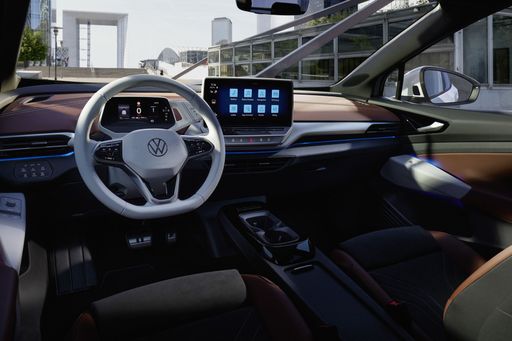
ID.5 @ Volkswagen AG / VW Media

Interior and Comfort

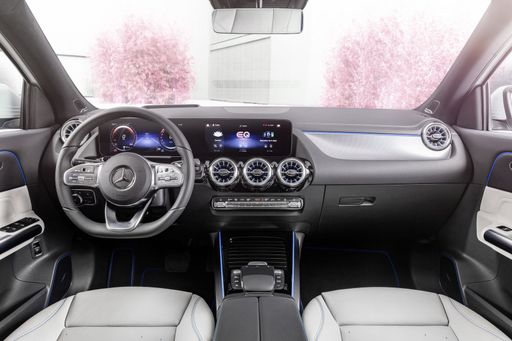
Both models promise a spacious and comfortable interior, but they cater to different tastes. The EQA features a luxurious cabin laden with high-quality materials and cutting-edge technology, showcasing the modern aesthetics Mercedes-Benz is known for. With a trunk capacity of up to 340 liters, it optimally blends style with functionality, allowing for ample storage space.

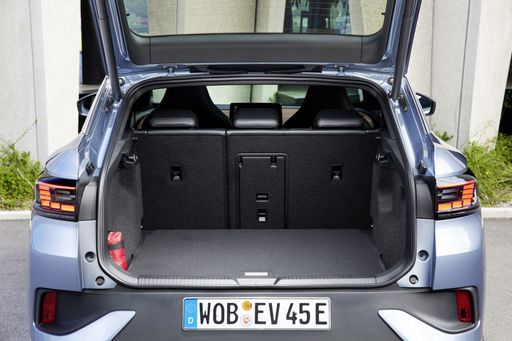
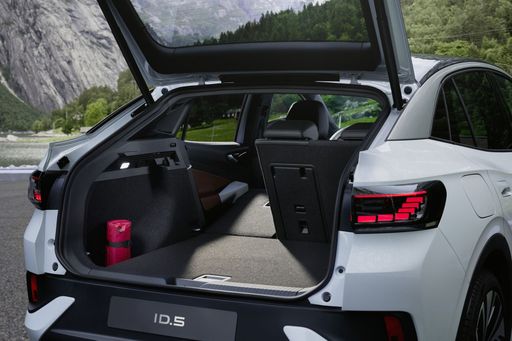
On the other hand, the VW ID.5 boasts a more utilitarian approach with a larger trunk capacity of 549 liters, an advantage for families or those needing extra cargo space. The interior is designed to be user-friendly with a focus on connectivity and tech-savviness, appealing to a more value-driven customer segment.

EQA @ Mercedes-Benz Group Media

Safety and Innovation

Safety features are paramount in both vehicles. The EQA is equipped with the latest driver assistance systems from Mercedes, including adaptive cruise control, lane-keeping assistance, and a pre-collision safety system. This suite of technologies provides peace of mind for drivers and passengers alike.

The ID.5 also comes loaded with advanced safety features, including automatic emergency braking and a sophisticated driver monitoring system, ensuring that safety does not take a backseat in the electric era. VW's innovative ID. software enhances vehicle functionality and provides over-the-air updates, keeping the car at the forefront of technology and safety.

ID.5 @ Volkswagen AG / VW Media

Conclusion: Which SUV is Right for You?

Deciding between the Mercedes EQA and the VW ID.5 ultimately boils down to personal preferences and priorities. If you desire a luxurious experience with advanced technology and performance, the EQA should be your choice. However, if practicality and range are higher on your list, the ID.5 stands out with its impressive range and cargo capacity. Both vehicles represent the promise of electric mobility and are sure to attract attention on the roads.

Here’s where it gets real: The technical differences in detail

EQA @ Mercedes-Benz Group Media

Costs and Efficiency:

Looking at overall running costs, both models reveal some interesting differences in everyday economy.

VW ID.5 has a clearly perceptible advantage in terms of price – it starts at 36800 £, while the Mercedes EQA costs 44200 £. That’s a price difference of around 7406 £.

In terms of energy consumption, the advantage goes to the Mercedes EQA: with 14.40 kWh per 100 km, it’s hardly perceptible more efficient than the VW ID.5 with 15.70 kWh. That’s a difference of about 1.30 kWh.

As for range, the Mercedes EQA performs hardly perceptible better – achieving up to 561 km, about 2 km more than the VW ID.5.

ID.5 @ Volkswagen AG / VW Media

Engine and Performance:

Power, torque and acceleration are the classic benchmarks for car enthusiasts – and here, some clear differences start to show.

When it comes to engine power, the VW ID.5 has a a bit edge – offering 340 HP compared to 292 HP. That’s roughly 48 HP more horsepower.

In acceleration from 0 to 100 km/h, the VW ID.5 is to a small extent quicker – completing the sprint in 5.40 s, while the Mercedes EQA takes 6 s. That’s about 0.60 s faster.

In terms of top speed, the VW ID.5 performs to a small extent better – reaching 180 km/h, while the Mercedes EQA tops out at 160 km/h. The difference is around 20 km/h.

There’s also a difference in torque: VW ID.5 pulls evident stronger with 679 Nm compared to 520 Nm. That’s about 159 Nm difference.

Space and Everyday Use:

Cabin size, boot volume and payload all play a role in everyday practicality. Here, comfort and flexibility make the difference.

Both vehicles offer seating for 5 people.

In curb weight, VW ID.5 is slight lighter – 1963 kg compared to 2045 kg. The difference is around 82 kg.

In terms of boot space, the VW ID.5 offers distinct more room – 549 L compared to 340 L. That’s a difference of about 209 L.

In maximum load capacity, the VW ID.5 performs to a small extent better – up to 1561 L, which is about 241 L more than the Mercedes EQA.

When it comes to payload, VW ID.5 clearly perceptible takes the win – 549 kg compared to 425 kg. That’s a difference of about 124 kg.

Who wins the race?

The VW ID.5 proves to be wins the duel decisively and therefore becomes our DriveDuel Champion!
VW ID.5 is the better all-rounder in this comparison.

from about £36,800
ID.5 @ Volkswagen AG / VW Media

VW ID.5

  • Engine Type : Electric
  • Transmission : Automatic
  • Drive Type : Rear-Wheel Drive, All-Wheel Drive
  • Power HP : 170 - 340 HP
  • Consumption kWh/100km : 15.7 - 16.6 kWh
  • Electric Range : 363 - 559 km

Mercedes EQA

5 (1)
rate

The Mercedes EQA slips into the electric crossover ranks with the brand’s familiar luxury polish, offering a quiet, fuss-free drive that feels perfectly at home in the city or on a country escape. Inside it’s neatly finished and tech-forward, projecting grown-up refinement even if it plays things a bit safe for anyone chasing outright excitement.

details

VW ID.5

VW ID.5 dresses electric power in a sleek, coupe-like profile that turns sensible motoring into something a touch more stylish and smug. Inside it’s spacious and user-friendly, with calm, confidence-inspiring driving that suits buyers who want EV simplicity without the sci‑fi theatrics.

details
Mercedes EQA
VW ID.5
EQA @ Mercedes-Benz Group Media
ID.5 @ Volkswagen AG / VW Media

Costs and Consumption

Price
44200 - 57400 £
Price
36800 - 48400 £
Consumption L/100km
-
Consumption L/100km
-
Consumption kWh/100km
14.4 - 16.9 kWh
Consumption kWh/100km
15.7 - 16.6 kWh
Electric Range
476 - 561 km
Electric Range
363 - 559 km
Battery Capacity
70.50 kWh
Battery Capacity
52 - 79 kWh
co2
0 g/km
co2
0 g/km
Fuel tank capacity
-
Fuel tank capacity
-

Dimensions and Body

Body Type
SUV
Body Type
SUV
Seats
5
Seats
5
Doors
5
Doors
5
Curb weight
2045 - 2115 kg
Curb weight
1963 - 2233 kg
Trunk capacity
340 L
Trunk capacity
549 L
Length
4463 mm
Length
4582 - 4599 mm
Width
1834 mm
Width
1852 mm
Height
1608 - 1613 mm
Height
1601 - 1618 mm
Max trunk capacity
1320 L
Max trunk capacity
1561 L
Payload
425 kg
Payload
517 - 549 kg

Engine and Performance

Engine Type
Electric
Engine Type
Electric
Transmission
Automatic
Transmission
Automatic
Transmission Detail
Reduction Gearbox
Transmission Detail
Reduction Gearbox
Drive Type
Front-Wheel Drive, All-Wheel Drive
Drive Type
Rear-Wheel Drive, All-Wheel Drive
Power HP
190 - 292 HP
Power HP
170 - 340 HP
Acceleration 0-100km/h
6 - 8.6 s
Acceleration 0-100km/h
5.4 - 8.9 s
Max Speed
160 km/h
Max Speed
160 - 180 km/h
Torque
385 - 520 Nm
Torque
310 - 679 Nm
Number of Cylinders
-
Number of Cylinders
-
Power kW
140 - 215 kW
Power kW
125 - 250 kW
Engine capacity
-
Engine capacity
-

General

Model Year
2024 - 2025
Model Year
2024 - 2025
CO2 Efficiency Class
A
CO2 Efficiency Class
A
Brand
Mercedes-Benz
Brand
VW
Is the Mercedes EQA offered with different drivetrains?

Available configurations include Front-Wheel Drive or All-Wheel Drive.

The prices and data displayed are estimates based on German list prices and may vary by country. This information is not legally binding.