VS

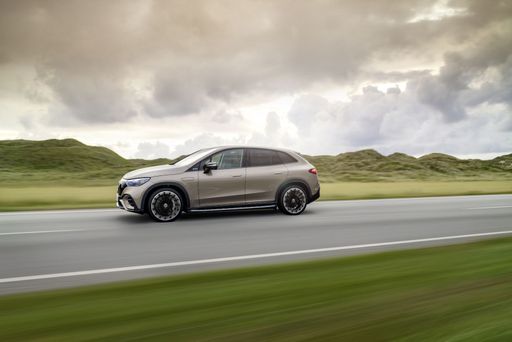
Mercedes EQE SUV vs BMW iX comparison

Compare performance (625 HP vs 659 HP), boot space and price (71,600 £ vs 71,600 £ ) at a glance. Find out which car is the better choice for you – Mercedes EQE SUV or BMW iX?

Mercedes EQE SUV vs BMW iX: Key differences

Mercedes EQE SUV

5 (1 Reviews)
rate
  • marginally cheaper
  • barely quicker 0–100 km/h
  • very slightly lighter
  • only slightly more trunk space

BMW iX

3.9 (1 Reviews)
rate
  • barely more power
  • barely more efficient
  • moderately more electric range

All details on performance, efficiency, range and trunk space can be found in the technical comparison below – including user reviews for both models.

EQE SUV

Electric Showdown: BMW iX vs. Mercedes EQE SUV

As the automotive world races towards an electrified future, two premium SUVs are making waves with their innovative technology and impressive performance: the BMW iX and the Mercedes EQE SUV. Both electric models embody the luxury, functionality, and advanced features expected from their prestigious brands. Let's dive into a detailed comparison of these remarkable vehicles to see how they stack up against each other.
iX

Power and Performance

The BMW iX offers a range of power options, including 326 HP, 523 HP, and a staggering 619 HP, making it an enticing option for performance enthusiasts. On the other hand, the Mercedes EQE SUV presents a diverse lineup with outputs between 245 HP up to a powerful 625 HP. This direct competition in power showcases the intention of each manufacturer to cater to different driving preferences.

Acceleration times further emphasize their performance capabilities. The BMW iX boasts impressive figures, reaching 0-100 km/h in as little as 3.8 seconds, while the EQE SUV closely follows with a competitive 3.7 seconds for its top variant. Both vehicles also offer remarkable top speeds, with the iX reaching up to 250 km/h and the EQE SUV achieving 240 km/h.

EQE SUV

Range and Battery Specifications

When it comes to electric range, the iX also competes fiercely. With variants offering ranges between 426 km to a maximum of 619 km, it presents a viable option for those concerned about range anxiety. Conversely, the EQE SUV holds the upper hand with ranges extending from 451 km up to an impressive 614 km, making it a strong contender in the long-distance driving category.

Battery capacities are slightly in favor of the EQE SUV, featuring options of 90.6 kWh and 96 kWh. Meanwhile, the BMW iX showcases slightly larger battery options at 74.1 kWh and 108.8 kWh. With both manufacturers employing advanced battery technology to enhance efficiency, consumption is noteworthy. The iX's energy consumption ranges from 19.9 kWh/100 km to 22 kWh, while the EQE SUV is slightly more efficient, averaging 18.2 kWh to 23.2 kWh/100 km.

iX

Design and Interior Comfort

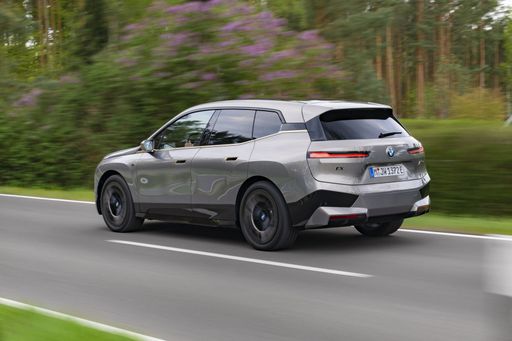
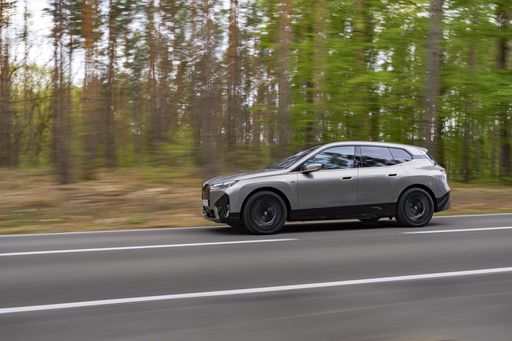
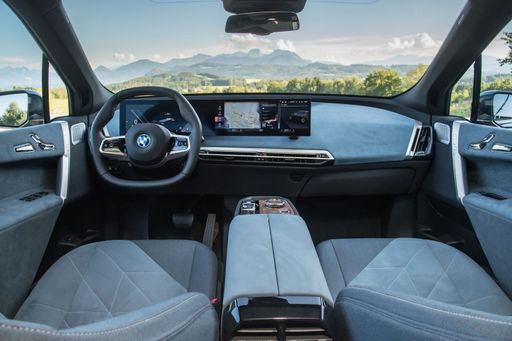
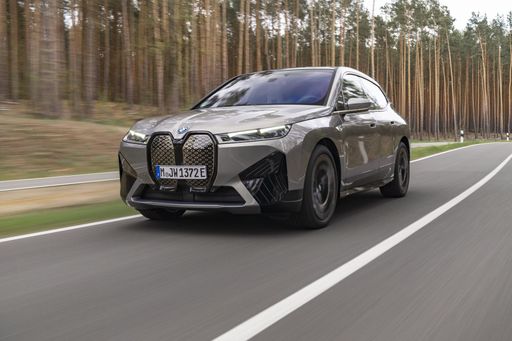
Design plays a pivotal role in attracting buyers to luxury vehicles, and both the BMW iX and the Mercedes EQE SUV do not disappoint. The iX stands at an impressive length of 4,953 mm, width of 1,967 mm, and height of 1,695 mm. It features a striking profile with a distinctive kidney grille and a sleek, modern interior that emphasizes spaciousness and high-tech aesthetics.

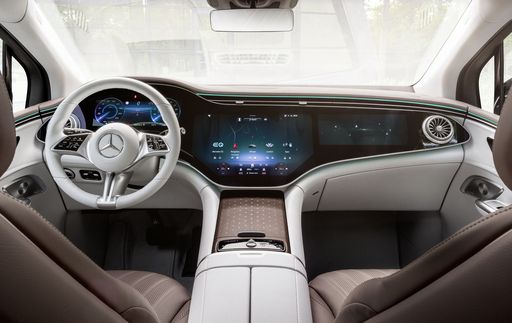
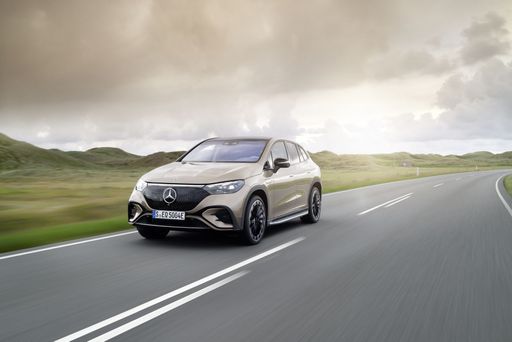
In comparison, the EQE SUV is slightly smaller, with lengths ranging from 4,863 to 4,879 mm, and a width of 1,940 mm. Its design is characterized by smooth lines and a sumptuous interior packed with technology, including the latest MBUX infotainment system that connects seamlessly with the driver.

EQE SUV

Safety and Technology Innovations

Both automakers prioritize safety and groundbreaking technology in their electric offerings. The BMW iX comes equipped with a comprehensive suite of driver assistance systems, including adaptive cruise control, lane-keeping assist, and advanced parking functionalities, all working harmoniously to offer an enhanced driving experience.

Meanwhile, Mercedes-Benz focuses heavily on the electrification experience with its EQE SUV. The vehicle features an advanced array of tech, including augmented reality navigation and over-the-air updates that keep the vehicle's software fresh and modern. The EQE SUV also includes biometric access options, ensuring maximum security.

iX

Conclusion: Which One to Choose?

Both the BMW iX and the Mercedes EQE SUV represent the forefront of modern electric vehicle technology, merging luxury with eco-friendliness. For those seeking dynamic performance and bragging rights regarding speed, the iX is compelling. Conversely, if maximum range and cutting-edge technology are a priority, the EQE SUV will certainly impress.

Ultimately, the choice between these two electric giants will hinge on personal priorities—whether it's performance, range, design, or innovative features. The future of luxury electric SUVs is bright with both these remarkable contenders leading the charge.

Here’s where it gets real: The technical differences in detail

EQE SUV

Costs and Efficiency:

Price and efficiency are key factors when choosing a car – and this is often where the real differences emerge.

Mercedes EQE SUV is marginally cheaper – starting at 71,600 £ , while the BMW iX costs 71,600 £ . That’s a price difference of around 18 £.

In terms of energy consumption, the BMW iX is barely more efficient: consuming 17.8 kWh/100km compared to 18.3 kWh/100km for the Mercedes EQE SUV. That’s a difference of about 0.5 kWh/100km.

As for electric range, the BMW iX offers moderately more range – reaching up to 701 km, about 90 km more than the Mercedes EQE SUV.

iX

Engine and Performance:

Under the bonnet, it becomes clear which model is tuned for sportiness and which one takes the lead when you hit the accelerator.

When it comes to engine power, the BMW iX offers barely more power – delivering 659 HP compared to 625 HP. That’s roughly 34 HP more horsepower.

When accelerating from 0 to 100 km/h, the Mercedes EQE SUV is barely quicker – completing the sprint in 3.7 s, while the BMW iX takes 3.8 s. That’s about 0.1 s quicker.

There’s also a difference in torque: the BMW iX delivers only slightly more torque with 1,015 Nm compared to 950 Nm. That’s about 65 Nm more.

EQE SUV

Space and Everyday Use:

Whether family car or daily driver – which one offers more room, flexibility and comfort?

Both vehicles offer seating for 5 people.

In terms of curb weight, Mercedes EQE SUV is very slightly lighter – 2,440 kg compared to 2,525 kg. The difference is around 85 kg.

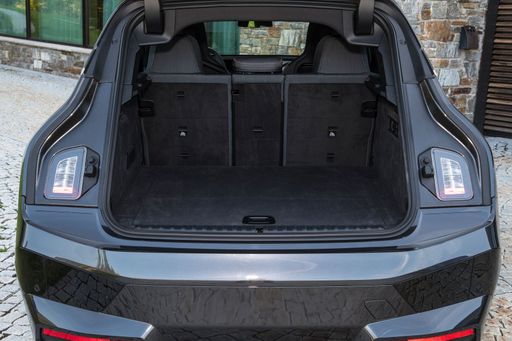
Looking at boot space, the Mercedes EQE SUV offers only slightly more boot space – 520 L compared to 500 L. That’s a difference of about 20 L.

When it comes to payload, the Mercedes EQE SUV carries barely more – 580 kg compared to 575 kg. That’s a difference of about 5 kg.

Who wins the race in the data check?

The BMW iX has the upper hand in the objective data comparison.
This result only shows which model scores more points on paper – not which of the two cars feels right for you.

from £71,600
iX

BMW iX

  • Engine Type : Electric
  • Transmission : Automatic
  • Drive Type : All-Wheel Drive
  • Power HP : 408 - 659 HP
  • Consumption kWh/100km : 17.8 - 20.6 kWh/100km
  • Electric Range : 600 - 701 km
Mercedes EQE SUV
BMW iX

Costs and Consumption

View detailed analysis

Engine and Performance

View detailed analysis

Dimensions and Body

View detailed analysis

Mercedes EQE SUV

The Mercedes EQE SUV wraps silent electric power in a sumptuous, tech-filled shell, offering a cocoon-like cabin that makes long journeys feel indulgent. It’s not a driver's toy but a sophisticated cruiser for buyers who want luxury, space and futuristic gadgetry without shouting for attention.

details

BMW iX

The BMW iX arrives like a tech-rich luxury SUV that refuses to shout, offering a serene yet authoritative road presence that suits both city commutes and long-distance cruising. Inside, its minimalist cabin wraps high-quality materials and clever interfaces around a driver-focused layout, making it feel more like a forward-thinking lounge than just another electric appliance — and yes, it still delivers the dynamic driving character you'd expect from a BMW.

details
Mercedes EQE SUV
BMW iX

Costs and Consumption

Price
71,600 - 125,100 £
Price
71,600 - 108,400 £
Consumption L/100km
-
Consumption L/100km
-
Consumption kWh/100km
18.3 - 23.1 kWh/100km
Consumption kWh/100km
17.8 - 20.6 kWh/100km
Electric Range
453 - 611 km
Electric Range
600 - 701 km
Battery Capacity
90.5 - 96 kWh
Battery Capacity
-
co2
0 g/km
co2
0 g/km
Fuel tank capacity
-
Fuel tank capacity
-

Dimensions and Body

Body Type
SUV
Body Type
SUV
Seats
5
Seats
5
Doors
4
Doors
-
Curb weight
2,440 - 2,615 kg
Curb weight
2,525 - 2,655 kg
Trunk capacity
520 L
Trunk capacity
500 L
Length
4,863 - 4,879 mm
Length
-
Width
1,940 mm
Width
1,970 mm
Height
1,672 - 1,685 mm
Height
-
Max trunk capacity
1,675 L
Max trunk capacity
-
Payload
505 - 580 kg
Payload
505 - 575 kg

Engine and Performance

Engine Type
Electric
Engine Type
Electric
Transmission
Automatic
Transmission
Automatic
Transmission Detail
Reduction Gearbox
Transmission Detail
Reduction Gearbox
Drive Type
All-Wheel Drive, Rear-Wheel Drive
Drive Type
All-Wheel Drive
Power HP
265 - 625 HP
Power HP
408 - 659 HP
Acceleration 0-100km/h
3.7 - 7.1 s
Acceleration 0-100km/h
3.8 - 5.1 s
Max Speed
210 - 240 km/h
Max Speed
-
Torque
550 - 950 Nm
Torque
700 - 1,015 Nm
Number of Cylinders
-
Number of Cylinders
-
Power kW
195 - 460 kW
Power kW
300 - 485 kW
Engine capacity
-
Engine capacity
-

General

Model Year
2,023 - 2,025
Model Year
2,025
CO2 Efficiency Class
A
CO2 Efficiency Class
A
Brand
Mercedes-Benz
Brand
BMW
DriveDuel uses data analysis and artificial intelligence to evaluate vehicle data and create content. Content is regularly reviewed and improved. The displayed prices are estimates based on German list prices, adjusted to the respective country’s VAT. Country-specific registration taxes are not included. This information is not legally binding.