
 Deutschland
 France
 Nederland
 Great Britain
 Sverige
 Danmark
 Suomi
Suomi Italia
 Polska
 Česko
Česko España
VS
Mercedes EQE SUV vs Fiat Panda comparison
Compare performance (625 HP vs 70 HP), boot space and price (71,600 £ vs 14,100 £ ) at a glance. Find out which car is the better choice for you – Mercedes EQE SUV or Fiat Panda?
Mercedes EQE SUV vs Fiat Panda: Key differences
EQE SUV
Costs and Efficiency:
When it comes to price and running costs, the biggest differences usually appear. This is often where you see which car fits your budget better in the long run.
Fiat Panda is considerably cheaper – starting at 14,100 £ , while the Mercedes EQE SUV costs 71,600 £ . That’s a price difference of around 57,419 £.
Panda
Engine and Performance:
Under the bonnet, it becomes clear which model is tuned for sportiness and which one takes the lead when you hit the accelerator.
When it comes to engine power, the Mercedes EQE SUV offers considerably more power – delivering 625 HP compared to 70 HP. That’s roughly 555 HP more horsepower.
When accelerating from 0 to 100 km/h, the Mercedes EQE SUV is substantially quicker – completing the sprint in 3.7 s, while the Fiat Panda takes 13.9 s. That’s about 10.2 s quicker.
Looking at top speed, the Mercedes EQE SUV is markedly faster – reaching 240 km/h, while the Fiat Panda tops out at 164 km/h. The difference is around 76 km/h.
There’s also a difference in torque: the Mercedes EQE SUV delivers substantially more torque with 950 Nm compared to 92 Nm. That’s about 858 Nm more.
EQE SUV
Space and Everyday Use:
Whether family car or daily driver – which one offers more room, flexibility and comfort?
Seats: Mercedes EQE SUV offers more seats – 5 vs 4.
In terms of curb weight, Fiat Panda is substantially lighter – 1,055 kg compared to 2,440 kg. The difference is around 1,385 kg.
Looking at boot space, the Mercedes EQE SUV offers considerably more boot space – 520 L compared to 225 L. That’s a difference of about 295 L.
For maximum load capacity, the Mercedes EQE SUV offers considerably more capacity – up to 1,675 L, about 805 L more than the Fiat Panda.
When it comes to payload, the Mercedes EQE SUV carries markedly more – 580 kg compared to 365 kg. That’s a difference of about 215 kg.
Who wins the race in the data check?
The Mercedes EQE SUV stands well ahead of its rival in the objective data comparison.
This result only shows which model scores more points on paper – not which of the two cars feels right for you.
from £71,600
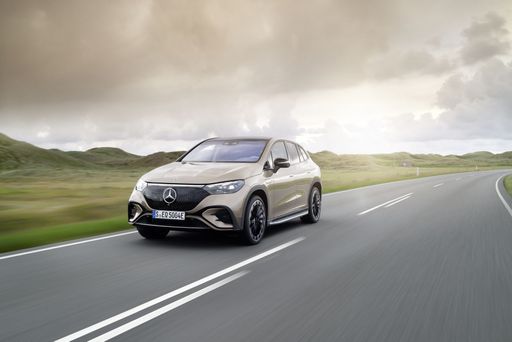
Mercedes EQE SUV
Mercedes EQE SUV
Fiat Panda
Costs and Consumption
View detailed analysis
View detailed analysis
Engine and Performance
View detailed analysis
View detailed analysis
Dimensions and Body
View detailed analysis
View detailed analysis
Mercedes EQE SUV
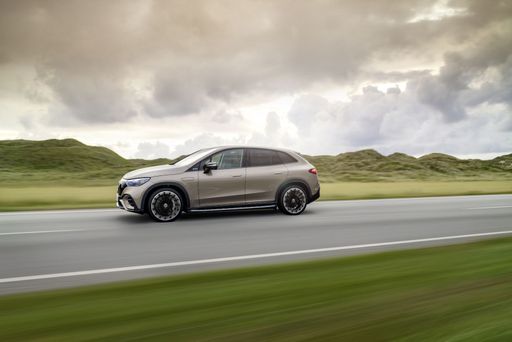
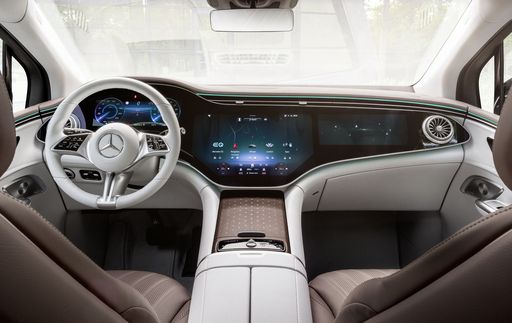
The Mercedes EQE SUV wraps silent electric power in a sumptuous, tech-filled shell, offering a cocoon-like cabin that makes long journeys feel indulgent. It’s not a driver's toy but a sophisticated cruiser for buyers who want luxury, space and futuristic gadgetry without shouting for attention.
details

Fiat Panda
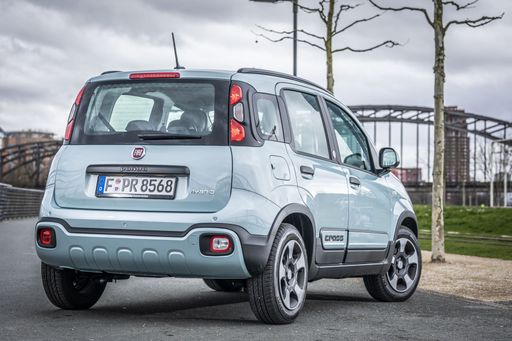
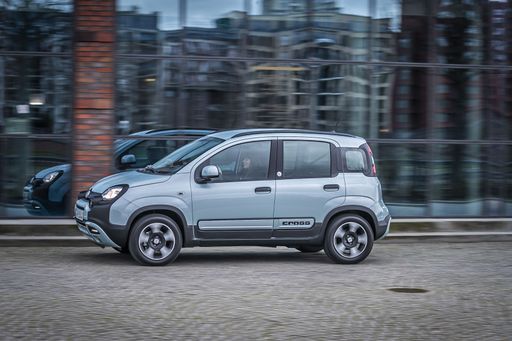
The Panda is a charming, no-nonsense city companion that mixes cheerful Italian flair with genuinely useful practicality, making tight streets and daily errands feel less of a chore. Its honest simplicity, clever packaging and a dash of cheeky character make it a smart, low-stress buy for people who prefer sensible perks over showroom flash.
details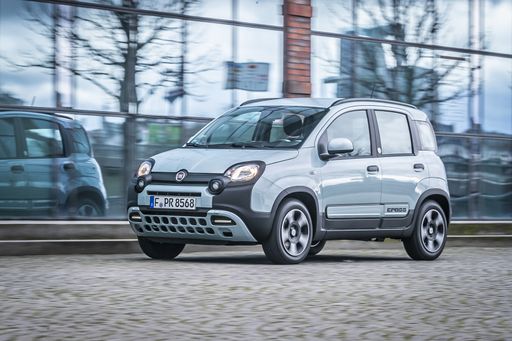
Mercedes EQE SUV
Fiat Panda
Costs and Consumption |
|
|---|---|
|
Price
71,600 - 125,100 £
|
Price
14,100 £
|
|
Consumption L/100km
-
|
Consumption L/100km
5 L/100km
|
|
Consumption kWh/100km
18.3 - 23.1 kWh/100km
|
Consumption kWh/100km
-
|
|
Electric Range
453 - 611 km
|
Electric Range
-
|
|
Battery Capacity
90.5 - 96 kWh
|
Battery Capacity
-
|
|
co2
0 g/km
|
co2
113 g/km
|
|
Fuel tank capacity
-
|
Fuel tank capacity
38 L
|
Dimensions and Body |
|
|---|---|
|
Body Type
SUV
|
Body Type
Hatchback
|
|
Seats
5
|
Seats
4
|
|
Doors
4
|
Doors
5
|
|
Curb weight
2,440 - 2,615 kg
|
Curb weight
1,055 kg
|
|
Trunk capacity
520 L
|
Trunk capacity
225 L
|
|
Length
4,863 - 4,879 mm
|
Length
3,635 mm
|
|
Width
1,940 mm
|
Width
1,643 mm
|
|
Height
1,672 - 1,685 mm
|
Height
1,551 mm
|
|
Max trunk capacity
1,675 L
|
Max trunk capacity
870 L
|
|
Payload
505 - 580 kg
|
Payload
365 kg
|
Engine and Performance |
|
|---|---|
|
Engine Type
Electric
|
Engine Type
Petrol MHEV
|
|
Transmission
Automatic
|
Transmission
Manuel
|
|
Transmission Detail
Reduction Gearbox
|
Transmission Detail
Manual Gearbox
|
|
Drive Type
All-Wheel Drive, Rear-Wheel Drive
|
Drive Type
Front-Wheel Drive
|
|
Power HP
265 - 625 HP
|
Power HP
70 HP
|
|
Acceleration 0-100km/h
3.7 - 7.1 s
|
Acceleration 0-100km/h
13.9 s
|
|
Max Speed
210 - 240 km/h
|
Max Speed
164 km/h
|
|
Torque
550 - 950 Nm
|
Torque
92 Nm
|
|
Number of Cylinders
-
|
Number of Cylinders
3
|
|
Power kW
195 - 460 kW
|
Power kW
51 kW
|
|
Engine capacity
-
|
Engine capacity
999 cm3
|
General |
|
|---|---|
|
Model Year
2,023 - 2,025
|
Model Year
2024
|
|
CO2 Efficiency Class
A
|
CO2 Efficiency Class
C
|
|
Brand
Mercedes-Benz
|
Brand
Fiat
|
DriveDuel uses data analysis and artificial intelligence to evaluate vehicle data and create content. Content is regularly reviewed and improved.
The displayed prices are estimates based on German list prices, adjusted to the respective country’s VAT. Country-specific registration taxes are not included. This information is not legally binding.