VS

Mercedes EQE vs VW ID.7 Touring comparison

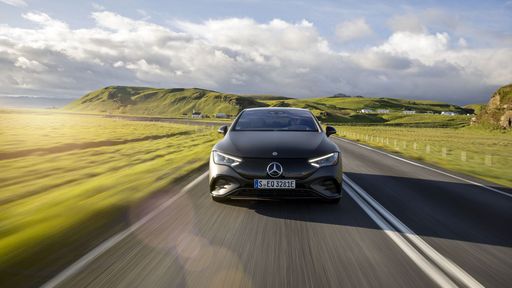
Compare performance (625 HP vs 340 HP), boot space and price (57,600 £ vs 47,100 £ ) at a glance. Find out which car is the better choice for you – Mercedes EQE or VW ID.7 Touring?

Mercedes EQE vs VW ID.7 Touring: Key differences

Mercedes EQE

4.5 (4 Reviews)
rate
  • significantly more power
  • very slightly more electric range
  • considerably quicker 0–100 km/h
details

VW ID.7 Touring

5 (2 Reviews)
rate
  • clearly cheaper
  • somewhat more efficient
  • barely lighter
  • clearly more trunk space
details

All details on performance, efficiency, range and trunk space can be found in the technical comparison below – including user reviews for both models.

By Achim Sedelmaier

EQE

An In-Depth Comparison: Mercedes EQE vs. VW ID.7 Touring

The electric vehicle (EV) market is evolving rapidly, with manufacturers striving to offer innovative solutions for eco-conscious drivers. Two significant contenders in the mid-size EV segment are the Mercedes EQE and the VW ID.7 Touring. Each vehicle presents a unique approach to electric mobility, catering to different needs and preferences.
ID.7 Touring

Performance and Powertrains

Starting with the heart of the matter, both the Mercedes EQE and the VW ID.7 Touring offer impressive performance through their electric powertrains. The Mercedes EQE provides a range of power output options, from 245 HP in the base model up to a whopping 625 HP in the top-tier variant. Its torque can reach up to 950 Nm, enabling quick acceleration with a 0-100 km/h time as low as 3.5 seconds in the most powerful version.

On the other hand, the VW ID.7 Touring presents slightly less intimidating figures, with power options up to 340 HP and a maximum torque of 679 Nm. Despite these limits, the ID.7 boasts a respectable 0-100 km/h acceleration in 5.5 seconds, making it an exciting option for drivers.

EQE

Electric Range and Efficiency

Range anxiety is a key concern for many potential EV buyers, but both models excel in this department. The Mercedes EQE offers an electric range between 502 km to an impressive 690 km, depending on the configuration. This is primarily due to its considerable battery capacity, which ranges from 89 kWh to 90.5 kWh.

In comparison, the VW ID.7 Touring also performs well, achieving a range up to 690 km with its larger 86 kWh battery pack. The ID.7 Touring's energy consumption stands out as well, operating at an efficient 14 kWh/100 km in specific configurations, which is commendable in the EV segment.

ID.7 Touring

Dimensions and Utility

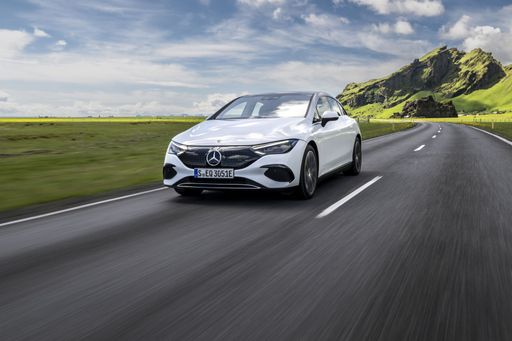
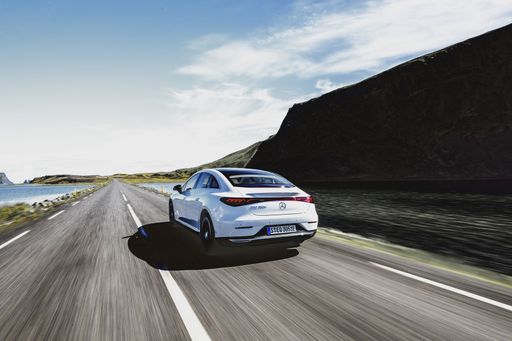
When it comes to size, both vehicles are designed to offer a spacious interior for families and individuals alike. The Mercedes EQE measures 4,946 mm in length with a width of 1,961 mm and a height of 1,510 mm, offering a premium feel typical of the brand. It has a trunk capacity of 430 liters, which is suitable for everyday use.

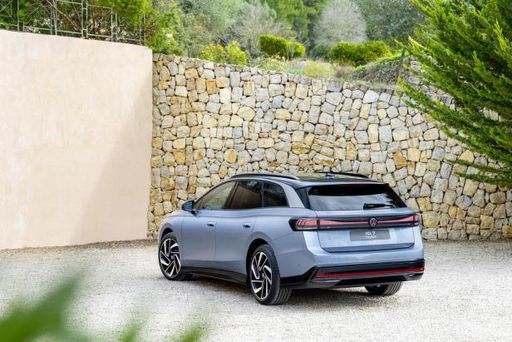
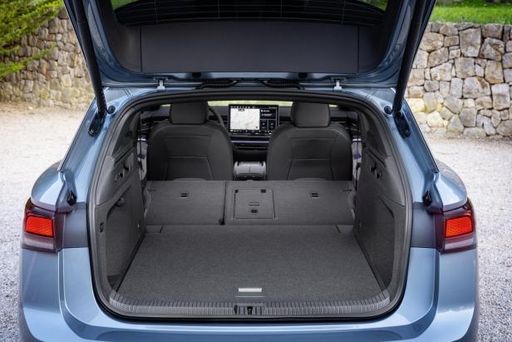
The VW ID.7 Touring, as a wagon, takes practicality a step further. It measures at 4,961 mm in length, 1,862 mm in width, and a height of 1,551 mm, providing slightly more space. Its trunk capacity stands out at 605 liters, making it ideal for those who require extra storage for longer trips or family outings.

EQE

Innovative Features and Technology

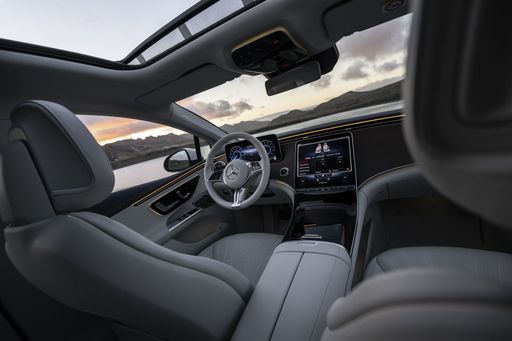
Both the Mercedes EQE and VW ID.7 Touring are packed with cutting-edge technology and features designed to enhance the driving experience. The EQE comes equipped with the MBUX infotainment system, offering a large touchscreen interface, augmented reality navigation, and sophisticated voice controls. Additionally, the EQE offers various driver assistance features, such as Adaptive Cruise Control and an advanced lane-keeping system.

In contrast, the VW ID.7 Touring features the latest version of VW’s ID. Digital cockpit, which delivers essential driving information seamlessly. It also includes a comprehensive suite of safety features, including Emergency Assist and Travel Assist functionalities. The emphasis on connectivity and user-friendly interfaces goes hand in hand in both vehicles, ensuring drivers remain informed without distraction.

ID.7 Touring

Conclusion: Which EV Reigns Supreme?

Ultimately, choosing between the Mercedes EQE and VW ID.7 Touring depends on personal preferences and driving needs. The EQE offers performance and luxury, solidifying its place as a leader in the EV segment for those who prioritize power and high-end features. Conversely, the ID.7 Touring appeals to families seeking roominess and efficiency, all while delivering a solid electric driving experience.

Both vehicles represent the forward momentum in electric mobility, showcasing innovative technology, efficiency, and performance. As the market continues to grow, it will be interesting to see how these models evolve and how competitors rise to meet the challenges each brings to the table.

Here’s where it gets real: The technical differences in detail

EQE

Costs and Efficiency:

When it comes to price and running costs, the biggest differences usually appear. This is often where you see which car fits your budget better in the long run.

VW ID.7 Touring is clearly cheaper – starting at 47,100 £ , while the Mercedes EQE costs 57,600 £ . That’s a price difference of around 10,527 £.

In terms of energy consumption, the VW ID.7 Touring is somewhat more efficient: consuming 14 kWh/100km compared to 15.8 kWh/100km for the Mercedes EQE. That’s a difference of about 1.8 kWh/100km.

As for electric range, the Mercedes EQE offers very slightly more range – reaching up to 691 km, about 2 km more than the VW ID.7 Touring.

ID.7 Touring

Engine and Performance:

Power, torque and acceleration are the classic benchmarks for car enthusiasts – and here, some clear differences start to show.

When it comes to engine power, the Mercedes EQE offers significantly more power – delivering 625 HP compared to 340 HP. That’s roughly 285 HP more horsepower.

When accelerating from 0 to 100 km/h, the Mercedes EQE is considerably quicker – completing the sprint in 3.5 s, while the VW ID.7 Touring takes 5.5 s. That’s about 2 s quicker.

Looking at top speed, the Mercedes EQE is slightly faster – reaching 220 km/h, while the VW ID.7 Touring tops out at 180 km/h. The difference is around 40 km/h.

There’s also a difference in torque: the Mercedes EQE delivers markedly more torque with 950 Nm compared to 679 Nm. That’s about 271 Nm more.

EQE

Space and Everyday Use:

Cabin size, boot volume and payload all play a role in everyday practicality. Here, comfort and flexibility make the difference.

Both vehicles offer seating for 5 people.

In terms of curb weight, VW ID.7 Touring is barely lighter – 2,191 kg compared to 2,375 kg. The difference is around 184 kg.

Looking at boot space, the VW ID.7 Touring offers clearly more boot space – 605 L compared to 430 L. That’s a difference of about 175 L.

When it comes to payload, the Mercedes EQE carries clearly more – 600 kg compared to 465 kg. That’s a difference of about 135 kg.

Who wins the race in the data check?

The Mercedes EQE is decisively ahead in the objective data comparison.
This result only shows which model scores more points on paper – not which of the two cars feels right for you.

from £57,600
EQE

Mercedes EQE

  • Engine Type : Electric
  • Transmission : Automatic
  • Drive Type : All-Wheel Drive, Rear-Wheel Drive
  • Power HP : 265 - 625 HP
  • Consumption kWh/100km : 15.8 - 20.7 kWh/100km
  • Electric Range : 502 - 691 km
Mercedes EQE
VW ID.7 Touring

Costs and Consumption

View detailed analysis

Engine and Performance

View detailed analysis

Dimensions and Body

View detailed analysis

Mercedes EQE

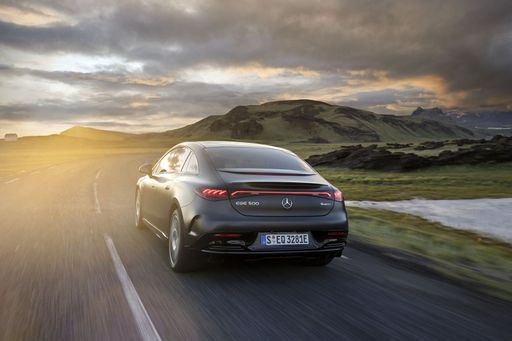
The Mercedes EQE glides like a silk-wrapped saloon from the future, pairing whisper-quiet refinement with a high-tech cabin that feels both modern and indulgent. For buyers who want electric luxury without shouting about it, the EQE is composed, comfortably confident, and just smug enough to feel special.

details

VW ID.7 Touring

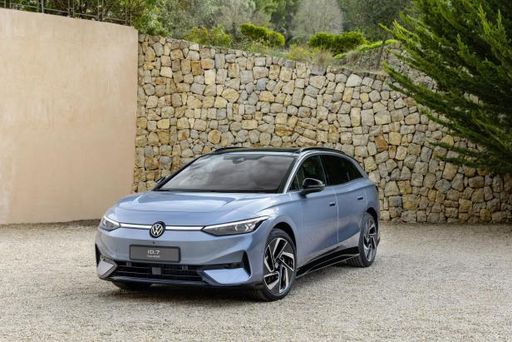
The VW ID.7 Touring blends sleek, aerodynamic fastback looks with estate practicality, delivering an electric family car that looks grown-up and feels refined. Inside it's calm and spacious with clever storage and modern tech, swallowing suitcases and weekend plans with ease — a sensible, slightly flashy choice for buyers who want electric comfort without giving up practicality.

details
Mercedes EQE
VW ID.7 Touring

Costs and Consumption

Price
57,600 - 94,900 £
Price
47,100 - 54,900 £
Consumption L/100km
-
Consumption L/100km
-
Consumption kWh/100km
15.8 - 20.7 kWh/100km
Consumption kWh/100km
14 - 16.6 kWh/100km
Electric Range
502 - 691 km
Electric Range
584 - 689 km
Battery Capacity
90.5 - 96 kWh
Battery Capacity
77 - 86 kWh
co2
0 g/km
co2
0 g/km
Fuel tank capacity
-
Fuel tank capacity
-

Dimensions and Body

Body Type
Sedan
Body Type
Estate
Seats
5
Seats
5
Doors
4
Doors
5
Curb weight
2,375 - 2,540 kg
Curb weight
2,191 - 2,336 kg
Trunk capacity
430 L
Trunk capacity
605 L
Length
4,946 - 4,964 mm
Length
4,961 mm
Width
1,961 mm
Width
1,862 mm
Height
1,492 - 1,510 mm
Height
1,549 - 1,551 mm
Max trunk capacity
-
Max trunk capacity
1,714 L
Payload
545 - 600 kg
Payload
459 - 465 kg

Engine and Performance

Engine Type
Electric
Engine Type
Electric
Transmission
Automatic
Transmission
Automatic
Transmission Detail
Reduction Gearbox
Transmission Detail
Reduction Gearbox
Drive Type
All-Wheel Drive, Rear-Wheel Drive
Drive Type
Rear-Wheel Drive, All-Wheel Drive
Power HP
265 - 625 HP
Power HP
286 - 340 HP
Acceleration 0-100km/h
3.5 - 6.9 s
Acceleration 0-100km/h
5.5 - 6.7 s
Max Speed
210 - 220 km/h
Max Speed
180 km/h
Torque
550 - 950 Nm
Torque
545 - 679 Nm
Number of Cylinders
-
Number of Cylinders
-
Power kW
195 - 460 kW
Power kW
210 - 250 kW
Engine capacity
-
Engine capacity
-

General

Model Year
2,024 - 2,025
Model Year
2024
CO2 Efficiency Class
A
CO2 Efficiency Class
A
Brand
Mercedes-Benz
Brand
VW
DriveDuel uses data analysis and artificial intelligence to evaluate vehicle data and create content. Content is regularly reviewed and improved. The displayed prices are estimates based on German list prices, adjusted to the respective country’s VAT. Country-specific registration taxes are not included. This information is not legally binding.