VS

Mercedes GLA vs Hyundai Tucson comparison

Compare performance (421 HP vs 288 HP), boot space and price (38,800 £ vs 31,300 £ ) at a glance. Find out which car is the better choice for you – Mercedes GLA or Hyundai Tucson?

Mercedes GLA vs Hyundai Tucson: Key differences

Mercedes GLA

4.5 (4 Reviews)
rate
  • visibly more power
  • marginally more electric range
  • significantly quicker 0–100 km/h
details

Hyundai Tucson

4.8 (6 Reviews)
rate
  • markedly cheaper
  • marginally more efficient
  • marginally lighter
  • visibly more trunk space
details

All details on performance, efficiency, range and trunk space can be found in the technical comparison below – including user reviews for both models.

By Achim Sedelmaier

GLA

A Clash of Trends: Hyundai Tucson vs. Mercedes GLA

In the world of compact SUVs, few nameplates draw as much attention as the Hyundai Tucson and the Mercedes GLA. Both vehicles offer impressive specifications and unique features, but they cater to different audiences. In this comparison, we will explore the technical aspects and innovations of these two models, helping you decide which may be the right fit for your lifestyle.
Tucson

Powertrain Options and Performance

The heart of any vehicle lies in its powertrain, and both the Tucson and GLA deliver with a range of engine options tailored to diverse driving preferences. The Hyundai Tucson offers a variety of engine types, including Diesel MHEV, Petrol MHEV, Full Hybrid, and Plug-in Hybrid configurations. Power output ranges from 136 to a formidable 252 HP, with torque values peaking at 367 Nm. Acceleration from 0-100 km/h varies, with the quickest variant completing the sprint in just 7.9 seconds.

On the other hand, the Mercedes GLA touts a selection of petrol and diesel engines that generate between 116 and 421 HP. Its performance-oriented models, like the GLA 45 S, reach 0-100 km/h in an exhilarating 4.3 seconds. The torque for GLA models varies, peaking at an impressive 500 Nm for the higher performance trims, giving it a sporty edge that enthusiasts may appreciate.

GLA

Fuel Efficiency and Eco-friendliness

When it comes to fuel consumption, the Tucson is engineered for efficiency, with some variants achieving as low as 5.1 L/100 km. Furthermore, its plug-in hybrid models offer an electric range of up to 70 km, making it a suitable option for urban commuting. The emissions for Tucson range from 126 to 153 g/km, placing it in a competitive category for eco-conscious buyers.

In comparison, the Mercedes GLA offers petrol models with a consumption rate starting from 5.4 L/100 km and plug-in hybrids that can deliver an electric-only range of 70 km as well. However, emissions for the GLA can peak at 216 g/km, which may deter some eco-conscious consumers. Still, the GLA's performance-focused variants will appeal to those who seek thrills over efficiency.

Tucson

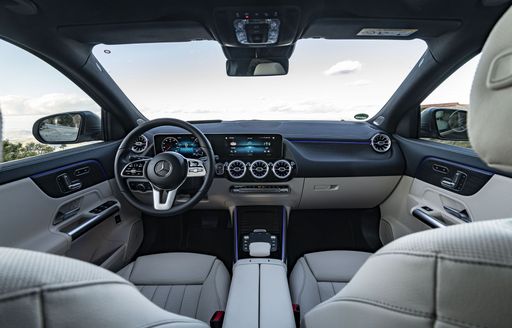
Interior Comfort and Technology

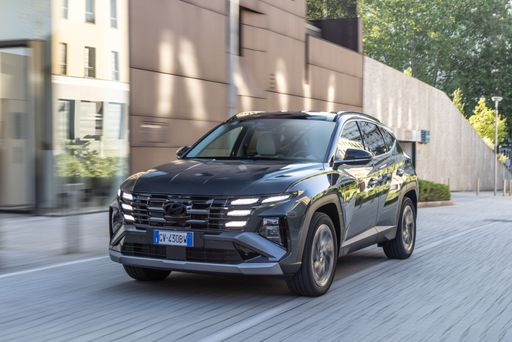
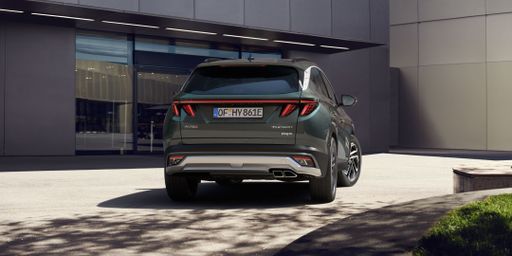
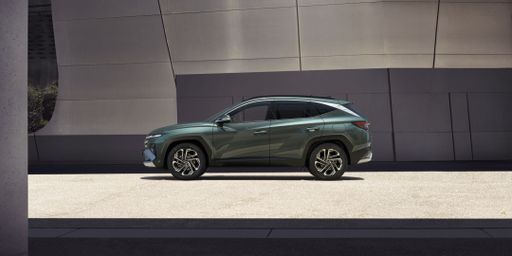
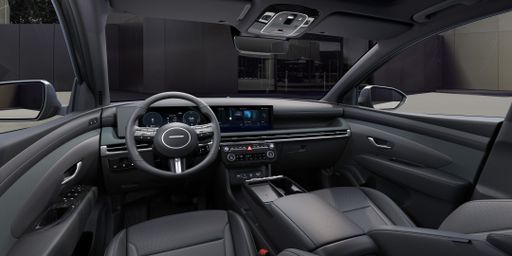
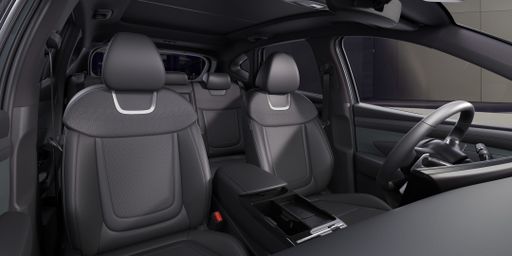
Both vehicles have distinct characteristics in terms of interior design and technology. The Hyundai Tucson boasts a spacious cabin with generous trunk capacity, ranging from 546 to 620 liters, ideal for families and adventure seekers alike. The interior is equipped with modern tech features, including an intuitive infotainment system and advanced safety options.

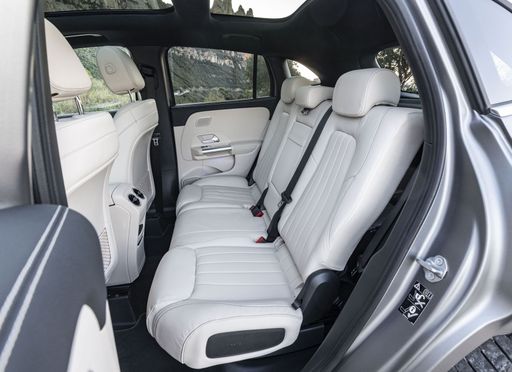
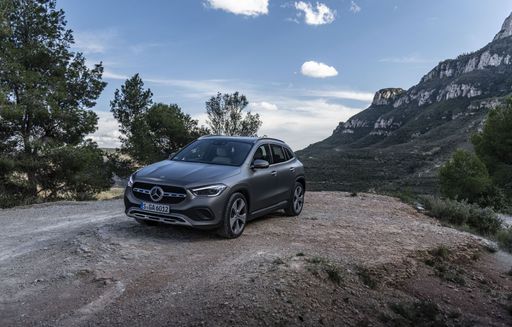
Conversely, the Mercedes GLA exudes luxury with its premium materials and advanced digital displays. Its trunk capacity, while smaller at 385 to 435 liters, still offers adequate space for daily needs. The GLA is equipped with Mercedes' MBUX infotainment system, which features voice recognition and sophisticated navigation, adding a layer of convenience and sophistication.

GLA

Driving Experience and Handling

Driving dynamics can significantly influence a buyer's decision. The Hyundai Tucson's front and all-wheel drive configurations ensure a comfortable ride suited to various terrains, with responsive handling that makes city driving a breeze.

The Mercedes GLA, however, takes the driving experience up a notch with its sport-tuned suspension and agile handling. Its all-wheel-drive systems enhance grip and stability, making it a more engaging option for those who enjoy spirited driving on winding roads.

Tucson

Conclusion: Which One to Choose?

Ultimately, the choice between the Hyundai Tucson and the Mercedes GLA hinges on what you're looking for in a compact SUV. If you prioritize versatility, fuel efficiency, and space, the Tucson may be the better choice. However, for those seeking luxury, superior performance, and advanced technology, the GLA would likely fit the bill. Both vehicles showcase their respective brands' commitment to innovation and quality; it’s just a matter of which fits your lifestyle best.

Here’s where it gets real: The technical differences in detail

GLA

Costs and Efficiency:

Price and efficiency are key factors when choosing a car – and this is often where the real differences emerge.

Hyundai Tucson is markedly cheaper – starting at 31,300 £ , while the Mercedes GLA costs 38,800 £ . That’s a price difference of around 7,559 £.

Fuel consumption also shows a difference: the Hyundai Tucson uses 2.7 L/100km and is marginally more efficient than the Mercedes GLA with 2.9 L/100km. The difference is about 0.2 L/100km.

As for electric range, the Mercedes GLA offers marginally more range – reaching up to 74 km, about 4 km more than the Hyundai Tucson.

Tucson

Engine and Performance:

Power, torque and acceleration say a lot about how a car feels on the road. This is where you see which model delivers more driving dynamics.

When it comes to engine power, the Mercedes GLA offers visibly more power – delivering 421 HP compared to 288 HP. That’s roughly 133 HP more horsepower.

When accelerating from 0 to 100 km/h, the Mercedes GLA is significantly quicker – completing the sprint in 4.3 s, while the Hyundai Tucson takes 7.5 s. That’s about 3.2 s quicker.

There’s also a difference in torque: the Mercedes GLA delivers noticeably more torque with 500 Nm compared to 379 Nm. That’s about 121 Nm more.

GLA

Space and Everyday Use:

Cabin size, boot volume and payload all play a role in everyday practicality. Here, comfort and flexibility make the difference.

Both vehicles offer seating for 5 people.

In terms of curb weight, Hyundai Tucson is marginally lighter – 1,542 kg compared to 1,570 kg. The difference is around 28 kg.

Looking at boot space, the Hyundai Tucson offers visibly more boot space – 620 L compared to 435 L. That’s a difference of about 185 L.

When it comes to payload, the Hyundai Tucson carries marginally more – 545 kg compared to 500 kg. That’s a difference of about 45 kg.

Who wins the race in the data check?

The Mercedes GLA is decisively ahead in the objective data comparison.
This result only shows which model scores more points on paper – not which of the two cars feels right for you.

from £38,800
GLA

Mercedes GLA

  • Engine Type Petrol MHEV, Plugin Hybrid, Diesel, Petrol
  • Transmission Automatic
  • Drive Type Front-Wheel Drive, All-Wheel Drive
  • Power HP 116 - 421 HP
  • Consumption L/100km 2.9 - 9.5 L/100km
  • Electric Range 74 km
Mercedes GLA
Hyundai Tucson

Costs and Consumption

View detailed analysis

Engine and Performance

View detailed analysis

Dimensions and Body

View detailed analysis

Mercedes GLA

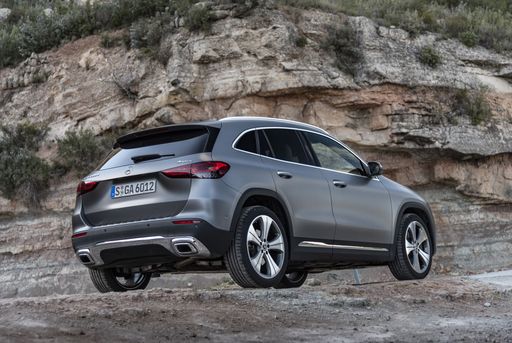
The Mercedes GLA is a compact luxury crossover that brings Mercedes-Benz's refined design and premium cabin materials into a practical, city-friendly package. It combines comfortable ride quality and intuitive tech with poised handling, making it a confident choice for everyday driving and longer journeys.

details

Hyundai Tucson

The Hyundai Tucson is a well-rounded compact SUV that blends modern styling with a comfortable, thoughtfully laid-out interior, making it appealing for daily driving and family use. It delivers a calm ride, a generous level of equipment for the price, and sensible practicality, so it's a smart choice if you want a straightforward, dependable crossover without fuss.

details
Mercedes GLA
Hyundai Tucson

Costs and Consumption

Price
38,800 - 75,300 £
Price
31,300 - 48,800 £
Consumption L/100km
2.9 - 9.5 L/100km
Consumption L/100km
2.7 - 7.6 L/100km
Consumption kWh/100km
-
Consumption kWh/100km
-
Electric Range
74 km
Electric Range
63 - 70 km
Battery Capacity
-
Battery Capacity
-
co2
66 - 216 g/km
co2
62 - 172 g/km
Fuel tank capacity
-
Fuel tank capacity
-

Dimensions and Body

Body Type
SUV
Body Type
SUV
Seats
5
Seats
5
Doors
-
Doors
-
Curb weight
1,570 - 1,810 kg
Curb weight
1,542 - 1,893 kg
Trunk capacity
385 - 435 L
Trunk capacity
546 - 620 L
Length
-
Length
-
Width
1,834 - 1,849 mm
Width
1,865 mm
Height
-
Height
-
Max trunk capacity
-
Max trunk capacity
-
Payload
480 - 500 kg
Payload
518 - 545 kg

Engine and Performance

Engine Type
Petrol MHEV, Plugin Hybrid, Diesel, Petrol
Engine Type
Petrol, Full Hybrid, Plugin Hybrid, Diesel MHEV
Transmission
Automatic
Transmission
Manuel, Automatic
Transmission Detail
Dual-Clutch Automatic
Transmission Detail
Manual Gearbox, Dual-Clutch Automatic, Automatic Gearbox
Drive Type
Front-Wheel Drive, All-Wheel Drive
Drive Type
Front-Wheel Drive, All-Wheel Drive
Power HP
116 - 421 HP
Power HP
136 - 288 HP
Acceleration 0-100km/h
4.3 - 11 s
Acceleration 0-100km/h
7.5 - 11.6 s
Max Speed
-
Max Speed
-
Torque
230 - 500 Nm
Torque
250 - 379 Nm
Number of Cylinders
4
Number of Cylinders
4
Power kW
85 - 310 kW
Power kW
100 - 212 kW
Engine capacity
1,332 - 1,991 cm3
Engine capacity
1,598 cm3

General

Model Year
2025
Model Year
2025
CO2 Efficiency Class
E, F, B, G
CO2 Efficiency Class
F, D, E, B
Brand
Mercedes-Benz
Brand
Hyundai
DriveDuel uses data analysis and artificial intelligence to evaluate vehicle data and create content. Content is regularly reviewed and improved. The displayed prices are estimates based on German list prices, adjusted to the respective country’s VAT. Country-specific registration taxes are not included. This information is not legally binding.