VS

Mercedes GLC vs Hyundai Tucson comparison

Compare performance (680 HP vs 288 HP), boot space and price (50,300 £ vs 20,900 £ ) at a glance. Find out which car is the better choice for you – Mercedes GLC or Hyundai Tucson?

Mercedes GLC vs Hyundai Tucson: Key differences

Mercedes GLC

4.4 (11 Reviews)
rate
  • significantly more power
  • substantially more efficient
  • clearly more electric range
  • clearly quicker 0–100 km/h

Hyundai Tucson

4.6 (4 Reviews)
rate
  • considerably cheaper
  • markedly lighter

All details on performance, efficiency, range and trunk space can be found in the technical comparison below – including user reviews for both models.

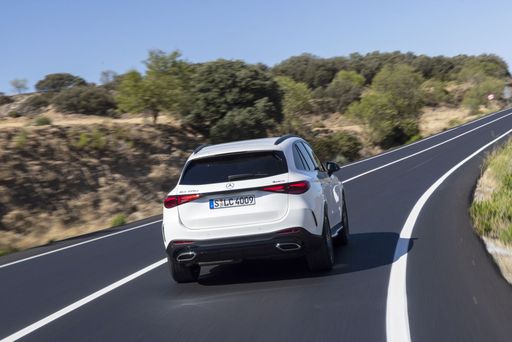
GLC

Hyundai Tucson vs. Mercedes GLC: A Comprehensive Comparison

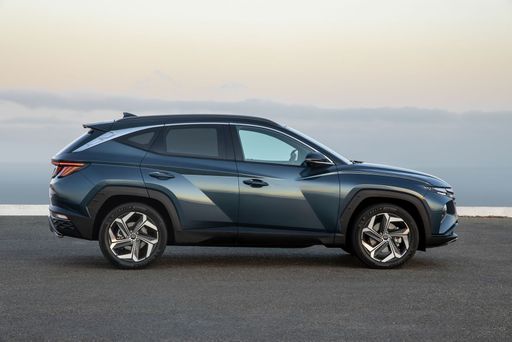
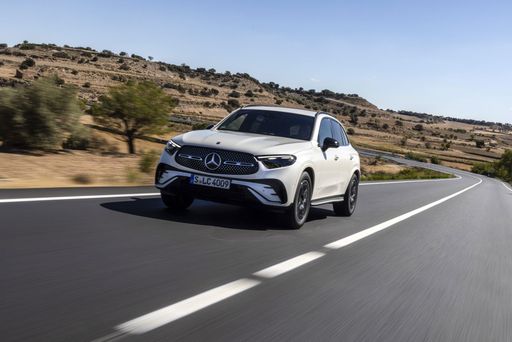
When it comes to the competitive compact SUV market, the Hyundai Tucson and the Mercedes GLC stand out as two popular choices but for very different audiences. The Tucson offers great value and practicality, while the GLC leans towards luxury and performance. This article delves deep into the technical aspects and innovations of both models to help you decide which SUV suits your needs better.
Tucson

Design and Dimensions

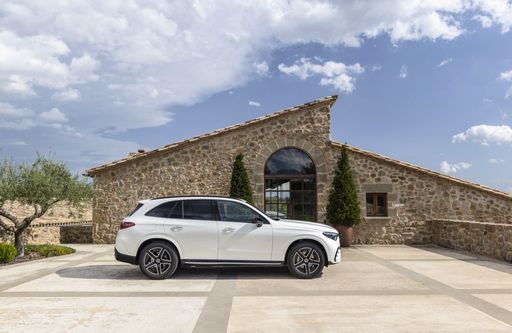
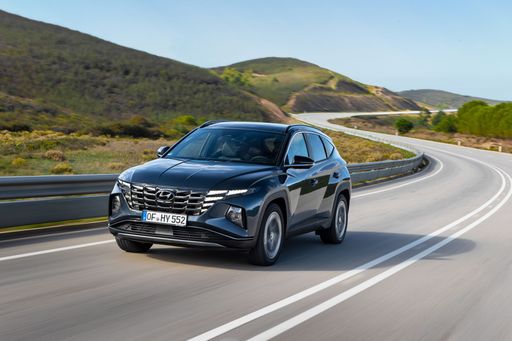
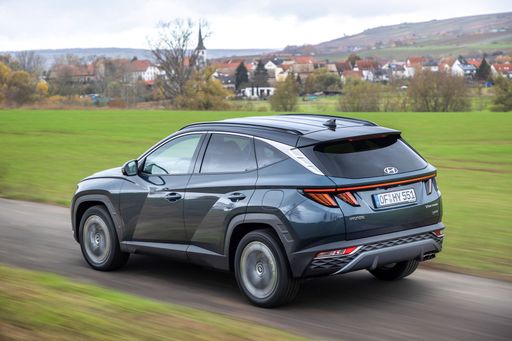
Both the Tucson and the GLC feature modern designs characteristic of their brands. The Tucson measures 4,510mm in length, 1,865mm in width, and 1,650mm in height, providing ample interior space for its five-seat capacity. The Mercedes GLC, slightly larger, spans between 4,716mm and 4,792mm in length, 1,890mm in width, and offers a height ranging from 1,603mm to 1,647mm, also accommodating five passengers comfortably.

GLC

Engine Options and Performance

The Hyundai Tucson offers a variety of engine types including diesel, petrol, full hybrid, and plug-in hybrid options, with power outputs ranging from 136 to 252 HP. The GLC, on the other hand, offers a range of petrol and diesel MHEV and plug-in hybrid engines with a more powerful spectrum, reaching up to a staggering 680 HP in its hybrid variants. For those seeking performance, the GLC can accelerate from 0 to 100 km/h in as little as 3.5 seconds, while the Tucson offers competitive times, with its quickest variant reaching the mark in just 7.9 seconds.

Tucson

Transmission and Drive

The Tucson offers both automatic and manual transmission options, along with front-wheel and all-wheel-drive variants. The GLC, however, is exclusively available with an automatic gearbox and all-wheel drive, contributing to a more dynamic and controlled driving experience, especially on challenging terrains.

GLC

Fuel Economy and Environmental Considerations

Fuel efficiency is a critical consideration for many buyers. The Tucson shines with its lowest consumption figures at just 1.0 L/100km in its most efficient plug-in hybrid variant. The GLC's fuel consumption ranges from 0.4 to 10.3 L/100km depending on the engine and configuration. Both vehicles also present a variety of CO2 efficiency classes, making them appealing choices for eco-conscious consumers, although the GLC has slightly higher emissions in some variants compared to the Tucson.

Tucson

Innovative Features and Technology

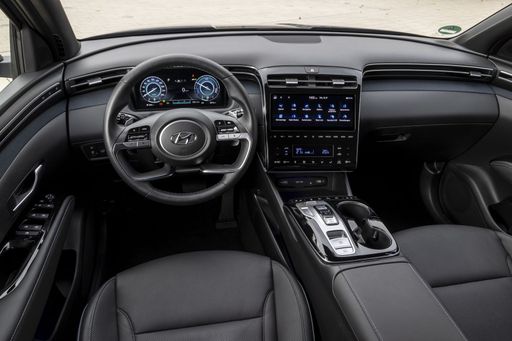
Innovation is not lacking in either SUV. The Hyundai Tucson impresses with its advanced driver assistance systems, including smart cruise control and lane-keeping assist, along with a user-friendly touchscreen infotainment system with integrated navigation. Its cabin is equipped with high-quality materials and substantial tech features like vehicle-to-load capability in plug-in variants.

The Mercedes GLC, true to its luxury status, offers a high-end infotainment system with the MBUX (Mercedes-Benz User Experience) that features voice activation, a stunning display, and sophisticated connectivity options. Furthermore, it boasts an array of safety and driver assistance features, including adaptive cruise control, blind-spot monitoring, and active lane change assistance, setting the bar high in the premium segment.

GLC

Interior Comfort and Storage

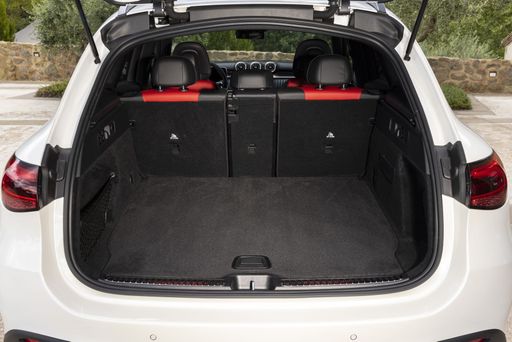
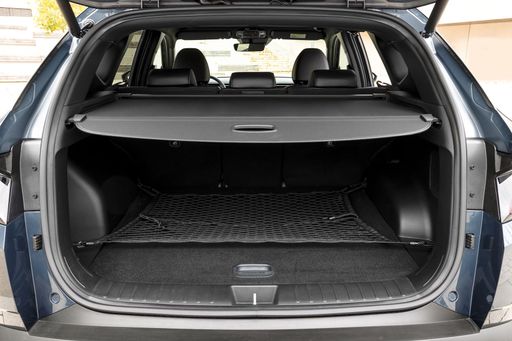
Comfort is paramount in both models. The Tucson features adjustable seating and a spacious interior, with trunk capacities ranging from 546 to 620 liters depending on the variant. The GLC, with trunk sizes ranging from 390 to 620 liters, also provides luxury materials and a quiet cabin experience, ensuring a comfortable ride for both passengers and driver.

Tucson

Conclusion: Which One Is Right for You?

Choosing between the Hyundai Tucson and the Mercedes GLC ultimately boils down to your needs and budget. The Tucson is a sensible choice for those seeking a versatile and cost-effective SUV that doesn’t compromise on features. Meanwhile, the GLC is tailored for buyers who prioritize luxury, performance, and advanced technology. Whichever you choose, both vehicles showcase impressive qualities that cater to diverse driving needs.

Here’s where it gets real: The technical differences in detail

GLC

Costs and Efficiency:

Price and efficiency are key factors when choosing a car – and this is often where the real differences emerge.

Hyundai Tucson is considerably cheaper – starting at 20,900 £ , while the Mercedes GLC costs 50,300 £ . That’s a price difference of around 29,430 £.

Fuel consumption also shows a difference: the Mercedes GLC uses 1.6 L/100km and is substantially more efficient than the Hyundai Tucson with 2.7 L/100km. The difference is about 1.1 L/100km.

As for electric range, the Mercedes GLC offers clearly more range – reaching up to 714 km, about 644 km more than the Hyundai Tucson.

Tucson

Engine and Performance:

Under the bonnet, it becomes clear which model is tuned for sportiness and which one takes the lead when you hit the accelerator.

When it comes to engine power, the Mercedes GLC offers significantly more power – delivering 680 HP compared to 288 HP. That’s roughly 392 HP more horsepower.

When accelerating from 0 to 100 km/h, the Mercedes GLC is clearly quicker – completing the sprint in 3.5 s, while the Hyundai Tucson takes 7.5 s. That’s about 4 s quicker.

Looking at top speed, the Mercedes GLC is visibly faster – reaching 275 km/h, while the Hyundai Tucson tops out at 204 km/h. The difference is around 71 km/h.

There’s also a difference in torque: the Mercedes GLC delivers considerably more torque with 1,020 Nm compared to 379 Nm. That’s about 641 Nm more.

GLC

Space and Everyday Use:

Whether family car or daily driver – which one offers more room, flexibility and comfort?

Both vehicles offer seating for 5 people.

In terms of curb weight, Hyundai Tucson is markedly lighter – 1,542 kg compared to 1,910 kg. The difference is around 368 kg.

Boot capacity is identical – both offer 620 L of storage.

For maximum load capacity, the Hyundai Tucson offers only slightly more capacity – up to 1,799 L, about 59 L more than the Mercedes GLC.

When it comes to payload, the Mercedes GLC carries marginally more – 600 kg compared to 545 kg. That’s a difference of about 55 kg.

Who wins the race in the data check?

The Mercedes GLC is clearly superior overall in the objective data comparison.
This result only shows which model scores more points on paper – not which of the two cars feels right for you.

from £50,300
GLC

Mercedes GLC

  • Engine Type : Petrol MHEV, Plugin Hybrid, Diesel MHEV, Electric
  • Transmission : Automatic
  • Drive Type : All-Wheel Drive
  • Power HP : 186 - 680 HP
  • Consumption L/100km : 1.6 - 9.7 L/100km
  • Consumption kWh/100km : 14.9 - 16.6 kWh/100km
  • Electric Range : 12 - 714 km
Mercedes GLC
Hyundai Tucson

Costs and Consumption

View detailed analysis

Engine and Performance

View detailed analysis

Dimensions and Body

View detailed analysis

Mercedes GLC

The Mercedes GLC blends plush cabin comfort and composed road manners into an SUV that feels more grown-up than it looks. It won’t shout for attention, but will quietly please buyers who want refinement, usable space and a touch of luxury without the drama.

details

Hyundai Tucson

Hyundai Tucson marries bold, sculpted looks with a clever, roomy cabin that feels smarter than its price tag suggests. It's composed on the road, easy to live with day-to-day, and a sensible choice for buyers who want SUV style without the showroom theatrics.

details
Mercedes GLC
Hyundai Tucson

Costs and Consumption

Price
50,300 - 126,600 £
Price
20,900 - 47,900 £
Consumption L/100km
1.6 - 9.7 L/100km
Consumption L/100km
2.7 - 7.6 L/100km
Consumption kWh/100km
14.9 - 16.6 kWh/100km
Consumption kWh/100km
-
Electric Range
12 - 714 km
Electric Range
63 - 70 km
Battery Capacity
94 kWh
Battery Capacity
-
co2
0 - 221 g/km
co2
62 - 172 g/km
Fuel tank capacity
62 - 65 L
Fuel tank capacity
52 - 54 L

Dimensions and Body

Body Type
SUV
Body Type
SUV
Seats
5
Seats
5
Doors
5
Doors
5
Curb weight
1,910 - 2,535 kg
Curb weight
1,542 - 1,893 kg
Trunk capacity
390 - 620 L
Trunk capacity
546 - 620 L
Length
4,716 - 4,845 mm
Length
4,525 - 4,535 mm
Width
1,890 - 1,913 mm
Width
1,865 mm
Height
1,603 - 1,644 mm
Height
1,650 mm
Max trunk capacity
1,490 - 1,740 L
Max trunk capacity
1,795 - 1,799 L
Payload
475 - 600 kg
Payload
518 - 545 kg

Engine and Performance

Engine Type
Petrol MHEV, Plugin Hybrid, Diesel MHEV, Electric
Engine Type
Petrol, Full Hybrid, Plugin Hybrid, Diesel MHEV
Transmission
Automatic
Transmission
Manuel, Automatic
Transmission Detail
Automatic Gearbox, Reduction Gearbox
Transmission Detail
Manual Gearbox, Dual-Clutch Automatic, Automatic Gearbox
Drive Type
All-Wheel Drive
Drive Type
Front-Wheel Drive, All-Wheel Drive
Power HP
186 - 680 HP
Power HP
136 - 288 HP
Acceleration 0-100km/h
3.5 - 9 s
Acceleration 0-100km/h
7.5 - 11.6 s
Max Speed
210 - 275 km/h
Max Speed
196 - 204 km/h
Torque
320 - 1,020 Nm
Torque
250 - 379 Nm
Number of Cylinders
4 - 6
Number of Cylinders
4
Power kW
137 - 500 kW
Power kW
100 - 212 kW
Engine capacity
1,991 - 2,989 cm3
Engine capacity
1,598 cm3

General

Model Year
2,025 - 2,026
Model Year
2,025
CO2 Efficiency Class
F, G, D, B, E, A
CO2 Efficiency Class
F, D, E, B
Brand
Mercedes-Benz
Brand
Hyundai
DriveDuel uses data analysis and artificial intelligence to evaluate vehicle data and create content. Content is regularly reviewed and improved. The displayed prices are estimates based on German list prices, adjusted to the respective country’s VAT. Country-specific registration taxes are not included. This information is not legally binding.