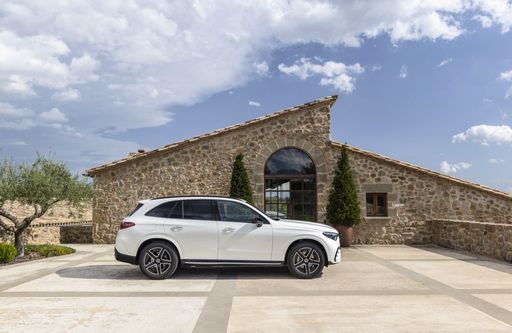
@ Mercedes-Benz Group Media
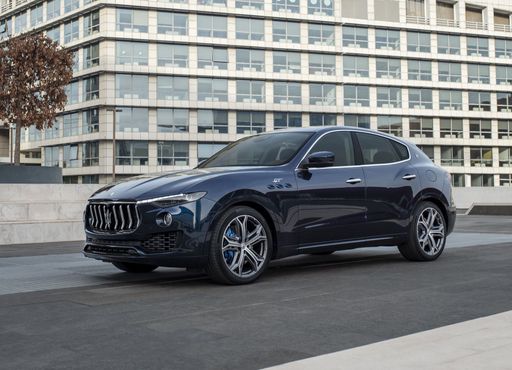
@ Maserati S.p.A.
VS

Mercedes GLC vs Maserati Levante – Which model is better for everyday use?

Everyday use, family trips or long-distance drives – here’s where the differences show.
Discover whether Mercedes GLC or Maserati Levante fits your lifestyle better.

GLC @ Mercedes-Benz Group Media

The automotive luxury SUV segment is an ever-competitive realm, and two names that often come to the forefront of consumer discussions are the Mercedes GLC and the Maserati Levante. While both SUV models boast superior engineering, design, and technology, they cater to different audiences and preferences. In this article, we will delve into a detailed comparison of the Mercedes GLC and Maserati Levante, highlighting their technical aspects and innovations.
Levante @ Maserati S.p.A.

Design and Dimensions

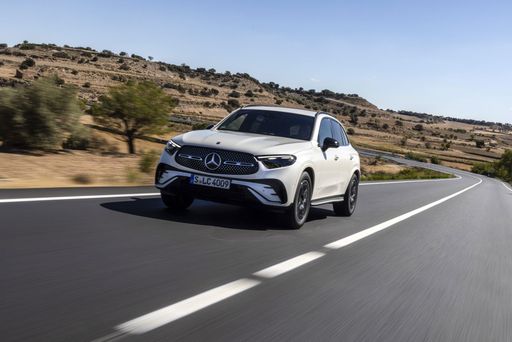
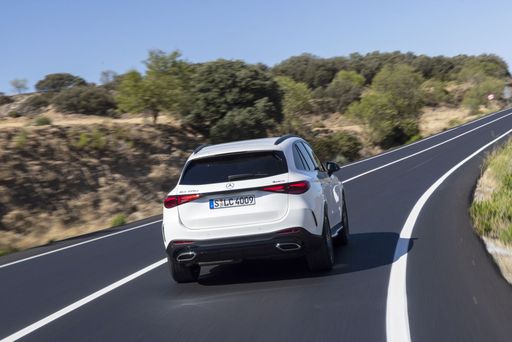
The Mercedes GLC exemplifies a refined and modern design with a sporty stance. Its length varies between 4716 mm to 4792 mm, a width of 1890 mm, and a height between 1603 mm and 1647 mm. These dimensions give the GLC an imposing presence on the road while ensuring a comfortable cabin space for up to five passengers.

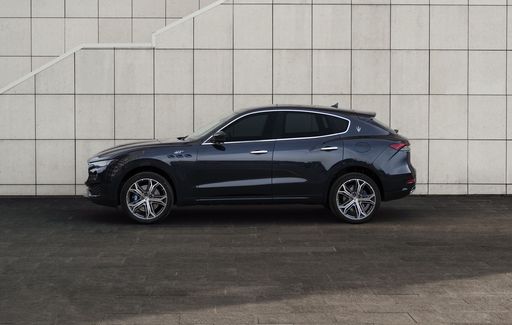
On the other hand, the Maserati Levante stands out with a more assertive and aggressive design, measuring 5005 mm in length, 1981 mm in width, and 1693 mm in height. The Levante's striking silhouette and signature Maserati grille make it visually distinct, tailoring to those who appreciate an SUV with a sporty edge.

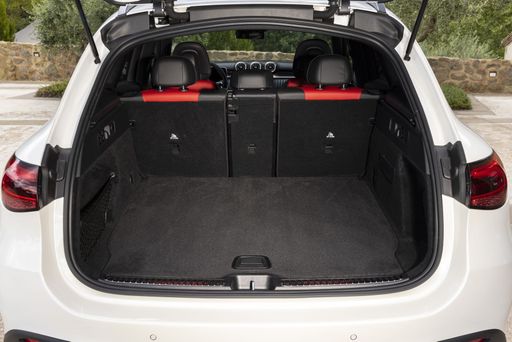
GLC @ Mercedes-Benz Group Media

Engine Performance and Options

The GLC offers a variety of powertrains, including petrol MHEV, diesel MHEV, and plugin hybrid options. It ranges from 227 hp to a staggering 680 hp, catering to different performance needs. With max torque reaching up to 1020 Nm, the GLC excels in acceleration, with some variants achieving 0-100 km/h in just 3.5 seconds. Its drive is often enhanced by its all-wheel-drive technology, ensuring excellent handling under various conditions.

Conversely, the Maserati Levante offers fewer engine options but focuses on performance and thrill. Its horsepower ranges from 330 hp to 430 hp, with a peak torque of 580 Nm. The Levante can sprint from 0-100 km/h in as little as 5.2 seconds, showcasing its sporty dynamics. Its all-wheel drive also offers engaging handling and responsiveness on winding roads or highways.

Levante @ Maserati S.p.A.

Fuel Efficiency and Consumption

When it comes to efficiency, the Mercedes GLC has the edge on paper, with fuel consumption ranging from 5.0 to 10.3 L/100km, depending on the variant. The hybrid models are especially efficient, offering an electric range of up to 130 km for those environmentally conscious consumers.

In comparison, the Maserati Levante, while powerful, doesn’t fare as well regarding fuel efficiency, averaging between 9.7 and 12.1 L/100km. This marks a notable difference, indicating that the GLC is a more economical choice for daily use, especially for those who frequently undertake city driving.

GLC @ Mercedes-Benz Group Media

Interior and Technological Innovations

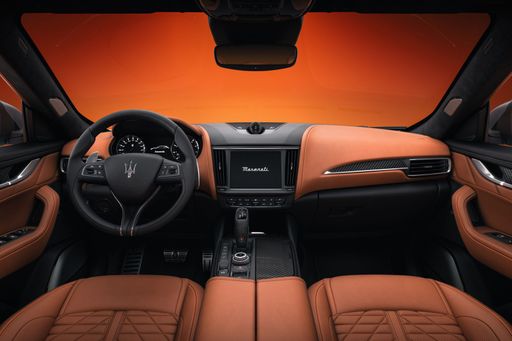
Inside, the Mercedes GLC is a blend of luxury, comfort, and cutting-edge technology. High-quality materials are complemented by the MBUX infotainment system, which offers a wide range of features including voice control, navigation, and a surround sound system. The spacious interior provides ample legroom and trunk capacity ranging from 390 to 620 L, making it a practical choice for families and travelers.

In contrast, the Maserati Levante leans heavily into its heritage with a focus on luxurious materials and bespoke finishes. The cabin features fine leather, handcrafted elements, and the Maserati Touch Control infotainment system. The trunk capacity of 580 L offers sufficient space while maintaining the sporty aesthetics characteristic of the brand.

Levante @ Maserati S.p.A.

Safety Features and Ratings

Both models come equipped with a suite of advanced safety features. The GLC boasts numerous driver assistance systems including adaptive cruise control, lane-keeping assist, and automatic emergency braking. Its focus on safety has earned it a top safety rating in various markets.

The Levante also incorporates numerous safety technologies, such as front collision warning and blind-spot monitoring; however, its exact safety ratings may vary depending on the region and evaluation criteria.

GLC @ Mercedes-Benz Group Media

Conclusion: The Verdict

Choosing between the Mercedes GLC and the Maserati Levante largely depends on personal priorities. If you prioritize efficiency, spaciousness, and cutting-edge technology, the Mercedes GLC presents a compelling case. However, for those who crave a distinctive luxury SUV that emphasizes sporty dynamics and Italian flair, the Maserati Levante proves itself as a worthy contender.

Ultimately, both SUVs embody luxury and performance, yet they cater to different tastes and needs. Potential buyers will benefit from a test drive of both models to determine which aligns best with their lifestyle and driving aspirations.

Here’s where it gets real: The technical differences in detail

Costs and Efficiency:

When it comes to price and running costs, the biggest differences usually appear. This is often where you see which car fits your budget better in the long run.

Mercedes GLC has a significantly advantage in terms of price – it starts at 50300 £, while the Maserati Levante costs 93900 £. That’s a price difference of around 43554 £.

Fuel consumption also shows a difference: Mercedes GLC manages with 1.60 L and is therefore convincingly more efficient than the Maserati Levante with 9.70 L. The difference is about 8.10 L per 100 km.

Engine and Performance:

Power, torque and acceleration are the classic benchmarks for car enthusiasts – and here, some clear differences start to show.

When it comes to engine power, the Mercedes GLC has a noticeable edge – offering 680 HP compared to 430 HP. That’s roughly 250 HP more horsepower.

In acceleration from 0 to 100 km/h, the Mercedes GLC is clearly quicker – completing the sprint in 3.50 s, while the Maserati Levante takes 5.20 s. That’s about 1.70 s faster.

In terms of top speed, the Mercedes GLC performs minimal better – reaching 275 km/h, while the Maserati Levante tops out at 264 km/h. The difference is around 11 km/h.

There’s also a difference in torque: Mercedes GLC pulls significantly stronger with 1020 Nm compared to 580 Nm. That’s about 440 Nm difference.

Space and Everyday Use:

Beyond pure performance, interior space and usability matter most in daily life. This is where you see which car is more practical and versatile.

Both vehicles offer seating for 5 people.

In curb weight, Mercedes GLC is to a small extent lighter – 1910 kg compared to 2165 kg. The difference is around 255 kg.

In terms of boot space, the Mercedes GLC offers slight more room – 620 L compared to 580 L. That’s a difference of about 40 L.

When it comes to payload, Maserati Levante hardly perceptible takes the win – 615 kg compared to 600 kg. That’s a difference of about 15 kg.

Who wins the race?

The Mercedes GLC proves to be dominates this comparison and therefore becomes our DriveDuel Champion!
Mercedes GLC is the better all-rounder in this comparison.

from about £50,300
GLC @ Mercedes-Benz Group Media

Mercedes GLC

  • Engine Type : Petrol MHEV, Plugin Hybrid, Diesel MHEV, Electric
  • Transmission : Automatic
  • Drive Type : All-Wheel Drive
  • Power HP : 186 - 680 HP
  • Consumption L/100km : 1.6 - 9.9 L
  • Consumption kWh/100km : 14.9 - 16.6 kWh
  • Electric Range : 12 - 714 km

Mercedes GLC

4 (2)
rate

The Mercedes GLC blends plush cabin comfort and composed road manners into an SUV that feels more grown-up than it looks. It won’t shout for attention, but will quietly please buyers who want refinement, usable space and a touch of luxury without the drama.

details

Maserati Levante

5 (1)
rate

The Maserati Levante blends Italian flair with SUV practicality, wrapped in sculpted lines and a throaty exhaust note that ensures it never goes unnoticed. It's a driver's SUV that favors emotion over spreadsheets, pairing a luxurious cabin with lively handling so even the daily commute feels like a cheeky weekend escape.

details
Mercedes GLC
Maserati Levante
GLC @ Mercedes-Benz Group Media
Levante @ Maserati S.p.A.

Costs and Consumption

Price
50300 - 126600 £
Price
93900 - 125800 £
Consumption L/100km
1.6 - 9.9 L
Consumption L/100km
9.7 - 12.1 L
Consumption kWh/100km
14.9 - 16.6 kWh
Consumption kWh/100km
-
Electric Range
12 - 714 km
Electric Range
-
Battery Capacity
94 kWh
Battery Capacity
-
co2
0 - 225 g/km
co2
221 - 273 g/km
Fuel tank capacity
49 - 65 L
Fuel tank capacity
80 L

Dimensions and Body

Body Type
SUV
Body Type
SUV
Seats
5
Seats
5
Doors
5
Doors
4
Curb weight
1910 - 2535 kg
Curb weight
2165 - 2184 kg
Trunk capacity
390 - 620 L
Trunk capacity
580 L
Length
4716 - 4845 mm
Length
5005 mm
Width
1890 - 1913 mm
Width
1981 mm
Height
1603 - 1647 mm
Height
1693 mm
Max trunk capacity
1335 - 1740 L
Max trunk capacity
-
Payload
475 - 600 kg
Payload
316 - 615 kg

Engine and Performance

Engine Type
Petrol MHEV, Plugin Hybrid, Diesel MHEV, Electric
Engine Type
Petrol MHEV, Petrol
Transmission
Automatic
Transmission
Automatic
Transmission Detail
Automatic Gearbox, Reduction Gearbox
Transmission Detail
Automatic Gearbox
Drive Type
All-Wheel Drive
Drive Type
All-Wheel Drive
Power HP
186 - 680 HP
Power HP
330 - 430 HP
Acceleration 0-100km/h
3.5 - 9 s
Acceleration 0-100km/h
5.2 - 6 s
Max Speed
208 - 275 km/h
Max Speed
245 - 264 km/h
Torque
320 - 1020 Nm
Torque
450 - 580 Nm
Number of Cylinders
4 - 6
Number of Cylinders
4 - 6
Power kW
137 - 500 kW
Power kW
243 - 316 kW
Engine capacity
1991 - 2989 cm3
Engine capacity
1995 - 2979 cm3

General

Model Year
2025 - 2026
Model Year
2023
CO2 Efficiency Class
F, G, B, A
CO2 Efficiency Class
G
Brand
Mercedes-Benz
Brand
Maserati
What drive types are available for the Mercedes GLC?

The Mercedes GLC is offered with All-Wheel Drive.

The prices and data displayed are estimates based on German list prices and may vary by country. This information is not legally binding.