VS

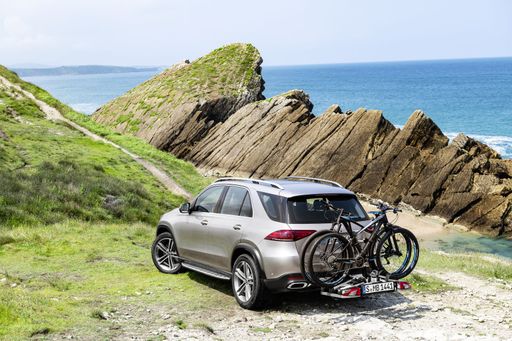
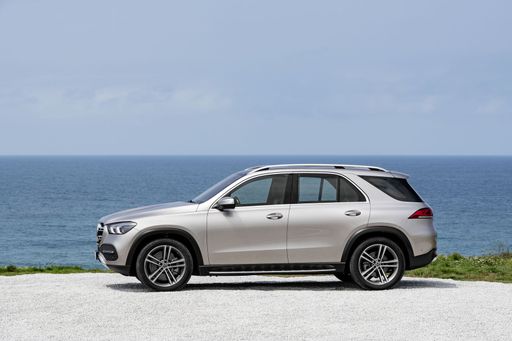
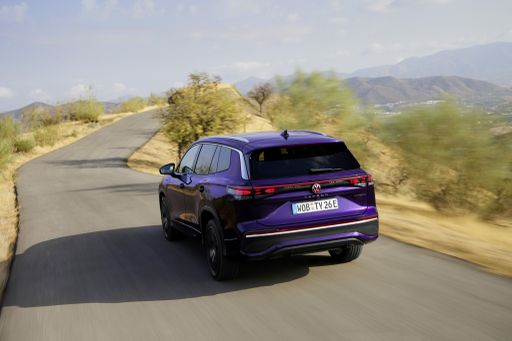
Mercedes GLE vs VW Tayron comparison

Compare performance (585 HP vs 272 HP), boot space and price (78,900 £ vs 40,200 £ ) at a glance. Find out which car is the better choice for you – Mercedes GLE or VW Tayron?

Mercedes GLE vs VW Tayron: Key differences

Mercedes GLE

4.7 (3 Reviews)
rate
  • considerably more power
  • noticeably quicker 0–100 km/h
details

VW Tayron

4.5 (6 Reviews)
rate
  • substantially cheaper
  • substantially more efficient
  • a bit more electric range
  • significantly lighter
  • clearly more trunk space
details

All details on performance, efficiency, range and trunk space can be found in the technical comparison below – including user reviews for both models.

By Achim Sedelmaier

GLE

The Battle of the SUVs: Mercedes GLE vs VW Tayron

In the dynamic world of SUVs, two models stand out with their compelling blend of performance, luxury, and innovation: the 2024 Mercedes GLE and the 2025 VW Tayron. Each of these eminent vehicles boasts a unique combination of features that cater to diverse driving experiences and preferences. But how do they truly stack up against each other in terms of technical aspects and modern advancements? Let's dive into the details.
Tayron

Performance and Power

The Mercedes GLE offers a broad range of engine options that include Diesel MHEV, Plugin Hybrid, and Petrol MHEV, showcasing Mercedes’ commitment to versatility and power. Power outputs range from an impressive 289 HP to a formidable 634 HP, providing thrilling acceleration from 0 to 100 km/h in just 3.9 seconds in its top-tier models.

On the other hand, the VW Tayron serves as a robust contender with its lineup of Petrol MHEV, Plugin Hybrid, Diesel, and Petrol engines. The power band extends from 150 HP to a competent 272 HP, achieving 0 to 100 km/h in around 6.1 seconds for its most powerful configuration. While the Tayron may not match the peak power of the GLE, it ensures an engaging drive with a focus on efficiency and practicality.

GLE

Efficiency and Range

Both SUVs make strides in fuel efficiency, a critical consideration for modern drivers. The GLE's hybrid models boast an electric range between 86 and 114 km, with consumption as low as 0.5 L/100 km in its most efficient variant. These figures underscore Mercedes' commitment to sustainable luxury.

The Tayron, with its all-electric range extending up to 126 km, demonstrates VW's dedication to eco-friendly motoring. Consumption starts at an impressive 0.4 L/100 km in its hybrid versions, striking a balance between performance and environmental consciousness.

Tayron

Interior and Technology

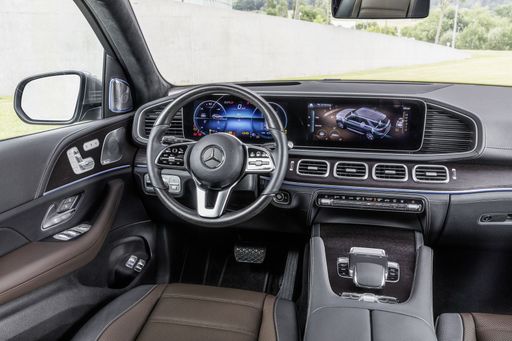
Both SUVs come equipped with a multitude of technological innovations aimed at enhancing driver and passenger experiences. The Mercedes GLE is renowned for its cutting-edge MBUX infotainment system, featuring voice command capabilities and dual displays that offer seamless connectivity and intuitive control.

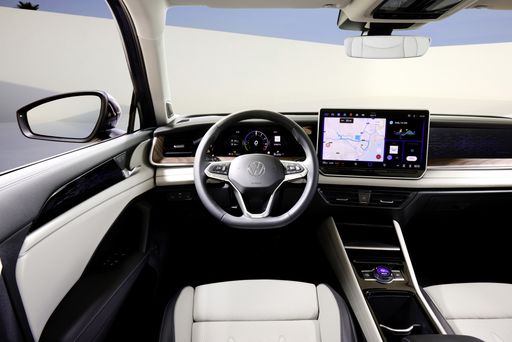
In contrast, the VW Tayron delivers a forward-thinking cockpit that emphasizes user-friendly design and comprehensive connectivity options. Its advanced infotainment system integrates smartphone compatibility and a suite of driver-assistance features, ensuring a comfortable and safe ride.

GLE

Design and Dimensions

The Mercedes GLE captures the essence of luxury with its elegant design, accommodating dimensions, and a payload range that accommodates up to 705 kg. Available in all-wheel drive, the GLE assures exceptional stability and control, ideal for varying terrains and weather conditions.

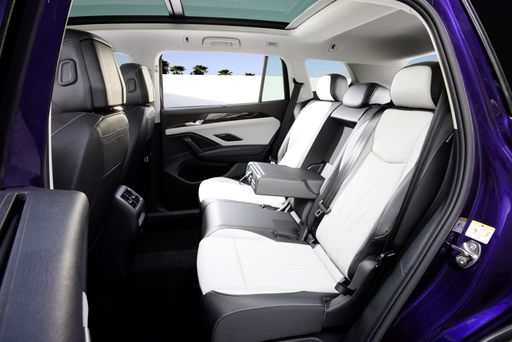
The VW Tayron, while slightly smaller in stature, makes efficient use of its space with a trunk capacity of 885 liters. Its dual offerings in front-wheel and all-wheel drive offer flexibility to cater to different driving preferences, ensuring agility and efficiency wrapped in a modern aesthetic.

Tayron

The Verdict

The decision between the Mercedes GLE and the VW Tayron ultimately hinges on the buyer’s priorities. The GLE, with its luxurious appeal, performance-driven features, and a wider array of powerful engines, appeals to those seeking a premium experience. Conversely, the Tayron, with its efficiency, advanced technology, and practicality, attracts those who prioritize innovation and sustainability without compromising on performance.

Whether it's the alluring sophistication of the Mercedes GLE or the advanced practicality of the VW Tayron, each SUV has something unique to offer, redefining the landscape they both traverse.

Here’s where it gets real: The technical differences in detail

GLE

Costs and Efficiency:

Price and efficiency are often the first things buyers look at. Here it becomes clear which model has the long-term edge – whether at the pump, the plug, or in purchase price.

VW Tayron is substantially cheaper – starting at 40,200 £ , while the Mercedes GLE costs 78,900 £ . That’s a price difference of around 38,691 £.

Fuel consumption also shows a difference: the VW Tayron uses 1.5 L/100km and is substantially more efficient than the Mercedes GLE with 3.2 L/100km. The difference is about 1.7 L/100km.

As for electric range, the VW Tayron offers a bit more range – reaching up to 123 km, about 19 km more than the Mercedes GLE.

Tayron

Engine and Performance:

Power, torque and acceleration say a lot about how a car feels on the road. This is where you see which model delivers more driving dynamics.

When it comes to engine power, the Mercedes GLE offers considerably more power – delivering 585 HP compared to 272 HP. That’s roughly 313 HP more horsepower.

When accelerating from 0 to 100 km/h, the Mercedes GLE is noticeably quicker – completing the sprint in 4.5 s, while the VW Tayron takes 6.1 s. That’s about 1.6 s quicker.

There’s also a difference in torque: the Mercedes GLE delivers substantially more torque with 750 Nm compared to 400 Nm. That’s about 350 Nm more.

GLE

Space and Everyday Use:

Cabin size, boot volume and payload all play a role in everyday practicality. Here, comfort and flexibility make the difference.

Both vehicles offer seating for 5 people.

In terms of curb weight, VW Tayron is significantly lighter – 1,682 kg compared to 2,390 kg. The difference is around 708 kg.

Looking at boot space, the VW Tayron offers clearly more boot space – 885 L compared to 655 L. That’s a difference of about 230 L.

When it comes to payload, the Mercedes GLE carries visibly more – 770 kg compared to 573 kg. That’s a difference of about 197 kg.

Who wins the race in the data check?

The VW Tayron is far ahead overall in the objective data comparison.
This result only shows which model scores more points on paper – not which of the two cars feels right for you.

from £40,200
Tayron

VW Tayron

  • Engine Type Petrol MHEV, Diesel, Petrol, Plugin Hybrid
  • Transmission Automatic
  • Drive Type Front-Wheel Drive, All-Wheel Drive
  • Power HP 150 - 272 HP
  • Consumption L/100km 1.5 - 8.5 L/100km
  • Electric Range 116 - 123 km
Mercedes GLE
VW Tayron

Costs and Consumption

View detailed analysis

Engine and Performance

View detailed analysis

Dimensions and Body

View detailed analysis

Mercedes GLE

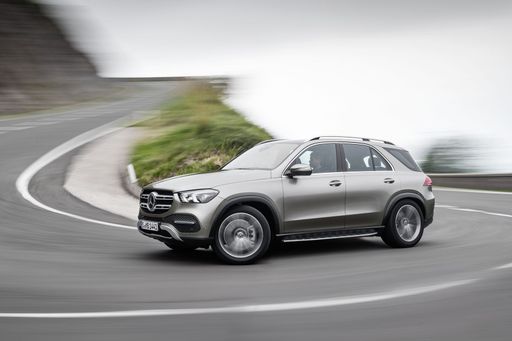
The Mercedes GLE blends luxurious comfort with a confident road presence, wrapping tech and refinement in an SUV shape that still knows how to behave on a twisty back road. Inside it's plush and quiet, with clever storage and driver aids that make long trips effortless — plus the badge gives it that easy-to-respect curb appeal.

details

VW Tayron

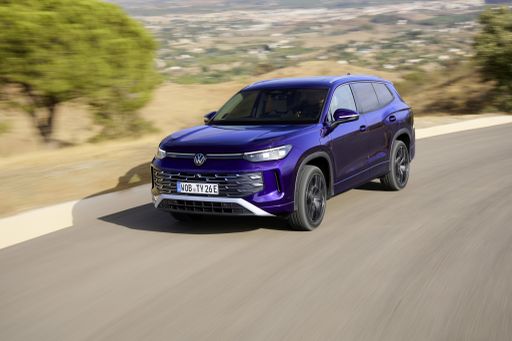
The VW Tayron combines a roomy, practical interior with a composed, comfortable ride that suits both daily commuting and longer journeys. With a restrained, modern design and a focus on straightforward tech and safety, it’s a sensible choice for buyers who want Volkswagen refinement without unnecessary flash.

details
Mercedes GLE
VW Tayron

Costs and Consumption

Price
78,900 - 115,800 £
Price
40,200 - 56,000 £
Consumption L/100km
3.2 - 10.6 L/100km
Consumption L/100km
1.5 - 8.5 L/100km
Consumption kWh/100km
-
Consumption kWh/100km
-
Electric Range
91 - 104 km
Electric Range
116 - 123 km
Battery Capacity
-
Battery Capacity
-
co2
72 - 241 g/km
co2
33 - 192 g/km
Fuel tank capacity
-
Fuel tank capacity
-

Dimensions and Body

Body Type
SUV
Body Type
SUV
Seats
5
Seats
5
Doors
-
Doors
-
Curb weight
2,390 - 2,815 kg
Curb weight
1,682 - 1,948 kg
Trunk capacity
485 - 655 L
Trunk capacity
705 - 885 L
Length
-
Length
-
Width
2,010 - 2,018 mm
Width
1,853 - 1,866 mm
Height
-
Height
-
Max trunk capacity
-
Max trunk capacity
-
Payload
495 - 770 kg
Payload
497 - 573 kg

Engine and Performance

Engine Type
Petrol MHEV, Plugin Hybrid, Diesel MHEV
Engine Type
Petrol MHEV, Diesel, Petrol, Plugin Hybrid
Transmission
Automatic
Transmission
Automatic
Transmission Detail
Automatic Gearbox
Transmission Detail
Dual-Clutch Automatic
Drive Type
All-Wheel Drive
Drive Type
Front-Wheel Drive, All-Wheel Drive
Power HP
309 - 585 HP
Power HP
150 - 272 HP
Acceleration 0-100km/h
4.5 - 6.2 s
Acceleration 0-100km/h
6.1 - 9.7 s
Max Speed
-
Max Speed
-
Torque
560 - 750 Nm
Torque
250 - 400 Nm
Number of Cylinders
6
Number of Cylinders
4
Power kW
227 - 430 kW
Power kW
110 - 200 kW
Engine capacity
2,989 - 2,999 cm3
Engine capacity
1,498 - 1,984 cm3

General

Model Year
2026
Model Year
2,025 - 2,026
CO2 Efficiency Class
G, B
CO2 Efficiency Class
E, F, B, G
Brand
Mercedes-Benz
Brand
VW
DriveDuel uses data analysis and artificial intelligence to evaluate vehicle data and create content. Content is regularly reviewed and improved. The displayed prices are estimates based on German list prices, adjusted to the respective country’s VAT. Country-specific registration taxes are not included. This information is not legally binding.