VS

Mercedes Sprinter Transporter vs Fiat Ducato comparison

Compare performance (204 HP vs 270 HP), boot space and price (26,900 £ vs 34,300 £ ) at a glance. Find out which car is the better choice for you – Mercedes Sprinter Transporter or Fiat Ducato?

Mercedes Sprinter Transporter vs Fiat Ducato: Key differences

Mercedes Sprinter Transporter

  • clearly cheaper
  • barely more electric range
  • marginally lighter

Fiat Ducato

  • clearly more power
  • only slightly more efficient
Sprinter Transporter

Fiat Ducato vs. Mercedes Sprinter Transporter: A Comprehensive Comparison

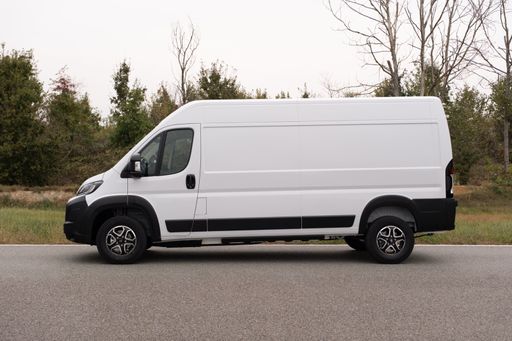
In the competitive world of commercial vehicles, the Fiat Ducato and the Mercedes Sprinter Transporter have emerged as top contenders in the cargo van segment. Each model brings its unique strengths, making the decision for fleet operators nuanced. Here, we delve into the technical aspects and innovations that set these two giants apart.

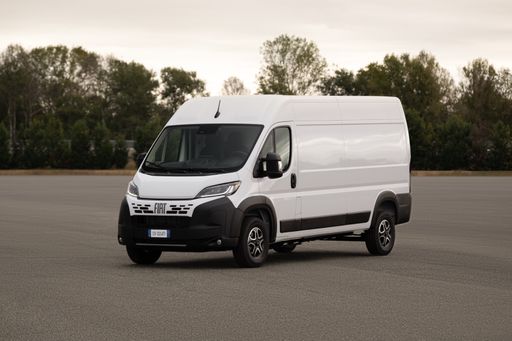
Ducato

Performance and Engine Options

The Fiat Ducato offers a range of engine types, including diesel and electric variants. The diesel options produce from 120 to 270 HP, with torque outputs ranging from 320 to 450 Nm. With a consumption of 7.2 to 9.3 L/100km, it provides efficiency aligned with performance. The electric variant boasts an impressive range of up to 430 km, making it suitable for urban deliveries.

In contrast, the Mercedes Sprinter Transporter features both electric and diesel engines, with power outputs ranging from 114 to 204 HP. The diesel models offer torque levels up to 450 Nm, but their fuel consumption is higher, peaking at 12.3 L/100km, which might concern operators focused on fuel economy. The electric Sprinter offers a range of up to 453 km, depending on the battery capacity, making it a strong candidate for eco-conscious businesses.

Transmission Systems and Drivetrain

When it comes to transmission, the Ducato provides versatility with both manual and automatic options available, along with a reduction gearbox. Its front-wheel-drive configuration enhances handling, especially when loaded, ensuring stability and comfort.

The Sprinter, on the other hand, offers both rear-wheel and all-wheel drive configurations, providing enhanced traction under various conditions. The automatic and manual gearboxes available equip drivers with choices tailored to their driving style or business needs.

Dimensions and Load Capacity

Size matters in the realm of commercial vans. The Fiat Ducato's dimensions vary between 5413 mm and 6678 mm in length, accommodating payloads from 560 kg to a robust 2020 kg. Its versatility in size makes it capable of handling different types of cargo, from small deliveries to large items.

The Sprinter adds to its appeal with a maximum length of 7367 mm and a payload capacity peaking at 1541 kg. This makes it slightly larger and potentially more robust for heavy-duty tasks. However, the Ducato’s lighter versions may be more agile in urban settings.

Innovative Features and Technology

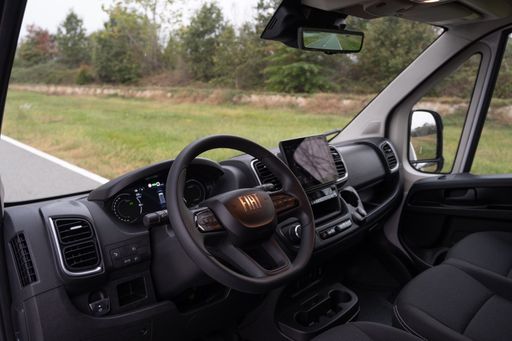
Both vehicles embrace modern technology that enhances driving experience and safety. The Ducato is equipped with various driver assistance systems, including lane assist and adaptive cruise control, while also integrating connectivity features for fleet management.

Meanwhile, the Sprinter excels with its advanced infotainment options, featuring a large touchscreen display, smartphone integration, and superior navigation systems. The availability of driver assistance technologies like Active Brake Assist and Blind Spot Monitoring sets it apart as a leader in safety.

Environmental Considerations

With increasing scrutiny on emissions, both vehicles demonstrate a commitment to sustainability. The Ducato’s diesel models have CO2 emissions ranging from 148 to 244 g/km, falling into varying efficiency classes. Its electric version is a zero-emission option that speaks to forward-thinking businesses.

The Sprinter also features electric variants that emit no CO2, while its diesel engines vary significantly, with some versions boasting as low as 0 g/km in the electric models. However, its diesel counterparts can reach up to 333 g/km, highlighting the need for cautious selection for eco-performance.

Conclusion: Which One Is Right for You?

Choosing between the Fiat Ducato and the Mercedes Sprinter Transporter ultimately depends on specific business needs. The Ducato shines with its varied engine offerings and payload versatility, making it ideal for businesses requiring a balance of performance and economy. On the other hand, the Sprinter stands out with its advanced technology and safety features, appealing to those prioritizing connectivity and enhanced driving experience.

Both vehicles are formidable contenders in the cargo van segment, making the final choice dependent on organizational priorities and operational requirements. Whether it's maneuverability, payload capacity, or innovative technology, either model can serve the diverse needs of today’s transportation landscape.

Here’s where it gets real: The technical differences in detail

Sprinter Transporter

Costs and Efficiency:

When it comes to price and running costs, the biggest differences usually appear. This is often where you see which car fits your budget better in the long run.

Mercedes Sprinter Transporter is clearly cheaper – starting at 26,900 £ , while the Fiat Ducato costs 34,300 £ . That’s a price difference of around 7,375 £.

Fuel consumption also shows a difference: the Fiat Ducato uses 7.5 L/100km and is only slightly more efficient than the Mercedes Sprinter Transporter with 7.9 L/100km. The difference is about 0.4 L/100km.

As for electric range, the Mercedes Sprinter Transporter offers barely more range – reaching up to 444 km, about 14 km more than the Fiat Ducato.

Ducato

Engine and Performance:

Power, torque and acceleration are the classic benchmarks for car enthusiasts – and here, some clear differences start to show.

When it comes to engine power, the Fiat Ducato offers clearly more power – delivering 270 HP compared to 204 HP. That’s roughly 66 HP more horsepower.

Looking at top speed, the Fiat Ducato is significantly faster – reaching 165 km/h, while the Mercedes Sprinter Transporter tops out at 90 km/h. The difference is around 75 km/h.

Both models offer the same torque – 450 Nm.

Space and Everyday Use:

Beyond pure performance, interior space and usability matter most in daily life. This is where you see which car is more practical and versatile.

Both vehicles offer seating for 3 people.

In terms of curb weight, Mercedes Sprinter Transporter is marginally lighter – 2,052 kg compared to 2,125 kg. The difference is around 73 kg.

For maximum load capacity, the Fiat Ducato offers very slightly more capacity – up to 17,000 L, about 1,500 L more than the Mercedes Sprinter Transporter.

When it comes to payload, the Mercedes Sprinter Transporter carries noticeably more – 2,641 kg compared to 2,020 kg. That’s a difference of about 621 kg.

Who wins the race in the data check?

The Fiat Ducato is far ahead overall in the objective data comparison.
This result only shows which model scores more points on paper – not which of the two cars feels right for you.

from £34,300
Ducato

Fiat Ducato

  • Engine Type : Diesel, Electric
  • Transmission : Manuel, Automatic
  • Drive Type : Front-Wheel Drive
  • Power HP : 120 - 270 HP
  • Consumption L/100km : 7.5 - 9 L/100km
  • Electric Range : 430 km
Mercedes Sprinter Transporter
Fiat Ducato

Costs and Consumption

View detailed analysis

Engine and Performance

View detailed analysis

Dimensions and Body

View detailed analysis

Mercedes Sprinter Transporter

The Mercedes Sprinter is the dependable workhorse that makes light of heavy loads, blending smart practicality with a surprisingly carlike cabin that keeps drivers sane on long runs. With a range of configurations and a reputation for durability, it’s the van buyers turn to when they need something tough, clever and oddly enjoyable to drive.

details

Fiat Ducato

The Fiat Ducato is a no-nonsense workhorse that turns practicality into an artform, with a cavernous, flexible load area and predictable, car-like driving manners that make long days behind the wheel far less tedious. It’s equally at home with a tradesman’s kit or a camper conversion, offering sensible packaging, easy servicing and the sort of reliability that keeps surprises—and down-time—to a minimum.

details
Mercedes Sprinter Transporter
Fiat Ducato

Costs and Consumption

Price
26,900 - 72,900 £
Price
34,300 - 57,800 £
Consumption L/100km
7.9 - 12.7 L/100km
Consumption L/100km
7.5 - 9 L/100km
Consumption kWh/100km
27.1 - 31.5 kWh/100km
Consumption kWh/100km
-
Electric Range
194 - 444 km
Electric Range
430 km
Battery Capacity
56 - 113 kWh
Battery Capacity
-
co2
0 - 333 g/km
co2
0 - 233 g/km
Fuel tank capacity
71 L
Fuel tank capacity
90 L

Dimensions and Body

Body Type
Cargo Van
Body Type
Cargo Van
Seats
3
Seats
3
Doors
4
Doors
4
Curb weight
2,052 - 3,166 kg
Curb weight
2,125 - 2,940 kg
Trunk capacity
-
Trunk capacity
-
Length
5,932 - 7,367 mm
Length
5,413 - 6,678 mm
Width
1,993 mm
Width
2,050 - 2,100 mm
Height
2,331 - 2,663 mm
Height
2,254 - 2,774 mm
Max trunk capacity
9,000 - 15,500 L
Max trunk capacity
10,000 - 17,000 L
Payload
577 - 2,641 kg
Payload
560 - 2,020 kg

Engine and Performance

Engine Type
Electric, Diesel
Engine Type
Diesel, Electric
Transmission
Automatic, Manuel
Transmission
Manuel, Automatic
Transmission Detail
Reduction Gearbox, Manual Gearbox, Automatic Gearbox
Transmission Detail
Manual Gearbox, Automatic Gearbox, Reduction Gearbox
Drive Type
Rear-Wheel Drive, All-Wheel Drive
Drive Type
Front-Wheel Drive
Power HP
114 - 204 HP
Power HP
120 - 270 HP
Acceleration 0-100km/h
-
Acceleration 0-100km/h
-
Max Speed
90 km/h
Max Speed
90 - 165 km/h
Torque
300 - 450 Nm
Torque
320 - 450 Nm
Number of Cylinders
4
Number of Cylinders
4
Power kW
84 - 150 kW
Power kW
88 - 200 kW
Engine capacity
1,950 cm3
Engine capacity
2,184 cm3

General

Model Year
2,024 - 2,025
Model Year
2,023 - 2,025
CO2 Efficiency Class
A, G
CO2 Efficiency Class
G, A
Brand
Mercedes-Benz
Brand
Fiat
DriveDuel uses data analysis and artificial intelligence to evaluate vehicle data and create content. Content is regularly reviewed and improved. The displayed prices are estimates based on German list prices, adjusted to the respective country’s VAT. Country-specific registration taxes are not included. This information is not legally binding.