
 Deutschland
 France
 Nederland
 Great Britain
 Sverige
 Danmark
 Suomi
Suomi Italia
 Polska
 España
VS
Mercedes Vito Bus vs Genesis GV80 comparison
Compare performance (237 HP vs 304 HP), boot space and price (36,300 £ vs 59,400 £ ) at a glance. Find out which car is the better choice for you – Mercedes Vito Bus or Genesis GV80?
Vito Bus
Costs and Efficiency:
Looking at overall running costs, both models reveal some interesting differences in everyday economy.
Mercedes Vito Bus is substantially cheaper – starting at 36,300 £ , while the Genesis GV80 costs 59,400 £ . That’s a price difference of around 23,052 £.
Fuel consumption also shows a difference: the Mercedes Vito Bus uses 6.7 L/100km and is clearly more efficient than the Genesis GV80 with 8.8 L/100km. The difference is about 2.1 L/100km.
GV80
Engine and Performance:
Under the bonnet, it becomes clear which model is tuned for sportiness and which one takes the lead when you hit the accelerator.
When it comes to engine power, the Genesis GV80 offers visibly more power – delivering 304 HP compared to 237 HP. That’s roughly 67 HP more horsepower.
Looking at top speed, the Genesis GV80 is significantly faster – reaching 237 km/h, while the Mercedes Vito Bus tops out at 140 km/h. The difference is around 97 km/h.
There’s also a difference in torque: the Genesis GV80 delivers slightly more torque with 588 Nm compared to 500 Nm. That’s about 88 Nm more.
Space and Everyday Use:
Beyond pure performance, interior space and usability matter most in daily life. This is where you see which car is more practical and versatile.
Seats: Mercedes Vito Bus offers more seats – 8 vs 7.
In terms of curb weight, Mercedes Vito Bus is very slightly lighter – 2,023 kg compared to 2,155 kg. The difference is around 132 kg.
Looking at boot space, the Mercedes Vito Bus offers considerably more boot space – 1,390 L compared to 735 L. That’s a difference of about 655 L.
For maximum load capacity, the Mercedes Vito Bus offers significantly more capacity – up to 4,990 L, about 2,838 L more than the Genesis GV80.
When it comes to payload, the Mercedes Vito Bus carries visibly more – 1,077 kg compared to 690 kg. That’s a difference of about 387 kg.
Who wins the race in the data check?
The Mercedes Vito Bus is far ahead overall in the objective data comparison.
This result only shows which model scores more points on paper – not which of the two cars feels right for you.
from £36,300
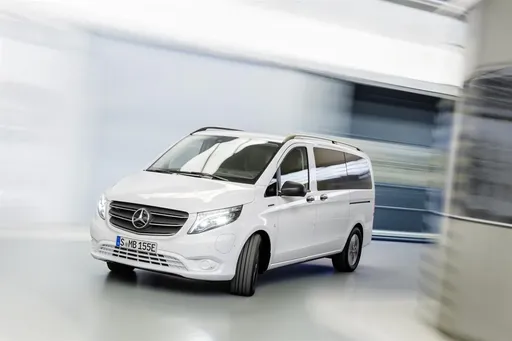
Mercedes Vito Bus
Mercedes Vito Bus
Genesis GV80
Costs and Consumption
View detailed analysis
View detailed analysis
Engine and Performance
View detailed analysis
View detailed analysis
Dimensions and Body
View detailed analysis
View detailed analysis
Mercedes Vito Bus
The Mercedes Vito is a sturdy, no-nonsense people carrier that blends commercial practicality with a surprisingly civilised cabin, making long shuttles feel less like a chore. If you need a dependable transporter that swallows luggage, forgives hard use and still looks a touch more premium than a plain van, the Vito is an easy, sensible pick.
details
Genesis GV80
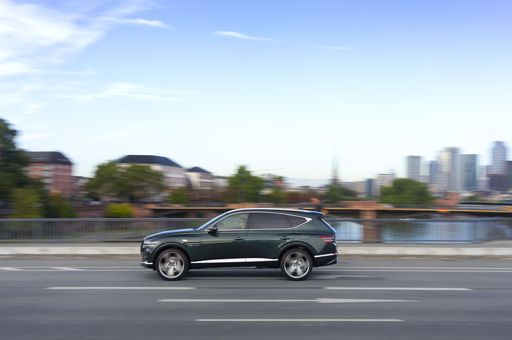
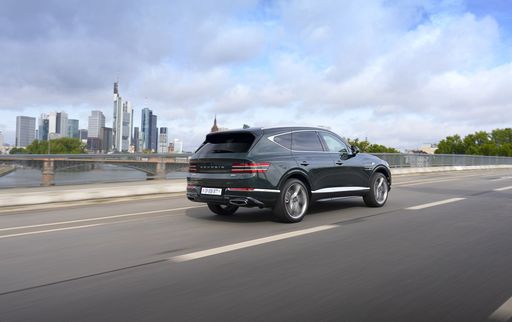
The Genesis GV80 feels like a boutique hotel on wheels, with striking looks and an interior that wraps you in plush materials and thoughtful details. It pairs a serenely composed ride with clever tech, making it the kind of luxury SUV that lets you enjoy the good life without shouting about the badge.
details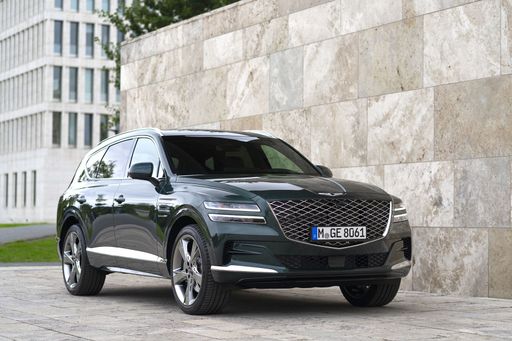
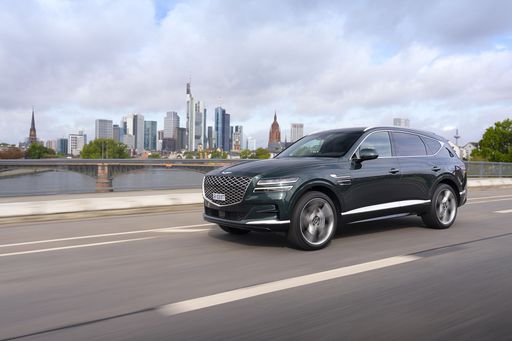
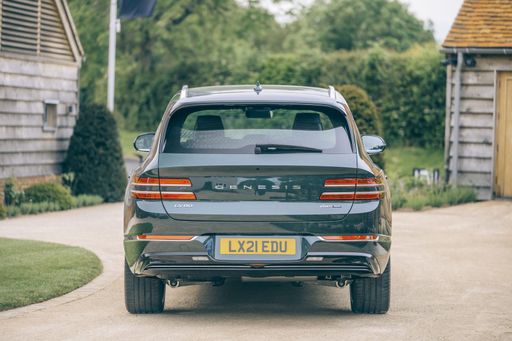
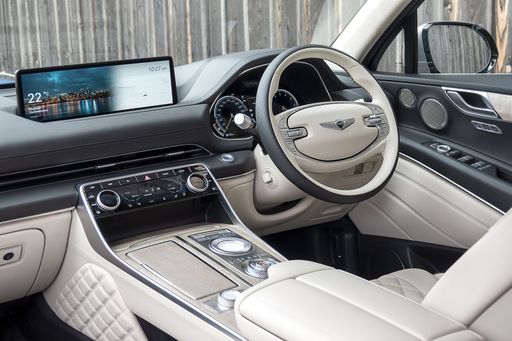
Mercedes Vito Bus
Genesis GV80
Costs and Consumption |
|
|---|---|
|
Price
36,300 - 55,900 £
|
Price
59,400 - 75,600 £
|
|
Consumption L/100km
6.7 - 10 L/100km
|
Consumption L/100km
8.8 - 10.8 L/100km
|
|
Consumption kWh/100km
26.7 - 26.9 kWh/100km
|
Consumption kWh/100km
-
|
|
Electric Range
248 - 370 km
|
Electric Range
-
|
|
Battery Capacity
60 - 90 kWh
|
Battery Capacity
-
|
|
co2
0 - 228 g/km
|
co2
231 - 241 g/km
|
|
Fuel tank capacity
57 - 70 L
|
Fuel tank capacity
80 L
|
Dimensions and Body |
|
|---|---|
|
Body Type
Bus
|
Body Type
SUV
|
|
Seats
8
|
Seats
5 - 7
|
|
Doors
4
|
Doors
5
|
|
Curb weight
2,023 - 2,739 kg
|
Curb weight
2,155 - 2,325 kg
|
|
Trunk capacity
580 - 1,390 L
|
Trunk capacity
727 - 735 L
|
|
Length
4,895 - 5,370 mm
|
Length
4,945 mm
|
|
Width
1,928 mm
|
Width
1,975 mm
|
|
Height
1,890 mm
|
Height
1,715 mm
|
|
Max trunk capacity
4,190 - 4,990 L
|
Max trunk capacity
2,144 - 2,152 L
|
|
Payload
726 - 1,077 kg
|
Payload
660 - 690 kg
|
Engine and Performance |
|
|---|---|
|
Engine Type
Diesel, Electric, Petrol
|
Engine Type
Petrol, Diesel
|
|
Transmission
Automatic
|
Transmission
Automatic
|
|
Transmission Detail
Automatic Gearbox, Reduction Gearbox
|
Transmission Detail
Automatic Gearbox
|
|
Drive Type
Rear-Wheel Drive, All-Wheel Drive, Front-Wheel Drive
|
Drive Type
All-Wheel Drive
|
|
Power HP
136 - 237 HP
|
Power HP
272 - 304 HP
|
|
Acceleration 0-100km/h
-
|
Acceleration 0-100km/h
6.9 s
|
|
Max Speed
140 km/h
|
Max Speed
230 - 237 km/h
|
|
Torque
330 - 500 Nm
|
Torque
422 - 588 Nm
|
|
Number of Cylinders
4
|
Number of Cylinders
4 - 6
|
|
Power kW
100 - 174 kW
|
Power kW
200 - 224 kW
|
|
Engine capacity
1,950 - 1,999 cm3
|
Engine capacity
2,497 - 2,996 cm3
|
General |
|
|---|---|
|
Model Year
2,024
|
Model Year
2,021 - 2,022
|
|
CO2 Efficiency Class
G, A
|
CO2 Efficiency Class
G
|
|
Brand
Mercedes-Benz
|
Brand
Genesis
|
DriveDuel uses data analysis and artificial intelligence to evaluate vehicle data and create content. Content is regularly reviewed and improved.
The displayed prices are estimates based on German list prices, adjusted to the respective country’s VAT. Country-specific registration taxes are not included. This information is not legally binding.