VS

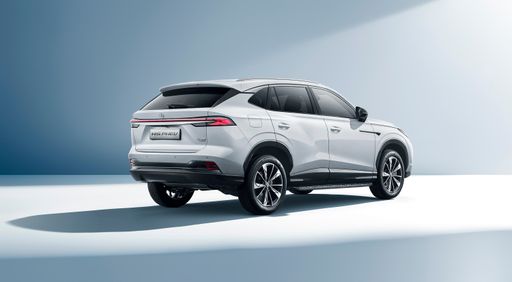
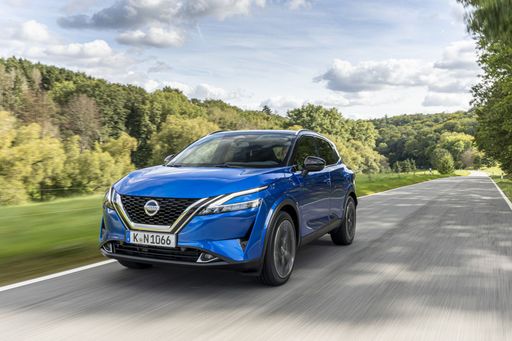
MG HS vs Nissan Qashqai comparison

Compare performance (272 HP vs 205 HP), boot space and price (30,000 £ vs 29,600 £ ) at a glance. Find out which car is the better choice for you – MG HS or Nissan Qashqai?

MG HS vs Nissan Qashqai: Key differences

MG HS

4.7 (7 Reviews)
rate
  • noticeably more power
  • clearly more efficient
  • moderately quicker 0–100 km/h
  • very slightly more trunk space
details

Nissan Qashqai

4.9 (3 Reviews)
rate
  • marginally cheaper
  • clearly lighter
details

All details on performance, efficiency, range and trunk space can be found in the technical comparison below – including user reviews for both models.

By Achim Sedelmaier

HS

Quick take: Nissan Qashqai VS MG HS

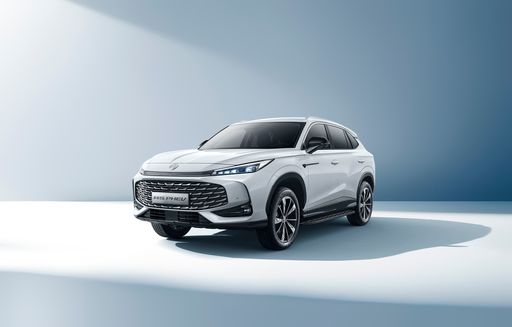
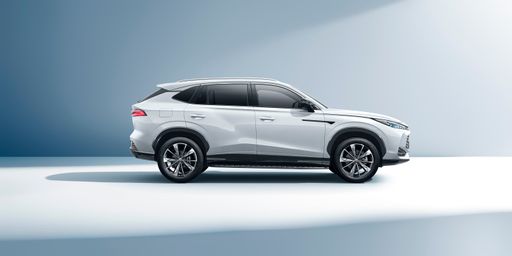
Nissan Qashqai VS MG HS sets up a clear choice between calm refinement and generous practicality. The Nissan Qashqai feels engineered around quiet, EV‑like city driving and polished infotainment, making everyday commuting and manoeuvring relaxed and predictable. The MG HS answers with roomy rear seats, a very generous equipment list and a plug‑in ability that turns many short trips into electric ones, but it trades some refinement and interface polish for that value. Each car leans into a different promise: Nissan for composed, modern comfort; MG for space and kit at a lower price point.
Qashqai

Character and driving personality

The Qashqai steers a course toward understatement — serene pull from its electrified drive and a linear response that encourages calm, efficient driving rather than excitement. The MG HS feels heavier and stronger off the line, with clear poke when you need it, yet the steering and body control never invite spirited cornering; it’s more about shove than finesse. If you want a relaxed, predictable cruiser that soothes daily traffic, the Nissan’s temperament will appeal; if you prioritise outright urge and the ability to run electrically around town, the MG’s character is more suited. The trade‑off is simple: Qashqai gives composure and smoothness, MG gives power and practicality but less driver engagement.

HS

Comfort and long‑distance behavior

On long runs the Nissan Qashqai tends to feel quieter and less tiring, especially on versions with smaller wheels where road and tyre noise stay subdued and the front seats are notably supportive. The MG HS rewards rear passengers with more legroom and a feeling of space that makes three‑hour stints in the back far less cramped, but on rougher surfaces it can feel slightly bouncier and the motorway noise level climbs more than in the Qashqai. For driver and front‑seat comfort over long distances the Qashqai tilts ahead; for families who routinely carry adults in the back, the MG’s cabin space will win smiles. Your choice comes down to whether you value front‑seat serenity or rear‑seat generosity on long trips.

Qashqai

Practicality and everyday usability

Both cars present practical compromises rather than clean wins: the Nissan’s clever double‑floor options and wide doors make family life easy, though a high loading lip can make bulky items awkward to stow. The MG HS offers a slightly larger trunk envelope in some variants and better rear access, but PHEV versions lose usable boot height and can feel fiddlier to load for holiday luggage. Visibility and parking aids are a strong point on the Qashqai — its 360° camera and tidy controls let you slide into tight urban spaces with less stress — while the MG compensates with a wealth of standard safety kit and sensors. So if you need everyday manoeuvrability and simple loading, lean toward the Nissan; if maximum kit and rear space matter more, the MG is more practical despite its loading quirks.

HS

Cabin feel, infotainment and perceived quality

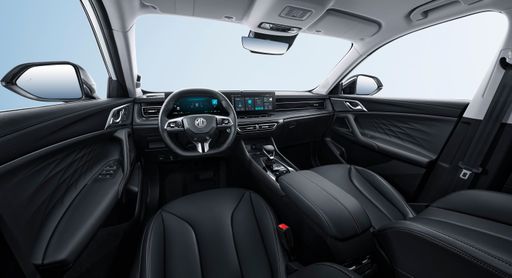
The Qashqai’s cabin prioritises sensible ergonomics: the modern Google‑built infotainment works smoothly, physical climate controls are a welcome relief in traffic, and materials give a mostly solid, reassuring impression. The MG HS packs more kit into its price but the big central screen and menus can feel sluggish and cluttered, driving owners to plug in CarPlay as a workaround; some surfaces are soft‑touch, but lower trim areas reveal harder plastics. Perceived quality therefore splits along expectations: the Nissan feels more polished for daily interaction, the MG feels like a bargain that buys extras rather than luxury. Buyers who prize slick, intuitive tech and neat finishes will prefer the Qashqai; buyers chasing equipment and value will accept the MG’s interface compromises.

Qashqai

Buyer fit and who should test which car next

If your life is urban commute, child seats, and a desire for calm, low‑stress driving with modern infotainment, the Nissan Qashqai is the natural place to start — it rewards small‑wheel choices and steady speeds with comfort and economy. If you have a home charger, prioritise rear passenger comfort, and want the most features for your money plus meaningful electric daily range, the MG HS deserves a long test drive to experience its PHEV advantage. The trade‑off is between refinement and gadgetry: choose the Qashqai for serenity and polished controls, the MG HS for space, kit and lower entry cost — both angles make sense, and the technical comparison that follows will show how those practical differences map onto drivetrain, weight and efficiency.

Here’s where it gets real: The technical differences in detail

HS

Costs and Efficiency:

Looking at overall running costs, both models reveal some interesting differences in everyday economy.

Nissan Qashqai is marginally cheaper – starting at 29,600 £ , while the MG HS costs 30,000 £ . That’s a price difference of around 386 £.

Fuel consumption also shows a difference: the MG HS uses 0.5 L/100km and is clearly more efficient than the Nissan Qashqai with 4.3 L/100km. The difference is about 3.8 L/100km.

Qashqai

Engine and Performance:

Power, torque and acceleration say a lot about how a car feels on the road. This is where you see which model delivers more driving dynamics.

When it comes to engine power, the MG HS offers noticeably more power – delivering 272 HP compared to 205 HP. That’s roughly 67 HP more horsepower.

When accelerating from 0 to 100 km/h, the MG HS is moderately quicker – completing the sprint in 6.8 s, while the Nissan Qashqai takes 7.6 s. That’s about 0.8 s quicker.

There’s also a difference in torque: the MG HS delivers barely more torque with 350 Nm compared to 330 Nm. That’s about 20 Nm more.

HS

Space and Everyday Use:

Whether family car or daily driver – which one offers more room, flexibility and comfort?

Both vehicles offer seating for 5 people.

In terms of curb weight, Nissan Qashqai is clearly lighter – 1,420 kg compared to 1,735 kg. The difference is around 315 kg.

Looking at boot space, the MG HS offers very slightly more boot space – 507 L compared to 504 L. That’s a difference of about 3 L.

When it comes to payload, the Nissan Qashqai carries noticeably more – 516 kg compared to 400 kg. That’s a difference of about 116 kg.

Who wins the race in the data check?

The MG HS is decisively ahead in the objective data comparison.
This result only shows which model scores more points on paper – not which of the two cars feels right for you.

from £30,000
HS

MG HS

  • Engine Type : Full Hybrid, Plugin Hybrid
  • Transmission : Automatic
  • Drive Type : Front-Wheel Drive
  • Power HP : 224 - 272 HP
  • Consumption L/100km : 0.5 - 5.5 L/100km
  • Electric Range : 100 km
MG HS
Nissan Qashqai

Costs and Consumption

View detailed analysis

Engine and Performance

View detailed analysis

Dimensions and Body

View detailed analysis

MG HS

The MG HS, also known as the EHS in its hybrid variant, is a midsize SUV that combines modern design with a focus on comfort and technology. Its spacious interior offers a premium feel, enhanced by quality materials and an array of advanced features aimed at ensuring a smooth driving experience. Known for its efficiency, the MG HS/EHS delivers an enjoyable ride whether navigating city streets or taking on longer road trips.

details

Nissan Qashqai

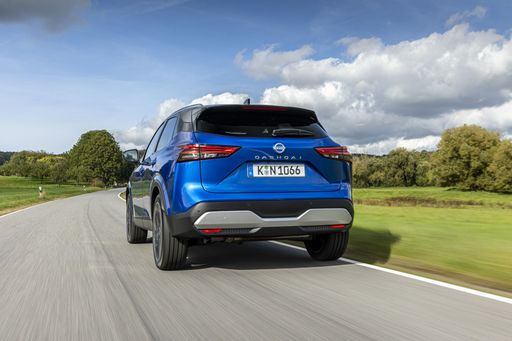
The Nissan Qashqai blends practical, family-friendly packaging with SUV styling that refuses to shout, making it a sensible and dependable choice for everyday life. It’s comfortable to live with, economical on the road, and neatly equipped enough to feel modern without ever feeling precious — perfect if you want crossover versatility without the drama.

details
MG HS
Nissan Qashqai

Costs and Consumption

Price
30,000 - 36,000 £
Price
29,600 - 39,900 £
Consumption L/100km
0.5 - 5.5 L/100km
Consumption L/100km
4.3 - 6.8 L/100km
Consumption kWh/100km
-
Consumption kWh/100km
-
Electric Range
100 km
Electric Range
-
Battery Capacity
-
Battery Capacity
-
co2
14 - 126 g/km
co2
98 - 152 g/km
Fuel tank capacity
-
Fuel tank capacity
-

Dimensions and Body

Body Type
SUV
Body Type
SUV
Seats
5
Seats
5
Doors
-
Doors
-
Curb weight
1,735 - 1,930 kg
Curb weight
1,420 - 1,624 kg
Trunk capacity
507 L
Trunk capacity
479 - 504 L
Length
-
Length
-
Width
1,890 mm
Width
1,835 mm
Height
-
Height
-
Max trunk capacity
-
Max trunk capacity
-
Payload
400 kg
Payload
446 - 516 kg

Engine and Performance

Engine Type
Full Hybrid, Plugin Hybrid
Engine Type
Petrol MHEV, Full Hybrid
Transmission
Automatic
Transmission
Manuel, Automatic
Transmission Detail
Automatic Gearbox
Transmission Detail
Manual Gearbox, CVT, Reduction Gearbox
Drive Type
Front-Wheel Drive
Drive Type
Front-Wheel Drive, All-Wheel Drive
Power HP
224 - 272 HP
Power HP
158 - 205 HP
Acceleration 0-100km/h
6.8 - 7.9 s
Acceleration 0-100km/h
7.6 - 9.9 s
Max Speed
-
Max Speed
-
Torque
340 - 350 Nm
Torque
260 - 330 Nm
Number of Cylinders
4
Number of Cylinders
3 - 4
Power kW
165 - 200 kW
Power kW
116 - 151 kW
Engine capacity
1,496 cm3
Engine capacity
1,332 - 1,498 cm3

General

Model Year
2025
Model Year
2,025 - 2,026
CO2 Efficiency Class
D, B
CO2 Efficiency Class
E, C
Brand
MG
Brand
Nissan
DriveDuel uses data analysis and artificial intelligence to evaluate vehicle data and create content. Content is regularly reviewed and improved. The displayed prices are estimates based on German list prices, adjusted to the respective country’s VAT. Country-specific registration taxes are not included. This information is not legally binding.